Edzy
AI TutorResourcesToolsCompareBuy
SearchDownload AppLogin
Edzy

Edzy for Classes 6-12

Edzy is a personal AI tutor for CBSE and State Board students, with curriculum-aligned guidance, practice, revision, and study plans that adapt to each learner.

  • Email: always@edzy.ai
  • Phone: +91 96256 68472
  • WhatsApp: +91 96256 68472
  • Address: Sector 63, Gurgaon, Haryana

Follow Edzy

Browse by Class

  • CBSE Class 6
  • CBSE Class 7
  • CBSE Class 8
  • CBSE Class 9
  • CBSE Class 10
  • CBSE Class 11
  • CBSE Class 12
Explore the CBSE resource hub

Explore Edzy

  • Study Resources
  • Free Study Tools
  • Best Apps for Board Exams
  • Edzy vs ChatGPT
  • About Us
  • Why We Built Edzy
  • Blog
  • CBSE AI Tutor

Support & Legal

  • Help & FAQs
  • Accessibility
  • Privacy Policy
  • Terms & Conditions
  • Refund Policy
  • Cookie Policy
  • Site Directory

© 2026 Edzy. All rights reserved.

Curriculum-aligned learning paths for students in Classes 6-12.

CBSE
Class 11
Knowledge Traditions Practices of India
Language and Literature of India

Question Bank

Practice Hub

Question Bank: Language and Literature of India

This chapter explores the significance of language and literature in Indian culture, emphasizing their roles in communication, preservation of heritage, and social interactions.

Structured practice
Question Practice

Practice chapter questions in a cleaner, exam-ready flow

Start with curated question sets, move into full module views when needed, and keep discovering related practice without losing your place in the chapter.

Question Bank - Language and Literature of India

View all (118)
Q1.

What is the Sanskrit term for 'language'?

Single Answer MCQ
Q-00070584
View explanation
Q2.

Why is language considered essential for human civilization?

Single Answer MCQ
Q-00070585
View explanation
Q3.

What role did language play in the formation of the Urdu language?

Single Answer MCQ
Q-00070586
View explanation
Q4.

How does language contribute to cultural ethics?

Single Answer MCQ
Q-00070587
View explanation
Q5.

What was the purpose of Udant Martand?

Single Answer MCQ
Q-00070588
View explanation
Q6.

Which of the following best describes the importance of language in human history?

Single Answer MCQ
Q-00070589
View explanation
Q7.

What did Hicky's Bengal Gazette signify in the context of language?

Single Answer MCQ
Q-00070590
View explanation
Q8.

What can lead to conflicts in societies as per the discussion on language?

Single Answer MCQ
Q-00070591
View explanation
Q9.

What impact does exposure to other cultures have on individuals?

Single Answer MCQ
Q-00070592
View explanation
Q10.

What does learning language help individuals absorb according to the chapter?

Single Answer MCQ
Q-00070593
View explanation
Q11.

Which development is associated with the birth of the modern newspaper in India?

Single Answer MCQ
Q-00070594
View explanation
Q12.

Which author is known for the magazine Bangadarshan?

Single Answer MCQ
Q-00070595
View explanation
Q13.

In what way does language give meaning to experiences?

Single Answer MCQ
Q-00070596
View explanation
Q14.

What does the root 'Bhāṣ' suggest about the nature of language?

Single Answer MCQ
Q-00070597
View explanation
Q15.

How can language act as a tool for social change?

Single Answer MCQ
Q-00070598
View explanation
Q16.

What is the literal meaning of the Sanskrit word 'Bhāṣā'?

Single Answer MCQ
Q-00070627
View explanation
Q17.

How does language primarily contribute to culture?

Single Answer MCQ
Q-00070628
View explanation
Q18.

Which of the following best explains why people can live in harmony?

Single Answer MCQ
Q-00070629
View explanation
Q19.

The emergence of Urdu in India is attributed to which historical interaction?

Single Answer MCQ
Q-00070630
View explanation
Q20.

Which of the following languages reflects the cultural exchange during the Mughal period?

Single Answer MCQ
Q-00070631
View explanation
Q21.

What role did literature play in the struggle for freedom from British rule?

Single Answer MCQ
Q-00070632
View explanation
Q22.

Which of the following newspapers was the first in India?

Single Answer MCQ
Q-00070633
View explanation
Q23.

What was the significance of 'Udant Martand'?

Single Answer MCQ
Q-00070634
View explanation
Q24.

Which concept describes language's role in ethical and moral values?

Single Answer MCQ
Q-00070635
View explanation
Q25.

What aspect is necessary for co-existence in a multicultural society?

Single Answer MCQ
Q-00070636
View explanation
Q26.

How do language and culture connect according to the text?

Single Answer MCQ
Q-00070637
View explanation
Q27.

In what ways does exposure to other cultures benefit individuals?

Single Answer MCQ
Q-00070638
View explanation
Q28.

Which writer’s work became a voice against authority during the freedom struggle?

Single Answer MCQ
Q-00070639
View explanation
Q29.

What facilitated the transition from private letters to newspapers in India?

Single Answer MCQ
Q-00070640
View explanation
Q30.

What is a common source of conflict in diverse societies?

Single Answer MCQ
Q-00070641
View explanation
Q31.

What does the term 'cultural inheritance' imply in the context of language?

Single Answer MCQ
Q-00070642
View explanation
Q32.

What role did Panini play in the study of language?

Single Answer MCQ
Q-00070643
View explanation
Q33.

Which language family does Tamil belong to?

Single Answer MCQ
Q-00070644
View explanation
Q34.

What describes the nature of languages according to modern linguistics?

Single Answer MCQ
Q-00070645
View explanation
Q35.

What is a Prakrit?

Single Answer MCQ
Q-00070646
View explanation
Q36.

Which language was primarily used by Buddha in his teachings?

Single Answer MCQ
Q-00070647
View explanation
Q37.

What impact did the establishment of the printing press have on literature?

Single Answer MCQ
Q-00070648
View explanation
Q38.

Which of the following is NOT one of the major language families in India?

Single Answer MCQ
Q-00070649
View explanation
Q39.

What reflects the linguistic diversity of India?

Single Answer MCQ
Q-00070650
View explanation
Q40.

Which of the following is an example of an Apabhramsha?

Single Answer MCQ
Q-00070651
View explanation
Q41.

The 19th-century developments in language study led to which significant realization?

Single Answer MCQ
Q-00070652
View explanation
Q42.

Which of the following factors contributes to India’s linguistic diversity?

Single Answer MCQ
Q-00070653
View explanation
Q43.

When did Sanskrit become the predominant language of learning in India?

Single Answer MCQ
Q-00070654
View explanation
Q44.

Literature connects which of the following elements?

Single Answer MCQ
Q-00070655
View explanation
Q45.

What is a significant characteristic of modern language study as mentioned in the chapter?

Single Answer MCQ
Q-00070656
View explanation
Q46.

Which factor is crucial for the survival of a language according to the chapter?

Single Answer MCQ
Q-00070657
View explanation
Q47.

What was the significance of the Bengal Gazette in Indian history?

Single Answer MCQ
Q-00070658
View explanation
Q48.

Who was the founder of India's first newspaper, Bengal Gazette?

Single Answer MCQ
Q-00070659
View explanation
Q49.

When was the first Indian newspaper, Udant Martand, published?

Single Answer MCQ
Q-00070660
View explanation
Q50.

What theme did Bankimchandra Chattopadhyaya focus on in his magazine Bangadarshan?

Single Answer MCQ
Q-00070661
View explanation
Q51.

Which of the following best describes the impact of the printing press on Indian literature?

Single Answer MCQ
Q-00070662
View explanation
Q52.

What role did Kavivachansudha play in Indian literature?

Single Answer MCQ
Q-00070663
View explanation
Q53.

Which of the following reflects the early view on language diversity as mentioned in the text?

Single Answer MCQ
Q-00070664
View explanation
Q54.

What was a key contribution of ancient Indian grammarians to linguistics?

Single Answer MCQ
Q-00070665
View explanation
Q55.

What change did the advent of the printing press bring to communication in India?

Single Answer MCQ
Q-00070666
View explanation
Q56.

Which concept is emphasized as a fundamental aspect of linguistic diversity?

Single Answer MCQ
Q-00070667
View explanation
Q57.

Who is credited with founding the Udant Martand?

Single Answer MCQ
Q-00070668
View explanation
Q58.

What was the intention behind the writings of Indian authors during the freedom struggle?

Single Answer MCQ
Q-00070669
View explanation
Q59.

What role did language play in the socio-political context of India according to the text?

Single Answer MCQ
Q-00070670
View explanation
Q60.

What are the five major language families in India?

Single Answer MCQ
Q-00070671
View explanation
Q61.

Who standardised Sanskrit grammar during the fifth century B.C.?

Single Answer MCQ
Q-00070672
View explanation
Q62.

What style is predominantly associated with the literature of the British era in India?

Single Answer MCQ
Q-00070673
View explanation
Q63.

Which language family does Sanskrit belong to?

Single Answer MCQ
Q-00070674
View explanation
Q64.

Rabindranath Tagore is notable for what achievement?

Single Answer MCQ
Q-00070675
View explanation
Q65.

Which Indian language is considered the most ancient among the Dravidian languages?

Single Answer MCQ
Q-00070676
View explanation
Q66.

Which of the following was a consequence of Macaulay's Minute on Education in 1835?

Single Answer MCQ
Q-00070677
View explanation
Q67.

What is the significance of Panini in the study of languages?

Single Answer MCQ
Q-00070678
View explanation
Q68.

Which of the following poems was translated by A.K. Ramanujan?

Single Answer MCQ
Q-00070679
View explanation
Q69.

Which family of languages includes languages like Hindi and Bengali?

Single Answer MCQ
Q-00070680
View explanation
Q70.

What are Prakrits in the context of Indian languages?

Single Answer MCQ
Q-00070681
View explanation
Q71.

What does the linguistic diversity in India signify?

Single Answer MCQ
Q-00070682
View explanation
Q72.

Which Indian author is known for pioneering English literature in India?

Single Answer MCQ
Q-00070683
View explanation
Q73.

What is a Prakrit?

Single Answer MCQ
Q-00070684
View explanation
Q74.

What is a defining characteristic of modern Indian literature?

Single Answer MCQ
Q-00070685
View explanation
Q75.

Which of the following is a major language family in India?

Single Answer MCQ
Q-00070686
View explanation
Q76.

In which language was Buddhist literature primarily written?

Single Answer MCQ
Q-00070687
View explanation
Q77.

Which language family comprises languages such as Manipuri and Bodo?

Single Answer MCQ
Q-00070688
View explanation
Q78.

Which of the following statements highlights the significance of literature?

Single Answer MCQ
Q-00070689
View explanation
Q79.

What does the term 'Apabhramsha' refer to?

Single Answer MCQ
Q-00070690
View explanation
Q80.

Which genre of writing gained prominence due to the rise of journalism in the British era?

Single Answer MCQ
Q-00070691
View explanation
Q81.

What role did the printing press play in the development of Indian languages?

Single Answer MCQ
Q-00070692
View explanation
Q82.

What literary movement did the advent of English education in India herald?

Single Answer MCQ
Q-00070693
View explanation
Q83.

Which genre of literature did NOT see significant development during the British era?

Single Answer MCQ
Q-00070694
View explanation
Q84.

In the context of Indian languages, what does 'Apabhramsha' refer to?

Single Answer MCQ
Q-00070695
View explanation
Q85.

In what era did Sanskrit regain prominence as a language of learning?

Single Answer MCQ
Q-00070696
View explanation
Q86.

What is a key factor that contributes to the constant evolution of languages?

Single Answer MCQ
Q-00070697
View explanation
Q87.

Which of the following is NOT a feature of the Tibeto-Burmese language family?

Single Answer MCQ
Q-00070698
View explanation
Q88.

What does linguistic pluralism enhance in a society?

Single Answer MCQ
Q-00070699
View explanation
Q89.

Which of the following is considered a form of ‘Śruti’ literature?

Single Answer MCQ
Q-00070700
View explanation
Q90.

Who is regarded as the greatest Sanskrit poet of ancient India?

Single Answer MCQ
Q-00070701
View explanation
Q91.

What is the significance of the four Vedas?

Single Answer MCQ
Q-00070702
View explanation
Q92.

Which literature forms are associated with the post-Vedic period?

Single Answer MCQ
Q-00070703
View explanation
Q93.

What does 'Smṛti' literature encompass?

Single Answer MCQ
Q-00070704
View explanation
Q94.

Who is known as the author of the Rāmāyaṇa?

Single Answer MCQ
Q-00070705
View explanation
Q95.

In which period did the works of playwrights such as Bhāsa and Kālidāsa flourish?

Single Answer MCQ
Q-00070706
View explanation
Q96.

What is the approximate number of verses in the Mahābhārata?

Single Answer MCQ
Q-00070707
View explanation
Q97.

Which of the following languages was NOT primarily used in ancient Indian literature?

Single Answer MCQ
Q-00070708
View explanation
Q98.

Which philosophical text is a part of the Mahābhārata?

Single Answer MCQ
Q-00070709
View explanation
Q99.

The concept of 'puruṣārthas' refers to:

Single Answer MCQ
Q-00070710
View explanation
Q100.

The Rāmāyaṇa primarily revolves around which central character?

Single Answer MCQ
Q-00070711
View explanation
Q101.

Which of the following works is associated with Bhāsa?

Single Answer MCQ
Q-00070712
View explanation
Q102.

Which playwright's works are significantly influenced by the epics?

Single Answer MCQ
Q-00070713
View explanation
Q103.

What genre do the Rāmāyaṇa and Mahābhārata belong to?

Single Answer MCQ
Q-00070714
View explanation
Q104.

Which ancient language is associated with theatrical works like 'Abhijñānaśākuntalam'?

Single Answer MCQ
Q-00070715
View explanation
Q105.

In the context of the Mahābhārata, what does the term 'Purusharthas' refer to?

Single Answer MCQ
Q-00070716
View explanation
Q106.

How do the 'Vedas' contribute to understanding ancient Indian rituals?

Single Answer MCQ
Q-00070717
View explanation
Q107.

Which epic includes the character of Draupadi?

Single Answer MCQ
Q-00070718
View explanation
Q108.

Which literary work describes the journey of Rāma?

Single Answer MCQ
Q-00070719
View explanation
Q109.

What major theme is shared by both the Rāmāyaṇa and Mahābhārata?

Single Answer MCQ
Q-00070720
View explanation
Q110.

What is a common theme found in the Jātaka tales?

Single Answer MCQ
Q-00070721
View explanation
Q111.

Which character is a prominent avatar of Lord Vishnu in the Rāmāyaṇa?

Single Answer MCQ
Q-00070722
View explanation
Q112.

Which of the following texts reflects on philosophical inquiries into life?

Single Answer MCQ
Q-00070723
View explanation
Q113.

The term 'Ādikavi' relates to which of the following?

Single Answer MCQ
Q-00070724
View explanation
Q114.

Which dramatic work captures the events from the Mahābhārata?

Single Answer MCQ
Q-00070725
View explanation
Q115.

In the context of the Mahābhārata, what is the significance of the Bhagavad-Gītā?

Single Answer MCQ
Q-00070726
View explanation
Q116.

Which of the following characters from the Mahābhārata is considered the epitome of righteousness?

Single Answer MCQ
Q-00070727
View explanation
Q117.

In which epic is the character of Hanuman predominantly featured?

Single Answer MCQ
Q-00070728
View explanation
Q118.

What literary form encompasses epic narratives in ancient India?

Single Answer MCQ
Q-00070729
View explanation
Learn Better On The App
Built for collaborative learning

Study With Friends

Join classmates, challenge them in duels, and make practice more engaging.

Quick duels
Shared momentum

Faster access to practice, revision, and daily study flow.

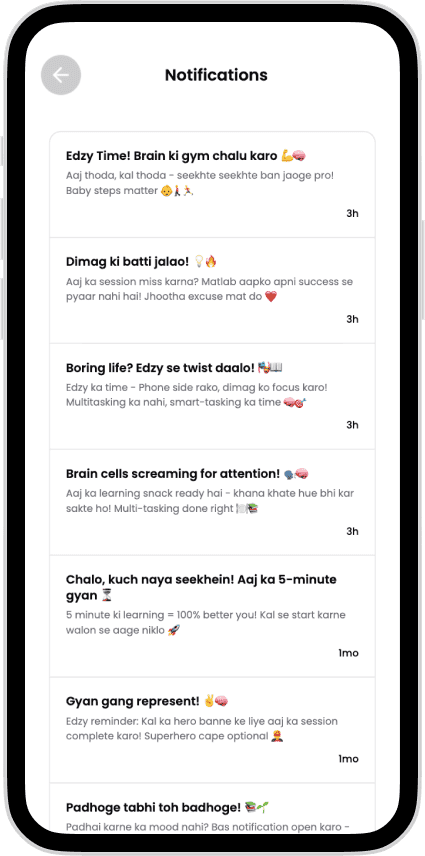
Edzy mobile app preview