Edzy
AI TutorResourcesToolsCompareBuy
SearchDownload AppLogin
Edzy

Edzy for Classes 6-12

Edzy is a personal AI tutor for CBSE and State Board students, with curriculum-aligned guidance, practice, revision, and study plans that adapt to each learner.

  • Email: always@edzy.ai
  • Phone: +91 96256 68472
  • WhatsApp: +91 96256 68472
  • Address: Sector 63, Gurgaon, Haryana

Follow Edzy

Browse by Class

  • CBSE Class 6
  • CBSE Class 7
  • CBSE Class 8
  • CBSE Class 9
  • CBSE Class 10
  • CBSE Class 11
  • CBSE Class 12
Explore the CBSE resource hub

Explore Edzy

  • Study Resources
  • Free Study Tools
  • Best Apps for Board Exams
  • Edzy vs ChatGPT
  • About Us
  • Why We Built Edzy
  • Blog
  • CBSE AI Tutor

Support & Legal

  • Help & FAQs
  • Accessibility
  • Privacy Policy
  • Terms & Conditions
  • Refund Policy
  • Cookie Policy
  • Site Directory

© 2026 Edzy. All rights reserved.

Curriculum-aligned learning paths for students in Classes 6-12.

CBSE
Class 11
Knowledge Traditions Practices of India
Mathematics in India

Question Bank

Practice Hub

Question Bank: Mathematics in India

This chapter explores the rich history of mathematics in India, highlighting key mathematicians and their contributions from ancient times to the seventeenth century.

Structured practice
Question Practice

Practice chapter questions in a cleaner, exam-ready flow

Start with curated question sets, move into full module views when needed, and keep discovering related practice without losing your place in the chapter.

Question Bank - Mathematics in India

View all (116)
Q1.

What significant numeral system is credited to ancient Indian mathematicians?

Single Answer MCQ
Q-00071130
View explanation
Q2.

Who is considered the pioneer of Indian mathematics during the Golden Period?

Single Answer MCQ
Q-00071131
View explanation
Q3.

Which ancient civilization's discoveries showcase early mathematical practices?

Single Answer MCQ
Q-00071132
View explanation
Q4.

What major mathematical concept did Aryabhata I introduce?

Single Answer MCQ
Q-00071133
View explanation
Q5.

Which of the following texts includes early references to the numerical system used in ancient India?

Single Answer MCQ
Q-00071134
View explanation
Q6.

In which work did Brahmagupta describe his mathematical theories?

Single Answer MCQ
Q-00071135
View explanation
Q7.

What does the term 'Gaṇita' refer to in ancient Indian culture?

Single Answer MCQ
Q-00071136
View explanation
Q8.

What mathematical operations are covered under the term 'pāṭigaṇita'?

Single Answer MCQ
Q-00071137
View explanation
Q9.

Which mathematician wrote the work known as 'Liḍavati'?

Single Answer MCQ
Q-00071138
View explanation
Q10.

During which period did continuous progress in mathematics occur after the Brāhmaṇa period?

Single Answer MCQ
Q-00071139
View explanation
Q11.

Which of the following mathematicians is known for systematic collection and systematisation of mathematical knowledge?

Single Answer MCQ
Q-00071140
View explanation
Q12.

The Jaina religious texts significantly contributed to which area of knowledge?

Single Answer MCQ
Q-00071141
View explanation
Q13.

When did the Golden Period of Indian mathematics begin?

Single Answer MCQ
Q-00071142
View explanation
Q14.

The use of numerical symbols became common in ancient India during whose reign?

Single Answer MCQ
Q-00071143
View explanation
Q15.

Which mathematical operation is NOT included in the eight fundamental operations of ancient gaṇita?

Single Answer MCQ
Q-00071144
View explanation
Q16.

Which ancient Indian literature regarded arithmetic as the first and noblest of arts?

Single Answer MCQ
Q-00071145
View explanation
Q17.

Which of the following indicates an early understanding of large numbers in ancient Indian culture?

Single Answer MCQ
Q-00071146
View explanation
Q18.

How did Aryabhata I describe the concept of zero?

Single Answer MCQ
Q-00071147
View explanation
Q19.

Which of the following works was authored by Bhāskara I?

Single Answer MCQ
Q-00071148
View explanation
Q20.

The inscription of which ruler shows that Numismatics was common in ancient India?

Single Answer MCQ
Q-00071149
View explanation
Q21.

How did ancient Indian mathematicians perceive mathematics in relation to spiritual knowledge?

Single Answer MCQ
Q-00071150
View explanation
Q22.

In which section of the Āryabhatiya do we find elements of trigonometry?

Single Answer MCQ
Q-00071151
View explanation
Q23.

Which notable feature of the numerical symbols developed in ancient India suggests their long-term use?

Single Answer MCQ
Q-00071152
View explanation
Q24.

What is a common misconception regarding the significance of Aryabhata's work?

Single Answer MCQ
Q-00071153
View explanation
Q25.

In which literature is 'Saṁkhyāna' particularly highlighted as a notable accomplishment?

Single Answer MCQ
Q-00071154
View explanation
Q26.

Which mathematician among the following is known for his work in both mathematics and astronomy?

Single Answer MCQ
Q-00071155
View explanation
Q27.

Which numeral system is NOT associated with ancient Indian mathematicians?

Single Answer MCQ
Q-00071156
View explanation
Q28.

What was the primary focus of Aryabhata's Gaṇita section?

Single Answer MCQ
Q-00071157
View explanation
Q29.

What was a notable achievement of mathematics in ancient India?

Single Answer MCQ
Q-00071158
View explanation
Q30.

Which numeral system is considered a purely Indian invention?

Single Answer MCQ
Q-00071159
View explanation
Q31.

In ancient India, which was the fundamental base for the numeral system?

Single Answer MCQ
Q-00071160
View explanation
Q32.

Which mathematician is known for the systematic collection of mathematical knowledge in ancient India?

Single Answer MCQ
Q-00071161
View explanation
Q33.

The inscriptions of which ruler provide evidence for the use of numerical symbols in ancient India?

Single Answer MCQ
Q-00071162
View explanation
Q34.

What was a notable characteristic of number names found in ancient Indian literature?

Single Answer MCQ
Q-00071163
View explanation
Q35.

What was the primary function of arithmetic in Buddhist literature?

Single Answer MCQ
Q-00071164
View explanation
Q36.

During which period is the 'Golden Age' of Indian mathematics considered to occur?

Single Answer MCQ
Q-00071165
View explanation
Q37.

Which symbol in Brahmi notation represents the number '3'?

Single Answer MCQ
Q-00071166
View explanation
Q38.

Which mathematician's work ended the Golden Age of Indian mathematics?

Single Answer MCQ
Q-00071167
View explanation
Q39.

What does the term 'Gaṇita' refer to in ancient Indian literature?

Single Answer MCQ
Q-00071168
View explanation
Q40.

What numerical value did the Yajurveda Saṁhitā reference showing the advanced number system?

Single Answer MCQ
Q-00071169
View explanation
Q41.

Which numeral system directly influenced the development of modern numerical systems?

Single Answer MCQ
Q-00071170
View explanation
Q42.

What is the primary base of the Indian numeration system?

Single Answer MCQ
Q-00071171
View explanation
Q43.

Who among the following was NOT part of the Golden period of Indian mathematics?

Single Answer MCQ
Q-00071172
View explanation
Q44.

Which term refers to multiplication in Indian mathematics?

Single Answer MCQ
Q-00071173
View explanation
Q45.

What mathematical concept did the Brahmi numerals primarily represent?

Single Answer MCQ
Q-00071174
View explanation
Q46.

What is the method of multiplication known as, that involves repeated addition?

Single Answer MCQ
Q-00071175
View explanation
Q47.

In ancient Indian mathematics, which scholar is associated with the term 'kuṭṭaka'?

Single Answer MCQ
Q-00071176
View explanation
Q48.

Which ancient text is prominent for its geometrical principles?

Single Answer MCQ
Q-00071177
View explanation
Q49.

How is the number '100' expressed in the ancient Indian numeral system?

Single Answer MCQ
Q-00071178
View explanation
Q50.

Which Indian mathematician first defined the concept of zero?

Single Answer MCQ
Q-00071179
View explanation
Q51.

What type of equations did Brahmagupta particularly focus on in his works?

Single Answer MCQ
Q-00071180
View explanation
Q52.

How was subtraction performed in ancient Indian arithmetic?

Single Answer MCQ
Q-00071181
View explanation
Q53.

What did Aryabhata contribute to the topic of arithmetic?

Single Answer MCQ
Q-00071182
View explanation
Q54.

Which of the following represents an ancient way to calculate areas?

Single Answer MCQ
Q-00071183
View explanation
Q55.

Which method did ancient Indians utilize for multiplication involving large numbers?

Single Answer MCQ
Q-00071184
View explanation
Q56.

What is the main purpose of the Sulbasūtras in ancient Indian mathematics?

Single Answer MCQ
Q-00071185
View explanation
Q57.

Which types of triangles are mentioned in the Sulbasūtras?

Single Answer MCQ
Q-00071186
View explanation
Q58.

In the context of ancient Indian geometry, what does the Pythagorean theorem relate?

Single Answer MCQ
Q-00071187
View explanation
Q59.

Who is credited with providing the formulas for the area of common geometrical figures in ancient India?

Single Answer MCQ
Q-00071188
View explanation
Q60.

What was the significance of the designs of Vedic fire altars?

Single Answer MCQ
Q-00071189
View explanation
Q61.

What is the fraction equivalent to the term 'ardha' as mentioned in ancient Indian texts?

Single Answer MCQ
Q-00071190
View explanation
Q62.

What geometric concepts did Brahmagupta notably contribute to?

Single Answer MCQ
Q-00071191
View explanation
Q63.

Which fraction is denoted by the term 'tri-pāda'?

Single Answer MCQ
Q-00071192
View explanation
Q64.

What term refers to the ancient Indian geometric methods used for altar construction?

Single Answer MCQ
Q-00071193
View explanation
Q65.

Identify the fraction referred to as 'kala' in ancient Indian mathematics.

Single Answer MCQ
Q-00071194
View explanation
Q66.

How did ancient Indian geometers relate the dimensions of squares to rectangular areas?

Single Answer MCQ
Q-00071195
View explanation
Q67.

In the context of Indian fractions, what does 'dvi-saptama' represent?

Single Answer MCQ
Q-00071196
View explanation
Q68.

Which ancient text provides rules for constructing right-angled triangles?

Single Answer MCQ
Q-00071197
View explanation
Q69.

What is the correct representation of the fraction three-eighths in Sanskrit?

Single Answer MCQ
Q-00071198
View explanation
Q70.

What does the term 'Viṣamatribhūja' refer to in the context of triangles?

Single Answer MCQ
Q-00071199
View explanation
Q71.

Which of the following fractions is used as 'pañcama-bhāga' in ancient texts?

Single Answer MCQ
Q-00071200
View explanation
Q72.

Which of the following principles is NOT typically found in the context of ancient Indian geometry?

Single Answer MCQ
Q-00071201
View explanation
Q73.

If a fraction in the Sulbasūtra states 'pañca-daśa-bhāga', what does it signify?

Single Answer MCQ
Q-00071202
View explanation
Q74.

What significant advancement did Āryabhaṭa make in the field of geometry?

Single Answer MCQ
Q-00071203
View explanation
Q75.

What is the sum of the fractions 1/4 and 1/2?

Single Answer MCQ
Q-00071204
View explanation
Q76.

What geometric property describes shapes that are similar?

Single Answer MCQ
Q-00071205
View explanation
Q77.

A recipe requires 3/4 cup of sugar, but you want to make half the recipe. How much sugar do you need?

Single Answer MCQ
Q-00071206
View explanation
Q78.

Which ancient Indian work first articulated the properties of similar triangles?

Single Answer MCQ
Q-00071207
View explanation
Q79.

What is the result when subtracting 1/3 from 1/2?

Single Answer MCQ
Q-00071208
View explanation
Q80.

In a group, 2/5 of the members are males. If there are 50 members in total, how many are males?

Single Answer MCQ
Q-00071209
View explanation
Q81.

Which pair represents two equivalent fractions?

Single Answer MCQ
Q-00071210
View explanation
Q82.

A cake is divided into 12 equal pieces. If you eat 1/4 of the cake, how many pieces did you eat?

Single Answer MCQ
Q-00071211
View explanation
Q83.

Which of the following is the correct method to compare fractions 3/4 and 2/3?

Single Answer MCQ
Q-00071212
View explanation
Q84.

What is the decimal equivalent of the fraction 3/8?

Single Answer MCQ
Q-00071213
View explanation
Q85.

If 2/5 of a number is 12, what is the number?

Single Answer MCQ
Q-00071214
View explanation
Q86.

Who is known for coining the term 'kuṭṭaka' related to algebra?

Single Answer MCQ
Q-00071215
View explanation
Q87.

What is the primary significance of zero in ancient Indian mathematics?

Single Answer MCQ
Q-00071216
View explanation
Q88.

Which mathematician authored 'Līlāvati' focusing on mathematical concepts?

Single Answer MCQ
Q-00071217
View explanation
Q89.

The term 'Bījaganānta' literally translates to which of the following?

Single Answer MCQ
Q-00071218
View explanation
Q90.

Which of the following operations is NOT included in the four fundamental operations of ancient mathematics?

Single Answer MCQ
Q-00071219
View explanation
Q91.

What does 'avyakta-gaṇita' signify in ancient Indian mathematics?

Single Answer MCQ
Q-00071220
View explanation
Q92.

Which philosopher emphasized the utility of algebra in solving problems?

Single Answer MCQ
Q-00071221
View explanation
Q93.

How did ancient Indian mathematicians typically represent calculations?

Single Answer MCQ
Q-00071222
View explanation
Q94.

Which ancient text includes the earliest known use of quadratic equations?

Single Answer MCQ
Q-00071223
View explanation
Q95.

Which equation is used to solve linear problems described in Indian mathematics?

Single Answer MCQ
Q-00071224
View explanation
Q96.

What fraction is known for being an accurate approximation of π (pi) in ancient Indian texts?

Single Answer MCQ
Q-00071225
View explanation
Q97.

Brahmagupta had significant contributions in which area besides algebra?

Single Answer MCQ
Q-00071226
View explanation
Q98.

Which of the following is a critical aspect of algebra as described by ancient Indian mathematicians?

Single Answer MCQ
Q-00071227
View explanation
Q99.

What is the relationship between the terms 'vyakta' and 'avyakta' as used in Indian mathematics?

Single Answer MCQ
Q-00071228
View explanation
Q100.

What is the sine of 90 degrees?

Single Answer MCQ
Q-00071245
View explanation
Q101.

Which ancient Indian mathematician contributed significantly to trigonometric formulas?

Single Answer MCQ
Q-00071246
View explanation
Q102.

What does the formula sin(A + B) represent?

Single Answer MCQ
Q-00071247
View explanation
Q103.

If cos(θ) = 0.6, what is sin(θ) if θ is in the first quadrant?

Single Answer MCQ
Q-00071248
View explanation
Q104.

What is the value of sin(30 degrees)?

Single Answer MCQ
Q-00071249
View explanation
Q105.

Who is known for creating accurate sine tables in ancient India?

Single Answer MCQ
Q-00071250
View explanation
Q106.

Using the sine addition formula, what is sin(60 + 30)?

Single Answer MCQ
Q-00071251
View explanation
Q107.

In a right triangle, if the opposite side is 3 and the hypotenuse is 5, what is sin(θ)?

Single Answer MCQ
Q-00071252
View explanation
Q108.

What is the cosine of an angle in relation to a right triangle?

Single Answer MCQ
Q-00071253
View explanation
Q109.

In Trigonometry, what is the function defining the ratio of the opposite side to the adjacent side?

Single Answer MCQ
Q-00071254
View explanation
Q110.

How are sine and cosine related to the unit circle?

Single Answer MCQ
Q-00071255
View explanation
Q111.

How do you find the values of sine and cosine for angles greater than 90 degrees?

Single Answer MCQ
Q-00071256
View explanation
Q112.

What is sin(45 degrees) expressed as a fraction?

Single Answer MCQ
Q-00071257
View explanation
Q113.

What is the sine value of a 180-degree angle?

Single Answer MCQ
Q-00071258
View explanation
Q114.

What identity is used to express sin(-θ)?

Single Answer MCQ
Q-00071259
View explanation
Q115.

What is tan(90 degrees)?

Single Answer MCQ
Q-00071260
View explanation
Q116.

Using the unit circle, what are the coordinates of the angle 270 degrees?

Single Answer MCQ
Q-00071261
View explanation
Learn Better On The App
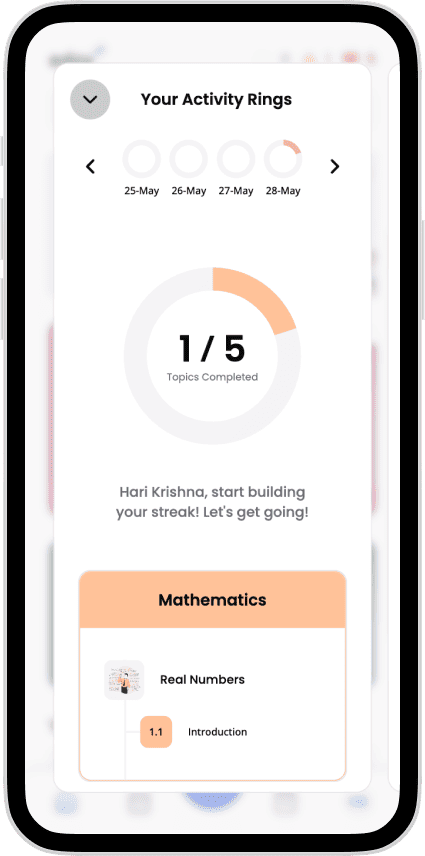
Gamified progress

Learning That Feels Rewarding

Earn XP, unlock badges, and turn revision into a habit that feels motivating.

XP and badges
Higher engagement

Faster access to practice, revision, and daily study flow.

Edzy mobile app preview