Edzy
AI TutorResourcesToolsCompareBuy
SearchDownload AppLogin
Edzy

Edzy for Classes 6-12

Edzy is a personal AI tutor for CBSE and State Board students, with curriculum-aligned guidance, practice, revision, and study plans that adapt to each learner.

  • Email: always@edzy.ai
  • Phone: +91 96256 68472
  • WhatsApp: +91 96256 68472
  • Address: Sector 63, Gurgaon, Haryana

Follow Edzy

Browse by Class

  • CBSE Class 6
  • CBSE Class 7
  • CBSE Class 8
  • CBSE Class 9
  • CBSE Class 10
  • CBSE Class 11
  • CBSE Class 12
Explore the CBSE resource hub

Explore Edzy

  • Study Resources
  • Free Study Tools
  • Best Apps for Board Exams
  • Edzy vs ChatGPT
  • About Us
  • Why We Built Edzy
  • Blog
  • CBSE AI Tutor

Support & Legal

  • Help & FAQs
  • Accessibility
  • Privacy Policy
  • Terms & Conditions
  • Refund Policy
  • Cookie Policy
  • Site Directory

© 2026 Edzy. All rights reserved.

Curriculum-aligned learning paths for students in Classes 6-12.

CBSE
Class 12
Biology
Biology
Molecular Basis of Inheritance
Question Bank

Question Bank - Molecular Basi...

Practice Hub

Question Bank: Molecular Basis of Inheritance

This chapter explains the molecular mechanisms behind inheritance, focusing on DNA and RNA structures, replication, transcription, and translation processes that underlie genetic expression.

Structured practice

Question Bank - Molecular Basis of Inheritance

Q1.

What are the building blocks of DNA?

Single Answer MCQ
Q-00084198
View explanation
Q2.

Which nitrogenous base is found only in DNA?

Single Answer MCQ
Q-00084199
View explanation
Q3.

What type of bond links nucleotides in a DNA strand?

Single Answer MCQ
Q-00084200
View explanation
Q4.

What is the role of DNA polymerase during DNA replication?

Single Answer MCQ
Q-00084201
View explanation
Q5.

In the Meselson and Stahl experiment, what type of replication was demonstrated?

Single Answer MCQ
Q-00084202
View explanation
Q6.

What is the complementary DNA sequence for 5'-ATCGTACG-3'?

Single Answer MCQ
Q-00084203
View explanation
Q7.

Which of the following statements about RNA is true?

Single Answer MCQ
Q-00084204
View explanation
Q8.

What defines a gene?

Single Answer MCQ
Q-00084205
View explanation
Q9.

What is the primary function of the promoter in a gene?

Single Answer MCQ
Q-00084206
View explanation
Q10.

Which process describes the synthesis of mRNA from DNA?

Single Answer MCQ
Q-00084207
View explanation
Q11.

Which base pairs with adenine in DNA?

Single Answer MCQ
Q-00084208
View explanation
Q12.

In which direction does DNA polymerase synthesize new DNA strands?

Single Answer MCQ
Q-00084209
View explanation
Q13.

Which of the following is a feature of the double helix structure of DNA?

Single Answer MCQ
Q-00084210
View explanation
Q14.

Which of the following enzymes is responsible for unwinding the DNA double helix during replication?

Single Answer MCQ
Q-00084211
View explanation
Q15.

Which of the following is true about the DNA replication process?

Single Answer MCQ
Q-00084212
View explanation
Q16.

During transcription, which strand of DNA serves as the template?

Single Answer MCQ
Q-00084213
View explanation
Q17.

What type of nucleic acid is RNA primarily considered?

Single Answer MCQ
Q-00084214
View explanation
Q18.

Which of the following was the first proposed genetic material in early life forms?

Single Answer MCQ
Q-00084215
View explanation
Q19.

What was the significance of Frederick Griffith's experiment with Streptococcus pneumoniae?

Single Answer MCQ
Q-00084216
View explanation
Q20.

Which of the following statements is true about RNA compared to DNA?

Single Answer MCQ
Q-00084217
View explanation
Q21.

Which of the following scientists identified DNA as the transforming principle in Griffith's experiment?

Single Answer MCQ
Q-00084218
View explanation
Q22.

In what form did RNA function in the earliest forms of life?

Single Answer MCQ
Q-00084219
View explanation
Q23.

Why was it initially believed that DNA could not be the genetic material?

Single Answer MCQ
Q-00084220
View explanation
Q24.

What structural component differentiates ribonucleic acid (RNA) from deoxyribonucleic acid (DNA)?

Single Answer MCQ
Q-00084221
View explanation
Q25.

Hershey and Chase used which type of virus to show that DNA is the genetic material?

Single Answer MCQ
Q-00084222
View explanation
Q26.

Which RNA type is primarily involved in bringing amino acids to the ribosome during protein synthesis?

Single Answer MCQ
Q-00084223
View explanation
Q27.

What did the results of Hershey and Chase's experiments conclusively demonstrate?

Single Answer MCQ
Q-00084224
View explanation
Q28.

What process involves the alteration of RNA to remove non-coding regions?

Single Answer MCQ
Q-00084225
View explanation
Q29.

Which enzyme did Avery and his colleagues use to demonstrate that DNA was the transforming principle?

Single Answer MCQ
Q-00084226
View explanation
Q30.

Which RNA is responsible for carrying the genetic information from DNA to the ribosome?

Single Answer MCQ
Q-00084227
View explanation
Q31.

What was the major discovery about the composition of DNA made by Hershey and Chase?

Single Answer MCQ
Q-00084228
View explanation
Q32.

What evidence supports the hypothesis that RNA was the first type of genetic material?

Single Answer MCQ
Q-00084229
View explanation
Q33.

In Griffith's experiments, what was the role of the heat-killed S strain bacteria?

Single Answer MCQ
Q-00084230
View explanation
Q34.

Which of the following is NOT a role of RNA in the cell?

Single Answer MCQ
Q-00084231
View explanation
Q35.

What type of inheritance did Griffith's experiment primarily investigate?

Single Answer MCQ
Q-00084232
View explanation
Q36.

Which characteristic of RNA allows it to perform enzymatic functions?

Single Answer MCQ
Q-00084233
View explanation
Q37.

The transformation observed in Griffith's experiment involved the change from which bacterial strain to which?

Single Answer MCQ
Q-00084234
View explanation
Q38.

What is the significance of the 'RNA world' hypothesis in understanding the origin of life?

Single Answer MCQ
Q-00084235
View explanation
Q39.

What structural component of DNA distinguishes it from RNA?

Single Answer MCQ
Q-00084236
View explanation
Q40.

Which class of macromolecules was initially thought to be the genetic material before the discoveries made in the 1940s?

Single Answer MCQ
Q-00084237
View explanation
Q41.

Why is the hypothesis that RNA preceded DNA considered plausible?

Single Answer MCQ
Q-00084238
View explanation
Q42.

What role do ribozymes play in the context of RNA's function?

Single Answer MCQ
Q-00084239
View explanation
Q43.

What evidence did Avery and his colleagues use to argue against proteins as the genetic material?

Single Answer MCQ
Q-00084240
View explanation
Q44.

Which component of a nucleotide distinguishes RNA from DNA?

Single Answer MCQ
Q-00084241
View explanation
Q45.

What is the primary characteristic of semiconservative DNA replication?

Single Answer MCQ
Q-00084242
View explanation
Q46.

During DNA replication, which enzyme is primarily responsible for synthesizing the new strand?

Single Answer MCQ
Q-00084243
View explanation
Q47.

What role does helicase play during DNA replication?

Single Answer MCQ
Q-00084244
View explanation
Q48.

What are Okazaki fragments?

Single Answer MCQ
Q-00084245
View explanation
Q49.

In which phase of the cell cycle does DNA replication occur?

Single Answer MCQ
Q-00084246
View explanation
Q50.

Why is RNA primase essential for DNA replication?

Single Answer MCQ
Q-00084247
View explanation
Q51.

Which discovery did the Meselson and Stahl experiment provide evidence for?

Single Answer MCQ
Q-00084248
View explanation
Q52.

What is the function of DNA ligase during replication?

Single Answer MCQ
Q-00084249
View explanation
Q53.

What are the template strands used for during DNA replication?

Single Answer MCQ
Q-00084250
View explanation
Q54.

Which of the following statements is true about replication origins?

Single Answer MCQ
Q-00084251
View explanation
Q55.

What is the primary role of telomeres during DNA replication?

Single Answer MCQ
Q-00084252
View explanation
Q56.

What is the consequence of a failure during DNA replication in eukaryotic cells?

Single Answer MCQ
Q-00084253
View explanation
Q57.

Which property of DNA contributes to the accuracy of the replication process?

Single Answer MCQ
Q-00084254
View explanation
Q58.

Why is it important for DNA replication to be coordinated with the cell cycle?

Single Answer MCQ
Q-00084255
View explanation
Q59.

How is the leading strand synthesized during DNA replication?

Single Answer MCQ
Q-00084256
View explanation
Q60.

What is the primary enzyme responsible for transcription in bacteria?

Single Answer MCQ
Q-00084257
View explanation
Q61.

During transcription, which region of a gene does RNA polymerase bind to initiate the process?

Single Answer MCQ
Q-00084258
View explanation
Q62.

Which of the following is NOT a type of RNA involved in protein synthesis?

Single Answer MCQ
Q-00084259
View explanation
Q63.

In eukaryotic cells, what must mRNA undergo before it can be translated?

Single Answer MCQ
Q-00084260
View explanation
Q64.

Which sequence is removed during the RNA splicing process in eukaryotic cells?

Single Answer MCQ
Q-00084261
View explanation
Q65.

What role does the sigma factor play during bacterial transcription?

Single Answer MCQ
Q-00084262
View explanation
Q66.

What is the function of the poly-A tail added to eukaryotic mRNA?

Single Answer MCQ
Q-00084263
View explanation
Q67.

In the lac operon, what triggers the transcription of the operon?

Single Answer MCQ
Q-00084264
View explanation
Q68.

What type of RNA carries the genetic code from DNA to the ribosome?

Single Answer MCQ
Q-00084265
View explanation
Q69.

The process of transcription in eukaryotes is distinct because it occurs in a compartment separate from where translation happens. What is this compartment?

Single Answer MCQ
Q-00084266
View explanation
Q70.

What term describes a gene that is expressed to produce multiple proteins due to alternative splicing?

Single Answer MCQ
Q-00084267
View explanation
Q71.

What functions as the termination signal for transcription in bacteria?

Single Answer MCQ
Q-00084268
View explanation
Q72.

Which of the following best describes the direction of RNA synthesis during transcription?

Single Answer MCQ
Q-00084269
View explanation
Q73.

What mechanism allows for the simultaneous transcription and translation in prokaryotes?

Single Answer MCQ
Q-00084270
View explanation
Q74.

In eukaryotes, which polymerase is responsible for synthesizing mRNA?

Single Answer MCQ
Q-00084271
View explanation
Q75.

Which type of RNA carries the genetic code from the nucleus to the ribosome?

Single Answer MCQ
Q-00084272
View explanation
Q76.

What is the primary function of tRNA during translation?

Single Answer MCQ
Q-00084273
View explanation
Q77.

What specific site on the ribosome do tRNAs bind to during translation?

Single Answer MCQ
Q-00084274
View explanation
Q78.

Which of the following codons signals the start of translation?

Single Answer MCQ
Q-00084275
View explanation
Q79.

In which part of the cell does translation occur?

Single Answer MCQ
Q-00084276
View explanation
Q80.

During translation, which component of the ribosome is responsible for forming peptide bonds?

Single Answer MCQ
Q-00084277
View explanation
Q81.

What is the minimum number of nucleotides required to code for one amino acid?

Single Answer MCQ
Q-00084278
View explanation
Q82.

What is the role of the ribosome in the translation process?

Single Answer MCQ
Q-00084279
View explanation
Q83.

How many codons are available in the genetic code?

Single Answer MCQ
Q-00084280
View explanation
Q84.

In eukaryotes, what must be removed from the initial RNA transcript before it can be translated?

Single Answer MCQ
Q-00084281
View explanation
Q85.

Which property of the genetic code allows for more than one codon to specify the same amino acid?

Single Answer MCQ
Q-00084282
View explanation
Q86.

How many amino acids are coded by a sequence containing six codons?

Single Answer MCQ
Q-00084283
View explanation
Q87.

What is the effect of a point mutation on the genetic code?

Single Answer MCQ
Q-00084284
View explanation
Q88.

What is a release factor in translation?

Single Answer MCQ
Q-00084285
View explanation
Q89.

Which enzyme is responsible for the synthesis of mRNA during transcription?

Single Answer MCQ
Q-00084286
View explanation
Q90.

Which site on the ribosome contains the tRNA with the growing polypeptide chain?

Single Answer MCQ
Q-00084287
View explanation
Q91.

The genetic code is said to be universal. What does this mean?

Single Answer MCQ
Q-00084288
View explanation
Q92.

What is the main purpose of the genetic code?

Single Answer MCQ
Q-00084289
View explanation
Q93.

What type of mutation is characterized by the insertion or deletion of nucleotides?

Single Answer MCQ
Q-00084290
View explanation
Q94.

How does the presence of introns affect gene expression in eukaryotes?

Single Answer MCQ
Q-00084291
View explanation
Q95.

In tRNA, what is the function of the anticodon?

Single Answer MCQ
Q-00084292
View explanation
Q96.

What energy molecule is required during the translation process?

Single Answer MCQ
Q-00084293
View explanation
Q97.

What is meant by the term 'non-overlapping' in the context of the genetic code?

Single Answer MCQ
Q-00084294
View explanation
Q98.

What type of mutation results in a premature stop codon?

Single Answer MCQ
Q-00084295
View explanation
Q99.

Which of the following illustrates the redundancy of the genetic code?

Single Answer MCQ
Q-00084296
View explanation
Q100.

Which of the following represents the role of ribosome during translation?

Single Answer MCQ
Q-00084297
View explanation
Q101.

Which type of mutation results in no change to the amino acid sequence?

Single Answer MCQ
Q-00084298
View explanation
Q102.

How does the genetic code illustrate the concept of evolution?

Single Answer MCQ
Q-00084299
View explanation
Q103.

What type of bond forms between the codon on mRNA and the anticodon on tRNA during translation?

Single Answer MCQ
Q-00084300
View explanation
Q104.

In the context of protein synthesis, which step follows the binding of tRNA to the codon of mRNA?

Single Answer MCQ
Q-00084301
View explanation
Q105.

What is the main purpose of DNA fingerprinting?

Single Answer MCQ
Q-00084302
View explanation
Q106.

Which DNA fragments are primarily analyzed in DNA fingerprinting?

Single Answer MCQ
Q-00084303
View explanation
Q107.

Who initially developed the DNA fingerprinting technique?

Single Answer MCQ
Q-00084304
View explanation
Q108.

What does VNTR stand for in the context of DNA fingerprinting?

Single Answer MCQ
Q-00084305
View explanation
Q109.

What technique is commonly used to separate DNA fragments in fingerprinting?

Single Answer MCQ
Q-00084306
View explanation
Q110.

In DNA fingerprinting, what is the role of restriction enzymes?

Single Answer MCQ
Q-00084307
View explanation
Q111.

Why is PCR important for DNA fingerprinting?

Single Answer MCQ
Q-00084308
View explanation
Q112.

What is the significance of polymorphism in DNA fingerprinting?

Single Answer MCQ
Q-00084309
View explanation
Q113.

Which of the following is NOT a use of DNA fingerprinting?

Single Answer MCQ
Q-00084310
View explanation
Q114.

Which type of DNA sequence contributes most to individual diversity in DNA fingerprinting?

Single Answer MCQ
Q-00084311
View explanation
Q115.

What is typically required to visualize the results of DNA fingerprinting after gel electrophoresis?

Single Answer MCQ
Q-00084312
View explanation
Q116.

In DNA fingerprinting, what information can identical twins provide to the analysis?

Single Answer MCQ
Q-00084313
View explanation
Q117.

How has the development of PCR affected DNA fingerprinting?

Single Answer MCQ
Q-00084314
View explanation
Q118.

What can DNA fingerprinting reveal about genetic diversity in populations?

Single Answer MCQ
Q-00084315
View explanation
Q119.

What major advance did Alec Jeffreys contribute to forensic science with his DNA fingerprinting technique?

Single Answer MCQ
Q-00084316
View explanation
Q120.

What is the primary level of gene expression regulation in eukaryotes?

Single Answer MCQ
Q-00084317
View explanation
Q121.

In a transcription unit, which sequence is located upstream of the structural gene?

Single Answer MCQ
Q-00084318
View explanation
Q122.

How do enhancers contribute to gene expression regulation?

Single Answer MCQ
Q-00084319
View explanation
Q123.

Which of the following directly affects mRNA transport from the nucleus to the cytoplasm?

Single Answer MCQ
Q-00084320
View explanation
Q124.

Which operon system is well-known for regulating gene expression in response to the presence of lactose?

Single Answer MCQ
Q-00084321
View explanation
Q125.

What is the role of RNA polymerase in transcription?

Single Answer MCQ
Q-00084322
View explanation
Q126.

During which stage of transcription is the RNA molecule synthesized?

Single Answer MCQ
Q-00084323
View explanation
Q127.

What is the function of transcription factors?

Single Answer MCQ
Q-00084324
View explanation
Q128.

What process can regulate gene expression post-transcriptionally?

Single Answer MCQ
Q-00084325
View explanation
Q129.

What is an operon?

Single Answer MCQ
Q-00084326
View explanation
Q130.

What role do untranslated regions (UTRs) play in mRNA?

Single Answer MCQ
Q-00084327
View explanation
Q131.

Which of the following processes marks the end of transcription?

Single Answer MCQ
Q-00084328
View explanation
Q132.

What is the effect of a mutation in a promoter region?

Single Answer MCQ
Q-00084329
View explanation
Q133.

How does the presence of lactose influence the Lac operon?

Single Answer MCQ
Q-00084330
View explanation
Q134.

In which process are ribosomes involved?

Single Answer MCQ
Q-00084331
View explanation
Q135.

How does a transcription factor binding site affect gene expression?

Single Answer MCQ
Q-00084332
View explanation
Q136.

What was the primary aim of the Human Genome Project?

Single Answer MCQ
Q-00084333
View explanation
Q137.

How many base pairs approximately make up the human genome?

Single Answer MCQ
Q-00084334
View explanation
Q138.

What technology was crucial for the sequencing process in the HGP?

Single Answer MCQ
Q-00084335
View explanation
Q139.

Which of the following is one of the ethical issues addressed by the HGP?

Single Answer MCQ
Q-00084336
View explanation
Q140.

Which two entities coordinated the Human Genome Project?

Single Answer MCQ
Q-00084337
View explanation
Q141.

Expressed Sequence Tags (ESTs) are associated with which part of genome research?

Single Answer MCQ
Q-00084338
View explanation
Q142.

What was a significant technological advancement that facilitated the HGP?

Single Answer MCQ
Q-00084339
View explanation
Q143.

What phrase best describes the mode of DNA replication hypothesized from the structure of DNA?

Single Answer MCQ
Q-00084340
View explanation
Q144.

Which organisms were used as model organisms in the HGP?

Single Answer MCQ
Q-00084341
View explanation
Q145.

One of the objectives of the HGP was to improve what aspect of genetic research?

Single Answer MCQ
Q-00084342
View explanation
Q146.

How is DNA fingerprinting related to the Human Genome Project?

Single Answer MCQ
Q-00084343
View explanation
Q147.

What was one challenge that HGP faced due to the data generated?

Single Answer MCQ
Q-00084344
View explanation
Q148.

What was the role of computer algorithms developed during the HGP?

Single Answer MCQ
Q-00084345
View explanation
Learn Better On The App
Free learning flow

Learn Without Limits

Access NCERT content for free with a cleaner, faster way to revise every day.

Chapter summaries
Revision tools

Faster access to practice, revision, and daily study flow.

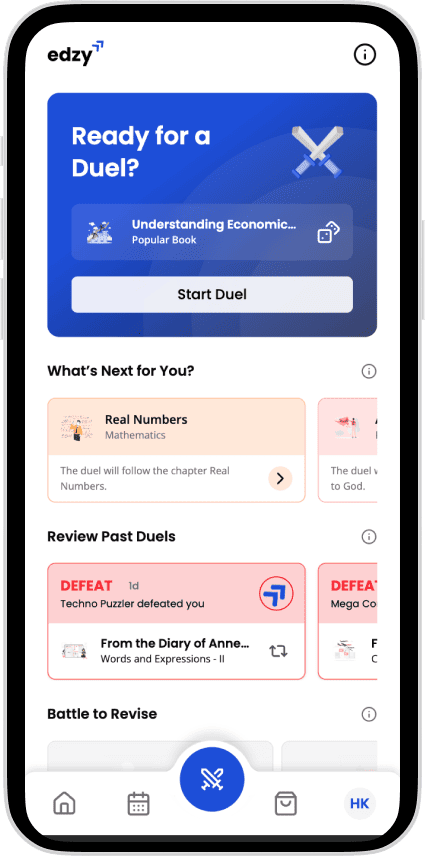
Edzy mobile app preview