Edzy
AI TutorResourcesToolsCompareBuy
SearchDownload AppLogin
Edzy

Edzy for Classes 6-12

Edzy is a personal AI tutor for CBSE and State Board students, with curriculum-aligned guidance, practice, revision, and study plans that adapt to each learner.

  • Email: always@edzy.ai
  • Phone: +91 96256 68472
  • WhatsApp: +91 96256 68472
  • Address: Sector 63, Gurgaon, Haryana

Follow Edzy

Browse by Class

  • CBSE Class 6
  • CBSE Class 7
  • CBSE Class 8
  • CBSE Class 9
  • CBSE Class 10
  • CBSE Class 11
  • CBSE Class 12
Explore the CBSE resource hub

Explore Edzy

  • Study Resources
  • Free Study Tools
  • Best Apps for Board Exams
  • Edzy vs ChatGPT
  • About Us
  • Why We Built Edzy
  • Blog
  • CBSE AI Tutor

Support & Legal

  • Help & FAQs
  • Accessibility
  • Privacy Policy
  • Terms & Conditions
  • Refund Policy
  • Cookie Policy
  • Site Directory

© 2026 Edzy. All rights reserved.

Curriculum-aligned learning paths for students in Classes 6-12.

CBSE
Class 12
Chemistry
Chemistry - II
Alcohols, Phenols and Ethers

Question Bank

Practice Hub

Question Bank: Alcohols, Phenols and Ethers

This chapter explores the chemistry of alcohols, phenols, and ethers, highlighting their significance in everyday life and various applications.

Structured practice
Question Practice

Practice chapter questions in a cleaner, exam-ready flow

Start with curated question sets, move into full module views when needed, and keep discovering related practice without losing your place in the chapter.

Question Bank - Alcohols, Phenols and Ethers

View all (75)
Q1.

Which of the following compounds is a primary alcohol?

Single Answer MCQ
Q-00083614
View explanation
Q2.

Which of the following is a distinguishing feature of tertiary alcohols?

Single Answer MCQ
Q-00083615
View explanation
Q3.

What type of alcohol is characterized by an -OH group adjacent to a double bond?

Single Answer MCQ
Q-00083616
View explanation
Q4.

Which of the following classifications best describes phenols?

Single Answer MCQ
Q-00083617
View explanation
Q5.

Which of these describes an ether?

Single Answer MCQ
Q-00083618
View explanation
Q6.

Which statement is true about dihydric alcohols?

Single Answer MCQ
Q-00083619
View explanation
Q7.

Identify the primary classification of an alcohol with the formula CH3CH2CH(OH)CH2CH3.

Single Answer MCQ
Q-00083620
View explanation
Q8.

Which of the following ethers is symmetrical?

Single Answer MCQ
Q-00083621
View explanation
Q9.

What type of alcohol is CH2=CH-CH2OH classified as?

Single Answer MCQ
Q-00083622
View explanation
Q10.

Which of the following is a characteristic of benzylic alcohols?

Single Answer MCQ
Q-00083623
View explanation
Q11.

Which of the following compounds represents a tri-hydric alcohol?

Single Answer MCQ
Q-00083624
View explanation
Q12.

A class of compounds classified as polyhydric would include which of the following?

Single Answer MCQ
Q-00083625
View explanation
Q13.

What distinguishes tertiary alcohols from secondary alcohols?

Single Answer MCQ
Q-00083626
View explanation
Q14.

Which reagent is used to convert chlorobenzene into phenol?

Single Answer MCQ
Q-00083627
View explanation
Q15.

What type of compound is produced when a diazonium salt is hydrolyzed?

Single Answer MCQ
Q-00083628
View explanation
Q16.

Which of the following compounds is used to produce phenol from cumene?

Single Answer MCQ
Q-00083629
View explanation
Q17.

In the preparation of phenols, which method involves the conversion of benzene sulfonic acid to sodium phenoxide?

Single Answer MCQ
Q-00083630
View explanation
Q18.

What is the main product when benzene is reacted with nitrous acid (NaNO2 + HCl)?

Single Answer MCQ
Q-00083631
View explanation
Q19.

Which preparation method gives a tertiary alcohol when using Grignard reagents?

Single Answer MCQ
Q-00083632
View explanation
Q20.

What is the product of the hydrolysis of sodium phenoxide?

Single Answer MCQ
Q-00083633
View explanation
Q21.

Which of the following reactions is a method to prepare phenol from naphthalene?

Single Answer MCQ
Q-00083634
View explanation
Q22.

What would be the result of the direct oxidation of isopropylbenzene?

Single Answer MCQ
Q-00083635
View explanation
Q23.

How can phenols be synthesized from alkyl halides?

Single Answer MCQ
Q-00083636
View explanation
Q24.

Which of the following reactions is NOT a method used to synthesize phenols?

Single Answer MCQ
Q-00083637
View explanation
Q25.

The preparation of phenols from diazonium salts primarily involves which of the following processes?

Single Answer MCQ
Q-00083638
View explanation
Q26.

From which precursor is phenol primarily produced industrially?

Single Answer MCQ
Q-00083639
View explanation
Q27.

In which reaction does phenol act as a nucleophile?

Single Answer MCQ
Q-00083640
View explanation
Q28.

What is the order of reactivity for Grignard reagents in synthesizing alcohols?

Single Answer MCQ
Q-00083641
View explanation
Q29.

What is the primary product when an unsymmetrical alkene undergoes acid-catalyzed hydration?

Single Answer MCQ
Q-00083642
View explanation
Q30.

Which reagent is commonly used for the reduction of aldehydes to alcohols?

Single Answer MCQ
Q-00083643
View explanation
Q31.

Which method is used to prepare alcohols from alkenes without following Markovnikov’s rule?

Single Answer MCQ
Q-00083644
View explanation
Q32.

When reducing a ketone, what type of alcohol is typically formed?

Single Answer MCQ
Q-00083645
View explanation
Q33.

Which acid is commonly reduced to form a primary alcohol?

Single Answer MCQ
Q-00083646
View explanation
Q34.

Which of the following is NOT a method of synthesizing alcohols?

Single Answer MCQ
Q-00083647
View explanation
Q35.

Upon reduction of which compound would you obtain a primary alcohol?

Single Answer MCQ
Q-00083648
View explanation
Q36.

Which type of alcohol is produced when 1-pentene is hydrated according to Markovnikov's rule?

Single Answer MCQ
Q-00083649
View explanation
Q37.

What kind of product is formed when tertiary alcohols are oxidized?

Single Answer MCQ
Q-00083650
View explanation
Q38.

Which of the following is a strong reducing agent used for converting esters to alcohols?

Single Answer MCQ
Q-00083651
View explanation
Q39.

What is the primary alcohol produced from the reduction of ethanoic acid?

Single Answer MCQ
Q-00083652
View explanation
Q40.

Which process involves the addition of hydrogen across a carbonyl group, converting it to an alcohol?

Single Answer MCQ
Q-00083653
View explanation
Q41.

When using hydroboration-oxidation on 1-hexene, what is the result?

Single Answer MCQ
Q-00083654
View explanation
Q42.

What is the general formula for alcohols derived from alkenes through acid-catalyzed hydration?

Single Answer MCQ
Q-00083655
View explanation
Q43.

What is the IUPAC name of CH3OH?

Single Answer MCQ
Q-00083656
View explanation
Q44.

Which of the following is the correct IUPAC name for 2-butanol?

Single Answer MCQ
Q-00083657
View explanation
Q45.

What is the IUPAC name for the compound CH3CH2OCH2CH3?

Single Answer MCQ
Q-00083658
View explanation
Q46.

Identify the common name for 2-methyl-2-propanol.

Single Answer MCQ
Q-00083659
View explanation
Q47.

What is the IUPAC name for C6H5OH?

Single Answer MCQ
Q-00083660
View explanation
Q48.

Which of the following compounds is classified as a primary alcohol?

Single Answer MCQ
Q-00083661
View explanation
Q49.

Which alcohol is correctly named as 1-propanol?

Single Answer MCQ
Q-00083662
View explanation
Q50.

Which of the following is a correct IUPAC name for a dibasic alcohol?

Single Answer MCQ
Q-00083663
View explanation
Q51.

Which of the following best describes 2,6-dimethylphenol?

Single Answer MCQ
Q-00083664
View explanation
Q52.

What is the systemic name for CH3OCH2CH3?

Single Answer MCQ
Q-00083665
View explanation
Q53.

What is the structural formula for tert-butanol?

Single Answer MCQ
Q-00083666
View explanation
Q54.

Which compound represents a symmetrical ether?

Single Answer MCQ
Q-00083667
View explanation
Q55.

Identify the correct IUPAC name for 3-hexanol.

Single Answer MCQ
Q-00083668
View explanation
Q56.

Which compound can be classified as a dihydric alcohol?

Single Answer MCQ
Q-00083669
View explanation
Q57.

Identify the structure of 4-methyl-2-pentanol.

Single Answer MCQ
Q-00083670
View explanation
Q58.

Which of the following statements describes the properties of phenols?

Single Answer MCQ
Q-00083671
View explanation
Q59.

Which of the following compounds cannot be produced from the dehydration of an alcohol?

Single Answer MCQ
Q-00083672
View explanation
Q60.

Which of the following is a method for preparing ethers?

Single Answer MCQ
Q-00083673
View explanation
Q61.

What condition favors the formation of ether over alkene during dehydration of ethanol?

Single Answer MCQ
Q-00083674
View explanation
Q62.

In the Williamson synthesis, which species acts as the nucleophile?

Single Answer MCQ
Q-00083675
View explanation
Q63.

Which of the following ethers can be prepared using Williamson synthesis?

Single Answer MCQ
Q-00083676
View explanation
Q64.

What is a disadvantage of using secondary or tertiary alcohols in ether preparation?

Single Answer MCQ
Q-00083677
View explanation
Q65.

Which reaction is used to prepare aryl ethers?

Single Answer MCQ
Q-00083678
View explanation
Q66.

What is the main product when 1-bromobutane reacts with sodium butoxide?

Single Answer MCQ
Q-00083679
View explanation
Q67.

Which of the following is a characteristic of ethers compared to alcohols?

Single Answer MCQ
Q-00083680
View explanation
Q68.

Which of the following statements about ethers is incorrect?

Single Answer MCQ
Q-00083681
View explanation
Q69.

What is the primary disadvantage of using ethers as solvents?

Single Answer MCQ
Q-00083682
View explanation
Q70.

What product can result from the acid-catalyzed dehydration of 2-propanol?

Single Answer MCQ
Q-00083683
View explanation
Q71.

In the reaction of 1-bromopropane with sodium ethoxide, which mechanism primarily occurs?

Single Answer MCQ
Q-00083684
View explanation
Q72.

What is the main product when methanol is treated with sodium hydroxide and iodomethane?

Single Answer MCQ
Q-00083685
View explanation
Q73.

Which ether is commonly used in laboratories as a solvent?

Single Answer MCQ
Q-00083686
View explanation
Q74.

In ether formation using alcohols, which byproduct is generated?

Single Answer MCQ
Q-00083687
View explanation
Q75.

What is the effect of the alkyl group on the stability of an ether?

Single Answer MCQ
Q-00083688
View explanation
Learn Better On The App
Free learning flow

Learn Without Limits

Access NCERT content for free with a cleaner, faster way to revise every day.

Chapter summaries
Revision tools

Faster access to practice, revision, and daily study flow.

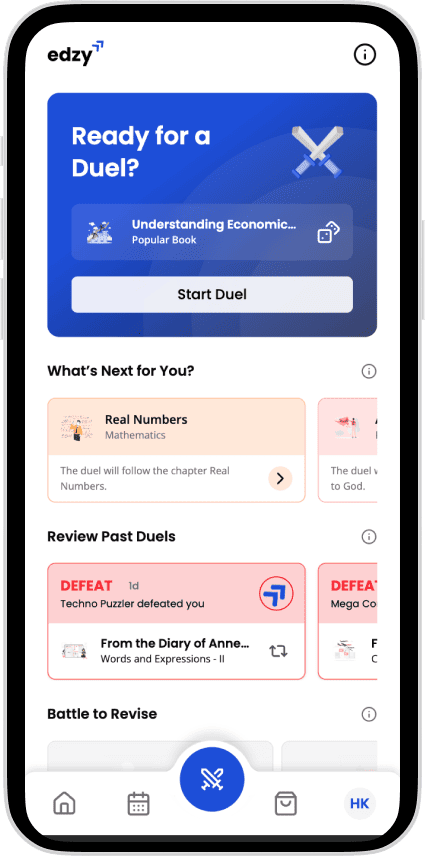
Edzy mobile app preview