Brand Logo
LoginDownload App
Search
Brand Logo

Edzy for Classes 6-12

Edzy is a personal AI tutor for CBSE and State Board students, with curriculum-aligned guidance, practice, revision, and study plans that adapt to each learner.

  • Email: always@edzy.ai
  • Phone: +91 96256 68472
  • WhatsApp: +91 96256 68472
  • Address: Sector 63, Gurgaon, Haryana

Follow Edzy

Browse by Class

  • CBSE Class 6
  • CBSE Class 7
  • CBSE Class 8
  • CBSE Class 9
  • CBSE Class 10
  • CBSE Class 11
  • CBSE Class 12
Explore the CBSE resource hub

Explore Edzy

  • Study Resources
  • Free Study Tools
  • Best Apps for Board Exams
  • Edzy vs ChatGPT
  • About Us
  • Why We Built Edzy
  • Blog
  • CBSE AI Tutor

Support & Legal

  • Help & FAQs
  • Accessibility
  • Privacy Policy
  • Terms & Conditions
  • Refund Policy
  • Cookie Policy
  • Site Directory

© 2026 Edzy. All rights reserved.

Curriculum-aligned learning paths for students in Classes 6-12.

Chapter Hub

IS MATTER AROUND US PURE?

This chapter explores the nature of matter, defining pure substances, mixtures, solutions, suspensions, and colloidal solutions along with their properties and differences. It provides insight into the classification of matter and the fundamental concepts of composition.

Summary, practice, and revision
CBSE
Class 9
Science
Science

IS MATTER AROUND US PURE?

Chapter Summary

Playing 00:00 / 00:00

Download NCERT Chapter PDF for IS MATTER AROUND US PURE? – Latest Edition

Access Free NCERT PDFs & Study Material on Edzy – Official, Anytime, Anywhere

Live Challenge Mode

Ready to Duel?

Challenge friends on the same chapter, answer fast, and sharpen your concepts in a focused 1v1 battle.

NCERT-aligned questions
Perfect for friends and classmates

Why start now

Quick, competitive practice with instant momentum and zero setup.

More about chapter "IS MATTER AROUND US PURE?"

In 'Is Matter Around Us Pure?', students learn the distinctions between pure substances and mixtures, explaining that 'pure' refers to substances with uniform composition at the molecular level. The chapter outlines types of mixtures, specifically homogeneous (solutions) and heterogeneous mixtures (suspensions and colloids), with practical examples and activities. It emphasizes the characteristics and behaviors of different solutions based on their components. Key concepts include how to define solutions regarding solute and solvent, the methods to express concentration, and the methods of separation utilized for various mixtures. This understanding is essential for grasping the fundamental principles of chemistry as it relates to the matter in our everyday lives.
Learn Better On The App
Gamified progress

Learning That Feels Rewarding

Earn XP, unlock badges, and turn revision into a habit that feels motivating.

XP and badges
Higher engagement

Faster access to practice, revision, and daily study flow.

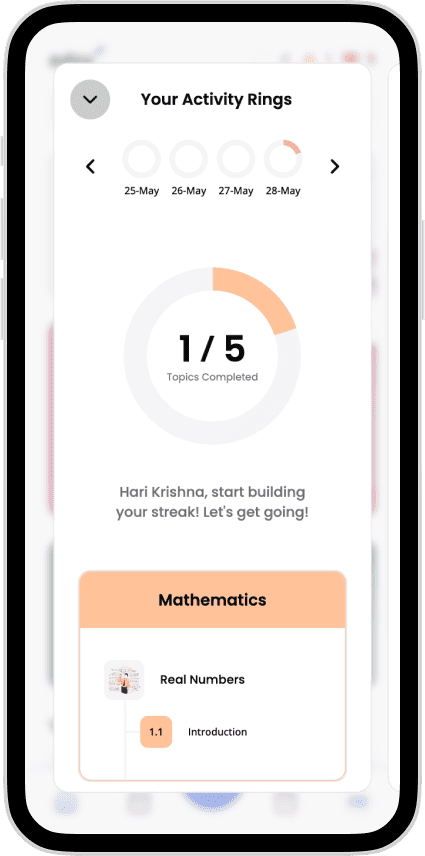
Edzy mobile app preview

Is Matter Around Us Pure? - Class 9 Science

Explore the concepts of mixtures, solutions, and pure substances in this detailed study of matter for Class 9 students. Learn to distinguish between different types of mixtures and understand their properties.

In chemistry, 'pure' denotes a substance that consists solely of one type of particle, having uniform composition and properties throughout. Unlike everyday usage, where 'pure' might refer to the absence of contaminants, a pure substance in scientific terms means it is homogeneous at a molecular level, as seen in elements or compounds.
A mixture is formed when two or more substances are combined, and they retain their own properties. Mixtures can be classified into homogeneous mixtures, where the composition is uniform, and heterogeneous mixtures, which have visibly distinguishable components. Examples include air as a homogeneous mixture and soil as a heterogeneous mixture.
Homogeneous mixtures, also known as solutions, consist of a uniform composition throughout. In such mixtures, the components are evenly distributed at a molecular level, making it impossible to distinguish individual substances with the naked eye. Examples include salt dissolved in water and air.
A solution is a specific type of homogeneous mixture where one or more solutes dissolve in a solvent. For instance, in sugar dissolved in water, sugar is the solute, and water is the solvent. Solutions are characterized by their stability; solute particles do not settle and are not visible.
A suspension is a type of heterogeneous mixture where solid particles are dispersed in a liquid but are not dissolved. The particles in a suspension are visible to the naked eye and can settle over time. An example of a suspension is muddy water, where soil particles remain suspended but can settle out upon standing.
A colloidal solution is a mixture where very small particles of one substance are dispersed throughout another substance. These particles are typically too small to be seen individually and do not settle out. An example is milk, which consists of fat droplets dispersed in water.
The Tyndall effect is the scattering of light by the small particles in a colloidal solution, making the path of light visible. This phenomenon is observed when a beam of light passes through a colloidal mixture, such as when sunlight filters through mist.
Pure substances can be classified into elements and compounds. Elements consist of only one type of atom and cannot be broken down chemically, while compounds are substances made from two or more different elements chemically bonded in fixed proportions.
Mixtures can be separated based on their physical properties using various techniques, including filtration, evaporation, and distillation. For example, salt can be separated from water by evaporation, leaving the salt behind.
A saturated solution is a solution that contains the maximum amount of solute that can dissolve at a given temperature. Beyond this point, any additional solute will remain undissolved, leading to a mixture of dissolved and undissolved particles.
The primary difference lies in the uniformity of composition. Homogeneous mixtures have a consistent composition throughout, such as solutions, while heterogeneous mixtures have visibly distinct phases, like a salad or oil and water.
Yes, the components of a mixture can be separated using physical techniques because they retain their individual properties. The method of separation depends on the types of substances present. For instance, components of a heterogeneous mixture may be separated by filtration.
Solutions are homogeneous mixtures characterized by their uniform composition, stability under standing, and transparency. Solute particles in a solution are smaller than 1 nanometer, and they do not scatter light, hence the path of a light beam is not visible.
The solvent is the component of a solution that dissolves the solute, usually present in the larger amount. The solvent determines the physical state of the solution and its overall properties, such as boiling and freezing points.
During a chemical change, the original substances undergo a transformation resulting in the formation of new substances with different properties. The change is irreversible under normal conditions, indicating a change in chemical composition.
The melting of ice is a physical change because it involves a change in state from solid to liquid without altering its chemical composition. Ice and water are the same substance, just in different states.
Metals typically have high electrical and thermal conductivity, luster, malleability, ductility, and are generally solid at room temperature (with the exception of mercury). They are shiny and can be shaped into wires or sheets.
Non-metals are generally poor conductors of heat and electricity, lack metallic luster, and can exist in various states at room temperature. They tend to be brittle when solid and are more diverse in terms of chemical reactivity compared to metals.
The solubility of most solids in liquids increases with temperature, meaning that more solute can dissolve in a solvent at higher temperatures. However, the solubility of gases in liquids typically decreases with increasing temperature.
The mass by mass percentage of a solution is calculated by dividing the mass of the solute by the total mass of the solution and multiplying by 100. This expression provides a percentage representation of how much of the solution's total mass is made up of the solute.
Colloids have particles that remain dispersed throughout the medium and do not settle over time, while in suspensions, the particles may settle out when left undisturbed. Colloidal particles are also smaller than those in suspensions.
Examples of colloidal solutions include milk (liquid emulsion), fog (gas in liquid aerosol), and jelly (solid in liquid gel). These mixtures exhibit the Tyndall effect due to the dispersed phase's ability to scatter light.
To test if a liquid is pure water, you can check its boiling and freezing points (should be 100°C and 0°C, respectively, at 1 atm pressure), or use a conductivity meter; pure water has very low conductivity compared to solutions with dissolved substances.
Elements are pure substances that consist of only one type of atom and cannot be broken down into simpler substances, whereas compounds consist of two or more different types of elements chemically bonded in fixed ratios and can often be broken down into their constituent elements.

Chapters related to "IS MATTER AROUND US PURE?"

MATTER IN OUR SURROUNDINGS

This chapter explains matter, its properties, and its different states. Understanding matter is essential as it forms the basis of all physical substances around us.

Start chapter

ATOMS AND MOLECULES

This chapter explores the concepts of atoms and molecules, including their definitions, properties, and significance in understanding matter.

Start chapter

STRUCTURE OF THE ATOM

This chapter discusses the structure of atoms, including the particles they are composed of and the models that describe their arrangement. Understanding atoms is crucial for grasping the nature of matter around us.

Start chapter

THE FUNDAMENTAL UNIT OF LIFE

This chapter explores the fundamental unit of life, the cell, its structure, functions, and significance in living organisms.

Start chapter

TISSUES

This chapter introduces tissues, groups of similar cells in plants and animals that work together for specific functions. Understanding tissues is crucial for studying the structure and functions of living organisms.

Start chapter

MOTION

This chapter explores the concept of motion, detailing how different objects move and how we perceive their motion relative to a reference point.

Start chapter

FORCE AND LAWS OF MOTION

This chapter explains the concepts of force and motion, exploring how forces affect the movement of objects and the principles behind these interactions.

Start chapter

GRAVITATION

This chapter covers the concept of gravitation and its significance in the universe, particularly the universal law of gravitation and its effects on objects on Earth and in space.

Start chapter

WORK AND ENERGY

This chapter focuses on the concepts of work, energy, and power, and their significance in understanding physical processes and activities.

Start chapter

SOUND

This chapter explores how sound is produced, transmitted, and perceived. Understanding sound is essential as it plays a vital role in communication and many technologies we use daily.

Start chapter

IS MATTER AROUND US PURE? Summary, Important Questions & Solutions | All Subjects

Question Bank

Worksheet

Revision Guide

Formula Sheet