
Brand Logo

Loading Edzy magic ...

Class 9

Class 9 - English
Moments (9 Chapters)|
Beehive (18 Chapters)|
Words and Expressions - I (9 Chapters)
Class 9 - Health and Physical Education
Health and Physical Education (14 Chapters)
Class 9 - Hindi
Sanchayan (4 Chapters)|
Sparsh (10 Chapters)|
Kshitij (13 Chapters)|
Kritika (4 Chapters)
Class 9 - ICT
Information and Communication Technology (8 Chapters)
Class 9 - Mathematics
Mathematics (12 Chapters)
Class 9 - Sanskrit
Shemushi Prathmo Bhag (10 Chapters)|
Vyakaranavithi (20 Chapters)|
Abhyaswaan Bhav (15 Chapters)
Class 9 - Science
Science (12 Chapters)
Class 9 - Social Science
Contemporary India (6 Chapters)|
Democratic Politics (5 Chapters)|
Economics (4 Chapters)|
India and the Contemporary World - I (5 Chapters)

Class 10

Class 10 - English
First Flight (22 Chapters)|
Foot Prints Without feet (9 Chapters)|
Words and Expressions - II (9 Chapters)
Class 10 - Health and Physical Education
Health and Physical Education (13 Chapters)
Class 10 - Hindi
Kshitij - II (13 Chapters)|
Sparsh (14 Chapters)|
Sanchayan - II (3 Chapters)|
Kritika (3 Chapters)
Class 10 - Mathematics
Mathematics (14 Chapters)
Class 10 - Sanskrit
Vyakaranavithi (14 Chapters)|
Shemushi - II (12 Chapters)|
Abhyaswaan Bhav - II (14 Chapters)
Class 10 - Science
Science (13 Chapters)
Class 10 - Social Science
Contemporary India (7 Chapters)|
Democratic Politics (5 Chapters)|
India and the Contemporary World - II (5 Chapters)|
Understanding Economic Development (5 Chapters)
Class 10 - Urdu
Nawa-e-urdu (15 Chapters)

Class 11

Class 11 - Accountancy
Accountancy - II (2 Chapters)|
Financial Accounting - I (7 Chapters)
Class 11 - Biology
Biology (19 Chapters)
Class 11 - Biotechnology
Biotechnology (12 Chapters)
Class 11 - Business Studies
Business Studies (11 Chapters)
Class 11 - Chemistry
Chemistry Part - I (6 Chapters)|
Chemistry Part - II (3 Chapters)
Class 11 - Computer Science
Computer Science (11 Chapters)
Class 11 - Creative Writing and Translation
Srijan (4 Chapters)
Class 11 - Economics
Statistics for Economics (8 Chapters)|
Indian Economic Development (8 Chapters)
Class 11 - English
Hornbill (11 Chapters)|
Snapshots (5 Chapters)|
Woven Words (27 Chapters)
Class 11 - Fine Art
An Introduction to Indian Art Part - I (8 Chapters)
Class 11 - Geography
Fundamentals of Physical Geography (14 Chapters)|
India Physical Environment (6 Chapters)|
Practical Work in Geography (6 Chapters)
Class 11 - Health and Physical Education
Health and Physical Education (11 Chapters)
Class 11 - History
Themes in World History (13 Chapters)
Class 11 - Home Science
Human Ecology and Family Sciences - I (7 Chapters)|
Human Ecology and Family Sciences - II (4 Chapters)
Class 11 - Informatics Practices
Informatics Practices (8 Chapters)
Class 11 - Knowledge Traditions Practices of India
Knowledge Traditions Practices of India (9 Chapters)
Class 11 - Mathematics
Mathematics (14 Chapters)
Class 11 - Physics
Physics Part - I (7 Chapters)|
Physics Part - II (7 Chapters)
Class 11 - Political Science
Indian Constitution at Work (10 Chapters)|
Political Theory (8 Chapters)
Class 11 - Psychology
Introduction to Psychology (8 Chapters)
Class 11 - Sangeet
Tabla evam Pakhawaj (8 Chapters)|
Hindustani Sangeet Gayan Evam Vadan (10 Chapters)
Class 11 - Sociology
Understanding Society (5 Chapters)|
Introducing Sociology (5 Chapters)

Class 12

Class 12 - Accountancy
Accountancy Part - I (4 Chapters)|
Accountancy Part - II (6 Chapters)
Class 12 - Biology
Biology (13 Chapters)
Class 12 - Biotechnology
Biotechnology (13 Chapters)
Class 12 - Business Studies
Business Studies - II (3 Chapters)|
Business Studies - I (8 Chapters)
Class 12 - Chemistry
Chemistry - II (5 Chapters)|
Chemistry - I (5 Chapters)
Class 12 - Computer Science
Computer Science (13 Chapters)
Class 12 - Economics
Introductory Microeconomics (5 Chapters)|
Introductory Macroeconomics (6 Chapters)
Class 12 - English
Flamingo (14 Chapters)|
Vistas (7 Chapters)|
Kaliedoscope (21 Chapters)
Class 12 - Fine Art
An Introduction to Indian Art Part - II (8 Chapters)
Class 12 - Geography
Practical Work in Geography - Part II (4 Chapters)|
Fundamentals of Human Geography (8 Chapters)|
India - People and Economy (9 Chapters)
Class 12 - Hindi
Aroh (15 Chapters)|
Antra (23 Chapters)|
Antral Bhag - II (3 Chapters)|
Vitan (3 Chapters)
Class 12 - History
Themes in Indian History - III (4 Chapters)|
Themes in Indian History - I (4 Chapters)|
Themes in Indian History - II (4 Chapters)
Class 12 - Home Science
Human Ecology and Family Sciences Part I (7 Chapters)|
Human Ecology and Family Sciences Part II (7 Chapters)
Class 12 - Informatics Practices
Informatics Practices (7 Chapters)
Class 12 - Mathematics
Mathematics Part - I (6 Chapters)|
Mathematics Part - II (7 Chapters)
Class 12 - Physics
Physics Part - I (8 Chapters)|
Physics Part - II (6 Chapters)
Class 12 - Political Science
Politics in India Since Independence (8 Chapters)|
Contemporary World Politics (7 Chapters)
Class 12 - Psychology
Psychology (7 Chapters)
Class 12 - Sangeet
Hindustani Sangeet Gayan Evam Vadan (9 Chapters)|
Tabla evam Pakhawaj (7 Chapters)
Class 12 - Sociology
Social Change and Development in India (8 Chapters)|
Indian Society (7 Chapters)

About Edzy - Gamified Learning Platform

Edzy is India's premier gamified AI tutor platform for CBSE and State Board students in classes 6-12. Our platform transforms traditional studying with AI-powered study plans, interactive practice sessions, and personalized learning pathways. Students using Edzy experience unmatched learning efficiency through our immersive educational environment that combines advanced technology with curriculum-aligned content.

Why Choose Edzy for CBSE and State Board Preparation

Edzy offers an adaptive AI educational experience tailored to each student's learning style and pace. We integrate gamification with proven educational strategies to create an engaging environment that students love. Our micro-content approach breaks down complex CBSE and State Board topics into manageable lessons, building confidence through mastery-based progression and real-time feedback.

CBSE and State Board Focus Areas

Edzy specializes in transforming online education for classes 6-12 with AI-powered tutoring. We provide comprehensive NCERT-aligned content and engaging lessons across Mathematics, Science, English, Social Studies, and IT. Our system helps students master fundamental concepts and excel in board exams through AI-generated study plans, personalized learning timelines, and dynamic practice sessions.

Edzy's Unique Approach to Online Learning

Unlike traditional online coaching platforms, Edzy converts CBSE and State Board syllabus content into interactive learning adventures. Our AI tutor provides timely assistance while adapting to student progress. The platform features instant feedback, gamified practice sessions, and achievement badges to motivate continuous learning and concept mastery.

Brand Logo

Edzy | Largest Online Learning Platform for Classes 6–12

Study smarter with Edzy – India’s leading gamified AI tutor for CBSE and State Boards. Designed for Classes 6–12, Edzy offers interactive lessons, AI-powered study plans, and rewarding practice tools for every subject.

Find us on Social Media

Links

About EdzyFAQsContact UsCBSE CoursesDuelsRumblesEdzy App

Parents & Teachers

Search EdzyParent DashboardCreator PlatformEducation BlogCBSE & NCERT News

Policies

Terms and ConditionsRefund PolicyPrivacy PolicyCookie Policy

© 2026 Edzy | Largest Online Learning Platform for Classes 6–12. All rights reserved.

Edzy is an AI tutor for CBSE and State Board students, offering interactive lessons and personalized learning for Classes 6–12.

SitemapNews SitemapBlog SitemapSchool SitemapAccessibility
CBSE
Class 10
English
First Flight
Amanda!

Question Bank

Question Bank: Amanda!

This chapter focuses on Amanda, a girl who feels constrained by rules and expectations placed upon her by adults. It highlights her longing for freedom and self-expression.

Question Bank - Amanda!

View all (171)
Q1.

What is the poem 'Amanda!' about?

Single Answer MCQ
Q-00000920
Q2.

Who is Amanda in the poem?

Single Answer MCQ
Q-00000921
Q3.

What are some of the things Amanda's parents/elders do not allow her to do?

Single Answer MCQ
Q-00000922
Q4.

Why does Amanda want to be a mermaid in the poem?

Single Answer MCQ
Q-00000923
Q5.

Is Amanda an orphan according to the poem?

Single Answer MCQ
Q-00000924
Q6.

Why does Amanda want to be like Rapunzel?

Single Answer MCQ
Q-00000925
Q7.

What does the girl yearn for in the poem?

Single Answer MCQ
Q-00000926
Q8.

How does the poem 'Amanda!' reflect the theme of freedom?

Single Answer MCQ
Q-00000927
Q9.

Who is the speaker in the poem 'Amanda!'?

Single Answer MCQ
Q-00000928
Q10.

What is the significance of the parenthetical stanzas in the poem?

Single Answer MCQ
Q-00000929
Q11.

How does the poem use imagery to convey Amanda's desires?

Single Answer MCQ
Q-00000930
Q12.

What is the tone of the poem 'Amanda!'?

Single Answer MCQ
Q-00000931
Q13.

How does the structure of the poem contribute to its meaning?

Single Answer MCQ
Q-00000932
Q14.

What do the references to mermaids, orphans, and Rapunzel symbolize in the poem?

Single Answer MCQ
Q-00000933
Q15.

How does the repetition of Amanda's name throughout the poem impact the reader?

Single Answer MCQ
Q-00000934
Q16.

How does the poem explore the theme of rebellion against authority?

Single Answer MCQ
Q-00000935
Q17.

What is the significance of the title 'Amanda!'?

Single Answer MCQ
Q-00000936
Q18.

How does the poem challenge traditional gender roles?

Single Answer MCQ
Q-00000937
Q19.

How does the poem use humor to convey its message?

Single Answer MCQ
Q-00000938
Q20.

How does the poem 'Amanda!' relate to the theme of adolescence?

Single Answer MCQ
Q-00000939
Q21.

What is the central conflict in the poem 'Amanda!'?

Single Answer MCQ
Q-00000940
Q22.

How does the poem address the idea of societal expectations?

Single Answer MCQ
Q-00000941
Q23.

How does the poem 'Amanda!' reflect the universal experience of growing up?

Single Answer MCQ
Q-00000942
Q24.

How does the poem use symbolism to convey Amanda's inner thoughts and desires?

Single Answer MCQ
Q-00000943
Q25.

How does the poem 'Amanda!' resonate with the experiences of teenagers today?

Single Answer MCQ
Q-00000944
Q26.

What is the main theme of the poem 'Amanda!'?

Single Answer MCQ
Q-00005050
Q27.

Why are the stanzas in parentheses in the poem?

Single Answer MCQ
Q-00005051
Q28.

What does Amanda fantasize about in the poem?

Single Answer MCQ
Q-00005052
Q29.

What is the tone of the commands directed at Amanda?

Single Answer MCQ
Q-00005053
Q30.

Which character trait of Amanda is highlighted through the poem?

Single Answer MCQ
Q-00005054
Q31.

How does the poem depict the conflict in Amanda's life?

Single Answer MCQ
Q-00005055
Q32.

In the poem, what does the term 'languid' suggest about Amanda's dream of being a mermaid?

Single Answer MCQ
Q-00005056
Q33.

What does Amanda's dream to be like Rapunzel reveal about her desires?

Single Answer MCQ
Q-00005057
Q34.

What literary device is predominantly used in the line, 'The silence is golden, the freedom is sweet'?

Single Answer MCQ
Q-00005058
Q35.

Why does Amanda call herself an orphan in the poem?

Single Answer MCQ
Q-00005059
Q36.

What does the phrase 'bear feet' imply about Amanda's character?

Single Answer MCQ
Q-00005060
Q37.

What feeling is predominantly expressed through Amanda's internal thoughts?

Single Answer MCQ
Q-00005061
Q38.

In the context of the poem, what does 'pattern soft dust' signify?

Single Answer MCQ
Q-00005062
Q39.

Which of the following emotions does Amanda NOT express in the poem?

Single Answer MCQ
Q-00005063
Q40.

What aspect of childhood does the poem 'Amanda!' reflect?

Single Answer MCQ
Q-00005064
Q41.

What kind of freedom does Amanda long for in the poem?

Single Answer MCQ
Q-00005065
Q42.

What do the commands from the speaker in the poem symbolize?

Single Answer MCQ
Q-00005066
Q43.

In stanza two, where does Amanda imagine herself?

Single Answer MCQ
Q-00005067
Q44.

What does the phrase 'the silence is golden' imply about Amanda's feelings?

Single Answer MCQ
Q-00005068
Q45.

Who is the speaker addressing throughout the poem?

Single Answer MCQ
Q-00005069
Q46.

How do the parentheses in stanzas 2, 4, and 6 affect the poem's meaning?

Single Answer MCQ
Q-00005070
Q47.

What does Amanda associate with the character Rapunzel?

Single Answer MCQ
Q-00005071
Q48.

What does the overall tone of the poem suggest about Amanda's feelings towards her parents?

Single Answer MCQ
Q-00005072
Q49.

In what way does Amanda compare herself to a mermaid?

Single Answer MCQ
Q-00005073
Q50.

What message does the line 'Stop that sulking at once' convey about adult perceptions of children?

Single Answer MCQ
Q-00005074
Q51.

What does Amanda wish to experience as an orphan in the poem?

Single Answer MCQ
Q-00005075
Q52.

Why do you think Amanda doesn't respond to commands in the poem?

Single Answer MCQ
Q-00005076
Q53.

What is the primary contrast presented in the poem?

Single Answer MCQ
Q-00005077
Q54.

Which literary device is predominantly used in the poem to express Amanda's feelings?

Single Answer MCQ
Q-00005078
Q55.

What overall theme is explored in the poem 'Amanda!'?

Single Answer MCQ
Q-00005094
Q56.

What literary device is predominantly used in the lines where Amanda imagines herself as a mermaid?

Single Answer MCQ
Q-00005095
Q57.

What is Amanda often scolded for?

Single Answer MCQ
Q-00005096
Q58.

How does Amanda feel about the instructions she receives from adults?

Single Answer MCQ
Q-00005097
Q59.

In the poem, where does Amanda imagine herself to be?

Single Answer MCQ
Q-00005098
Q60.

In which stanza does Amanda express her wish to be an orphan?

Single Answer MCQ
Q-00005099
Q61.

What does the speaker in the poem tell Amanda to do?

Single Answer MCQ
Q-00005100
Q62.

What does the repeated use of 'Amanda!' signify in the poem?

Single Answer MCQ
Q-00005101
Q63.

Why are the stanzas in parentheses significant?

Single Answer MCQ
Q-00005102
Q64.

Identify the mood conveyed in Amanda's vision of drifting as a mermaid.

Single Answer MCQ
Q-00005103
Q65.

How does Amanda feel about the instructions given to her?

Single Answer MCQ
Q-00005104
Q66.

What do the varied scenarios Amanda imagines reveal about her character?

Single Answer MCQ
Q-00005105
Q67.

What does the line 'the silence is golden' imply about Amanda's feelings?

Single Answer MCQ
Q-00005106
Q68.

How does the speaker's tone in the poem contrast with Amanda's imaginary worlds?

Single Answer MCQ
Q-00005107
Q69.

What character is referenced to show Amanda's wish for freedom?

Single Answer MCQ
Q-00005108
Q70.

What figurative language is evident in Amanda wishing to be Rapunzel?

Single Answer MCQ
Q-00005109
Q71.

What literary device is predominantly used in Amanda's dream sequences?

Single Answer MCQ
Q-00005111
Q72.

Which aspect of life does Amanda critique through her daydreams?

Single Answer MCQ
Q-00005112
Q73.

Which of the following best describes the mood of the poem?

Single Answer MCQ
Q-00005114
Q74.

The speaker chastises Amanda for her behavior. What literary technique does this represent?

Single Answer MCQ
Q-00005116
Q75.

What does Amanda's character symbolize in the poem?

Single Answer MCQ
Q-00005117
Q76.

What is the effect of the contrast between Amanda's fantasies and the reality presented?

Single Answer MCQ
Q-00005118
Q77.

What do Amanda's fantasies reveal about her character?

Single Answer MCQ
Q-00005119
Q78.

How do the repetitive instructions given to Amanda serve the poem's theme?

Single Answer MCQ
Q-00005121
Q79.

In 'Amanda!', which line conveys the essence of restricted freedom?

Single Answer MCQ
Q-00005122
Q80.

How does the poet use personification in the poem?

Single Answer MCQ
Q-00005124
Q81.

What is the significance of Amanda calling her imagined friend 'Kitty'?

Single Answer MCQ
Q-00005126
Q82.

Analyze the impact of the refrain 'Amanda!' on reader perception.

Single Answer MCQ
Q-00005128
Q83.

What is Amanda's main feeling throughout the poem?

Single Answer MCQ
Q-00005345
Q84.

What does Amanda desire in her daydreams?

Single Answer MCQ
Q-00005351
Q85.

In Stanza 4, what does Amanda compare herself to?

Single Answer MCQ
Q-00005356
Q86.

What literary device is predominantly used in Stanza 2?

Single Answer MCQ
Q-00005361
Q87.

What attitude do the instructions in the poem suggest the speaker has towards Amanda?

Single Answer MCQ
Q-00005366
Q88.

How does the repetition of Amanda's name impact the poem?

Single Answer MCQ
Q-00005370
Q89.

Why does Amanda refer to herself as an orphan in her dreams?

Single Answer MCQ
Q-00005375
Q90.

Which character trait does Amanda display in her reactions to the instructions?

Single Answer MCQ
Q-00005380
Q91.

What does Amanda's longing for a tranquil life suggest about her current state?

Single Answer MCQ
Q-00005385
Q92.

What does the phrase 'quaking in its boots' suggest about Amanda's class?

Single Answer MCQ
Q-00005391
Q93.

What do the lines about 'not losing heart' reveal about the classmates' situation?

Single Answer MCQ
Q-00005398
Q94.

How does Amanda's idealization of a mermaid contrast with her real-life experiences?

Single Answer MCQ
Q-00005405
Q95.

What theme does Amanda's character embody throughout the poem?

Single Answer MCQ
Q-00005411
Q96.

What is the main theme of the poem 'Amanda!'?

Single Answer MCQ
Q-00032103
Q97.

What do the repeated admonishments in the poem imply about Amanda's life?

Single Answer MCQ
Q-00032104
Q98.

Which literary device is predominantly used in the lines spoken by Amanda?

Single Answer MCQ
Q-00032105
Q99.

What does Amanda imagine herself as when she says she would be a mermaid?

Single Answer MCQ
Q-00032106
Q100.

How does the poem reflect the internal conflict faced by Amanda?

Single Answer MCQ
Q-00032107
Q101.

What tone does the speaker adopt towards Amanda?

Single Answer MCQ
Q-00032108
Q102.

What is the significance of including stanzas in parentheses?

Single Answer MCQ
Q-00032109
Q103.

Which character from a fairytale does Amanda wish to be like?

Single Answer MCQ
Q-00032110
Q104.

What does the repeated use of Amanda's name signify in the poem?

Single Answer MCQ
Q-00032111
Q105.

What does Amanda's imagination reveal about her character?

Single Answer MCQ
Q-00032112
Q106.

How do the instructions given to Amanda contrast with her dreams?

Single Answer MCQ
Q-00032113
Q107.

What could the emerald sea symbolize in Amanda’s fantasy?

Single Answer MCQ
Q-00032114
Q108.

In what way does the structure of 'Amanda!' enhance its meaning?

Single Answer MCQ
Q-00032115
Q109.

Why do you think the poem uses the figure of a mermaid?

Single Answer MCQ
Q-00032116
Q110.

What does the closing stanza suggest about Amanda's demeanor?

Single Answer MCQ
Q-00032117
Q111.

What does Amanda's mother admonish her to stop doing?

Single Answer MCQ
Q-00032133
Q112.

In which setting does Amanda imagine herself as a mermaid?

Single Answer MCQ
Q-00032134
Q113.

What do the parentheses in stanzas 2, 4, and 6 signify?

Single Answer MCQ
Q-00032135
Q114.

What does Amanda wish to experience as an orphan?

Single Answer MCQ
Q-00032136
Q115.

Which character from a fairy tale does Amanda reference?

Single Answer MCQ
Q-00032137
Q116.

What is the overall theme of the poem?

Single Answer MCQ
Q-00032138
Q117.

How does the poem illustrate Amanda's feelings towards authority?

Single Answer MCQ
Q-00032139
Q118.

What literary device describes Amanda’s dream of being a mermaid?

Single Answer MCQ
Q-00032140
Q119.

What does the line 'the silence is golden' imply about Amanda's preference?

Single Answer MCQ
Q-00032141
Q120.

What do you think Amanda feels about the nagging she receives?

Single Answer MCQ
Q-00032142
Q121.

What does Amanda imagine her life would be like as a mermaid?

Single Answer MCQ
Q-00032144
Q122.

Why does the poet use commands in relation to Amanda?

Single Answer MCQ
Q-00032146
Q123.

How does Amanda view the expectations placed on her?

Single Answer MCQ
Q-00032148
Q124.

What feeling does the phrase 'you’re always so moody' evoke about Amanda?

Single Answer MCQ
Q-00032150
Q125.

Why might Amanda identify with being a mermaid?

Single Answer MCQ
Q-00032152
Q126.

What is one main trait of Amanda's character as depicted in the poem?

Single Answer MCQ
Q-00032162
Q127.

How does Amanda react to her parents' commands throughout the poem?

Single Answer MCQ
Q-00032163
Q128.

In what imaginary role does Amanda find solace?

Single Answer MCQ
Q-00032164
Q129.

What does Amanda yearn for most in the poem?

Single Answer MCQ
Q-00032165
Q130.

What does the phrase 'quaking in its boots' suggest about Amanda's classmates?

Single Answer MCQ
Q-00032166
Q131.

How is the theme of parental control depicted in Amanda’s experiences?

Single Answer MCQ
Q-00032167
Q132.

Which of Amanda’s given scenarios depicts her feeling of isolation?

Single Answer MCQ
Q-00032168
Q133.

What could the term 'emerald sea' in the poem symbolize about Amanda's desires?

Single Answer MCQ
Q-00032169
Q134.

What literary device is primarily used in the poem to express Amanda's feelings?

Single Answer MCQ
Q-00032170
Q135.

Why does Amanda describe herself as 'an orphan, roaming the street'?

Single Answer MCQ
Q-00032171
Q136.

How does the speaker in the poem convey control over Amanda’s freedom?

Single Answer MCQ
Q-00032172
Q137.

How can Amanda's character be seen as a reflection of adolescent experiences?

Single Answer MCQ
Q-00032173
Q138.

Which emotion primarily drives Amanda’s desires expressed in the poem?

Single Answer MCQ
Q-00032174
Q139.

What kind of relationship does Amanda seem to have with her parents based on the poem?

Single Answer MCQ
Q-00032175
Q140.

What does the phrase 'the silence is golden' suggest about Amanda's yearning?

Single Answer MCQ
Q-00032176
Q141.

What does Amanda's disobedience indicate about her internal struggles?

Single Answer MCQ
Q-00032177
Q142.

What role do the parenthetical stanzas play in the poem?

Single Answer MCQ
Q-00032178
Q143.

Which stanza reflects Amanda’s adventurous spirit?

Single Answer MCQ
Q-00032179
Q144.

Why might the poet have chosen to make Amanda address a character named 'Kitty'?

Single Answer MCQ
Q-00032180
Q145.

How does Amanda's portrayal contrast with societal expectations of children?

Single Answer MCQ
Q-00032181
Q146.

What does the repetition of 'Amanda' signify throughout the poem?

Single Answer MCQ
Q-00032182
Q147.

What literary devices does the poet use to enhance Amanda’s character portrayal?

Single Answer MCQ
Q-00032183
Q148.

Which of the following lines reflects Amanda's desire for escape?

Single Answer MCQ
Q-00032184
Q149.

What conclusion can be drawn about the nature of Amanda's character?

Single Answer MCQ
Q-00032185
Q150.

How does Amanda's dream of being an orphan contrast with her real life?

Single Answer MCQ
Q-00032186
Q151.

What kind of imagery does the poet use to depict Amanda's dreams?

Single Answer MCQ
Q-00032187
Q152.

What role does tone play in the poem regarding Amanda's character?

Single Answer MCQ
Q-00032188
Q153.

Which aspect of Amanda's character is emphasized through her desire to be Rapunzel?

Single Answer MCQ
Q-00032189
Q154.

How does the poem's structure contribute to its message?
Single Answer MCQ
Q-00032190
Q155.

What does the final stanza suggest about Amanda's character?

Single Answer MCQ
Q-00032191
Q156.

What does Amanda wish to be while imagining herself as a mermaid?

Single Answer MCQ
Q-00032209
Q157.

What is implied about Amanda's age based on the poem?

Single Answer MCQ
Q-00032210
Q158.

How does the speaker's attitude towards Amanda's wishes affect their relationship?

Single Answer MCQ
Q-00032211
Q159.

Why does Amanda refer to herself as an orphan in the poem?

Single Answer MCQ
Q-00032212
Q160.

What literary device is predominantly used in the poem to express Amanda's wishes?

Single Answer MCQ
Q-00032213
Q161.

What does Amanda's statement about Rapunzel convey about her dreams?

Single Answer MCQ
Q-00032214
Q162.

Which of the following actions do adults frequently instruct Amanda to avoid?

Single Answer MCQ
Q-00032215
Q163.

What is the effect of the repeated phrase 'Don't ... Amanda!' on the structure of the poem?

Single Answer MCQ
Q-00032216
Q164.

In the poem, why does the author use parentheses for stanzas 2, 4, and 6?

Single Answer MCQ
Q-00032217
Q165.

How does Amanda express her desire for freedom through her thoughts about being an orphan?

Single Answer MCQ
Q-00032218
Q166.

What can be inferred about the tone of the poem?

Single Answer MCQ
Q-00032219
Q167.

What does the phrase 'the freedom is sweet' indicate about Amanda's feelings?

Single Answer MCQ
Q-00032220
Q168.

What task does Amanda repeatedly forget, as suggested in the poem?

Single Answer MCQ
Q-00032221
Q169.

Why does Amanda's mood seem to change throughout the poem?

Single Answer MCQ
Q-00032222
Q170.

What do Amanda's various imagined identities suggest about her character?

Single Answer MCQ
Q-00032223
Q171.

What does Amanda's interaction with the reader suggest about her perspective?

Single Answer MCQ
Q-00032224

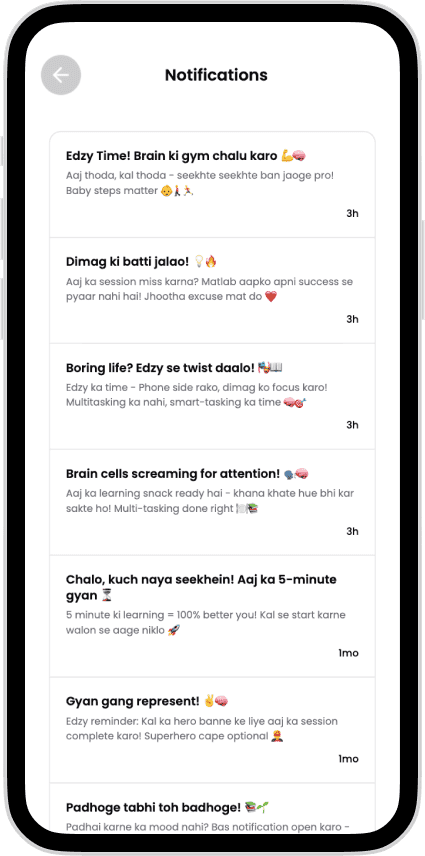
🔔 Smart Study Reminders

Edzy knows what to study next. Stay on track with timely nudges & updates.

Edzy mobile app