
Brand Logo

Loading Edzy magic ...

Class 9

Class 9 - English
Moments (9 Chapters)|
Beehive (18 Chapters)|
Words and Expressions - I (9 Chapters)
Class 9 - Health and Physical Education
Health and Physical Education (14 Chapters)
Class 9 - Hindi
Sanchayan (4 Chapters)|
Sparsh (10 Chapters)|
Kshitij (13 Chapters)|
Kritika (4 Chapters)
Class 9 - ICT
Information and Communication Technology (8 Chapters)
Class 9 - Mathematics
Mathematics (12 Chapters)
Class 9 - Sanskrit
Shemushi Prathmo Bhag (10 Chapters)|
Vyakaranavithi (20 Chapters)|
Abhyaswaan Bhav (15 Chapters)
Class 9 - Science
Science (12 Chapters)
Class 9 - Social Science
Contemporary India (6 Chapters)|
Democratic Politics (5 Chapters)|
Economics (4 Chapters)|
India and the Contemporary World - I (5 Chapters)

Class 10

Class 10 - English
First Flight (22 Chapters)|
Foot Prints Without feet (9 Chapters)|
Words and Expressions - II (9 Chapters)
Class 10 - Health and Physical Education
Health and Physical Education (13 Chapters)
Class 10 - Hindi
Kshitij - II (13 Chapters)|
Sparsh (14 Chapters)|
Sanchayan - II (3 Chapters)|
Kritika (3 Chapters)
Class 10 - Mathematics
Mathematics (14 Chapters)
Class 10 - Sanskrit
Vyakaranavithi (14 Chapters)|
Shemushi - II (12 Chapters)|
Abhyaswaan Bhav - II (14 Chapters)
Class 10 - Science
Science (13 Chapters)
Class 10 - Social Science
Contemporary India (7 Chapters)|
Democratic Politics (5 Chapters)|
India and the Contemporary World - II (5 Chapters)|
Understanding Economic Development (5 Chapters)
Class 10 - Urdu
Nawa-e-urdu (15 Chapters)

Class 11

Class 11 - Accountancy
Accountancy - II (2 Chapters)|
Financial Accounting - I (7 Chapters)
Class 11 - Biology
Biology (19 Chapters)
Class 11 - Biotechnology
Biotechnology (12 Chapters)
Class 11 - Business Studies
Business Studies (11 Chapters)
Class 11 - Chemistry
Chemistry Part - I (6 Chapters)|
Chemistry Part - II (3 Chapters)
Class 11 - Computer Science
Computer Science (11 Chapters)
Class 11 - Creative Writing and Translation
Srijan (4 Chapters)
Class 11 - Economics
Statistics for Economics (8 Chapters)|
Indian Economic Development (8 Chapters)
Class 11 - English
Hornbill (11 Chapters)|
Snapshots (5 Chapters)|
Woven Words (27 Chapters)
Class 11 - Fine Art
An Introduction to Indian Art Part - I (8 Chapters)
Class 11 - Geography
Fundamentals of Physical Geography (14 Chapters)|
India Physical Environment (6 Chapters)|
Practical Work in Geography (6 Chapters)
Class 11 - Health and Physical Education
Health and Physical Education (11 Chapters)
Class 11 - History
Themes in World History (13 Chapters)
Class 11 - Home Science
Human Ecology and Family Sciences - I (7 Chapters)|
Human Ecology and Family Sciences - II (4 Chapters)
Class 11 - Informatics Practices
Informatics Practices (8 Chapters)
Class 11 - Knowledge Traditions Practices of India
Knowledge Traditions Practices of India (9 Chapters)
Class 11 - Mathematics
Mathematics (14 Chapters)
Class 11 - Physics
Physics Part - I (7 Chapters)|
Physics Part - II (7 Chapters)
Class 11 - Political Science
Indian Constitution at Work (10 Chapters)|
Political Theory (8 Chapters)
Class 11 - Psychology
Introduction to Psychology (8 Chapters)
Class 11 - Sangeet
Tabla evam Pakhawaj (8 Chapters)|
Hindustani Sangeet Gayan Evam Vadan (10 Chapters)
Class 11 - Sociology
Understanding Society (5 Chapters)|
Introducing Sociology (5 Chapters)

Class 12

Class 12 - Accountancy
Accountancy Part - I (4 Chapters)|
Accountancy Part - II (6 Chapters)
Class 12 - Biology
Biology (13 Chapters)
Class 12 - Biotechnology
Biotechnology (13 Chapters)
Class 12 - Business Studies
Business Studies - II (3 Chapters)|
Business Studies - I (8 Chapters)
Class 12 - Chemistry
Chemistry - II (5 Chapters)|
Chemistry - I (5 Chapters)
Class 12 - Computer Science
Computer Science (13 Chapters)
Class 12 - Economics
Introductory Microeconomics (5 Chapters)|
Introductory Macroeconomics (6 Chapters)
Class 12 - English
Flamingo (14 Chapters)|
Vistas (7 Chapters)|
Kaliedoscope (21 Chapters)
Class 12 - Fine Art
An Introduction to Indian Art Part - II (8 Chapters)
Class 12 - Geography
Practical Work in Geography - Part II (4 Chapters)|
Fundamentals of Human Geography (8 Chapters)|
India - People and Economy (9 Chapters)
Class 12 - Hindi
Aroh (15 Chapters)|
Antra (23 Chapters)|
Antral Bhag - II (3 Chapters)|
Vitan (3 Chapters)
Class 12 - History
Themes in Indian History - III (4 Chapters)|
Themes in Indian History - I (4 Chapters)|
Themes in Indian History - II (4 Chapters)
Class 12 - Home Science
Human Ecology and Family Sciences Part I (7 Chapters)|
Human Ecology and Family Sciences Part II (7 Chapters)
Class 12 - Informatics Practices
Informatics Practices (7 Chapters)
Class 12 - Mathematics
Mathematics Part - I (6 Chapters)|
Mathematics Part - II (7 Chapters)
Class 12 - Physics
Physics Part - I (8 Chapters)|
Physics Part - II (6 Chapters)
Class 12 - Political Science
Politics in India Since Independence (8 Chapters)|
Contemporary World Politics (7 Chapters)
Class 12 - Psychology
Psychology (7 Chapters)
Class 12 - Sangeet
Hindustani Sangeet Gayan Evam Vadan (9 Chapters)|
Tabla evam Pakhawaj (7 Chapters)
Class 12 - Sociology
Social Change and Development in India (8 Chapters)|
Indian Society (7 Chapters)

About Edzy - Gamified Learning Platform

Edzy is India's premier gamified AI tutor platform for CBSE and State Board students in classes 6-12. Our platform transforms traditional studying with AI-powered study plans, interactive practice sessions, and personalized learning pathways. Students using Edzy experience unmatched learning efficiency through our immersive educational environment that combines advanced technology with curriculum-aligned content.

Why Choose Edzy for CBSE and State Board Preparation

Edzy offers an adaptive AI educational experience tailored to each student's learning style and pace. We integrate gamification with proven educational strategies to create an engaging environment that students love. Our micro-content approach breaks down complex CBSE and State Board topics into manageable lessons, building confidence through mastery-based progression and real-time feedback.

CBSE and State Board Focus Areas

Edzy specializes in transforming online education for classes 6-12 with AI-powered tutoring. We provide comprehensive NCERT-aligned content and engaging lessons across Mathematics, Science, English, Social Studies, and IT. Our system helps students master fundamental concepts and excel in board exams through AI-generated study plans, personalized learning timelines, and dynamic practice sessions.

Edzy's Unique Approach to Online Learning

Unlike traditional online coaching platforms, Edzy converts CBSE and State Board syllabus content into interactive learning adventures. Our AI tutor provides timely assistance while adapting to student progress. The platform features instant feedback, gamified practice sessions, and achievement badges to motivate continuous learning and concept mastery.

Brand Logo

Edzy | Largest Online Learning Platform for Classes 6–12

Study smarter with Edzy – India’s leading gamified AI tutor for CBSE and State Boards. Designed for Classes 6–12, Edzy offers interactive lessons, AI-powered study plans, and rewarding practice tools for every subject.

Find us on Social Media

Links

About EdzyFAQsContact UsCBSE CoursesDuelsRumblesEdzy App

Parents & Teachers

Search EdzyParent DashboardCreator PlatformEducation BlogCBSE & NCERT News

Policies

Terms and ConditionsRefund PolicyPrivacy PolicyCookie Policy

© 2026 Edzy | Largest Online Learning Platform for Classes 6–12. All rights reserved.

Edzy is an AI tutor for CBSE and State Board students, offering interactive lessons and personalized learning for Classes 6–12.

SitemapNews SitemapBlog SitemapSchool SitemapAccessibility
CBSE
Class 10
Social Science
India and the Contemporary Wor...
Nationalism in India

Question Bank

Question Bank: Nationalism in India

Question Bank - Nationalism in India

View all (121)
Q1.

What was the primary reason for Mahatma Gandhi's introduction of satyagraha in India?

Single Answer MCQ
Q-00015073
Q2.

Which event prompted Mahatma Gandhi to call for a nationwide hartal in 1919?

Single Answer MCQ
Q-00015074
Q3.

What was the purpose of the Rowlatt Act, enacted in 1919?

Single Answer MCQ
Q-00015075
Q4.

How did the First World War affect the economic situation in India?

Single Answer MCQ
Q-00015076
Q5.

Which of the following best describes 'satyagraha'?

Single Answer MCQ
Q-00015077
Q6.

What was the consequence of the Amritsar massacre on Indian society?

Single Answer MCQ
Q-00015078
Q7.

What major social issue did the Khilafat Movement aim to address?

Single Answer MCQ
Q-00015079
Q8.

What was the result of Gandhi's Satyagraha during the Kheda movement?

Single Answer MCQ
Q-00015080
Q9.

Which act aimed at disenfranchising Indians and suppressing their rights?

Single Answer MCQ
Q-00015081
Q10.

What was the primary method of protest promoted by Gandhi during the Rowlatt Act agitation?

Single Answer MCQ
Q-00015082
Q11.

What was a significant outcome of the Non-Cooperation Movement?

Single Answer MCQ
Q-00015083
Q12.

Why did Mahatma Gandhi consider 'satyagraha' to be a superior form of resistance?

Single Answer MCQ
Q-00015084
Q13.

Which of the following best illustrates the impact of World War I on India's social fabric?

Single Answer MCQ
Q-00015085
Q14.

What role did the influenza epidemic have in the context of Indian nationalism during the 1918-1921 period?

Single Answer MCQ
Q-00015086
Q15.

What event marked the beginning of the Civil Disobedience Movement?

Single Answer MCQ
Q-00015087
Q16.

Who was the Viceroy of India during the Salt March?

Single Answer MCQ
Q-00015088
Q17.

What was the primary demand regarding the salt tax made by Gandhi?

Single Answer MCQ
Q-00015089
Q18.

What was the purpose of the Round Table Conference called by the British Government?

Single Answer MCQ
Q-00015090
Q19.

Which political figure was actively against the idea of dominion status for India?

Single Answer MCQ
Q-00015091
Q20.

What strategy did Gandhi employ to unify various Indian classes during the Civil Disobedience Movement?

Single Answer MCQ
Q-00015092
Q21.

What was the slogan associated with the Simon Commission's arrival in India?

Single Answer MCQ
Q-00015093
Q22.

The Lahore Congress of December 1929 formally demanded what?

Single Answer MCQ
Q-00015094
Q23.

What method of protest did the Civil Disobedience Movement primarily use?

Single Answer MCQ
Q-00015095
Q24.

Which class of people did Gandhi particularly wish to inspire through the Salt March?

Single Answer MCQ
Q-00015096
Q25.

How did the Civil Disobedience Movement differ from the Non-Cooperation Movement?

Single Answer MCQ
Q-00015097
Q26.

Which leader supported more radical mass agitation over council politics within the Congress?

Single Answer MCQ
Q-00015098
Q27.

Which event led to Mahatma Gandhi's decision to withdraw the Non-Cooperation Movement?

Single Answer MCQ
Q-00015099
Q28.

Which of Gandhi's demands was particularly targeted at the socioeconomic struggles of a specific group?

Single Answer MCQ
Q-00015100
Q29.

What role did Lala Lajpat Rai play in the nationalist movement?

Single Answer MCQ
Q-00015101
Q30.

Which term refers to the complete independence sought by Congress leaders in 1929?

Single Answer MCQ
Q-00015102
Q31.

What was a key aspect of the Non-Cooperation Movement that began in January 1921?

Single Answer MCQ
Q-00015103
Q32.

Which group primarily led the Non-Cooperation Movement in the towns?

Single Answer MCQ
Q-00015104
Q33.

What significant impact did the boycott of foreign cloth have between 1921 and 1922?

Single Answer MCQ
Q-00015105
Q34.

In which region did Baba Ramchandra lead the peasant movement against landlords?

Single Answer MCQ
Q-00015106
Q35.

What was one reason why khadi cloth struggled to replace mill cloth during the Non-Cooperation Movement?

Single Answer MCQ
Q-00015107
Q36.

What criticism did Congress leaders have regarding the AWadh peasant movement?

Single Answer MCQ
Q-00015108
Q37.

What event on January 6, 1921, heightened tensions in the Non-Cooperation Movement?

Single Answer MCQ
Q-00015109
Q38.

Which significant strategy did Vallabhbhai Patel use during the Bardoli movement?

Single Answer MCQ
Q-00015110
Q39.

What role did the Justice Party play in the Non-Cooperation Movement?

Single Answer MCQ
Q-00015111
Q40.

What was the common aspiration behind different social groups' participation in the Non-Cooperation Movement?

Single Answer MCQ
Q-00015112
Q41.

How did Gandhi's philosophy of non-violence influence the movements?

Single Answer MCQ
Q-00015113
Q42.

Which term best describes the economic strategy of the Non-Cooperation Movement towards foreign goods?

Single Answer MCQ
Q-00015114
Q43.

In Gujarat's Bardoli, what was the primary demand of the farmers?

Single Answer MCQ
Q-00015115
Q44.

Which political ideology did the Non-Cooperation Movement help popularize among the masses?

Single Answer MCQ
Q-00015116
Q45.

What role did local leaders play during the peasant movements connected to the Non-Cooperation Movement?

Single Answer MCQ
Q-00015117
Q46.

What is the term for a shared identity that binds people together as a nation?

Single Answer MCQ
Q-00015131
Q47.

Which cultural process significantly contributed to the development of nationalism in India?

Single Answer MCQ
Q-00015132
Q48.

Who created the image of Bharat Mata in the late 19th century?

Single Answer MCQ
Q-00015133
Q49.

What was the significance of the Swadeshi Movement in the context of nationalism?

Single Answer MCQ
Q-00015134
Q50.

What role did popular prints play in inspiring nationalism in India?

Single Answer MCQ
Q-00015135
Q51.

Which literary work first included the hymn 'Vande Mataram'?

Single Answer MCQ
Q-00015136
Q52.

Which symbol helped create a visual identity for India during the rise of nationalism?

Single Answer MCQ
Q-00015137
Q53.

How did the nationalists view Indian folklore in relation to national identity?

Single Answer MCQ
Q-00015138
Q54.

Which of the following was a result of the image of Bharat Mata being circulated in popular prints?

Single Answer MCQ
Q-00015139
Q55.

What significance did sacrifice hold in the portrayal of leaders in nationalist prints?

Single Answer MCQ
Q-00015140
Q56.

What aspect of the image of Bharat Mata emphasized her qualities?

Single Answer MCQ
Q-00015141
Q57.

Which group played a key role in popularizing the image of Bharat Mata?

Single Answer MCQ
Q-00015142
Q58.

What was the purpose of devising symbols like Bharat Mata during the nationalist movement?

Single Answer MCQ
Q-00015143
Q59.

Which medium was used to disseminate the idea of Bharat Mata widely?

Single Answer MCQ
Q-00015144
Q60.

What effect did the sense of collective belonging have on India's struggle for independence?

Single Answer MCQ
Q-00015145
Q61.

What was the main purpose of the Rowlatt Act of 1919?

Single Answer MCQ
Q-00044901
Q62.

What was the primary aim of the Non-Cooperation Movement launched in January 1921?

Single Answer MCQ
Q-00044902
Q63.

Which movement did Mahatma Gandhi launch against the Rowlatt Act?

Single Answer MCQ
Q-00044903
Q64.

Which group primarily initiated the Non-Cooperation Movement in urban areas?

Single Answer MCQ
Q-00044904
Q65.

What was the economic impact of the First World War on India?

Single Answer MCQ
Q-00044905
Q66.

What action did many Indian merchants take during the Non-Cooperation Movement?

Single Answer MCQ
Q-00044906
Q67.

Who was the Viceroy of India during the Rowlatt Act?

Single Answer MCQ
Q-00044907
Q68.

Which notable figure led the peasant movement in Awadh during the Non-Cooperation Movement?

Single Answer MCQ
Q-00044908
Q69.

What was a major consequence of the Amritsar Massacre in 1919?

Single Answer MCQ
Q-00044909
Q70.

What was a consequence of the Non-Cooperation Movement on British cloth imports between 1921 and 1922?

Single Answer MCQ
Q-00044910
Q71.

What ideology did Satyagraha promote?

Single Answer MCQ
Q-00044911
Q72.

Why did the Non-Cooperation Movement face a decline in urban areas?

Single Answer MCQ
Q-00044912
Q73.

Which of the following events prompted the formation of the Khilafat Movement?

Single Answer MCQ
Q-00044913
Q74.

Which aspect of the peasant movement in Awadh concerned the Congress leadership?

Single Answer MCQ
Q-00044914
Q75.

What did Mahatma Gandhi refer to when he mentioned 'Satyagraha' as 'active resistance'?

Single Answer MCQ
Q-00044915
Q76.

What was the primary goal of the Bardoli Satyagraha led by Vallabhbhai Patel?

Single Answer MCQ
Q-00044916
Q77.

What common practice did peasants in Awadh face that increased their hardships?

Single Answer MCQ
Q-00044917
Q78.

Which was a major consequence of the failure of the Non-Cooperation Movement?

Single Answer MCQ
Q-00044918
Q79.

In what way did the Non-Cooperation Movement impact educational institutions?

Single Answer MCQ
Q-00044919
Q80.

What was the central demand of the Non-Cooperation Movement initiated by Gandhi?

Single Answer MCQ
Q-00044920
Q81.

What demonstration method involved blocking entrances during protests?

Single Answer MCQ
Q-00044921
Q82.

During which event did General Dyer enforce martial law?
Single Answer MCQ
Q-00044922
Q83.

What role did Jawaharlal Nehru take on during the peasant movements in Awadh?

Single Answer MCQ
Q-00044923
Q84.

What was Mahatma Gandhi's vision for fighting against colonial rule?

Single Answer MCQ
Q-00044924
Q85.

What was the response of many peasants to the Non-Cooperation Movement?

Single Answer MCQ
Q-00044925
Q86.

What did the term 'hartal' signify in the context of the Indian independence movement?

Single Answer MCQ
Q-00044926
Q87.

What significant practice were peasants in the countryside opposing through their participation in the movement?

Single Answer MCQ
Q-00044927
Q88.

The Non-Cooperation Movement was a significant response to what event?

Single Answer MCQ
Q-00044928
Q89.

Who influenced peasants to believe that tax payments were unnecessary during the Non-Cooperation Movement?

Single Answer MCQ
Q-00044929
Q90.

What was one critical aspect of the relationship between city and rural participation in the Non-Cooperation Movement?

Single Answer MCQ
Q-00044930
Q91.

What role did khadi cloth play during the Non-Cooperation Movement?

Single Answer MCQ
Q-00044931
Q92.

What does collective belonging in nationalism primarily signify?

Single Answer MCQ
Q-00044932
Q93.

Which cultural process significantly contributed to fostering nationalism in India?

Single Answer MCQ
Q-00044933
Q94.

Who is credited with popularizing the image of Bharat Mata?

Single Answer MCQ
Q-00044934
Q95.

Which of the following artworks symbolizes the idea of Bharat Mata?

Single Answer MCQ
Q-00044935
Q96.

What role did folk songs play in the development of a national identity?

Single Answer MCQ
Q-00044936
Q97.

What was the purpose of collecting folk tales in late-nineteenth-century India?

Single Answer MCQ
Q-00044937
Q98.

Which of these figures emphasized sacrifice for the nation through their imagery?

Single Answer MCQ
Q-00044938
Q99.

Which song became a significant anthem of the nationalist movement in India?

Single Answer MCQ
Q-00044939
Q100.

What did the imagery of Bharat Mata represent to the nationalists?

Single Answer MCQ
Q-00044940
Q101.

Which leader is often linked to the idea of challenging colonial rule through folk expressions?

Single Answer MCQ
Q-00044941
Q102.

What was a significant effect of the Swadeshi movement on collective nationalism?

Single Answer MCQ
Q-00044942
Q103.

Which aspect commonly depicted in nationalism representations symbolized unity among diverse communities?

Single Answer MCQ
Q-00044943
Q104.

How did popular prints contribute to the formation of nationalism?

Single Answer MCQ
Q-00044944
Q105.

Which idea describes nationalism's emergence due to shared struggles?

Single Answer MCQ
Q-00044945
Q106.

Why is collective belonging essential in a nationalist movement?

Single Answer MCQ
Q-00044946
Q107.

What did the figure of Bharat Mata contribute to the understanding of nationalism?

Single Answer MCQ
Q-00044947
Q108.

What was the main reason behind Mahatma Gandhi's withdrawal from the Non-Cooperation Movement?

Single Answer MCQ
Q-00044948
Q109.

Which demand was symbolically significant for Gandhi in the Civil Disobedience Movement?

Single Answer MCQ
Q-00044949
Q110.

What was the outcome of the Lahore Congress in December 1929?

Single Answer MCQ
Q-00044950
Q111.

What major event did Gandhi initiate on 6 April 1930?

Single Answer MCQ
Q-00044951
Q112.

Which commission arrived in India in 1928 and faced widespread protests?

Single Answer MCQ
Q-00044952
Q113.

Which leader emphasized the need for training satyagrahis before mass struggles?

Single Answer MCQ
Q-00044953
Q114.

What was the aim of the Swaraj Party formed by C. R. Das and Motilal Nehru?

Single Answer MCQ
Q-00044954
Q115.

How did the worldwide economic depression affect Indian agrarian society in the late 1920s?

Single Answer MCQ
Q-00044955
Q116.

In Gandhi's letter to Viceroy Irwin, what action was threatened if demands were unmet?

Single Answer MCQ
Q-00044956
Q117.

What was the significance of the Salt March in the context of Indian nationalism?

Single Answer MCQ
Q-00044957
Q118.

What did the Independence Day Pledge of January 26, 1930, declare?

Single Answer MCQ
Q-00044958
Q119.

What characterized the beliefs of the younger Congress leaders like Nehru and Bose during the late 1920s?

Single Answer MCQ
Q-00044959
Q120.

How did the British government respond to the demands of the Indian leaders in October 1929?

Single Answer MCQ
Q-00044960
Q121.

What did the term 'Purna Swaraj' signify for Indian nationalists?

Single Answer MCQ
Q-00044961

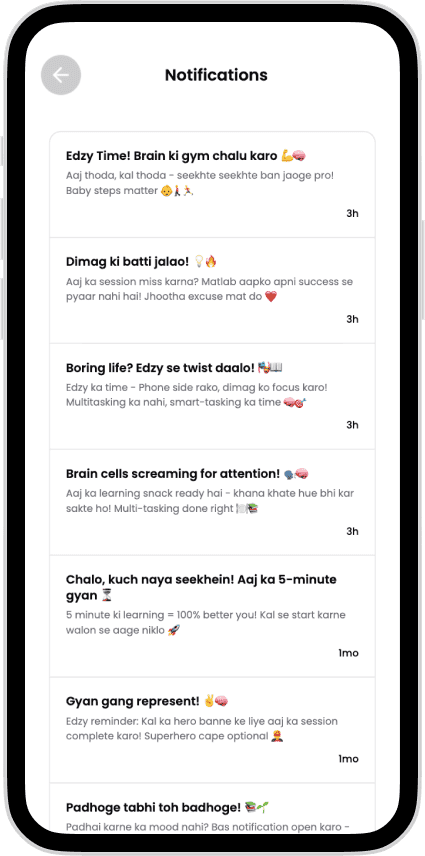
🔔 Smart Study Reminders

Edzy knows what to study next. Stay on track with timely nudges & updates.

Edzy mobile app