
CBSE Introduces On-Screen Marking for Class XII Examinations
A New Era of Efficient and Transparent Evaluation
The Central Board of Secondary Education (CBSE) has announced the introduction of On-Screen Marking (OSM) for Class XII examinations starting in 2026, aiming to enhance the evaluation process.

Listen to this article
CBSE Introduces On-Screen Marking for Class XII Examinations
Introduction of On-Screen Marking (OSM)
The Central Board of Secondary Education (CBSE) has taken a significant step towards modernizing the examination evaluation process by introducing On-Screen Marking (OSM) for Class XII examinations, effective from 2026. This initiative is part of CBSE's ongoing efforts to enhance efficiency, transparency, and accuracy in the evaluation of answer scripts.
What is On-Screen Marking (OSM)?
On-Screen Marking refers to the digital evaluation of answer sheets, where teachers will assess student responses on a computer screen rather than using traditional paper-based methods. This transition is expected to streamline the evaluation process, reduce errors, and involve a broader pool of educators in the marking process.
Benefits of On-Screen Marking
The introduction of OSM comes with a myriad of benefits that aim to enhance the overall examination experience for students, teachers, and the educational system as a whole. Here are some key advantages:
Elimination of Totalling Errors: Automated calculations will minimize human errors associated with manual totalling.
Faster Evaluation: The digital platform will facilitate quicker assessments, allowing results to be declared sooner.
Wider Teacher Participation: Teachers from various schools can participate in the evaluation process, ensuring a diverse range of perspectives.
Cost and Time Savings: Reduced transportation needs for answer sheets will save both time and costs associated with physical movement.
Environmental Sustainability: The shift to digital evaluation supports eco-friendly practices by reducing paper usage.
Post-Result Verification Simplified: With digital marking, the need for post-result verification of marks will be significantly reduced.
Global Teacher Involvement: Teachers from CBSE-affiliated schools around the world can contribute to the evaluation process.
Preparation for Schools
To ensure the successful implementation of OSM, CBSE has outlined specific requirements that schools must meet. These include:
Establishing a computer lab with a Public Static IP as per CBSE Affiliation Bye-Laws.
Providing PCs or laptops with Windows OS 8 or above, at least 4 GB RAM, and 1 GB free space on the C:/ drive.
Ensuring the latest internet browsers (Chrome/Edge/Firefox) are installed.
Installing Adobe Reader for document viewing.
Maintaining reliable internet connectivity with a minimum speed of 2 Mbps.
Ensuring an uninterrupted power supply to avoid disruptions during the evaluation process.
Support from CBSE
To facilitate a smooth transition to On-Screen Marking, CBSE has committed to providing support through various initiatives:
Allowing all teachers with OASIS IDs to log in and familiarize themselves with the OSM system.
Conducting multiple dry runs to practice the evaluation process before the actual examinations.
Organizing training programs to explain the OSM system in detail.
Establishing a call center for issue resolution during the evaluation period.
Releasing instructional videos to help teachers understand the new system better.
Implications for Students and Teachers
The introduction of OSM is poised to have a profound impact on both students and teachers. For students, faster evaluation means quicker feedback on their performance, which can be crucial for their academic growth. Additionally, the transparency of the process may enhance trust in the evaluation system.
For teachers, OSM offers an opportunity to engage with a more modern approach to assessment. It allows them to focus on the quality of evaluation without the logistical challenges associated with paper-based marking. Furthermore, the involvement of a wider pool of educators can lead to more balanced and fair assessments.
Conclusion
The introduction of On-Screen Marking for Class XII examinations marks a significant advancement in the CBSE evaluation process. By embracing technology, CBSE aims to create a more efficient, transparent, and inclusive system that benefits students and teachers alike. As schools prepare for this transition, the focus will be on ensuring readiness and support for all stakeholders involved.
FAQs about On-Screen Marking
1. When will On-Screen Marking be implemented?
On-Screen Marking will be implemented starting from the 2026 Class XII examinations.
2. Will Class X evaluations also shift to OSM?
No, Class X evaluations will continue in the traditional physical mode for the year 2026.
3. What are the technical requirements for schools?
Schools need to have a computer lab with specific hardware and software requirements, including reliable internet connectivity.
4. How will teachers be trained for OSM?
CBSE will conduct training programs and provide instructional videos to help teachers understand the new system.
5. What benefits does OSM offer to students?
OSM offers faster evaluation, reduced errors, and increased transparency in the assessment process.
Related News

Prior Intimation of Submission of List of Candidates for Class X/XII Examination 2026-27

CBSE Skill Expo and Guidance Festival 2026-27: Venue Details Announced
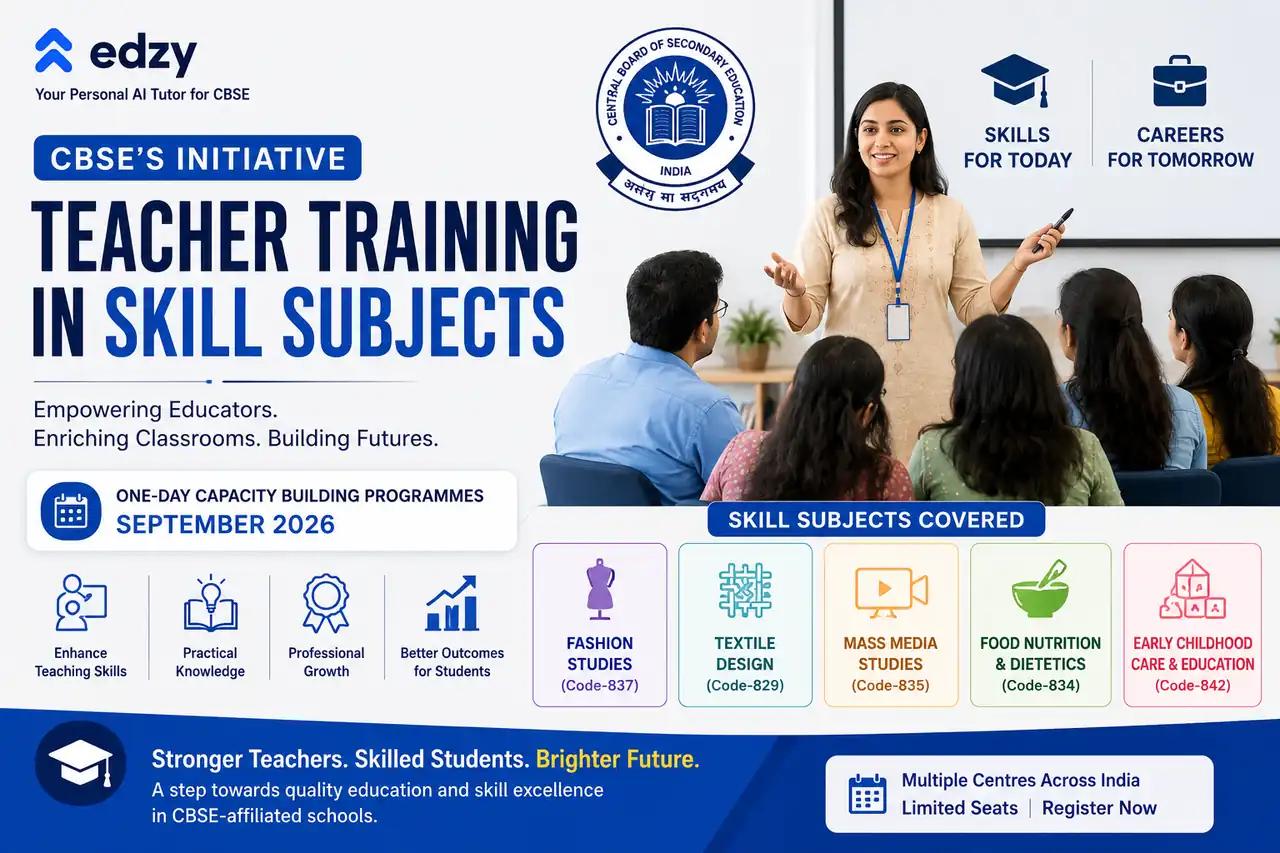
CBSE Organizes One-Day Teacher Training for Skill Subjects in September 2026

KVS/NVS Recruitment Drive 2025: Tier-II Results Declared