
CBSE's Observations on the 2026 Question Papers: A Comprehensive Overview
Understanding the Implications for Students and Educators
An in-depth analysis of CBSE's observations regarding the 2026 question papers, focusing on the impact on students and teaching methodologies.

Listen to this article
CBSE's Observations on the 2026 Question Papers: A Comprehensive Overview
Introduction
The Central Board of Secondary Education (CBSE) plays a pivotal role in shaping the educational landscape in India. As we approach the academic year 2026, the board has released observations regarding the upcoming question papers. This article delves into the implications of these observations for students, educators, and the overall educational framework.
Understanding the CBSE Observations
On February 16, 2026, CBSE published a document outlining its observations on the question papers for the upcoming examinations. While the document itself is succinct, its implications are far-reaching. The observations aim to enhance the quality of assessments and ensure that they align with the learning objectives set forth by the NCERT curriculum.
Key Highlights from the Observations
Alignment with Learning Outcomes: The observations emphasize the need for question papers to reflect the core learning outcomes defined by the NCERT. This alignment ensures that assessments are not only a test of rote memorization but also evaluate critical thinking and application of knowledge.
Inclusion of Diverse Question Types: CBSE is advocating for a variety of question formats, including multiple-choice questions, short answer questions, and case studies. This diversity caters to different learning styles and helps in assessing a broader range of skills.
Focus on Conceptual Understanding: The board has highlighted the importance of assessing students' conceptual understanding rather than mere factual recall. This shift encourages deeper learning and comprehension.
Incorporation of Real-World Scenarios: The observations suggest that question papers should include real-world applications of concepts, making learning relevant and engaging for students.
Feedback Mechanism: CBSE is looking to establish a robust feedback mechanism for educators and students to improve the quality of future assessments.
Implications for Students
The observations from CBSE carry significant implications for students preparing for their board examinations. Here’s how these changes may affect their learning journey:
Enhanced Preparation Strategies
With the emphasis on conceptual understanding and diverse question types, students will need to adapt their study strategies. Instead of focusing solely on memorization, they should engage in active learning techniques such as:
Participating in group discussions to clarify concepts.
Practicing with varied question formats to become familiar with the new assessment styles.
Applying theoretical knowledge to practical scenarios through projects and case studies.
Increased Engagement
The incorporation of real-world scenarios in question papers is likely to increase student engagement. When students see the relevance of their studies to everyday life, they are more motivated to learn. This approach can lead to:
A deeper interest in subjects, particularly in science and mathematics.
Improved retention of information as students relate concepts to practical applications.
Implications for Educators
Educators also stand to gain from the CBSE's observations. The shift in assessment strategies necessitates a reevaluation of teaching methodologies:
Curriculum Development
Teachers will need to align their lesson plans with the learning outcomes outlined by NCERT. This may involve:
Integrating more hands-on activities and real-world applications into the curriculum.
Developing assessments that reflect the diverse question types recommended by CBSE.
Professional Development
To effectively implement these changes, educators may require additional training and resources. Professional development programs focusing on:
Innovative teaching strategies that promote critical thinking.
Assessment design workshops to create varied question formats.
Conclusion
The observations made by CBSE regarding the 2026 question papers represent a significant step towards enhancing the quality of education in India. By focusing on conceptual understanding, diverse assessment formats, and real-world applications, the board is setting the stage for a more holistic educational experience for students. As we move forward, both students and educators must adapt to these changes to ensure success in the evolving educational landscape.
Next Steps for Students and Educators
As we prepare for the upcoming academic year, it is crucial for both students and educators to stay informed and proactive. Here are some actionable steps to consider:
Stay Updated: Regularly check the CBSE website for updates and resources related to the new assessment strategies.
Engage in Collaborative Learning: Encourage group study sessions to foster a collaborative learning environment.
Seek Feedback: Utilize feedback from practice assessments to identify areas for improvement.
By embracing these changes, we can collectively contribute to a more effective and engaging educational experience for all.
Related News

Prior Intimation of Submission of List of Candidates for Class X/XII Examination 2026-27

CBSE Skill Expo and Guidance Festival 2026-27: Venue Details Announced
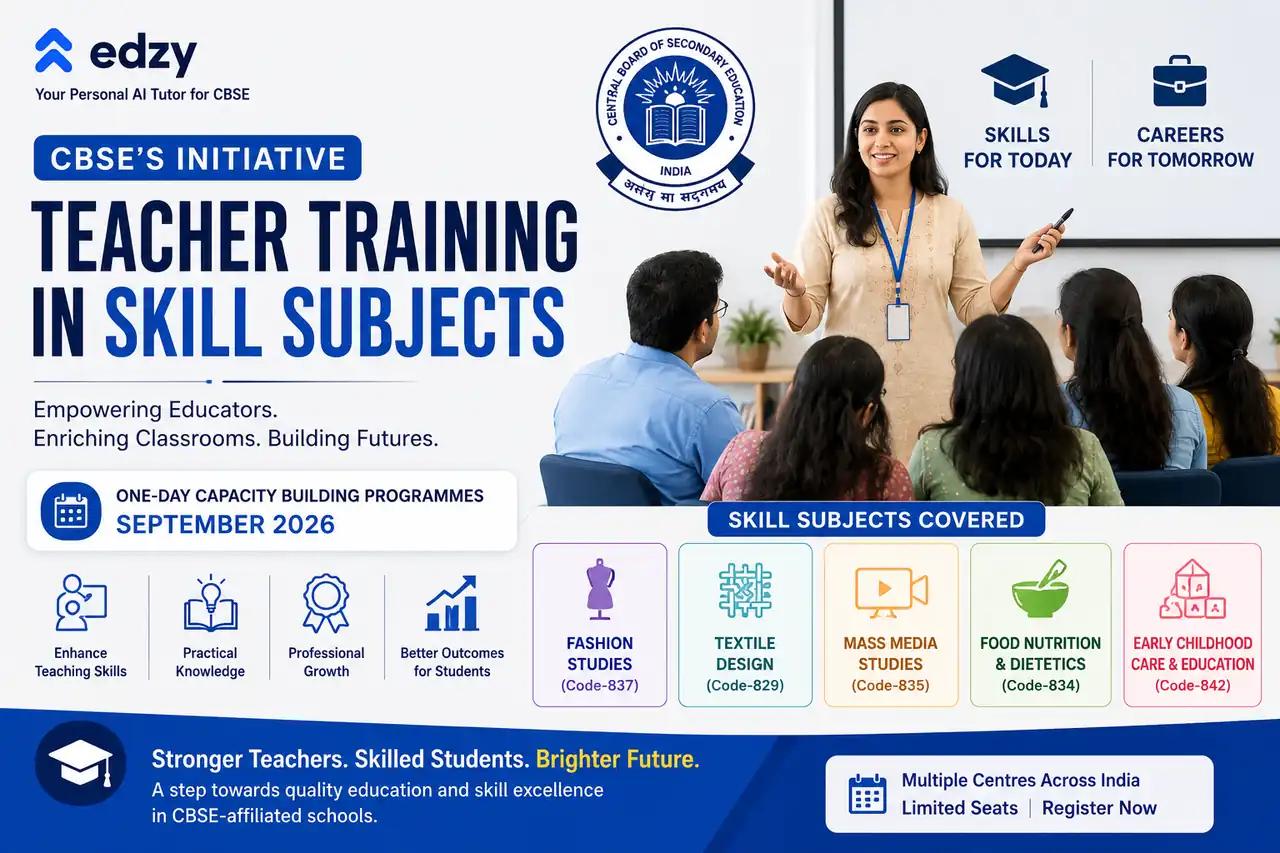
CBSE Organizes One-Day Teacher Training for Skill Subjects in September 2026

KVS/NVS Recruitment Drive 2025: Tier-II Results Declared