
NCERT Releases Handbook for Implementing Vocational Education in Middle Schools
New Guidelines Focus on Hands-on Learning, AI Integration, and Community Involvement
NCERT’s latest handbook outlines a transformative approach to vocational education for Grades 6–8, emphasizing project-based learning, AI tools, and real-world skills.
Listen to this article
NCERT Releases Handbook for Implementing Vocational Education in Middle Schools
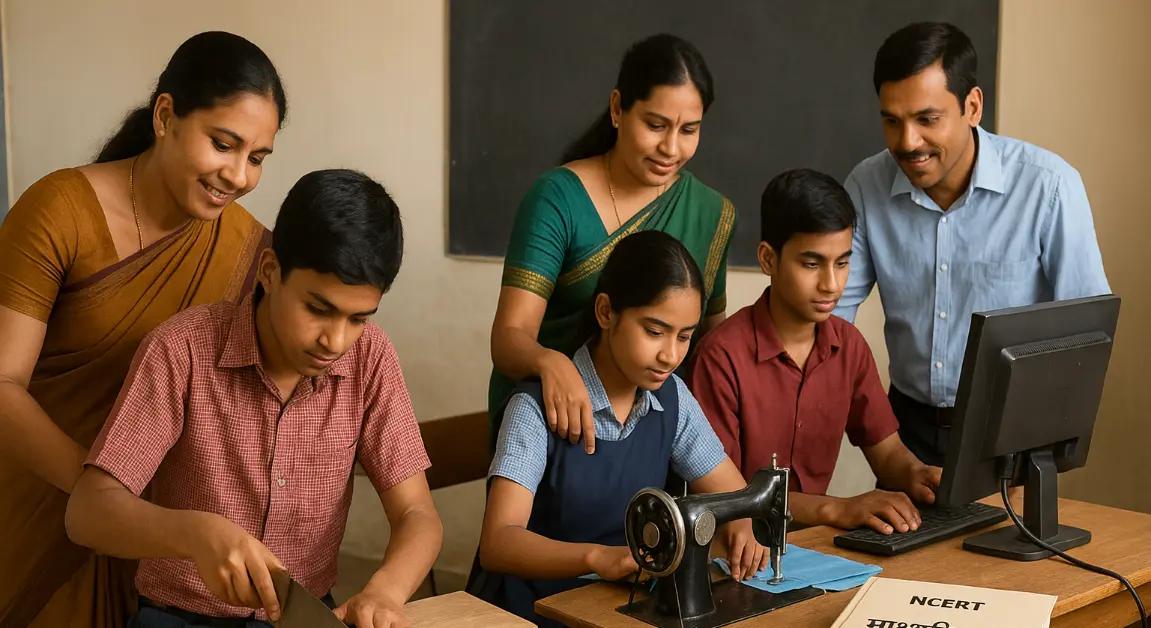
The National Council of Educational Research and Training (NCERT) has unveiled its Handbook for the Implementation of Vocational Education at the Middle Stage, aligning with the National Education Policy (NEP) 2020 and the National Curriculum Framework for School Education (NCF-SE) 2023. The handbook provides a roadmap for schools to integrate vocational education into Grades 6–8 through experiential, project-based learning.
Key Highlights of the Handbook
1. Project-Based Learning
Students will undertake three projects annually across three forms of work:
Work with Life Forms: Gardening, animal care, agriculture
Work with Machines and Materials: Carpentry, pottery, robotics
Work in Human Services: Hospitality, healthcare, retail
2. Integration of AI
The handbook encourages using Artificial Intelligence (AI) tools like Google Lens, ChatGPT, and coding platforms to enhance vocational projects. Examples include:
Plant disease identification using AI apps
Creating digital art or translating local crafts into virtual exhibits
Developing simple apps for school or community use
3. Community and Industry Collaboration
Schools are advised to:
Partner with local artisans, farmers, and businesses for internships
Organize Kaushal Mela (skill fairs) to showcase student projects
Leverage parents and SDMCs for resource mobilization
4. Focus on Values and Inclusion
The curriculum emphasizes:
Dignity of labor: All students participate in hands-on tasks
Inclusive practices: Adaptive tools for differently-abled students
Cross-cutting themes: Environmental sustainability, financial literacy, and cultural awareness
Implementation Roadmap
Schools must allocate 110 hours annually (165 periods) for vocational education, with block scheduling recommended. Key stakeholders include:
Teachers: Multi-subject involvement; no dedicated vocational teacher required
School Heads: Ensure timetable flexibility and community engagement
SCERTs/DIETs: Provide teacher training and localized resources
Why This Matters:
Vocational education at the middle-school level prepares students for real-world challenges, fosters creativity, and reduces the stigma around manual labor. The integration of AI and community projects ensures relevance in a rapidly evolving job market.
Related News

Extension of Last Date for PRAYAAS 2026-27 Applications Announced

Guidelines for Preservation and Weeding Out of Examination Records

Pension Disbursement Commences through E-Samarth Module for CBSE Employees

Order Regarding Sh. Amitabh Kumar and Sh. Bhoopender Singh at NCERT