Edzy
AI TutorResourcesToolsCompareBuy
SearchDownload AppLogin
Edzy

Edzy for Classes 6-12

Edzy is a personal AI tutor for CBSE and State Board students, with curriculum-aligned guidance, practice, revision, and study plans that adapt to each learner.

  • Email: always@edzy.ai
  • Phone: +91 96256 68472
  • WhatsApp: +91 96256 68472
  • Address: Sector 63, Gurgaon, Haryana

Follow Edzy

Browse by Class

  • CBSE Class 6
  • CBSE Class 7
  • CBSE Class 8
  • CBSE Class 9
  • CBSE Class 10
  • CBSE Class 11
  • CBSE Class 12
Explore the CBSE resource hub

Explore Edzy

  • Study Resources
  • Free Study Tools
  • Best Apps for Board Exams
  • Edzy vs ChatGPT
  • About Us
  • Why We Built Edzy
  • Blog
  • CBSE AI Tutor

Support & Legal

  • Help & FAQs
  • Accessibility
  • Privacy Policy
  • Terms & Conditions
  • Refund Policy
  • Cookie Policy
  • Site Directory

© 2026 Edzy. All rights reserved.

Curriculum-aligned learning paths for students in Classes 6-12.

CBSE
Class 10
Social Science
India and the Contemporary World - II
The Rise of Nationalism in Europe

Question Bank

Practice Hub

Question Bank: The Rise of Nationalism in Europe

This chapter explores the rise of nationalism in Europe during the 19th century, highlighting its impact on political and social changes.

Structured practice
Question Practice

Practice chapter questions in a cleaner, exam-ready flow

Start with curated question sets, move into full module views when needed, and keep discovering related practice without losing your place in the chapter.

Question Bank - The Rise of Nationalism in Europe

View all (181)
Q1.

What year did the French Revolution begin?

Single Answer MCQ
Q-00015415
View explanation
Q2.

What was the main outcome of the Estates General being renamed to the National Assembly?

Single Answer MCQ
Q-00015416
View explanation
Q3.

Which symbol was adopted as the national flag during the French Revolution?

Single Answer MCQ
Q-00015417
View explanation
Q4.

The Napoleonic Code established what key principle?

Single Answer MCQ
Q-00015418
View explanation
Q5.

What did the phrase 'la patrie' signify during the Revolution?

Single Answer MCQ
Q-00015419
View explanation
Q6.

Which of the following practices was NOT introduced by the French Revolutionaries?

Single Answer MCQ
Q-00015420
View explanation
Q7.

What role did the Jacobin clubs play during the Revolution?

Single Answer MCQ
Q-00015421
View explanation
Q8.

How did Napoleon contribute to the spread of nationalism?

Single Answer MCQ
Q-00015422
View explanation
Q9.

What was one effect of the Revolutionary Wars initiated by France?

Single Answer MCQ
Q-00015423
View explanation
Q10.

What did the revolutionaries take oaths on to inspire unity and patriotism?

Single Answer MCQ
Q-00015424
View explanation
Q11.

What was the goal of the revolutionary ideals proclaimed in France for other European nations?

Single Answer MCQ
Q-00015425
View explanation
Q12.

Which aspect of France’s reforms catered to economic unity?

Single Answer MCQ
Q-00015426
View explanation
Q13.

How did Napoleon's rule differ from the initial revolutionary ideals?

Single Answer MCQ
Q-00015427
View explanation
Q14.

What is one misconception about the French Revolution?

Single Answer MCQ
Q-00015428
View explanation
Q15.

What was the primary aim of the French revolutionary armies moving into other European countries?

Single Answer MCQ
Q-00015429
View explanation
Q16.

Which revolutionary reform served to simplify governance and promote a sense of common identity?

Single Answer MCQ
Q-00015430
View explanation
Q17.

What significant political change did nationalism bring to Europe in the 19th century?

Single Answer MCQ
Q-00015431
View explanation
Q18.

Which event is associated with the beginning of the Greek struggle for independence?

Single Answer MCQ
Q-00015432
View explanation
Q19.

Which group primarily pushed for political rights during the rise of nationalism in Europe?

Single Answer MCQ
Q-00015433
View explanation
Q20.

What ideology was closely linked to the emergence of nationalism in the early 19th century?

Single Answer MCQ
Q-00015434
View explanation
Q21.

What major outcome followed the revolutions of 1848 in Europe?

Single Answer MCQ
Q-00015435
View explanation
Q22.

How did the rise of industrialization affect nationalism in Europe?

Single Answer MCQ
Q-00015436
View explanation
Q23.

What role did the Habsburg Empire play in the context of nationalism?

Single Answer MCQ
Q-00015437
View explanation
Q24.

Which of the following was a key demand of the middle classes during the 19th century?

Single Answer MCQ
Q-00015438
View explanation
Q25.

Which war began due to nationalist aspirations in Italy?

Single Answer MCQ
Q-00015439
View explanation
Q26.

What was the nature of the political system in 18th-century Europe?

Single Answer MCQ
Q-00015440
View explanation
Q27.

What does the term 'suffrage' refer to in the context of liberal nationalism?

Single Answer MCQ
Q-00015441
View explanation
Q28.

Who were the primary opponents of nationalism in the Habsburg Empire?

Single Answer MCQ
Q-00015442
View explanation
Q29.

The Romantic Movement in the 19th century contributed to nationalism by:

Single Answer MCQ
Q-00015443
View explanation
Q30.

Which of the following groups sought to assert national identity in Central Europe?

Single Answer MCQ
Q-00015444
View explanation
Q31.

What was a defining feature of liberal nationalism in Europe?

Single Answer MCQ
Q-00015445
View explanation
Q32.

What ideology often conflicted with nationalism during the 19th century?

Single Answer MCQ
Q-00015446
View explanation
Q33.

What event marked the beginning of the July Revolution in France in 1830?

Single Answer MCQ
Q-00015447
View explanation
Q34.

Which artist is known for the painting 'Massacre at Chios' that expresses nationalist sentiments?

Single Answer MCQ
Q-00015448
View explanation
Q35.

The Treaty of Constantinople in 1832 recognized which country as independent?

Single Answer MCQ
Q-00015449
View explanation
Q36.

What role did Romanticism play in the rise of nationalism?

Single Answer MCQ
Q-00015450
View explanation
Q37.

Who was the English poet that actively supported the Greek War of Independence?

Single Answer MCQ
Q-00015451
View explanation
Q38.

The term 'volksgeist' is associated with which philosopher who emphasized German culture?

Single Answer MCQ
Q-00015452
View explanation
Q39.

Which of the following revolutions was not associated with the rise of nationalism between 1830-1848?

Single Answer MCQ
Q-00015453
View explanation
Q40.

What was a primary factor that drove the revolutions of 1830 in Europe?

Single Answer MCQ
Q-00015454
View explanation
Q41.

Which country achieved independence from the United Kingdom of the Netherlands during the July Revolution?

Single Answer MCQ
Q-00015455
View explanation
Q42.

The 'massacre at Chios' depicted in art aimed to generate sympathy for which group?

Single Answer MCQ
Q-00015456
View explanation
Q43.

Which revolution is considered a direct consequence of the spread of liberalism and nationalism?

Single Answer MCQ
Q-00015457
View explanation
Q44.

What aspect of nationalism was highlighted by Romantic artists in the 19th century?

Single Answer MCQ
Q-00015458
View explanation
Q45.

Which was a common characteristic of the revolutions occurring in Europe from 1830 to 1848?

Single Answer MCQ
Q-00015459
View explanation
Q46.

By what means did Romantic poets and artists attempt to influence public opinion during nationalist movements?

Single Answer MCQ
Q-00015460
View explanation
Q47.

The phrase 'When France sneezes, the rest of Europe catches cold' is attributed to which political figure?

Single Answer MCQ
Q-00015461
View explanation
Q48.

How did the revolutions of 1830-1848 contribute to the emergence of modern nationalism in Europe?

Single Answer MCQ
Q-00015462
View explanation
Q49.

Who was the chief architect of German unification?

Single Answer MCQ
Q-00015463
View explanation
Q50.

What was the primary method used by Bismarck for German unification?

Single Answer MCQ
Q-00015464
View explanation
Q51.

Which event marked the official proclamation of the German Empire?

Single Answer MCQ
Q-00015465
View explanation
Q52.

What role did the Junkers play in the unification of Germany?

Single Answer MCQ
Q-00015466
View explanation
Q53.

Which Italian kingdom played a central role in unifying Italy?

Single Answer MCQ
Q-00015467
View explanation
Q54.

Who was a prominent figure advocating for a unified Italy through his secret society?

Single Answer MCQ
Q-00015468
View explanation
Q55.

What was the significant outcome of the Franco-Prussian War?

Single Answer MCQ
Q-00015469
View explanation
Q56.

What idea did Mazzini promote for Italy?

Single Answer MCQ
Q-00015470
View explanation
Q57.

Which battle was pivotal in achieving Italian unification under Sardinia-Piedmont?

Single Answer MCQ
Q-00015471
View explanation
Q58.

Which of the following leaders is associated with Italian unification alongside King Victor Emmanuel II?

Single Answer MCQ
Q-00015472
View explanation
Q59.

What aspects were modernized in Germany after unification?

Single Answer MCQ
Q-00015473
View explanation
Q60.

Which ideology became less associated with nationalism in Europe after 1848?

Single Answer MCQ
Q-00015474
View explanation
Q61.

The unification of Italy was completed in which year?

Single Answer MCQ
Q-00015475
View explanation
Q62.

What was a significant barrier to unification efforts in Italy before the mid-19th century?

Single Answer MCQ
Q-00015476
View explanation
Q63.

What was one impact of the unification of Germany on Europe?

Single Answer MCQ
Q-00015477
View explanation
Q64.

Which of the following was not a reason for the failure of revolutionary uprisings in Italy in 1831 and 1848?

Single Answer MCQ
Q-00015478
View explanation
Q65.

What does the female figure in national allegory typically represent?

Single Answer MCQ
Q-00015479
View explanation
Q66.

Which allegory was used to represent liberty during the French Revolution?

Single Answer MCQ
Q-00015480
View explanation
Q67.

What attribute is commonly associated with Germania in artistic representations?

Single Answer MCQ
Q-00015481
View explanation
Q68.

The tricolour flag used in 1848 Germany is primarily associated with which group?

Single Answer MCQ
Q-00015482
View explanation
Q69.

Which female figure personifies the French nation?

Single Answer MCQ
Q-00015483
View explanation
Q70.

What does the broken chain symbolize in national allegories?

Single Answer MCQ
Q-00015484
View explanation
Q71.

What was the purpose of the images of Marianne in public spaces?

Single Answer MCQ
Q-00015485
View explanation
Q72.

In Veit's representation of Germania, what does the breastplate with an eagle signify?

Single Answer MCQ
Q-00015486
View explanation
Q73.

Why was Marianne chosen as a symbol of the French nation?

Single Answer MCQ
Q-00015487
View explanation
Q74.

What does the olive branch symbolize when depicted alongside the sword?

Single Answer MCQ
Q-00015488
View explanation
Q75.

The attributes of Liberty included a red cap and a broken chain; what do these symbolize?

Single Answer MCQ
Q-00015489
View explanation
Q76.

How did artists personify nations during the 18th and 19th centuries?

Single Answer MCQ
Q-00015490
View explanation
Q77.

What was a significant change made by Philip Veit in his later depiction of Germania?

Single Answer MCQ
Q-00015491
View explanation
Q78.

Which of the following best describes the role of symbols in visualizing the nation?

Single Answer MCQ
Q-00015492
View explanation
Q79.

Which region was known for intense nationalist conflicts in Europe after 1871?

Single Answer MCQ
Q-00015493
View explanation
Q80.

What ideology became prevalent among European nationalists in the late 19th century?

Single Answer MCQ
Q-00015494
View explanation
Q81.

What significant event did the nationalist conflicts in the Balkans contribute to?

Single Answer MCQ
Q-00015495
View explanation
Q82.

How did the Ottoman Empire attempt to maintain control over its European territories?

Single Answer MCQ
Q-00015496
View explanation
Q83.

Which factor drove Slavic nationalities in the Balkans to seek independence?

Single Answer MCQ
Q-00015497
View explanation
Q84.

What was the primary cause of rivalry among European powers in the Balkans?

Single Answer MCQ
Q-00015498
View explanation
Q85.

Which of the following nationalities was involved in the Balkan conflicts?

Single Answer MCQ
Q-00015499
View explanation
Q86.

What was a common strategy among Balkan states during the rise of nationalism?

Single Answer MCQ
Q-00015500
View explanation
Q87.

Which major power sought to support Slavic nationalism to weaken the Ottoman Empire?

Single Answer MCQ
Q-00015501
View explanation
Q88.

What was one major result of the Balkan Wars?

Single Answer MCQ
Q-00015502
View explanation
Q89.

Which ideology diverged from its original liberal intentions to become more exclusive by the late 19th century?

Single Answer MCQ
Q-00015503
View explanation
Q90.

What role did history play in the nationalist movements of the Balkans?

Single Answer MCQ
Q-00015504
View explanation
Q91.

Which of the following was a consequence of nationalistic fervor in Europe by the end of the 19th century?

Single Answer MCQ
Q-00015505
View explanation
Q92.

How did the European powers manipulate nationalism during the imperialist era?

Single Answer MCQ
Q-00015506
View explanation
Q93.

Which of the following countries was NOT fragmented into smaller kingdoms during the mid-eighteenth century?

Single Answer MCQ
Q-00044812
View explanation
Q94.

What was a significant outcome of the Napoleonic Wars in Europe?

Single Answer MCQ
Q-00044813
View explanation
Q95.

Liberal nationalism in the early nineteenth century emphasized which of the following?

Single Answer MCQ
Q-00044814
View explanation
Q96.

Which event marked the beginning of the Greek struggle for independence?

Single Answer MCQ
Q-00044815
View explanation
Q97.

What role did the landed aristocracy play in the emergence of nationalism?

Single Answer MCQ
Q-00044816
View explanation
Q98.

The demand for representative governments in Europe mainly came from which social group?

Single Answer MCQ
Q-00044817
View explanation
Q99.

Which ideology is most closely associated with the demand for national unity during the nineteenth century?

Single Answer MCQ
Q-00044818
View explanation
Q100.

The revolutions of 1848 in Europe were primarily sparked by:

Single Answer MCQ
Q-00044819
View explanation
Q101.

What was the primary reason for the limited political rights granted in revolutionary France?

Single Answer MCQ
Q-00044820
View explanation
Q102.

In the context of nationalism, what did the Napoleonic Code reinforce?

Single Answer MCQ
Q-00044821
View explanation
Q103.

Which group historically held the most power within the Habsburg Empire?

Single Answer MCQ
Q-00044822
View explanation
Q104.

The unification of Germany occurred primarily during which years?

Single Answer MCQ
Q-00044823
View explanation
Q105.

What major event in 1848 failed to achieve significant success across Europe?

Single Answer MCQ
Q-00044824
View explanation
Q106.

Which of the following movements is an example of Slav nationalism in the early twentieth century?

Single Answer MCQ
Q-00044825
View explanation
Q107.

The term 'suffrage' refers to which concept?

Single Answer MCQ
Q-00044826
View explanation
Q108.

What year did the French Revolution begin?

Single Answer MCQ
Q-00044827
View explanation
Q109.

Which document marked the beginning of a shift in sovereignty from the monarchy to the citizens in France?

Single Answer MCQ
Q-00044828
View explanation
Q110.

What was the significance of the tricolor flag adopted during the French Revolution?

Single Answer MCQ
Q-00044829
View explanation
Q111.

Which phrase describes the concept of 'la patrie' that emerged during the French Revolution?

Single Answer MCQ
Q-00044830
View explanation
Q112.

The Civil Code of 1804 established which of the following?

Single Answer MCQ
Q-00044831
View explanation
Q113.

How did Napoleon spread revolutionary ideas across Europe?

Single Answer MCQ
Q-00044832
View explanation
Q114.

What role did Jacobin clubs play during the French Revolution?

Single Answer MCQ
Q-00044833
View explanation
Q115.

Which of the following changes was NOT introduced as a result of the French Revolution?

Single Answer MCQ
Q-00044834
View explanation
Q116.

Which of the following best describes the phrase 'the people must seize their own freedom' seen in revolutionary imagery?

Single Answer MCQ
Q-00044835
View explanation
Q117.

The revolutionaries emphasized the idea of 'le citoyen.' What did this term mean?

Single Answer MCQ
Q-00044836
View explanation
Q118.

What was the outcome of the revolutionary wars initiated by the French armies in Europe?

Single Answer MCQ
Q-00044837
View explanation
Q119.

After the Revolution, which approach did Napoleon take regarding feudal privileges?

Single Answer MCQ
Q-00044838
View explanation
Q120.

Which of the following statements best summarizes the ideas of the French Revolution regarding citizenship?

Single Answer MCQ
Q-00044839
View explanation
Q121.

During the French Revolution, what significant policy was adopted regarding regional languages?

Single Answer MCQ
Q-00044840
View explanation
Q122.

Which legislative body replaced the Estates General during the French Revolution?

Single Answer MCQ
Q-00044841
View explanation
Q123.

What was a key element of the Napoleonic Code that influenced many European regions?

Single Answer MCQ
Q-00044842
View explanation
Q124.

What major political change occurred in France in July 1830?

Single Answer MCQ
Q-00044843
View explanation
Q125.

Which of the following was a significant outcome of the July Revolution in France?

Single Answer MCQ
Q-00044844
View explanation
Q126.

What was the key motivation behind the Greek War of Independence initiated in 1821?

Single Answer MCQ
Q-00044845
View explanation
Q127.

Which cultural movement significantly influenced nationalist sentiments in Europe during this period?

Single Answer MCQ
Q-00044846
View explanation
Q128.

Who was the prominent poet that supported the Greek War of Independence?

Single Answer MCQ
Q-00044847
View explanation
Q129.

The Treaty of Constantinople of 1832 recognized which nation as independent?

Single Answer MCQ
Q-00044848
View explanation
Q130.

Which philosopher emphasized folk culture as the essence of national identity?

Single Answer MCQ
Q-00044849
View explanation
Q131.

What role did Romantic artists and poets play in the rise of nationalism?

Single Answer MCQ
Q-00044850
View explanation
Q132.

Which of the following revolutions were associated with nationalist sentiments during the Age of Revolutions?

Single Answer MCQ
Q-00044851
View explanation
Q133.

Which event is often referred to as the 'Springtime of Nations'?

Single Answer MCQ
Q-00044852
View explanation
Q134.

What was one of the main reasons for the failure of the 1848 revolutions in Europe?

Single Answer MCQ
Q-00044853
View explanation
Q135.

Which region in Europe saw a rise in nationalist feelings due to the influence of the Romantic movement?

Single Answer MCQ
Q-00044854
View explanation
Q136.

Which of the following best describes the role of nationalism during the Age of Revolutions?

Single Answer MCQ
Q-00044855
View explanation
Q137.

What was a primary aim of liberal nationalists during the revolutions of 1830-1848?

Single Answer MCQ
Q-00044856
View explanation
Q138.

Who was the chief architect of German unification?

Single Answer MCQ
Q-00044857
View explanation
Q139.

In what year was the German Empire officially proclaimed?

Single Answer MCQ
Q-00044858
View explanation
Q140.

Which kingdom took the lead in the unification of Italy?

Single Answer MCQ
Q-00044859
View explanation
Q141.

What was the main goal of the secret society 'Young Italy' founded by Mazzini?

Single Answer MCQ
Q-00044860
View explanation
Q142.

Which two major conflicts helped in the unification of Germany?

Single Answer MCQ
Q-00044861
View explanation
Q143.

What role did the Junkers play in German unification?

Single Answer MCQ
Q-00044862
View explanation
Q144.

Which Italian region was the only one ruled by an Italian princely house before unification?

Single Answer MCQ
Q-00044863
View explanation
Q145.

What was a significant outcome of the wars waged by Bismarck?

Single Answer MCQ
Q-00044864
View explanation
Q146.

What ideology drove many nationalists in Europe during the 19th century?

Single Answer MCQ
Q-00044865
View explanation
Q147.

Who proclaimed the German Empire in 1871?

Single Answer MCQ
Q-00044866
View explanation
Q148.

Why is the year 1848 significant in German history?

Single Answer MCQ
Q-00044867
View explanation
Q149.

Which social class largely supported the unification of Italy?

Single Answer MCQ
Q-00044868
View explanation
Q150.

What was the primary focus of the Kingdom of Sardinia-Piedmont during the unification of Italy?

Single Answer MCQ
Q-00044869
View explanation
Q151.

What common feature did both German and Italian unification share?

Single Answer MCQ
Q-00044870
View explanation
Q152.

Which event marked the end of political fragmentation in Italy?

Single Answer MCQ
Q-00044871
View explanation
Q153.

What was a major characteristic of nationalism in Europe by the late 19th century?

Single Answer MCQ
Q-00044872
View explanation
Q154.

Which region was the most significant source of nationalist tension in Europe after 1871?

Single Answer MCQ
Q-00044873
View explanation
Q155.

Which empire was primarily in control of the Balkans before the rise of nationalism?

Single Answer MCQ
Q-00044874
View explanation
Q156.

What was one outcome of the Balkan nationalist struggles in the late 19th and early 20th centuries?

Single Answer MCQ
Q-00044875
View explanation
Q157.

Which European power was notably involved in supporting Slavic nationalism in the Balkans?

Single Answer MCQ
Q-00044876
View explanation
Q158.

How did nationalism change in intent from the first half to the second half of the 19th century?

Single Answer MCQ
Q-00044877
View explanation
Q159.

What was one method by which the major European powers manipulated nationalism?

Single Answer MCQ
Q-00044878
View explanation
Q160.

Which of the following events was a direct product of Balkan nationalism?

Single Answer MCQ
Q-00044879
View explanation
Q161.

What role did the idea of romantic nationalism play in the Balkans?

Single Answer MCQ
Q-00044880
View explanation
Q162.

What was one consequence of the decline of the Ottoman Empire for the Balkans?

Single Answer MCQ
Q-00044881
View explanation
Q163.

Which country emerged as a significant player in the Balkans after the decline of the Ottoman Empire?

Single Answer MCQ
Q-00044882
View explanation
Q164.

Which of the following most accurately describes the Balkan states' relationships in the early 20th century?

Single Answer MCQ
Q-00044883
View explanation
Q165.

What trend defined the relationship between nationalism and imperialism in Europe during this period?

Single Answer MCQ
Q-00044884
View explanation
Q166.

What does the term 'allegory' primarily refer to in the context of nationalism?

Single Answer MCQ
Q-00044885
View explanation
Q167.

What was a significant consequence of rivalries among great powers in the Balkans?

Single Answer MCQ
Q-00044886
View explanation
Q168.

Who is the female allegory representing the French nation?

Single Answer MCQ
Q-00044887
View explanation
Q169.

How did national identities influence the approach to governance in Balkan states?

Single Answer MCQ
Q-00044888
View explanation
Q170.

What item is commonly associated with Marianne as a symbol of liberty?

Single Answer MCQ
Q-00044889
View explanation
Q171.

Germania, as a symbol of the German nation, is depicted wearing what?

Single Answer MCQ
Q-00044890
View explanation
Q172.

Which symbols were associated with the ideals of justice in the context of the revolution?

Single Answer MCQ
Q-00044891
View explanation
Q173.

What did the broken chains symbolize in nationalist art?

Single Answer MCQ
Q-00044892
View explanation
Q174.

What is the significance of using female figures to personify nations?

Single Answer MCQ
Q-00044893
View explanation
Q175.

What does the 'black, red, and gold tricolour' symbolize in German nationalism?

Single Answer MCQ
Q-00044894
View explanation
Q176.

What do the rays of the rising sun typically represent in nationalist artwork?

Single Answer MCQ
Q-00044895
View explanation
Q177.

What change did Philip Veit make between his depictions of Germania from 1836 to 1848?

Single Answer MCQ
Q-00044896
View explanation
Q178.

What did the olive branch around the sword symbolize in nationalist imagery?

Single Answer MCQ
Q-00044897
View explanation
Q179.

Which of the following did NOT serve as a symbol of nationalism during revolutions in Europe?

Single Answer MCQ
Q-00044898
View explanation
Q180.

What does the breastplate with an eagle signify in German nationalism?

Single Answer MCQ
Q-00044899
View explanation
Q181.

Why were artworks of national allegories important during the rise of nationalism?

Single Answer MCQ
Q-00044900
View explanation
Learn Better On The App
Free learning flow

Learn Without Limits

Access NCERT content for free with a cleaner, faster way to revise every day.

Chapter summaries
Revision tools

Faster access to practice, revision, and daily study flow.

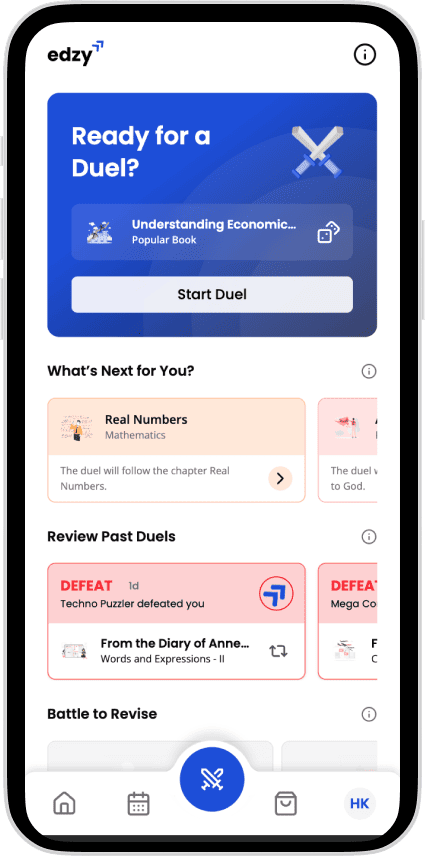
Edzy mobile app preview