

Brand Logo
Login
Search
Brand Logo

Edzy for Classes 6-12

Edzy is a personal AI tutor for CBSE and State Board students, with curriculum-aligned guidance, practice, revision, and study plans that adapt to each learner.

  • Email: always@edzy.ai
  • Phone: +91 96256 68472
  • WhatsApp: +91 96256 68472
  • Address: Sector 63, Gurgaon, Haryana

Follow Edzy

Browse by Class

  • CBSE Class 6
  • CBSE Class 7
  • CBSE Class 8
  • CBSE Class 9
  • CBSE Class 10
  • CBSE Class 11
  • CBSE Class 12
Explore the CBSE resource hub

Explore Edzy

  • Study Resources
  • Free Study Tools
  • Best Apps for Board Exams
  • Edzy vs ChatGPT
  • About Us
  • Why We Built Edzy
  • Blog
  • CBSE AI Tutor

Support & Legal

  • Help & FAQs
  • Accessibility
  • Privacy Policy
  • Terms & Conditions
  • Refund Policy
  • Cookie Policy
  • Site Directory

© 2026 Edzy. All rights reserved.

Curriculum-aligned learning paths for students in Classes 6-12.

CBSE
Class 6
Arts
Kriti-I
Seals to Prints

Question Bank

Practice Hub

Question Bank: Seals to Prints

In this chapter, you will learn about the design, purpose and artistic qualities of seals. Taking inspiration from the examples of seals through history, you will design your own seals and experiment them with a variety of materials for crafting. In this process, you will also be testing your seals on both paper and fabric.

Structured practice
Question Practice

Practice chapter questions in a cleaner, exam-ready flow

Start with curated question sets, move into full module views when needed, and keep discovering related practice without losing your place in the chapter.

Question Bank - Seals to Prints

View all (104)
Q1.

What is the primary purpose of a seal?

Single Answer MCQ
Q-00141633
View explanation
Q2.

Which material is commonly NOT used to create seals?

Single Answer MCQ
Q-00141635
View explanation
Q3.

What must be ensured for a clear impression of a seal?

Single Answer MCQ
Q-00141637
View explanation
Q4.

Which of the following is a characteristic of seals?

Single Answer MCQ
Q-00141639
View explanation
Q5.

In traditional block printing, what is used to apply ink?

Single Answer MCQ
Q-00141641
View explanation
Q6.

What is Ajrakh known for?

Single Answer MCQ
Q-00141643
View explanation
Q7.

Which of the following best describes a seal?

Single Answer MCQ
Q-00141645
View explanation
Q8.

How can seals be used in connection with printing?

Single Answer MCQ
Q-00141646
View explanation
Q9.

What materials can be used for creating a seal's impression?

Single Answer MCQ
Q-00141647
View explanation
Q10.

Why is it important to simplify complex designs when making a seal?

Single Answer MCQ
Q-00141648
View explanation
Q11.

What aspect of seals can give clues about historical societies?

Single Answer MCQ
Q-00141649
View explanation
Q12.

What is the first step in the seal-making process?

Single Answer MCQ
Q-00141650
View explanation
Q13.

Which of the following is NOT a function of seals?

Single Answer MCQ
Q-00141651
View explanation
Q14.

What skill is essential for creating intricate designs on seals?

Single Answer MCQ
Q-00141652
View explanation
Q15.

What might be a challenge when using a seal to create a pattern?

Single Answer MCQ
Q-00141653
View explanation
Q16.

What can studying seals help us understand about past cultures?

Single Answer MCQ
Q-00141654
View explanation
Q17.

What is a main purpose of using seals in historical contexts?

Single Answer MCQ
Q-00141655
View explanation
Q18.

Which of the following statements about seals is true?

Single Answer MCQ
Q-00141656
View explanation
Q19.

Which material is commonly used for making seals?

Single Answer MCQ
Q-00141657
View explanation
Q20.

In historical seals, what does an image of an animal typically represent?

Single Answer MCQ
Q-00141658
View explanation
Q21.

What is the primary purpose of a seal?

Single Answer MCQ
Q-00141659
View explanation
Q22.

Which material is commonly used to make impressions for seals?

Single Answer MCQ
Q-00141660
View explanation
Q23.

Which civilization is known for their intricate seal designs that include animal motifs?

Single Answer MCQ
Q-00141661
View explanation
Q24.

What should you do first when designing your own seal?

Single Answer MCQ
Q-00141662
View explanation
Q25.

During which period were seals predominantly used for administrative purposes?

Single Answer MCQ
Q-00141663
View explanation
Q26.

Which of the following could be used to create an impression for a seal?

Single Answer MCQ
Q-00141664
View explanation
Q27.

Which statement best describes how seals are related to identity?

Single Answer MCQ
Q-00141665
View explanation
Q28.

What characteristics should your personal symbol for a seal have?

Single Answer MCQ
Q-00141666
View explanation
Q29.

What role did seals play in royal decrees?

Single Answer MCQ
Q-00141667
View explanation
Q30.

When testing impressions with found objects, why is it important to analyze the clarity of impressions?

Single Answer MCQ
Q-00141668
View explanation
Q31.

Which aspect of seal design was most critical in ancient cultures?

Single Answer MCQ
Q-00141669
View explanation
Q32.

What type of surfaces can you test your seals on?

Single Answer MCQ
Q-00141670
View explanation
Q33.

The seal-making process in the Indus Valley showcased what type of craftsmanship?

Single Answer MCQ
Q-00141671
View explanation
Q34.

Which of these can affect the impression quality when making a seal?

Single Answer MCQ
Q-00141672
View explanation
Q35.

Which purpose does a seal serve in modern postal services?

Single Answer MCQ
Q-00141673
View explanation
Q36.

What is a common style used in seals throughout history?

Single Answer MCQ
Q-00141674
View explanation
Q37.

What is one way seals can influence historical research?

Single Answer MCQ
Q-00141675
View explanation
Q38.

Why might someone choose to create a simple design for their seal?

Single Answer MCQ
Q-00141676
View explanation
Q39.

Why is simplicity important when designing a seal?

Single Answer MCQ
Q-00141677
View explanation
Q40.

What aspect does a seal commonly communicate about its owner?

Single Answer MCQ
Q-00141678
View explanation
Q41.

What should one do if their seal design is difficult to carve?

Single Answer MCQ
Q-00141679
View explanation
Q42.

What does ajrakh block printing traditionally focus on?

Single Answer MCQ
Q-00141680
View explanation
Q43.

How should one approach the design of a personal seal?

Single Answer MCQ
Q-00141681
View explanation
Q44.

What is a potential benefit of testing a seal with different objects?

Single Answer MCQ
Q-00141682
View explanation
Q45.

What is the first step in making your own seal?

Single Answer MCQ
Q-00141683
View explanation
Q46.

Which of the following is NOT a suitable option to create an impression on clay?

Single Answer MCQ
Q-00141684
View explanation
Q47.

Why is it important to keep your design simple when making a seal?

Single Answer MCQ
Q-00141685
View explanation
Q48.

What tool is suggested for printing with a seal?

Single Answer MCQ
Q-00141686
View explanation
Q49.

What type of pattern can you create with a seal?

Single Answer MCQ
Q-00141687
View explanation
Q50.

During your seal-making process, why should you analyze which objects create clearer impressions?

Single Answer MCQ
Q-00141688
View explanation
Q51.

In hand block printing, what is the purpose of the raised portions on the block?

Single Answer MCQ
Q-00141689
View explanation
Q52.

What final step is taken after pressing the rubber seal into the stamp pad?

Single Answer MCQ
Q-00141690
View explanation
Q53.

Which value should your seal design represent?

Single Answer MCQ
Q-00141691
View explanation
Q54.

Which of the following materials would likely create the best impression when pressed into clay?

Single Answer MCQ
Q-00141692
View explanation
Q55.

What is a potential challenge when using a complex design for a seal?

Single Answer MCQ
Q-00141693
View explanation
Q56.

Why should you keep your clay surface damp while testing found objects?

Single Answer MCQ
Q-00141694
View explanation
Q57.

What is the main material used in hand block printing?

Single Answer MCQ
Q-00141695
View explanation
Q58.

What can you learn from observing local carpenters and wood carvers?

Single Answer MCQ
Q-00141696
View explanation
Q59.

Which technique is similar to how rubber stamps work?

Single Answer MCQ
Q-00141697
View explanation
Q60.

What kind of design can be created with a hand block printer?

Single Answer MCQ
Q-00141698
View explanation
Q61.

What is the name of the special textile pattern printed in Kutchh?

Single Answer MCQ
Q-00141699
View explanation
Q62.

What tool is most essential for the hand block printing process?

Single Answer MCQ
Q-00141700
View explanation
Q63.

What do artists need to do before using a block for printing?

Single Answer MCQ
Q-00141701
View explanation
Q64.

In traditional hand block printing, what is the role of the artisan?

Single Answer MCQ
Q-00141702
View explanation
Q65.

What can be a common mistake when using a hand block for printing?

Single Answer MCQ
Q-00141703
View explanation
Q66.

How does the design on a hand block get printed onto fabric?

Single Answer MCQ
Q-00141704
View explanation
Q67.

What is important about the design's raised portions on a block?

Single Answer MCQ
Q-00141705
View explanation
Q68.

What kind of printing is hand block printing not characterized by?

Single Answer MCQ
Q-00141706
View explanation
Q69.

What aspect of hand block printing makes it unique compared to other printing methods?

Single Answer MCQ
Q-00141707
View explanation
Q70.

What is typically used to apply ink to the hand block?

Single Answer MCQ
Q-00141708
View explanation
Q71.

Which region in India is known for Ajrakh printing?

Single Answer MCQ
Q-00141709
View explanation
Q72.

What type of surface is best for hand block printing?
Single Answer MCQ
Q-00141710
View explanation
Q73.

What might an artist inquire about when making a hand block?

Single Answer MCQ
Q-00141711
View explanation
Q74.

What is the first step in designing your seal?

Single Answer MCQ
Q-00141712
View explanation
Q75.

Which material is NOT suitable for making a seal?

Single Answer MCQ
Q-00141713
View explanation
Q76.

Why is it important for the seal's surface to be flat?

Single Answer MCQ
Q-00141714
View explanation
Q77.

What kind of symbol would be best for a personalized seal?

Single Answer MCQ
Q-00141715
View explanation
Q78.

Which is an essential tool for shaping your seal?

Single Answer MCQ
Q-00141716
View explanation
Q79.

What should you do if your seal design is difficult to carve?

Single Answer MCQ
Q-00141717
View explanation
Q80.

When testing your seal, what do you do if you notice unclear impressions?

Single Answer MCQ
Q-00141718
View explanation
Q81.

Which of the following can be used to create impressions on clay?

Single Answer MCQ
Q-00141719
View explanation
Q82.

What is the main purpose of a seal?

Single Answer MCQ
Q-00141720
View explanation
Q83.

Why should you analyze the impressions made by different objects in the first step?

Single Answer MCQ
Q-00141721
View explanation
Q84.

Which of the following is considered a common material for sealing?

Single Answer MCQ
Q-00141722
View explanation
Q85.

What is an effective first action when making a personal seal?

Single Answer MCQ
Q-00141723
View explanation
Q86.

During the seal-making process, which step comes after designing your symbol?

Single Answer MCQ
Q-00141724
View explanation
Q87.

When applying paint to a seal, what surface is recommended for stamping?

Single Answer MCQ
Q-00141725
View explanation
Q88.

What should be prioritized in your seal design?

Single Answer MCQ
Q-00141726
View explanation
Q89.

What is the first step in making a seal using found objects?

Single Answer MCQ
Q-00141727
View explanation
Q90.

Why should you make the clay surface damp before pressing the objects?

Single Answer MCQ
Q-00141728
View explanation
Q91.

Which of the following objects would likely give the clearest impression when pressed into clay?

Single Answer MCQ
Q-00141729
View explanation
Q92.

What type of design should you create for your personal seal?

Single Answer MCQ
Q-00141730
View explanation
Q93.

What is the purpose of analyzing which objects create clearer impressions?

Single Answer MCQ
Q-00141731
View explanation
Q94.

When testing found objects, what should you do after pressing them into clay?

Single Answer MCQ
Q-00141732
View explanation
Q95.

Which of these is NOT a suitable found object for testing impressions?

Single Answer MCQ
Q-00141733
View explanation
Q96.

How can you improve the quality of impressions when using found objects?

Single Answer MCQ
Q-00141734
View explanation
Q97.

What value is emphasized in the design of your personal seal?

Single Answer MCQ
Q-00141735
View explanation
Q98.

Why is it important to keep your design simple?

Single Answer MCQ
Q-00141736
View explanation
Q99.

During the testing process, how should you arrange the found objects?

Single Answer MCQ
Q-00141737
View explanation
Q100.

After testing different objects, what should you focus on for your final seal design?

Single Answer MCQ
Q-00141738
View explanation
Q101.

What is primarily tested by pressing found objects into clay?

Single Answer MCQ
Q-00141739
View explanation
Q102.

What should you do if an object does not make a good impression?

Single Answer MCQ
Q-00141740
View explanation
Q103.

What role does personal experience play in creating a design for the seal?

Single Answer MCQ
Q-00141741
View explanation
Q104.

Why is it important to analyze different impressions made by various objects?

Single Answer MCQ
Q-00141742
View explanation
Learn Better On The App
Practice-first experience

Practice Makes Perfect

Sharpen concepts with MCQs, quizzes, and focused topic-based practice.

Endless questions
Topic-wise prep

Faster access to practice, revision, and daily study flow.

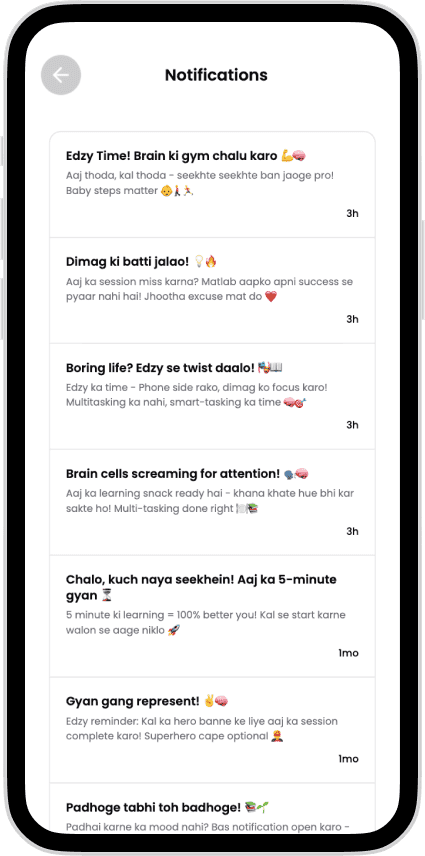
Edzy mobile app preview