

Brand Logo
Login
Search
Brand Logo

Edzy for Classes 6-12

Edzy is a personal AI tutor for CBSE and State Board students, with curriculum-aligned guidance, practice, revision, and study plans that adapt to each learner.

  • Email: always@edzy.ai
  • Phone: +91 96256 68472
  • WhatsApp: +91 96256 68472
  • Address: Sector 63, Gurgaon, Haryana

Follow Edzy

Browse by Class

  • CBSE Class 6
  • CBSE Class 7
  • CBSE Class 8
  • CBSE Class 9
  • CBSE Class 10
  • CBSE Class 11
  • CBSE Class 12
Explore the CBSE resource hub

Explore Edzy

  • Study Resources
  • Free Study Tools
  • Best Apps for Board Exams
  • Edzy vs ChatGPT
  • About Us
  • Why We Built Edzy
  • Blog
  • CBSE AI Tutor

Support & Legal

  • Help & FAQs
  • Accessibility
  • Privacy Policy
  • Terms & Conditions
  • Refund Policy
  • Cookie Policy
  • Site Directory

© 2026 Edzy. All rights reserved.

Curriculum-aligned learning paths for students in Classes 6-12.

CBSE
Class 6
English
Poorvi
The Kites

Question Bank

Practice Hub

Question Bank: The Kites

Structured practice
Question Practice

Practice chapter questions in a cleaner, exam-ready flow

Start with curated question sets, move into full module views when needed, and keep discovering related practice without losing your place in the chapter.

Question Bank - The Kites

View all (94)
Q1.

What do the kites resemble in the poem?

Single Answer MCQ
Q-00117986
View explanation
Q2.

Why does the child want to be like air?

Single Answer MCQ
Q-00117987
View explanation
Q3.

What feeling does the poet associate with looking down from above?

Single Answer MCQ
Q-00117988
View explanation
Q4.

In which stanza does the child express a wish to climb a tree?

Single Answer MCQ
Q-00117989
View explanation
Q5.

What literary device is used when saying 'like coloured birds'?

Single Answer MCQ
Q-00117990
View explanation
Q6.

How do rhymes contribute to the poem?

Single Answer MCQ
Q-00117991
View explanation
Q7.

Which word does not convey a sense of fun according to the poem?

Single Answer MCQ
Q-00117992
View explanation
Q8.

What does the poet signify by repeating certain words in the last stanza?

Single Answer MCQ
Q-00117993
View explanation
Q9.

Which sound pattern is exemplified by 'big bright blue'?

Single Answer MCQ
Q-00117994
View explanation
Q10.

What is a primary emotion felt by the child while flying the kite?

Single Answer MCQ
Q-00117995
View explanation
Q11.

What does the child want to do while atop the kite?

Single Answer MCQ
Q-00117996
View explanation
Q12.

What does the child compare their movement to when they say 'drift'?

Single Answer MCQ
Q-00117997
View explanation
Q13.

Which part of the kite is mentioned as bright?

Single Answer MCQ
Q-00117998
View explanation
Q14.

How does the poet capture the feeling of being in the sky?

Single Answer MCQ
Q-00117999
View explanation
Q15.

What conclusion can be drawn about the child's perspective in the poem?

Single Answer MCQ
Q-00118000
View explanation
Q16.

What is a common shape of a traditional kite?

Single Answer MCQ
Q-00118017
View explanation
Q17.

Which part of the kite helps it stay stable in the wind?

Single Answer MCQ
Q-00118018
View explanation
Q18.

In which festival do people fly kites in India, especially in Gujarat?

Single Answer MCQ
Q-00118019
View explanation
Q19.

What materials can be used to construct the body of a kite?

Single Answer MCQ
Q-00118020
View explanation
Q20.

What would you need on a windy day to fly a kite?

Single Answer MCQ
Q-00118021
View explanation
Q21.

Which of the following is NOT a part of the kite?

Single Answer MCQ
Q-00118022
View explanation
Q22.

How does the wind affect a kite's flight?

Single Answer MCQ
Q-00118023
View explanation
Q23.

Which country is known for holding a prominent kite festival called 'International Kite Festival'?

Single Answer MCQ
Q-00118024
View explanation
Q24.

What do the kites symbolize in the poem?

Single Answer MCQ
Q-00118025
View explanation
Q25.

During the Kite Festival, what is a common activity?

Single Answer MCQ
Q-00118026
View explanation
Q26.

In the poem, how does the author compare kites to birds?

Single Answer MCQ
Q-00118027
View explanation
Q27.

What is typically seen when looking up at a sky full of kites?

Single Answer MCQ
Q-00118028
View explanation
Q28.

What feeling does the child express when looking at the kites?

Single Answer MCQ
Q-00118029
View explanation
Q29.

What might a child feel when they see kites flying high?

Single Answer MCQ
Q-00118030
View explanation
Q30.

What does the child wish to be able to do in the poem?

Single Answer MCQ
Q-00118031
View explanation
Q31.

What do you call the string that controls the kite while flying?

Single Answer MCQ
Q-00118032
View explanation
Q32.

Which literary device is used in the line 'I wish I were small and light as air'?

Single Answer MCQ
Q-00118033
View explanation
Q33.

If a kite has a bright colored body, what effect does it typically have?

Single Answer MCQ
Q-00118034
View explanation
Q34.

What does 'sailing up there' suggest about the child's desires?

Single Answer MCQ
Q-00118035
View explanation
Q35.

When constructing a kite, what is the best position for the bridle?

Single Answer MCQ
Q-00118036
View explanation
Q36.

How does the poem portray the relationship between the child and nature?

Single Answer MCQ
Q-00118037
View explanation
Q37.

Why might an individual choose to participate in a kite festival?

Single Answer MCQ
Q-00118038
View explanation
Q38.

What is the tone of the poem overall?

Single Answer MCQ
Q-00118039
View explanation
Q39.

What sensation might a person experience while flying a kite in the open air?

Single Answer MCQ
Q-00118040
View explanation
Q40.

What part do 'paper wings' play in the poem?

Single Answer MCQ
Q-00118041
View explanation
Q41.

What repetitive phrase is used to emphasize height in the poem?

Single Answer MCQ
Q-00118042
View explanation
Q42.

What action does the child associate with hearing songs?

Single Answer MCQ
Q-00118043
View explanation
Q43.

Which of the following describes the setting of the poem?

Single Answer MCQ
Q-00118044
View explanation
Q44.

How do the people react when they see the kite?

Single Answer MCQ
Q-00118045
View explanation
Q45.

What does the child envision being able to do from up high?

Single Answer MCQ
Q-00118046
View explanation
Q46.

What common theme is expressed through the poem?

Single Answer MCQ
Q-00118047
View explanation
Q47.

What mood does the repetition of 'high, high' create?

Single Answer MCQ
Q-00118048
View explanation
Q48.

What is the part of a kite that helps stabilize its flight?

Single Answer MCQ
Q-00118049
View explanation
Q49.

Which part of the kite is referred to as the 'spine'?

Single Answer MCQ
Q-00118050
View explanation
Q50.

What connects the kite to the handle used for flying it?

Single Answer MCQ
Q-00118051
View explanation
Q51.

In which part of the kite is the design or pattern typically applied?

Single Answer MCQ
Q-00118052
View explanation
Q52.

What is the function of a kite's 'nose'?

Single Answer MCQ
Q-00118053
View explanation
Q53.

What might happen if a kite does not have a tail?

Single Answer MCQ
Q-00118054
View explanation
Q54.

Which of the following parts would be considered best for improving a kite's stability?

Single Answer MCQ
Q-00118055
View explanation
Q55.

Which part of the kite wraps and stores the kite line?

Single Answer MCQ
Q-00118056
View explanation
Q56.

How does the cross-section shape of the spine influence kite performance?

Single Answer MCQ
Q-00118057
View explanation
Q57.

What characteristic of the kite line affects how high a kite can fly?

Single Answer MCQ
Q-00118058
View explanation
Q58.

What is the main function of the 'cover' on a kite?

Single Answer MCQ
Q-00118059
View explanation
Q59.

In terms of kite design, what is a key benefit of having a wider tail?

Single Answer MCQ
Q-00118060
View explanation
Q60.

What does the child in the poem wish to be like?

Single Answer MCQ
Q-00118061
View explanation
Q61.

Why is the choice of material important for the cover of a kite?

Single Answer MCQ
Q-00118062
View explanation
Q62.

What type of poem does the author write about kites?

Single Answer MCQ
Q-00118063
View explanation
Q63.

What role does the nose play in directing the kite during flight?

Single Answer MCQ
Q-00118064
View explanation
Q64.

In the poem, kites are compared to what?

Single Answer MCQ
Q-00118065
View explanation
Q65.

What would be likely if a kite's spine were too flexible?

Single Answer MCQ
Q-00118066
View explanation
Q66.

Why do the people below stare at the child?

Single Answer MCQ
Q-00118067
View explanation
Q67.

What is one reason the child wishes to climb onto a kite?

Single Answer MCQ
Q-00118068
View explanation
Q68.

What is the primary emotion expressed in the poem?

Single Answer MCQ
Q-00118069
View explanation
Q69.

Which part of a kite helps it stay stable during flight?

Single Answer MCQ
Q-00118070
View explanation
Q70.

What is a characteristic feature of a cinquain poem?

Single Answer MCQ
Q-00118071
View explanation
Q71.

In kite flying, what does the kite line do?

Single Answer MCQ
Q-00118072
View explanation
Q72.

What feelings are evoked when the child looks down from the kite?

Single Answer MCQ
Q-00118073
View explanation
Q73.

Why is the child compared to a kite in the poem?

Single Answer MCQ
Q-00118074
View explanation
Q74.

What does the phrase 'wind-whipped sky' suggest about the environment?

Single Answer MCQ
Q-00118075
View explanation
Q75.

What does the word 'drift' imply about the kite's movement?

Single Answer MCQ
Q-00118076
View explanation
Q76.

Which color is least likely to be associated with kites based on traditional designs?

Single Answer MCQ
Q-00118077
View explanation
Q77.

What does draping kites with ribbons symbolize?

Single Answer MCQ
Q-00118078
View explanation
Q78.

How does the poet create a sense of longing in the poem?

Single Answer MCQ
Q-00118079
View explanation
Q79.

What is Uttarayan popularly known as?

Single Answer MCQ
Q-00118080
View explanation
Q80.

In which Indian state is the International Kite Festival held in January?

Single Answer MCQ
Q-00118081
View explanation
Q81.

During which month is the Kite Festival of India traditionally celebrated?

Single Answer MCQ
Q-00118082
View explanation
Q82.

What is a common sight during the Kite Festival?

Single Answer MCQ
Q-00118083
View explanation
Q83.

Which festival is celebrated in Punjab, involving kite flying?

Single Answer MCQ
Q-00118084
View explanation
Q84.

Why do many people attend kite festivals in India?

Single Answer MCQ
Q-00118085
View explanation
Q85.

What is a notable item used for kite flying?

Single Answer MCQ
Q-00118086
View explanation
Q86.

What effect does the wind have on kite flying?

Single Answer MCQ
Q-00118087
View explanation
Q87.

Which state in India hosts a kite festival organized by its Tourism Department?

Single Answer MCQ
Q-00118089
View explanation
Q88.

Which character describes flying on a kite in the poem?

Single Answer MCQ
Q-00118091
View explanation
Q89.

How do festivals like Uttarayan affect community spirit?

Single Answer MCQ
Q-00118093
View explanation
Q90.

What kind of kites can be seen during the Kite Festival?
Single Answer MCQ
Q-00118095
View explanation
Q91.

Why is kite flying considered a joyful activity?

Single Answer MCQ
Q-00118097
View explanation
Q92.

What tradition is associated with kite flying in the context of harvest?

Single Answer MCQ
Q-00118099
View explanation
Q93.

What is a common misconception about kite festivals?

Single Answer MCQ
Q-00118101
View explanation
Q94.

What often accompanies kite flying during the festival?

Single Answer MCQ
Q-00118103
View explanation
Learn Better On The App
Gamified progress

Learning That Feels Rewarding

Earn XP, unlock badges, and turn revision into a habit that feels motivating.

XP and badges
Higher engagement

Faster access to practice, revision, and daily study flow.

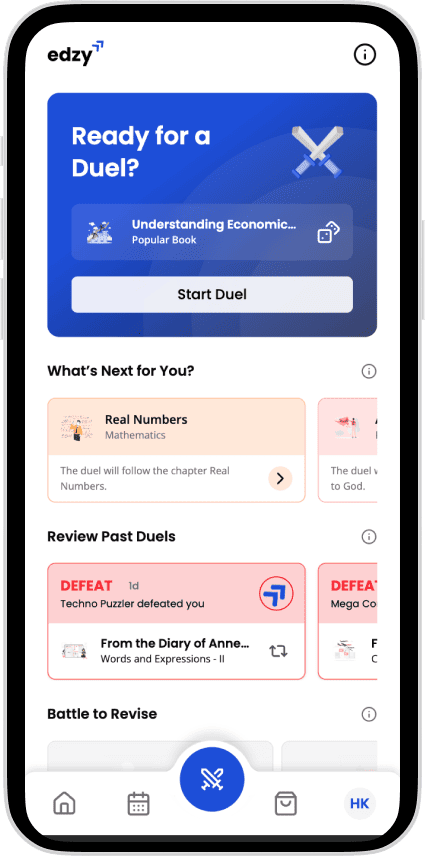
Edzy mobile app preview