

Brand Logo
Login
Search
Brand Logo

Edzy for Classes 6-12

Edzy is a personal AI tutor for CBSE and State Board students, with curriculum-aligned guidance, practice, revision, and study plans that adapt to each learner.

  • Email: always@edzy.ai
  • Phone: +91 96256 68472
  • WhatsApp: +91 96256 68472
  • Address: Sector 63, Gurgaon, Haryana

Follow Edzy

Browse by Class

  • CBSE Class 6
  • CBSE Class 7
  • CBSE Class 8
  • CBSE Class 9
  • CBSE Class 10
  • CBSE Class 11
  • CBSE Class 12
Explore the CBSE resource hub

Explore Edzy

  • Study Resources
  • Free Study Tools
  • Best Apps for Board Exams
  • Edzy vs ChatGPT
  • About Us
  • Why We Built Edzy
  • Blog
  • CBSE AI Tutor

Support & Legal

  • Help & FAQs
  • Accessibility
  • Privacy Policy
  • Terms & Conditions
  • Refund Policy
  • Cookie Policy
  • Site Directory

© 2026 Edzy. All rights reserved.

Curriculum-aligned learning paths for students in Classes 6-12.

CBSE
Class 7
Arts
Kriti
Nature’s Palette

Question Bank

Practice Hub

Question Bank: Nature’s Palette

Structured practice
Question Practice

Practice chapter questions in a cleaner, exam-ready flow

Start with curated question sets, move into full module views when needed, and keep discovering related practice without losing your place in the chapter.

Question Bank - Nature’s Palette

View all (75)
Q1.

What are primary colors?

Single Answer MCQ
Q-00152332
View explanation
Q2.

Which of the following is a secondary color?

Single Answer MCQ
Q-00152333
View explanation
Q3.

What color do you get by mixing blue and yellow?

Single Answer MCQ
Q-00152334
View explanation
Q4.

Which of these is NOT a primary color?

Single Answer MCQ
Q-00152335
View explanation
Q5.

What is a tertiary color?

Single Answer MCQ
Q-00152336
View explanation
Q6.

What process creates shades?

Single Answer MCQ
Q-00152337
View explanation
Q7.

To create a tone, you must mix a color with:

Single Answer MCQ
Q-00152339
View explanation
Q8.

When creating a color wheel, which colors should be in the center?

Single Answer MCQ
Q-00152342
View explanation
Q9.

What would you call the colors made by mixing red and purple?

Single Answer MCQ
Q-00152344
View explanation
Q10.

Which combination would result in a light tint?

Single Answer MCQ
Q-00152346
View explanation
Q11.

Which activity can help you understand color tones better?

Single Answer MCQ
Q-00152348
View explanation
Q12.

How can you create a grey color?

Single Answer MCQ
Q-00152350
View explanation
Q13.

Which of the following demonstrates a common misconception about color mixing?

Single Answer MCQ
Q-00152352
View explanation
Q14.

Which technique is not effective for showing light and shade in artwork?

Single Answer MCQ
Q-00152354
View explanation
Q15.

What is the first step in the plant study colouring activity?

Single Answer MCQ
Q-00152391
View explanation
Q16.

Which of the following is NOT a medium suggested for colouring?

Single Answer MCQ
Q-00152392
View explanation
Q17.

Why do plants change color through the seasons?

Single Answer MCQ
Q-00152393
View explanation
Q18.

What are the primary colors in the color wheel?

Single Answer MCQ
Q-00152394
View explanation
Q19.

What is a shade in colour theory?

Single Answer MCQ
Q-00152395
View explanation
Q20.

Which color is formed by mixing yellow and blue?

Single Answer MCQ
Q-00152396
View explanation
Q21.

What should you do after observing the plant for details in your drawing?

Single Answer MCQ
Q-00152397
View explanation
Q22.

What color is a tertiary color mixed from?

Single Answer MCQ
Q-00152398
View explanation
Q23.

In the context of the activity, what does the term 'tint' refer to?

Single Answer MCQ
Q-00152399
View explanation
Q24.

Which of the following is not a secondary color?

Single Answer MCQ
Q-00152400
View explanation
Q25.

During which stage of the plant’s life should you observe it for drawing?

Single Answer MCQ
Q-00152401
View explanation
Q26.

How can you create the color orange?

Single Answer MCQ
Q-00152402
View explanation
Q27.

Which technique helps show light and shadow in your artwork?

Single Answer MCQ
Q-00152403
View explanation
Q28.

Which color is made by mixing purple and red?

Single Answer MCQ
Q-00152405
View explanation
Q29.

What is the purpose of the 'Garden of Malabar'?

Single Answer MCQ
Q-00152404
View explanation
Q30.

What is the significance of using different angles while drawing a plant?

Single Answer MCQ
Q-00152407
View explanation
Q31.

What is the complementary color of yellow?

Single Answer MCQ
Q-00152406
View explanation
Q32.

When preparing to color, what should be done first?

Single Answer MCQ
Q-00152408
View explanation
Q33.

What do you call a color that is darker than the original hue?

Single Answer MCQ
Q-00152409
View explanation
Q34.

How can mixing colors enhance your plant study artwork?

Single Answer MCQ
Q-00152410
View explanation
Q35.

Which of the following represents a warm color?

Single Answer MCQ
Q-00152411
View explanation
Q36.

What is the main benefit of class displaying your artwork?

Single Answer MCQ
Q-00152412
View explanation
Q37.

What color do you get when you mix blue and green?

Single Answer MCQ
Q-00152413
View explanation
Q38.

What is a common misconception when drawing plants?

Single Answer MCQ
Q-00152414
View explanation
Q39.

What is the effect of mixing a color with white?

Single Answer MCQ
Q-00152415
View explanation
Q40.

Which of the following would be an advanced technique for depth in your drawings?

Single Answer MCQ
Q-00152416
View explanation
Q41.

Which term describes the purity or intensity of a color?

Single Answer MCQ
Q-00152417
View explanation
Q42.

In color theory, what does 'analogous colors' mean?

Single Answer MCQ
Q-00152418
View explanation
Q43.

What would you call colors that are directly opposite each other on the color wheel?

Single Answer MCQ
Q-00152419
View explanation
Q44.

How do you create a muted color?

Single Answer MCQ
Q-00152420
View explanation
Q45.

What is a tint in color theory?

Single Answer MCQ
Q-00152421
View explanation
Q46.

Which of the following colors is created by adding black to blue?

Single Answer MCQ
Q-00152422
View explanation
Q47.

What happens to a color when it is mixed with gray?

Single Answer MCQ
Q-00152423
View explanation
Q48.

What is the primary method to create shades of a color?

Single Answer MCQ
Q-00152424
View explanation
Q49.

When mixing yellow and blue, what type of color is formed?

Single Answer MCQ
Q-00152425
View explanation
Q50.

Which of the following is a tertiary color?

Single Answer MCQ
Q-00152426
View explanation
Q51.

How does the color blue change in low light conditions?

Single Answer MCQ
Q-00152427
View explanation
Q52.

What effect does adding white have on a color?

Single Answer MCQ
Q-00152428
View explanation
Q53.

If a color appears different in dim lighting compared to natural light, what concept is illustrated?

Single Answer MCQ
Q-00152429
View explanation
Q54.

Which color is commonly confused for green by those with color blindness?

Single Answer MCQ
Q-00152430
View explanation
Q55.

What visual phenomenon does the color wheel primarily demonstrate?

Single Answer MCQ
Q-00152431
View explanation
Q56.

Creating a tone involves which of the following actions?

Single Answer MCQ
Q-00152432
View explanation
Q57.

If you mix red with yellow, which tertiary color is produced?

Single Answer MCQ
Q-00152433
View explanation
Q58.

In visual art, what term describes the darkness or lightness of a color?

Single Answer MCQ
Q-00152434
View explanation
Q59.

What color theory principle explains the use of tints and shades in artworks?

Single Answer MCQ
Q-00152435
View explanation
Q60.

What is the origin of the word ‘miniature’ in art?

Single Answer MCQ
Q-00152436
View explanation
Q61.

Which natural source is primarily used to create colors in miniature paintings?

Single Answer MCQ
Q-00152437
View explanation
Q62.

What binder is commonly used with colors in Indian miniature paintings?

Single Answer MCQ
Q-00152438
View explanation
Q63.

Miniature paintings are often characterized by which of the following?

Single Answer MCQ
Q-00152439
View explanation
Q64.

In miniature paintings, gold and silver are typically used in what form?

Single Answer MCQ
Q-00152440
View explanation
Q65.

Which tool is primarily used to apply paint in miniature artworks?

Single Answer MCQ
Q-00152441
View explanation
Q66.

What is a common theme depicted in Indian miniature paintings?

Single Answer MCQ
Q-00152442
View explanation
Q67.

Which of the following colors is commonly associated with the term ‘minium’?

Single Answer MCQ
Q-00152443
View explanation
Q68.

What happened to the use of paper for miniature paintings from the 12th century CE onwards?

Single Answer MCQ
Q-00152444
View explanation
Q69.

What is one effect of exposure to light on materials used in miniature paintings?

Single Answer MCQ
Q-00152445
View explanation
Q70.

Which type of art brushes are primarily used in miniature paintings for fine details?

Single Answer MCQ
Q-00152446
View explanation
Q71.

What was an initial surface used for miniature paintings before paper?

Single Answer MCQ
Q-00152447
View explanation
Q72.

What type of themes could be depicted in Rajasthani miniature paintings?

Single Answer MCQ
Q-00152448
View explanation
Q73.

What effect does moisture have on colours in paintings?

Single Answer MCQ
Q-00152449
View explanation
Q74.

Which characteristic helps differentiate miniature paintings from larger artworks?

Single Answer MCQ
Q-00152450
View explanation
Q75.

Why is the study of color variations important in understanding miniature paintings?

Single Answer MCQ
Q-00152451
View explanation
Learn Better On The App
One app for the full journey

The NCERT Companion

From planning to practice to revision, keep your full study workflow in one place.

Planning to practice
Everything connected

Faster access to practice, revision, and daily study flow.

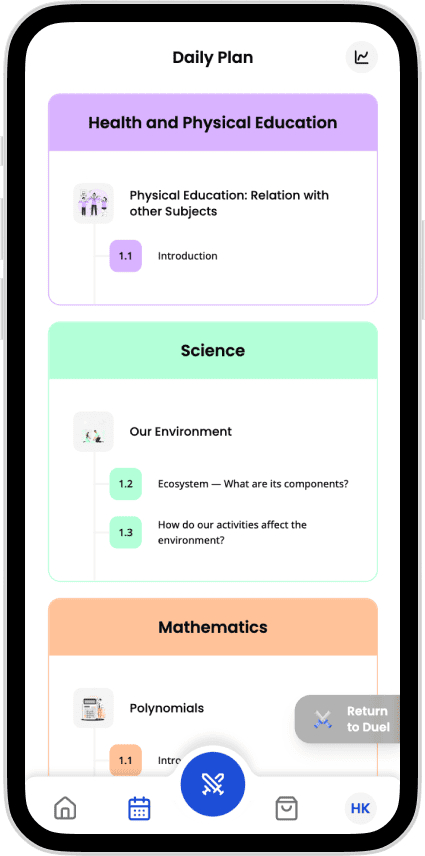
Edzy mobile app preview