Edzy
AI TutorResourcesToolsCompareBuy
SearchDownload AppLogin
Edzy

Edzy for Classes 6-12

Edzy is a personal AI tutor for CBSE and State Board students, with curriculum-aligned guidance, practice, revision, and study plans that adapt to each learner.

  • Email: always@edzy.ai
  • Phone: +91 96256 68472
  • WhatsApp: +91 96256 68472
  • Address: Sector 63, Gurgaon, Haryana

Follow Edzy

Browse by Class

  • CBSE Class 6
  • CBSE Class 7
  • CBSE Class 8
  • CBSE Class 9
  • CBSE Class 10
  • CBSE Class 11
  • CBSE Class 12
Explore the CBSE resource hub

Explore Edzy

  • Study Resources
  • Free Study Tools
  • Best Apps for Board Exams
  • Edzy vs ChatGPT
  • About Us
  • Why We Built Edzy
  • Blog
  • CBSE AI Tutor

Support & Legal

  • Help & FAQs
  • Accessibility
  • Privacy Policy
  • Terms & Conditions
  • Refund Policy
  • Cookie Policy
  • Site Directory

© 2026 Edzy. All rights reserved.

Curriculum-aligned learning paths for students in Classes 6-12.

Subject Journey

Sanskrit

Class 10 Sanskrit curriculum includes fundamental concepts of the language, covering letters, nouns, conjugations, and various grammatical rules. This subject enhances students' understanding of the rich tradition of Sanskrit and its applications.

3 books available
CBSE
Class 10

Sanskrit

Choose Your Book

Books for Class 10 - Sanskrit

Select the book your school uses and move into chapter-wise summaries, notes, flash cards, and question-bank practice.

Vyakaranavithi

Vyakaranavithi is an essential guide for Class 10 Sanskrit students, delving into the intricacies of the language. Covering various topics, it facilitates a comprehensive understanding of Sanskrit grammar and usage.

View chapters

Shemushi - II

Shemushi - II is an essential Sanskrit textbook for Class 10 students, offering a comprehensive overview of various topics that enhance language proficiency and cultural understanding.

View chapters

Abhyaswaan Bhav - II

Abhyaswaan Bhav - II is an essential exam subject book for Class 10 students, focusing on the Sanskrit language. It covers vital topics including comprehension, letter writing, and grammar concepts to enhance learning and preparation.

View chapters
The Class 10 Sanskrit syllabus focuses on the comprehensive study of Sanskrit language fundamentals, enabling students to explore linguistic elements such as vowels, consonants, nouns, and verb forms. With topics like word formation, grammatical rules, and syntax, learners gain not only language proficiency but also an appreciation for classical literature and culture. Grammar exercises, literature analysis, and practical applications reinforce learning, while a diverse array of topics prepares students for examinations and further studies. This well-structured curriculum fosters creative thinking and communication skills key to mastering Sanskrit, making it a valuable educational experience.
Learn Better On The App
Competitive revision

Challenge Your Friends

Compete in short duels with fast rounds, instant feedback, and zero boredom.

1v1 challenges
Fast recall training

Faster access to practice, revision, and daily study flow.

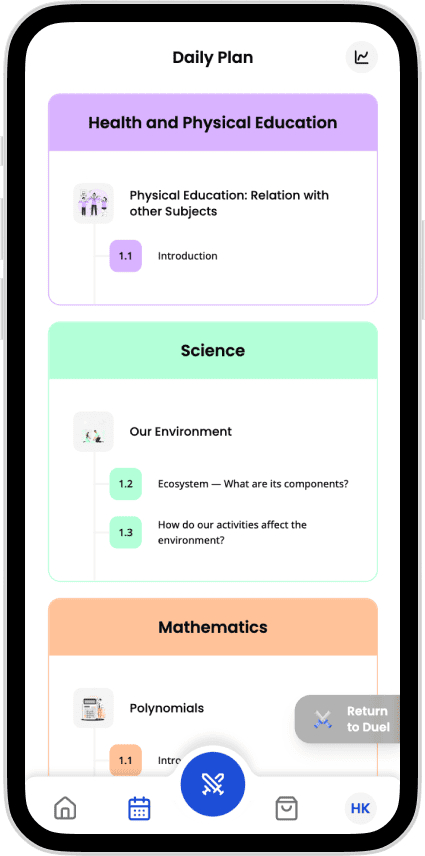
Edzy mobile app preview

Class 10 Sanskrit - Curriculum Overview and Resources

Explore the Class 10 Sanskrit syllabus focused on grammar, literature, and cultural significance. Enhance your language skills and prepare for exams with a comprehensive understanding of key topics.

Class 10 Sanskrit encompasses a variety of topics, including the definition of letters, types of vowels and consonants, and their pronunciation. It also covers nouns, their forms and usages, along with grammar rules and literary analysis, providing a holistic understanding of the language.
Studying Sanskrit helps students enhance their cognitive abilities, improves their language skills, and provides insights into classical texts. Learning this ancient language fosters appreciation for Indian heritage and contributes to a better understanding of various linguistic structures.
The curriculum includes essential grammatical concepts such as the definition of nouns, their classifications, verb forms, conjunctions, and several types of compounds. These topics are fundamental for building competency in syntax and usage in different contexts.
Students explore various literary forms, including prose, poetry, and drama, enhancing their interpretive skills. This exposure enables them to engage with the cultural and philosophical themes prevalent in Sanskrit literature, enriching their intellectual growth.
Class 10 Sanskrit fosters vocabulary development and analytical thinking. Engaging with diverse texts sharpens comprehension and communication skills while enhancing creative expression through language, which is vital for academic success.
Topics in Sanskrit grammar include definitions of various word forms, types of compounds, rules for suffixes and prefixes, and syntactical frameworks. Understanding these concepts is crucial for constructing grammatically correct sentences.
Effective study techniques include regular practice of writing and speaking, using flashcards for vocabulary, engaging with native speakers, and studying classical texts. Additionally, consistent revision and the use of study guides are beneficial.
Cultural context is significant in the Class 10 Sanskrit curriculum, as it ties language studies with historical achievements, philosophical concepts, and literary works that reflect the social and moral values of ancient India.
Yes, studying Sanskrit can open doors to advanced studies in linguistics, comparative literature, theology, and philosophy. It provides a strong foundational knowledge that is beneficial for scholars pursuing these fields.
Pronunciation is crucial in Sanskrit due to its phonetic nature. Accurate pronunciation aids in clear communication, enhances understanding of texts, and is key to mastering recitation, which is an integral part of studying this language.
Preparation for Sanskrit examinations should include regular revision of grammar rules, vocabulary, and active engagement with literary texts. Practicing past question papers and participating in study groups can also enhance readiness.
Students may face challenges in mastering pronunciation, understanding complex grammatical rules, and translating classical texts. Consistent practice, seeking help from teachers, and collaborative learning can help mitigate these issues.
No prior knowledge is required for Class 10 Sanskrit. The curriculum is designed to introduce students to the language from the basics, ensuring a gradual and comprehensive learning experience.
Translation exercises are integral to learning Sanskrit as they enhance comprehension of syntax and vocabulary. They also bridge the understanding of cultural and historical contexts associated with the texts.
Sanskrit serves as a root language for many Indo-European languages. Studying it can provide insights into language structures, enlightening students about etymology and the evolution of words across languages.
Students may explore works like Panchatantra, Mahabharata, and Ramayana, as well as various poetic forms and dramas that reflect the richness of Sanskrit literature and its significance in cultural heritage.
Yes, there are numerous online resources, such as websites, courses, and interactive platforms that offer learning materials, practice exercises, and video tutorials to enhance Sanskrit learning experience.
Learning Sanskrit deepens cultural understanding by connecting students with ancient texts, philosophies, rituals, and customs that form the basis of Indian culture, fostering appreciation for its grandeur and complexity.
While spoken Sanskrit is rare today, students can practice simple phrases, participate in discussions, and engage with community activities that promote the use of Sanskrit, helping to reinforce their learning.
The syllabus is structured around key themes and topics that progress from foundational language skills to more advanced grammatical concepts and literature analysis, ensuring comprehensive coverage of the subject matter.
Effective teaching methods include interactive learning, group discussions, multimedia resources, and regular assessments to evaluate student progress. These methods encourage active participation and enhance retention.
Future prospects include careers in academia, translation, cultural preservation, and roles in research organizations. Knowledge of Sanskrit can also support personal enrichment and contribution to various fields.

Additional Subjects in Class 10 | Complete Learning Resources

English

Open subject

Mathematics

Open subject

Hindi

Open subject

Urdu

Open subject

Science

Open subject

Social Science

Open subject

Health and Physical Education

Open subject