
How AI Tutors Help CBSE Class 10 Students Identify Weak Chapters Before Boards
Discover how AI tutors can pinpoint weak chapters for smarter revision.
This blog explores how AI-powered learning tools assist CBSE Class 10 students in identifying weak chapters, enabling effective revision strategies.


Gaurav Parashar
@gauravparashar
Listen to this article
How AI Tutors Help CBSE Class 10 Students Identify Weak Chapters Before Boards
As CBSE Class 10 students prepare for their board examinations, the pressure to perform well can be overwhelming. Many students often misjudge their understanding of subjects, leading to last-minute cramming and anxiety. However, with the advent of AI-powered learning tools, students now have the opportunity to identify their weak areas early in the academic year. This blog delves into how AI tutors analyze practice patterns to help students revise smarter, not harder.
Why Students Often Misjudge Their Weak Areas
One of the most common challenges faced by students is the inability to accurately assess their own understanding of various subjects. This misjudgment can stem from several factors:
Overconfidence in certain topics due to previous success.
Fear of failure leading to avoidance of difficult subjects.
Reliance on peer comparisons rather than self-assessment.
Inconsistent study habits that prevent a clear understanding of concepts.
For instance, a student may excel in mathematics during class tests but struggle with complex problems during mock exams. This discrepancy often leads to a false sense of security, resulting in inadequate preparation for the actual board exams.
How AI Tracks Learning Behaviour and Mistakes
AI tutors utilize advanced algorithms to track students' learning behaviors and mistakes over time. By analyzing data from quizzes, assignments, and practice tests, these tools can provide valuable insights into a student's performance. Here’s how AI tracks learning:
Data Collection: Every interaction a student has with the AI tutor is recorded, including the types of questions answered correctly or incorrectly.
Pattern Recognition: AI algorithms identify patterns in the data, such as recurring mistakes in specific chapters or concepts.
Feedback Mechanism: Based on the analysis, AI tutors offer immediate feedback, helping students understand where they went wrong.
For example, if a student consistently struggles with geometry questions, the AI tutor will flag this area for further review, allowing the student to focus on their weaknesses.
Chapter-Level and Concept-Level Insights
AI tutors provide both chapter-level and concept-level insights, allowing students to gain a comprehensive understanding of their strengths and weaknesses. Here’s how:
Chapter-Level Insights: AI can analyze performance across entire chapters, highlighting which chapters require more attention. For instance, if a student scores poorly on the chapter about 'Quadratic Equations,' the AI will suggest revisiting that chapter.
Concept-Level Insights: Beyond chapters, AI can break down performance into specific concepts. If a student struggles with 'factoring' within quadratic equations, the AI can recommend targeted practice on that concept.
This dual-level analysis empowers students to take charge of their learning journey, ensuring they focus their efforts where they are needed most.
Personalised Revision Suggestions
One of the standout features of AI tutors is their ability to offer personalized revision suggestions tailored to each student's unique learning needs. Here’s how this works:
Custom Study Plans: Based on the identified weak areas, AI tutors can create customized study plans that prioritize chapters and concepts needing improvement.
Targeted Practice Questions: AI can generate practice questions specifically designed to address the student's weak areas, ensuring focused revision.
Progress Tracking: As students work through their personalized study plans, AI tutors continuously track progress, adjusting recommendations as needed.
For example, if a student is weak in 'Statistics,' the AI tutor might suggest a series of practice tests focused solely on that topic, allowing the student to build confidence and competence.
Reducing Dependency on Guesswork
Traditional study methods often rely on guesswork, where students may choose to focus on topics they feel comfortable with rather than those they truly need to improve. AI tutors eliminate this guesswork by providing data-driven insights. Here’s how:
Objective Analysis: AI tutors provide an objective analysis of a student's performance, removing the emotional bias that often clouds self-assessment.
Clear Recommendations: Instead of vague suggestions, AI tutors offer clear, actionable recommendations based on data, guiding students on what to study next.
Confidence Building: By focusing on areas that need improvement, students can build confidence as they see tangible progress over time.
This approach not only enhances learning efficiency but also reduces anxiety associated with exam preparation.
Using AI Alongside School Teaching
AI tutors are designed to complement traditional school teaching rather than replace it. Here’s how students can effectively integrate AI into their study routines:
Supplementing Classroom Learning: AI tutors can provide additional resources and practice questions that align with what is being taught in school.
Reinforcing Concepts: Students can use AI to reinforce concepts learned in class, ensuring a deeper understanding.
Flexible Learning: AI tutors offer the flexibility to study at one's own pace, allowing students to revisit challenging topics as needed.
For instance, if a student learns about 'Chemical Reactions' in school, they can use their AI tutor to practice related questions and clarify doubts at their convenience.
Ethical and Responsible AI Usage
As with any technology, it is essential to use AI responsibly. Here are some guidelines for ethical AI usage in education:
Data Privacy: Ensure that the AI tutor complies with data privacy regulations, protecting students' personal information.
Balanced Approach: While AI is a powerful tool, it should be used as part of a balanced study routine that includes traditional learning methods.
Critical Thinking: Encourage students to think critically about the feedback provided by AI tutors, using it as a guide rather than an absolute authority.
By following these guidelines, students can harness the power of AI while maintaining a responsible approach to their education.
Benefits During Exam Season
As the board exams approach, the benefits of using AI tutors become even more pronounced. Here’s how AI can assist students during this critical time:
Focused Revision: AI tutors help students concentrate their revision efforts on weak areas, maximizing study efficiency.
Mock Tests: Many AI platforms offer mock tests that simulate the exam environment, helping students build confidence and reduce anxiety.
Time Management: AI can assist students in managing their time effectively, ensuring they cover all necessary topics before the exams.
For example, a student preparing for their mathematics board exam can take AI-generated mock tests to identify last-minute areas of concern, allowing for targeted revision just days before the exam.
In conclusion, AI tutors are revolutionizing the way CBSE Class 10 students prepare for their board examinations. By providing personalized insights, reducing guesswork, and complementing traditional teaching methods, AI empowers students to take control of their learning journey. As students and parents embrace these innovative tools, the path to academic success becomes clearer and more attainable.
Suggested blogs
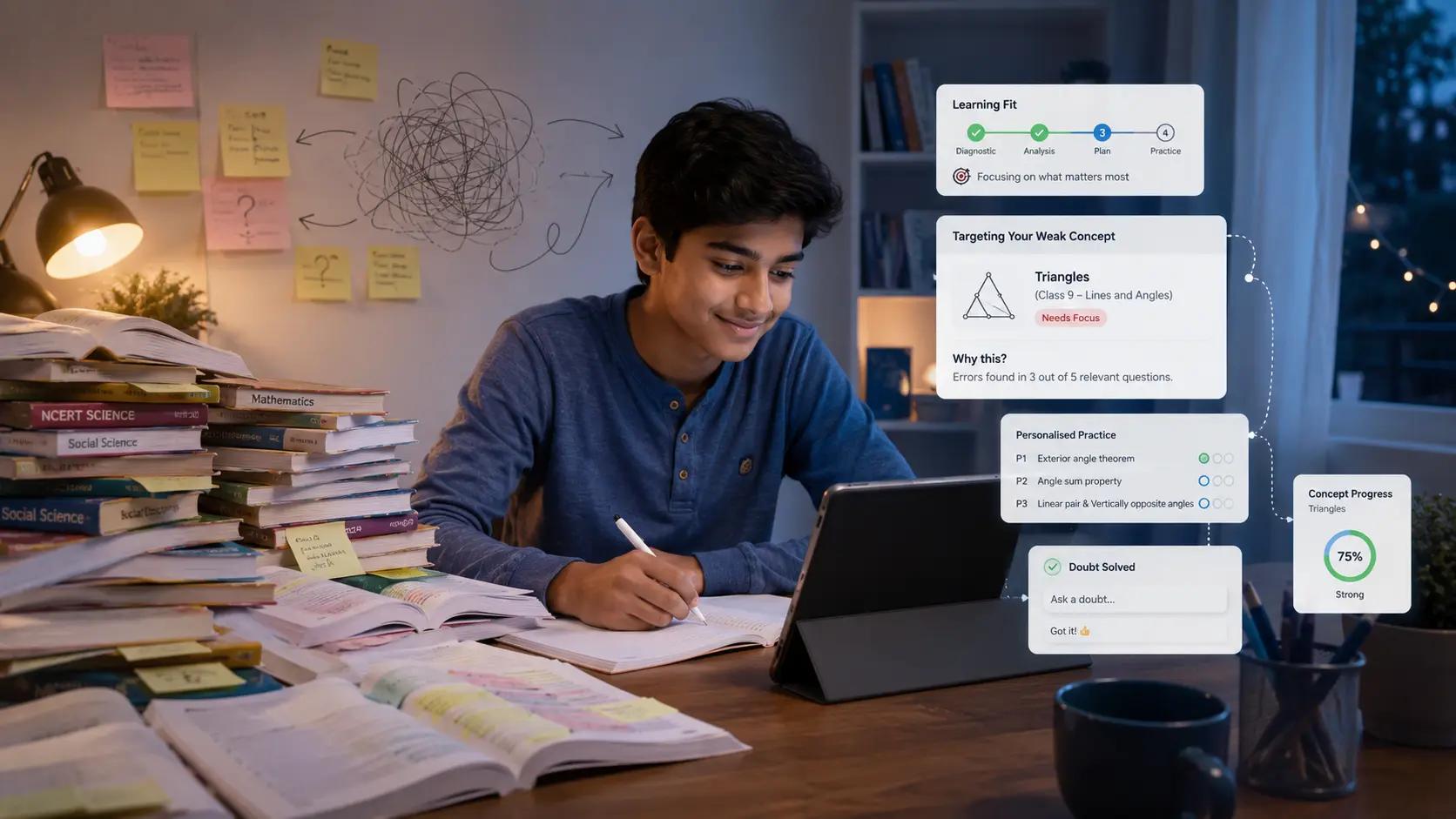
What Personalised Learning Actually Means for a CBSE Student (And Why It's Not What Most People Think)
Most students hear "personalised learning" and think pace. The real advantage is precision here's what that looks like for CBSE preparation.

How to Actually Use AI for CBSE Board Exam Preparation (Without Wasting Time on It)
Most students use AI the wrong way during revision. Here's the method that actually builds retention before board exams.
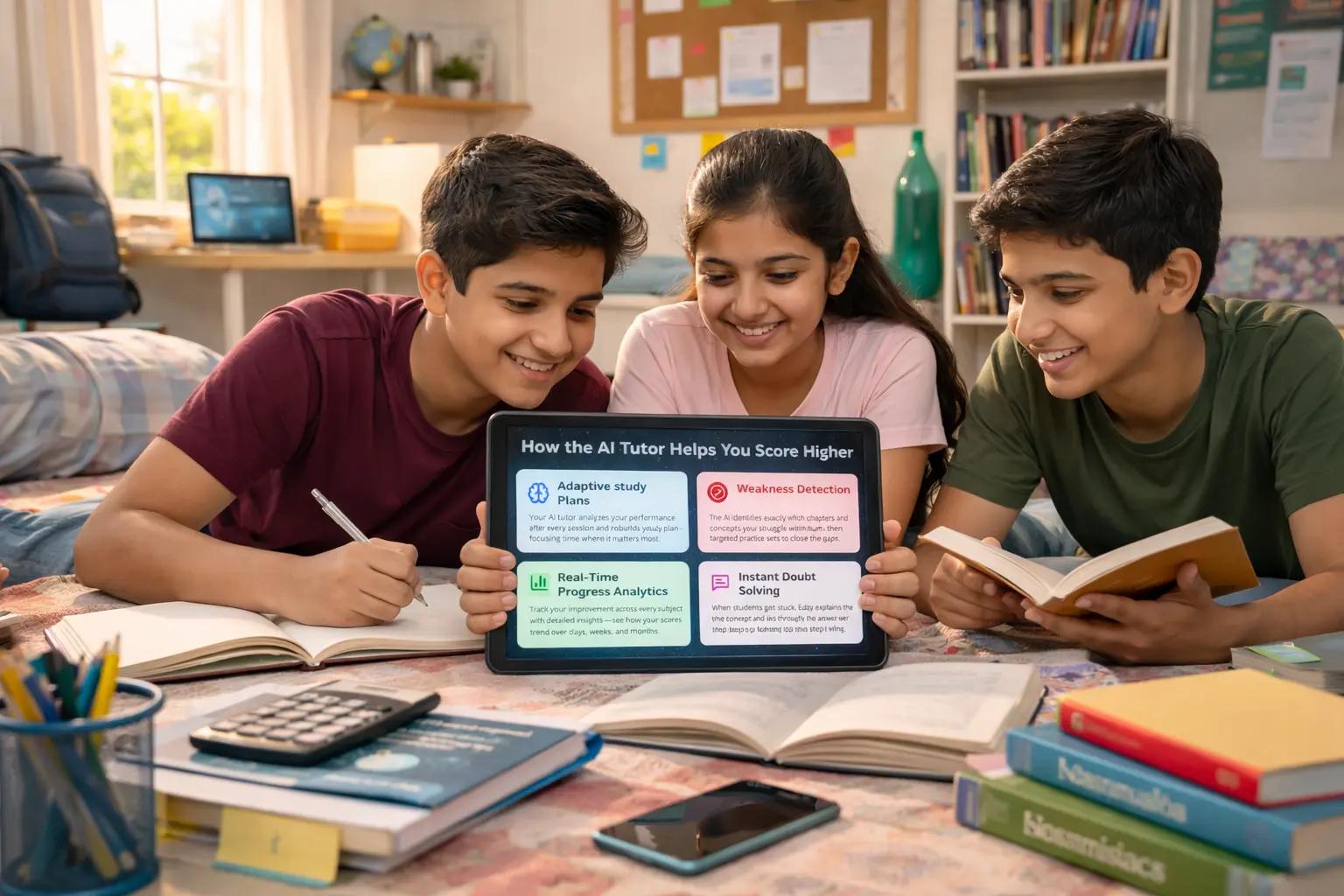
How AI-Based Practice Helps CBSE Class 10 Students Transition to Class 11
Navigating the academic leap from Class 10 to Class 11 with AI support

How AI Can Help CBSE Class 10 Students Revise Smarter During Holidays
Discover how AI tools can make holiday study effective yet enjoyable for CBSE Class 10 students.