
How to Actually Use AI for CBSE Board Exam Preparation (Without Wasting Time on It)
Most students use AI the wrong way during revision. Here's the method that actually builds retention before board exams.
AI tools are everywhere, but most CBSE students use them passively reading explanations, copying summaries and wonder why nothing sticks on exam day. This blog breaks down the Retrieval Loop, a four-step framework that turns AI into a feedback engine rather than a shortcut. Covers how to generate board-format practice questions, clear doubts without losing NCERT accuracy, and what to watch out for when AI gets things wrong. Built specifically for Class 10 and Class 12 students preparing for CBSE board exams.

Listen to this article
How to Actually Use AI for CBSE Board Exam Preparation (Without Wasting Time on It)
Most Class 10 and 12 students who try AI tools for studying walk away disappointed not because the tools don't work, but because they used them the wrong way.
They ask AI to explain a chapter. They read the explanation. They feel like they've studied. Three days later, they can't recall any of it because reading an explanation, however clear, is still passive. And passive exposure doesn't build the kind of memory that holds up in a three-hour board paper.
Used correctly, AI changes revision entirely. It shifts you from reviewing content to actively retrieving it and that shift is what actually moves marks. Here's how to make that shift happen, specifically for CBSE board exam preparation.
Why Most AI-Assisted Studying Doesn't Work
The problem isn't the tool. It's the habit around it.
When students use AI passively asking for summaries, reading explanations, copying definitions they're doing the same thing they'd do with a textbook, just faster. The speed feels like progress. The retention isn't there.
CBSE board papers, particularly in Class 10 and Class 12, have moved sharply toward application-based testing. Case-based questions, assertion-reason formats, and competency-based problems now make up a significant portion of board marks especially in Science, Social Science, and Business Studies. These question types can't be answered by recall alone. They require you to have genuinely processed the concept, not just read it.
That's the gap AI can close but only if you use it to practice retrieval, not to replace reading.
The Retrieval Loop: A Framework for Using AI in CBSE Revision
The most effective way to use AI for board exam preparation follows a four-step cycle. Call it the Retrieval Loop:
Step 1 — Study the concept from your NCERT textbook first. Not from AI. Not from YouTube. The NCERT is the source document for CBSE board papers, and your understanding needs to be anchored there.
Step 2 — Write from memory. Close the book. Write a five-mark answer, or a short explanation of the concept, entirely from memory. Don't refer to anything. The struggle is the point — attempting to retrieve information, even imperfectly, strengthens memory far more than re-reading does.
Step 3 — Use AI as your feedback engine. Paste your answer into an AI tool with this prompt:
"I am a Class [10/12] student preparing for CBSE board exams. Review this answer and tell me: which key points are missing, whether the structure matches CBSE expectations, and which NCERT keywords I should have included."
The feedback you receive is immediate and specific. You'll see exactly what you retained and what you thought you understood but didn't.
Step 4 — Close the gaps and repeat. Revise only the specific points you missed not the entire chapter. Then attempt a different question on the same concept and run the loop again.
This is how CBSE students are using AI for board exam revision without wasting time on it not as a shortcut around effort, but as a feedback mechanism that makes effort more precise.
Generating Practice Questions That Match Board Exam Formats
After finishing a chapter, don't wait for your school to give you a test. Generate one yourself.
Ask an AI tool for:
2 assertion-reason questions on the chapter
1 case-based question based on a real-world scenario
3 short answer questions (three-mark format)
1 application-based MCQ
The key is specificity. "Give me questions on Chapter 1 Science Class 10" returns generic output. "Give me 2 competency-based questions on the types of chemical reactions from NCERT Class 10 Chapter 1, in CBSE Board Exam format" returns something you can actually use.
For students who want questions already mapped to NCERT learning outcomes without building every prompt from scratch, Edzy offers chapter-wise practice sets built specifically around CBSE board expectations useful when you want structured, curriculum-aligned practice rather than spending revision time crafting AI prompts.
Using AI to Clear Doubts With One Important Rule
AI is genuinely useful for breaking down difficult concepts. Struggling with electromagnetic induction? Ask for an explanation using a bicycle dynamo. Still confused? Ask it again, simpler. Ask for just the first step of the derivation, nothing else.
This on-demand, patient explanation is something a classroom of forty students rarely allows. Edzy's AI doubt-solving works exactly this way you ask in your own words, follow up as many times as needed, and the explanation stays scoped to your NCERT chapter and grade level, so the language matches what your board paper will use.
The rule: treat AI explanations as a starting point, not a final answer. For any definition, formula, or fact that might appear in your board paper, verify it against your NCERT textbook. AI makes mistakes confidently and a subtly wrong definition memorised before boards is worse than no definition at all.
Use AI to understand the logic of something. Use NCERT to verify the specifics.
The Question Formats to Prioritise in AI-Generated Practice
Not all practice is equal. The three question types that have increased most in recent CBSE board papers are:
Case-based questions: a real-world scenario followed by four questions that require applying concepts from the chapter
Assertion-reason questions: two statements where you identify whether both are true and whether one explains the other
Competency-based questions: problems that require selecting and applying the right concept rather than reproducing a definition
When generating practice questions with AI, always specify one of these formats. Generic MCQs and straightforward short-answer questions are easier to generate but don't prepare you for the formats that carry the most marks in current board papers.
What AI Gets Wrong and Why It Matters for CBSE
AI generates incorrect information confidently and fluently. In a CBSE context, this could be an incorrect chemical formula, a misattributed historical date, or a definition that sounds like NCERT language but isn't.
The risk is real. A student who memorises an AI-generated definition that's subtly wrong carries that error into the board paper.
The safeguard is the same rule repeated: NCERT is primary. AI is a practice and feedback tool. Use it to generate questions, receive feedback on answers, and understand concepts then verify every specific fact against your textbook before treating it as exam-ready.
A Practical Starting Point for Tomorrow
If you haven't used AI for studying before, start with one chapter and one cycle of the Retrieval Loop:
Read one section of your NCERT chapter
Close the book and write a five-mark answer from memory
Paste it into an AI tool with the feedback prompt above
Note what you missed revise only those gaps
Ask the AI for three practice questions on that section for tomorrow
That's a complete revision cycle. It takes under an hour for one chapter section and produces more durable retention than reading the chapter twice.
The students who get the most out of AI in board exam preparation aren't the ones using it the most. They're the ones using it with a clear purpose each time and the Retrieval Loop gives every session that purpose.
Suggested blogs
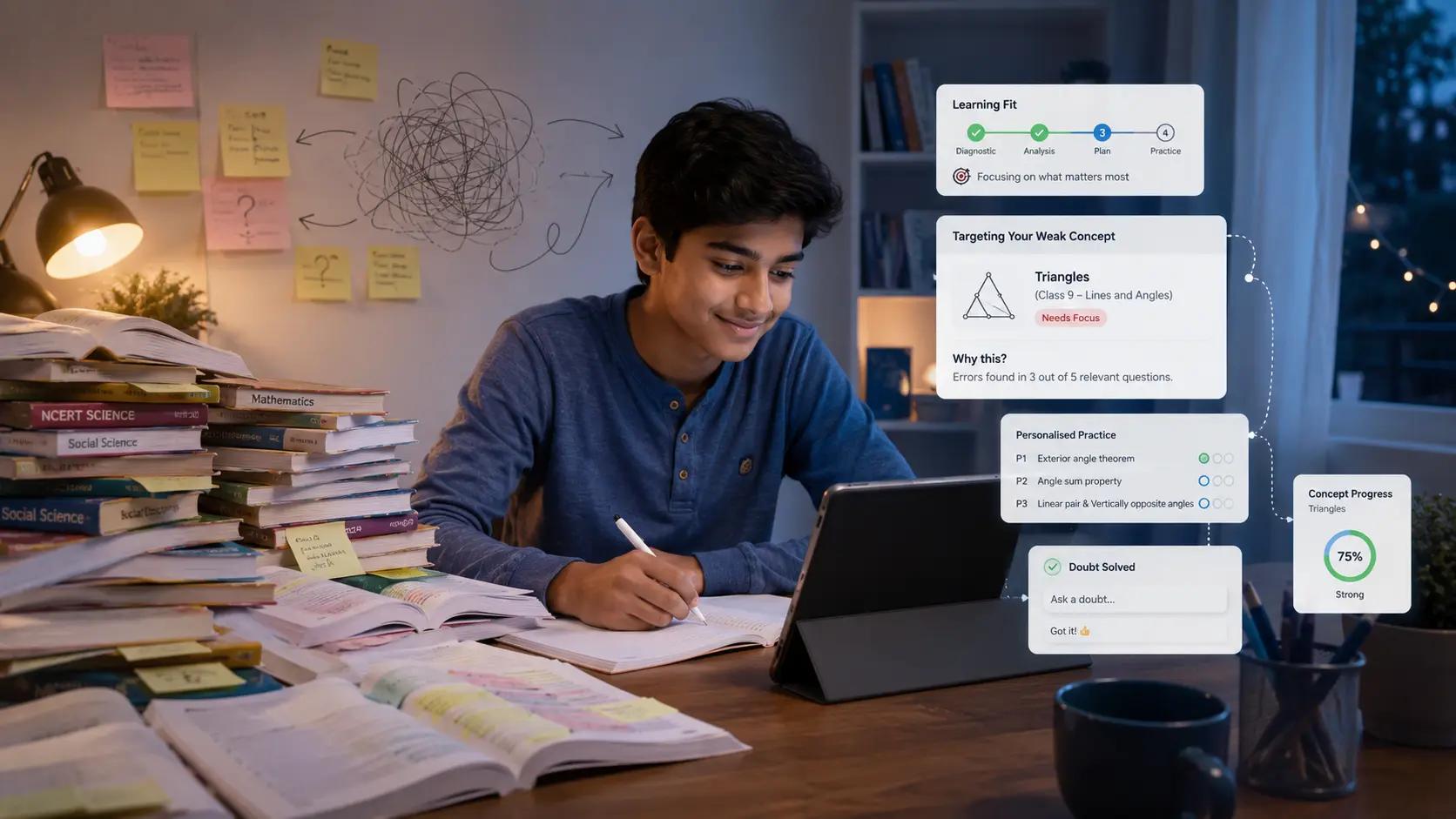
What Personalised Learning Actually Means for a CBSE Student (And Why It's Not What Most People Think)
Most students hear "personalised learning" and think pace. The real advantage is precision here's what that looks like for CBSE preparation.
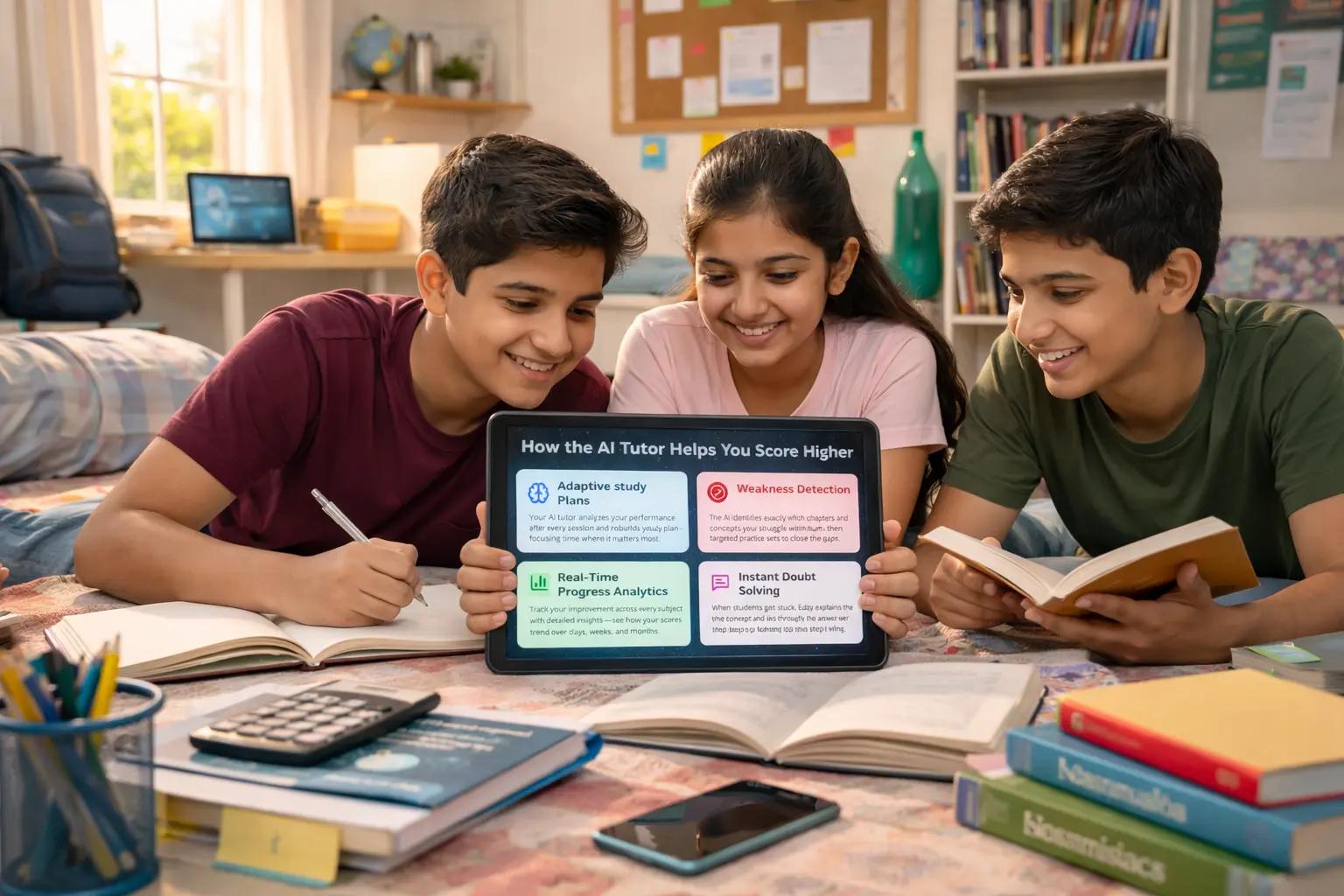
How AI-Based Practice Helps CBSE Class 10 Students Transition to Class 11
Navigating the academic leap from Class 10 to Class 11 with AI support

How AI Can Help CBSE Class 10 Students Revise Smarter During Holidays
Discover how AI tools can make holiday study effective yet enjoyable for CBSE Class 10 students.

Ethical Use of AI Tools During CBSE Class 10 Exam Preparation
Navigating AI responsibly for effective exam preparation