Brand Logo

Class 9

Class 9 - English
Moments (9 Chapters)|
Beehive (18 Chapters)|
Words and Expressions - I (9 Chapters)
Class 9 - Health and Physical Education
Health and Physical Education (14 Chapters)
Class 9 - Hindi
Sanchayan (4 Chapters)|
Sparsh (10 Chapters)|
Kshitij (13 Chapters)|
Kritika (4 Chapters)
Class 9 - ICT
Information and Communication Technology (8 Chapters)
Class 9 - Mathematics
Mathematics (12 Chapters)
Class 9 - Sanskrit
Shemushi Prathmo Bhag (10 Chapters)|
Vyakaranavithi (20 Chapters)|
Abhyaswaan Bhav (15 Chapters)
Class 9 - Science
Science (12 Chapters)
Class 9 - Social Science
Contemporary India (6 Chapters)|
Democratic Politics (5 Chapters)|
Economics (4 Chapters)|
India and the Contemporary World - I (5 Chapters)

Class 10

Class 10 - English
First Flight (22 Chapters)|
Foot Prints Without feet (9 Chapters)|
Words and Expressions - II (9 Chapters)
Class 10 - Health and Physical Education
Health and Physical Education (13 Chapters)
Class 10 - Hindi
Kshitij - II (13 Chapters)|
Sparsh (14 Chapters)|
Sanchayan - II (3 Chapters)|
Kritika (3 Chapters)
Class 10 - Mathematics
Mathematics (14 Chapters)
Class 10 - Sanskrit
Vyakaranavithi (14 Chapters)|
Shemushi - II (12 Chapters)|
Abhyaswaan Bhav - II (14 Chapters)
Class 10 - Science
Science (13 Chapters)
Class 10 - Social Science
Contemporary India (7 Chapters)|
Democratic Politics (5 Chapters)|
India and the Contemporary World - II (5 Chapters)|
Understanding Economic Development (5 Chapters)
Class 10 - Urdu
Nawa-e-urdu (15 Chapters)

Class 11

Class 11 - Accountancy
Accountancy - II (2 Chapters)|
Financial Accounting - I (7 Chapters)
Class 11 - Biology
Biology (19 Chapters)
Class 11 - Biotechnology
Biotechnology (12 Chapters)
Class 11 - Business Studies
Business Studies (11 Chapters)
Class 11 - Chemistry
Chemistry Part - I (6 Chapters)|
Chemistry Part - II (3 Chapters)
Class 11 - Computer Science
Computer Science (11 Chapters)
Class 11 - Creative Writing and Translation
Srijan (4 Chapters)
Class 11 - Economics
Statistics for Economics (8 Chapters)|
Indian Economic Development (8 Chapters)
Class 11 - English
Hornbill (11 Chapters)|
Snapshots (5 Chapters)|
Woven Words (27 Chapters)
Class 11 - Fine Art
An Introduction to Indian Art Part - I (8 Chapters)
Class 11 - Geography
Fundamentals of Physical Geography (14 Chapters)|
India Physical Environment (6 Chapters)|
Practical Work in Geography (6 Chapters)
Class 11 - Health and Physical Education
Health and Physical Education (11 Chapters)
Class 11 - History
Themes in World History (13 Chapters)
Class 11 - Home Science
Human Ecology and Family Sciences - I (7 Chapters)|
Human Ecology and Family Sciences - II (4 Chapters)
Class 11 - Informatics Practices
Informatics Practices (8 Chapters)
Class 11 - Knowledge Traditions Practices of India
Knowledge Traditions Practices of India (9 Chapters)
Class 11 - Mathematics
Mathematics (14 Chapters)
Class 11 - Physics
Physics Part - I (7 Chapters)|
Physics Part - II (7 Chapters)
Class 11 - Political Science
Indian Constitution at Work (10 Chapters)|
Political Theory (8 Chapters)
Class 11 - Psychology
Introduction to Psychology (8 Chapters)
Class 11 - Sangeet
Tabla evam Pakhawaj (8 Chapters)|
Hindustani Sangeet Gayan Evam Vadan (10 Chapters)
Class 11 - Sociology
Understanding Society (5 Chapters)|
Introducing Sociology (5 Chapters)

Class 12

Class 12 - Accountancy
Accountancy Part - I (4 Chapters)|
Accountancy Part - II (6 Chapters)
Class 12 - Biology
Biology (13 Chapters)
Class 12 - Biotechnology
Biotechnology (13 Chapters)
Class 12 - Business Studies
Business Studies - II (3 Chapters)|
Business Studies - I (8 Chapters)
Class 12 - Chemistry
Chemistry - II (5 Chapters)|
Chemistry - I (5 Chapters)
Class 12 - Computer Science
Computer Science (13 Chapters)
Class 12 - Economics
Introductory Microeconomics (5 Chapters)|
Introductory Macroeconomics (6 Chapters)
Class 12 - English
Flamingo (14 Chapters)|
Vistas (7 Chapters)|
Kaliedoscope (21 Chapters)
Class 12 - Fine Art
An Introduction to Indian Art Part - II (8 Chapters)
Class 12 - Geography
Practical Work in Geography - Part II (4 Chapters)|
Fundamentals of Human Geography (8 Chapters)|
India - People and Economy (9 Chapters)
Class 12 - Hindi
Aroh (15 Chapters)|
Antra (23 Chapters)|
Antral Bhag - II (3 Chapters)|
Vitan (3 Chapters)
Class 12 - History
Themes in Indian History - III (4 Chapters)|
Themes in Indian History - I (4 Chapters)|
Themes in Indian History - II (4 Chapters)
Class 12 - Home Science
Human Ecology and Family Sciences Part I (7 Chapters)|
Human Ecology and Family Sciences Part II (7 Chapters)
Class 12 - Informatics Practices
Informatics Practices (7 Chapters)
Class 12 - Mathematics
Mathematics Part - I (6 Chapters)|
Mathematics Part - II (7 Chapters)
Class 12 - Physics
Physics Part - I (8 Chapters)|
Physics Part - II (6 Chapters)
Class 12 - Political Science
Politics in India Since Independence (8 Chapters)|
Contemporary World Politics (7 Chapters)
Class 12 - Psychology
Psychology (7 Chapters)
Class 12 - Sangeet
Hindustani Sangeet Gayan Evam Vadan (9 Chapters)|
Tabla evam Pakhawaj (7 Chapters)
Class 12 - Sociology
Social Change and Development in India (8 Chapters)|
Indian Society (7 Chapters)

About Edzy - Gamified Learning Platform

Edzy is India's premier gamified AI tutor platform for CBSE and State Board students in classes 6-12. Our platform transforms traditional studying with AI-powered study plans, interactive practice sessions, and personalized learning pathways. Students using Edzy experience unmatched learning efficiency through our immersive educational environment that combines advanced technology with curriculum-aligned content.

Why Choose Edzy for CBSE and State Board Preparation

Edzy offers an adaptive AI educational experience tailored to each student's learning style and pace. We integrate gamification with proven educational strategies to create an engaging environment that students love. Our micro-content approach breaks down complex CBSE and State Board topics into manageable lessons, building confidence through mastery-based progression and real-time feedback.

CBSE and State Board Focus Areas

Edzy specializes in transforming online education for classes 6-12 with AI-powered tutoring. We provide comprehensive NCERT-aligned content and engaging lessons across Mathematics, Science, English, Social Studies, and IT. Our system helps students master fundamental concepts and excel in board exams through AI-generated study plans, personalized learning timelines, and dynamic practice sessions.

Edzy's Unique Approach to Online Learning

Unlike traditional online coaching platforms, Edzy converts CBSE and State Board syllabus content into interactive learning adventures. Our AI tutor provides timely assistance while adapting to student progress. The platform features instant feedback, gamified practice sessions, and achievement badges to motivate continuous learning and concept mastery.

Brand Logo

Edzy | Largest Online Learning Platform for Classes 6–12

Study smarter with Edzy – India’s leading gamified AI tutor for CBSE and State Boards. Designed for Classes 6–12, Edzy offers interactive lessons, AI-powered study plans, and rewarding practice tools for every subject.

Find us on Social Media

Links

About EdzyFAQsContact UsCBSE CoursesDuelsRumblesEdzy App

Parents & Teachers

Search EdzyParent DashboardCreator PlatformEducation BlogCBSE & NCERT News

Policies

Terms and ConditionsRefund PolicyPrivacy PolicyCookie Policy

© 2026 Edzy | Largest Online Learning Platform for Classes 6–12. All rights reserved.

Edzy is an AI tutor for CBSE and State Board students, offering interactive lessons and personalized learning for Classes 6–12.

SitemapNews SitemapBlog SitemapSchool SitemapAccessibility
CBSE
Class 12
English
Kaliedoscope
Freedom

Question Bank

Question Bank: Freedom

This chapter explores the concept of freedom as presented by George Bernard Shaw, emphasizing the challenges and misconceptions surrounding it.

Question Bank - Freedom

View all (71)
Q1.

According to Shaw, what constitutes true freedom?

Single Answer MCQ
Q-00076756
Q2.

What is one major misconception about freedom that Shaw addresses?

Single Answer MCQ
Q-00076757
Q3.

What does Shaw mean by 'slavery to necessities'?

Single Answer MCQ
Q-00076758
Q4.

Which aspect does Shaw believe hinders true freedom?

Single Answer MCQ
Q-00076759
Q5.

How does Shaw contrast 'natural slavery' to 'unnatural slavery'?

Single Answer MCQ
Q-00076760
Q6.

Which of the following best describes the link between sensitivity and freedom according to Shaw?

Single Answer MCQ
Q-00076761
Q7.

What is the author's perspective on self-interest in relation to freedom?

Single Answer MCQ
Q-00076762
Q8.

According to Krishnamurti, how do freedom and discipline relate to each other?

Single Answer MCQ
Q-00076763
Q9.

How does inquiry contribute to achieving freedom, as stated by Shaw?

Single Answer MCQ
Q-00076764
Q10.

What emotion does Shaw suggest we lose by being focused solely on self-interest?

Single Answer MCQ
Q-00076765
Q11.

In what way does Shaw believe society constrains personal freedoms?

Single Answer MCQ
Q-00076766
Q12.

What is described as an essential part of being free in Shaw's text?

Single Answer MCQ
Q-00076767
Q13.

How does Shaw suggest individuals often respond to the idea of freedom?

Single Answer MCQ
Q-00076768
Q14.

What does Shaw mean by 'the process of imitation' in context to freedom?

Single Answer MCQ
Q-00076769
Q15.

What key idea is Shaw trying to communicate through his discussion of necessity and freedom?

Single Answer MCQ
Q-00076770
Q16.

What does George Bernard Shaw suggest about the concept of a perfectly free person?

Single Answer MCQ
Q-00076771
Q17.

How does Shaw define natural slavery?

Single Answer MCQ
Q-00076772
Q18.

What does Shaw imply about the nature of human-made societal structures?

Single Answer MCQ
Q-00076773
Q19.

What mechanism does Shaw argue prevents individuals from recognizing their true slavery?

Single Answer MCQ
Q-00076774
Q20.

According to Shaw, which form of slavery is considered 'natural'?

Single Answer MCQ
Q-00076775
Q21.

According to Krishnamurti, what is the relationship between discipline and freedom?

Single Answer MCQ
Q-00076776
Q22.

What critique does Shaw provide regarding democratic elections?

Single Answer MCQ
Q-00076777
Q23.

What does Krishnamurti mean by 'breaking down the prison walls of tradition'?

Single Answer MCQ
Q-00076778
Q24.

What does Shaw mean by 'unnatural slavery'?

Single Answer MCQ
Q-00076779
Q25.

What is the primary barrier to true intelligence, according to Krishnamurti?

Single Answer MCQ
Q-00076780
Q26.

In what way does nature differ in its treatment of slaves compared to humans?

Single Answer MCQ
Q-00076781
Q27.

Which aspect of discipline does Krishnamurti challenge?

Single Answer MCQ
Q-00076782
Q28.

What is implied about the potential for achieving true freedom according to Shaw?

Single Answer MCQ
Q-00076783
Q29.

Krishnamurti suggests that a person should not just accept values from others but should:

Single Answer MCQ
Q-00076784
Q30.

What does Shaw argue about the balance of power between slaves and their masters?

Single Answer MCQ
Q-00076785
Q31.

What does Krishnamurti refer to when he talks about 'living in a frame'?

Single Answer MCQ
Q-00076786
Q32.

How does Shaw believe individuals can be misled by their own education?

Single Answer MCQ
Q-00076787
Q33.

According to Krishnamurti, how should young people approach learning and education?

Single Answer MCQ
Q-00076788
Q34.

Krishnamurti argues that the illusion of freedom is often created through:

Single Answer MCQ
Q-00076789
Q35.

What is the ultimate goal that Shaw believes governments should aim for?

Single Answer MCQ
Q-00076790
Q36.

What does Krishnamurti imply about the mind that simply conforms to tradition?

Single Answer MCQ
Q-00076791
Q37.

How does Shaw view the concept of choice in voting?

Single Answer MCQ
Q-00076792
Q38.

What is the consequence of not resolving the internal conflict discussed by Krishnamurti?

Single Answer MCQ
Q-00076793
Q39.

In Shaw's view, what role does literacy play in recognizing one's slavery?

Single Answer MCQ
Q-00076794
Q40.

What type of intelligence does Krishnamurti argue is necessary for true freedom?

Single Answer MCQ
Q-00076795
Q41.

In the context of freedom, what does Krishnamurti believe 'true freedom' allows us to do?

Single Answer MCQ
Q-00076796
Q42.

Krishnamurti mentions that discipline is often imposed by:

Single Answer MCQ
Q-00076797
Q43.

What role does Krishnamurti assign to inquiry in the quest for freedom?

Single Answer MCQ
Q-00076798
Q44.

Krishnamurti proposes that the solution to internal conflict lies in:

Single Answer MCQ
Q-00076799
Q45.

What is one primary concern regarding education as mentioned in the text?

Single Answer MCQ
Q-00076800
Q46.

According to the text, how do the elite perceive their education?

Single Answer MCQ
Q-00076801
Q47.

What does the author imply is needed to break free from indoctrination?

Single Answer MCQ
Q-00076802
Q48.

What is one potential misconception about discipline mentioned in the text?

Single Answer MCQ
Q-00076803
Q49.

What role do societal beliefs play in reinforcing educational indoctrination?

Single Answer MCQ
Q-00076804
Q50.

How does the text characterize the relationship between education and social class?

Single Answer MCQ
Q-00076805
Q51.

What does the text suggest about the effectiveness of voting for the working class?

Single Answer MCQ
Q-00076806
Q52.

What historical perspective does the text offer regarding revolutionary figures?

Single Answer MCQ
Q-00076807
Q53.

According to the text, how is traditional education often viewed?

Single Answer MCQ
Q-00076808
Q54.

What is suggested as a necessary component for real freedom?

Single Answer MCQ
Q-00076809
Q55.

How does the text frame the concept of 'human nature' in relation to education?

Single Answer MCQ
Q-00076810
Q56.

What is the primary argument made regarding the indoctrination of children?

Single Answer MCQ
Q-00076811
Q57.

In what way does the author suggest education should be transformed?

Single Answer MCQ
Q-00076812
Q58.

What is the main argument presented about discipline and freedom?

Single Answer MCQ
Q-00076813
Q59.

According to the text, why do individuals often choose to follow teachers or gurus?

Single Answer MCQ
Q-00076814
Q60.

What does the author imply about the importance of early freedom in decision-making?

Single Answer MCQ
Q-00076815
Q61.

According to the text, what happens when a person is constantly told what to do?

Single Answer MCQ
Q-00076816
Q62.

What role does inquiry play in achieving true freedom, according to the author?

Single Answer MCQ
Q-00076817
Q63.

What does the author mean by stating that real freedom requires sensitivity?

Single Answer MCQ
Q-00076818
Q64.

What does the text suggest is a common misconception about success?

Single Answer MCQ
Q-00076819
Q65.

Which statement reflects the author’s view on societal constructs and tradition?

Single Answer MCQ
Q-00076820
Q66.

What is implied about intelligence in relation to freedom?

Single Answer MCQ
Q-00076821
Q67.

What does the author suggest about the concept of doing nothing and its relation to freedom?

Single Answer MCQ
Q-00076822
Q68.

How does fear play a role in the struggles between personal desires and external pressures?

Single Answer MCQ
Q-00076823
Q69.

What did the author indicate about a person who conforms to societal norms?

Single Answer MCQ
Q-00076824
Q70.

Which statement best defines 'sensitivity' as per the text?

Single Answer MCQ
Q-00076825
Q71.

Why does the author argue against blind obedience to tradition?

Single Answer MCQ
Q-00076826

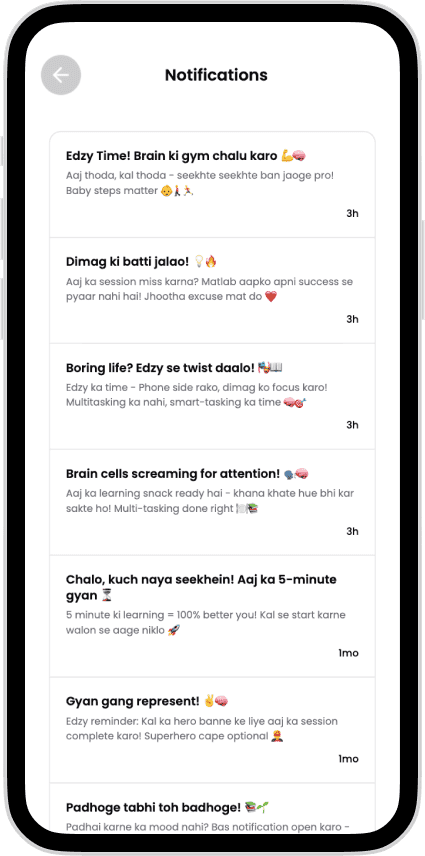
🔔 Smart Study Reminders

Edzy knows what to study next. Stay on track with timely nudges & updates.

Edzy mobile app