

Brand Logo
Login
Search
Brand Logo

Edzy for Classes 6-12

Edzy is a personal AI tutor for CBSE and State Board students, with curriculum-aligned guidance, practice, revision, and study plans that adapt to each learner.

  • Email: always@edzy.ai
  • Phone: +91 96256 68472
  • WhatsApp: +91 96256 68472
  • Address: Sector 63, Gurgaon, Haryana

Follow Edzy

Browse by Class

  • CBSE Class 6
  • CBSE Class 7
  • CBSE Class 8
  • CBSE Class 9
  • CBSE Class 10
  • CBSE Class 11
  • CBSE Class 12
Explore the CBSE resource hub

Explore Edzy

  • Study Resources
  • Free Study Tools
  • Best Apps for Board Exams
  • Edzy vs ChatGPT
  • About Us
  • Why We Built Edzy
  • Blog
  • CBSE AI Tutor

Support & Legal

  • Help & FAQs
  • Accessibility
  • Privacy Policy
  • Terms & Conditions
  • Refund Policy
  • Cookie Policy
  • Site Directory

© 2026 Edzy. All rights reserved.

Curriculum-aligned learning paths for students in Classes 6-12.

CBSE
Class 6
Physical Education and Well Being
Khel Yatra
Assimilation

Question Bank

Practice Hub

Question Bank: Assimilation

Structured practice
Question Practice

Practice chapter questions in a cleaner, exam-ready flow

Start with curated question sets, move into full module views when needed, and keep discovering related practice without losing your place in the chapter.

Question Bank - Assimilation

View all (84)
Q1.

What is the primary objective of the obstacle course in this context?

Single Answer MCQ
Q-00146885
View explanation
Q2.

Which skill is emphasized during the obstacle course segment?

Single Answer MCQ
Q-00146886
View explanation
Q3.

How are players divided for the game sections?

Single Answer MCQ
Q-00146887
View explanation
Q4.

What is the primary goal of small-sided games?

Single Answer MCQ
Q-00146888
View explanation
Q5.

What is a common element of scoring in these small-sided games?

Single Answer MCQ
Q-00146889
View explanation
Q6.

In the King of the Court format, what happens to the winning team?

Single Answer MCQ
Q-00146890
View explanation
Q7.

What happens to the winning team at the end of the game?

Single Answer MCQ
Q-00146891
View explanation
Q8.

Which of the following is a key benefit of small-sided games?

Single Answer MCQ
Q-00146892
View explanation
Q9.

During the Circle Time, what activity do participants engage in?

Single Answer MCQ
Q-00146893
View explanation
Q10.

During the obstacle course, players must control the ball around which part of their body?

Single Answer MCQ
Q-00146894
View explanation
Q11.

What is the primary focus while completing the obstacle course?

Single Answer MCQ
Q-00146895
View explanation
Q12.

What do players do after completing the obstacle course?

Single Answer MCQ
Q-00146896
View explanation
Q13.

How does the obstacle course contribute to players’ skill development?

Single Answer MCQ
Q-00146897
View explanation
Q14.

What is Circle Time primarily used for after games?

Single Answer MCQ
Q-00146898
View explanation
Q15.

What can players do after finishing the obstacle course?

Single Answer MCQ
Q-00146899
View explanation
Q16.

Why is it important for players to rotate teams in small-sided games?

Single Answer MCQ
Q-00146900
View explanation
Q17.

What term describes the team with the highest points at the end of the session?

Single Answer MCQ
Q-00146901
View explanation
Q18.

What should players focus on while defending in small-sided games?

Single Answer MCQ
Q-00146902
View explanation
Q19.

In what way does practicing with rotating teams benefit players?

Single Answer MCQ
Q-00146903
View explanation
Q20.

How do small-sided games help in developing ball control?

Single Answer MCQ
Q-00146904
View explanation
Q21.

Why is controlling the ball around the waist considered important in the obstacle course?

Single Answer MCQ
Q-00146905
View explanation
Q22.

Why is scoring a goal significant in the context of small-sided games?

Single Answer MCQ
Q-00146906
View explanation
Q23.

What common misconception might players have about winning teams?

Single Answer MCQ
Q-00146907
View explanation
Q24.

What misconception might players have about defeats in small-sided games?

Single Answer MCQ
Q-00146908
View explanation
Q25.

What is the likely outcome when players reflect on their previous games during Circle Time?

Single Answer MCQ
Q-00146909
View explanation
Q26.

What is the best strategy to take defeats gracefully in small-sided games?

Single Answer MCQ
Q-00146910
View explanation
Q27.

What role does communication play in small-sided games?

Single Answer MCQ
Q-00146911
View explanation
Q28.

What is the primary goal of the 'King of the Court' game format?

Single Answer MCQ
Q-00146912
View explanation
Q29.

How is the 'King of the Court' determined in the games?

Single Answer MCQ
Q-00146913
View explanation
Q30.

In the game setup, how are teams typically formed?

Single Answer MCQ
Q-00146914
View explanation
Q31.

In small-sided games, what primary factor influences a team’s points?

Single Answer MCQ
Q-00146915
View explanation
Q32.

During the obstacle course, which skill do players focus on while moving?

Single Answer MCQ
Q-00146916
View explanation
Q33.

During the obstacle course, which skill is being practiced?

Single Answer MCQ
Q-00146917
View explanation
Q34.

What happens to the winning team after their match in the 'King of the Court' format?

Single Answer MCQ
Q-00146918
View explanation
Q35.

What happens after players complete the obstacle course?

Single Answer MCQ
Q-00146919
View explanation
Q36.

What is the purpose of Circle Time after the games?

Single Answer MCQ
Q-00146920
View explanation
Q37.

What is the primary focus during Circle Time at the end of the game?

Single Answer MCQ
Q-00146921
View explanation
Q38.

Why is rotating teams important in assimilation games?

Single Answer MCQ
Q-00146922
View explanation
Q39.

What does successful defending in the game lead to?

Single Answer MCQ
Q-00146923
View explanation
Q40.

Which of the following best describes the activity after completing the obstacle course?

Single Answer MCQ
Q-00146924
View explanation
Q41.

Which of the following is not a way to earn points in the games?

Single Answer MCQ
Q-00146925
View explanation
Q42.

In the context of team play, what is a common misconception about losing?

Single Answer MCQ
Q-00146926
View explanation
Q43.

If Team A scores a goal and Team B defends well, which result will they anticipate?

Single Answer MCQ
Q-00146927
View explanation
Q44.

How should players ideally respond to defeats during assimilation games?

Single Answer MCQ
Q-00146928
View explanation
Q45.

What is the significance of teams rotating during games?

Single Answer MCQ
Q-00146929
View explanation
Q46.

What is one key element necessary for a successful game setup?

Single Answer MCQ
Q-00146930
View explanation
Q47.

What key strategy is emphasized for helping players take defeats gracefully?

Single Answer MCQ
Q-00146931
View explanation
Q48.

Which of the following is NOT part of the assimilation game process?

Single Answer MCQ
Q-00146932
View explanation
Q49.

Which action is a valid way a team might improve after a loss?

Single Answer MCQ
Q-00146933
View explanation
Q50.

In what way does scoring goals during the games contribute to the players' experience?

Single Answer MCQ
Q-00146934
View explanation
Q51.

If a team practices defending but fails to score during the game, what might their outcome be?

Single Answer MCQ
Q-00146935
View explanation
Q52.

When observing opponents during Circle Time, players should focus on which aspect?

Single Answer MCQ
Q-00146936
View explanation
Q53.

In a competitive setting, why might teams prioritize scoring over defending?

Single Answer MCQ
Q-00146938
View explanation
Q54.

What does effective team defense require during the games?

Single Answer MCQ
Q-00146937
View explanation
Q55.

What aspect is crucial for team balance in small-sided games?

Single Answer MCQ
Q-00146939
View explanation
Q56.

What is the primary skill practiced during dribbling in small-sided games?

Single Answer MCQ
Q-00146940
View explanation
Q57.

When attempting to score a goal, which part of the body is most commonly used?

Single Answer MCQ
Q-00146941
View explanation
Q58.

Which technique is crucial for effective dribbling?

Single Answer MCQ
Q-00146942
View explanation
Q59.

In the context of a small-sided game, what does earning points primarily depend on?

Single Answer MCQ
Q-00146943
View explanation
Q60.

If a player successfully dribbles past an opponent, what skill have they most likely used?

Single Answer MCQ
Q-00146944
View explanation
Q61.

Why is it important to navigate an obstacle course with a ball around the waist?

Single Answer MCQ
Q-00146945
View explanation
Q62.

What should players do after finishing the obstacle course to score a goal?

Single Answer MCQ
Q-00146946
View explanation
Q63.

During Circle Time, why is it valuable to discuss patterns of opponents' play?

Single Answer MCQ
Q-00146947
View explanation
Q64.

What is the main objective of a team in a small-sided game?

Single Answer MCQ
Q-00146948
View explanation
Q65.

Which of the following best describes teamwork in a small-sided game?

Single Answer MCQ
Q-00146949
View explanation
Q66.

Why might a player feel discouraged after losing a game?

Single Answer MCQ
Q-00146950
View explanation
Q67.

What can help players take defeats gracefully during a game?

Single Answer MCQ
Q-00146952
View explanation
Q68.

When practicing dribbling, players should avoid which of the following?

Single Answer MCQ
Q-00146954
View explanation
Q69.

What is the benefit of rotating teams in small-sided games?

Single Answer MCQ
Q-00146956
View explanation
Q70.

What can lead to a player becoming 'King of the Court'?

Single Answer MCQ
Q-00146958
View explanation
Q71.

What is the main purpose of Circle Time in the assimilation activity?

Single Answer MCQ
Q-00146974
View explanation
Q72.

During Circle Time, what is encouraged after experiencing defeat?

Single Answer MCQ
Q-00146976
View explanation
Q73.

Why is it important to maintain ball control during the obstacle course?

Single Answer MCQ
Q-00146978
View explanation
Q74.

What should players take note of during Circle Time?

Single Answer MCQ
Q-00146980
View explanation
Q75.

What is the objective of the King of the Court activity?

Single Answer MCQ
Q-00146982
View explanation
Q76.

What skills do players build during the small-sided games?

Single Answer MCQ
Q-00146984
View explanation
Q77.

In Circle Time, why is it helpful to discuss teamwork strategies?

Single Answer MCQ
Q-00146986
View explanation
Q78.

How are teams formed in the assimilation activity?

Single Answer MCQ
Q-00146988
View explanation
Q79.

What do players learn about defeat during Circle Time?
Single Answer MCQ
Q-00146990
View explanation
Q80.

What is a key benefit of reflecting on play patterns?

Single Answer MCQ
Q-00146992
View explanation
Q81.

What helps players become the 'King of the Court'?

Single Answer MCQ
Q-00146993
View explanation
Q82.

Which aspect can be assessed during Circle Time after playing?

Single Answer MCQ
Q-00146994
View explanation
Q83.

During the obstacle course, what is the primary focus for players?

Single Answer MCQ
Q-00146995
View explanation
Q84.

Why is reviewing opponents' play patterns valuable?

Single Answer MCQ
Q-00146996
View explanation
Learn Better On The App
Built for collaborative learning

Study With Friends

Join classmates, challenge them in duels, and make practice more engaging.

Quick duels
Shared momentum

Faster access to practice, revision, and daily study flow.

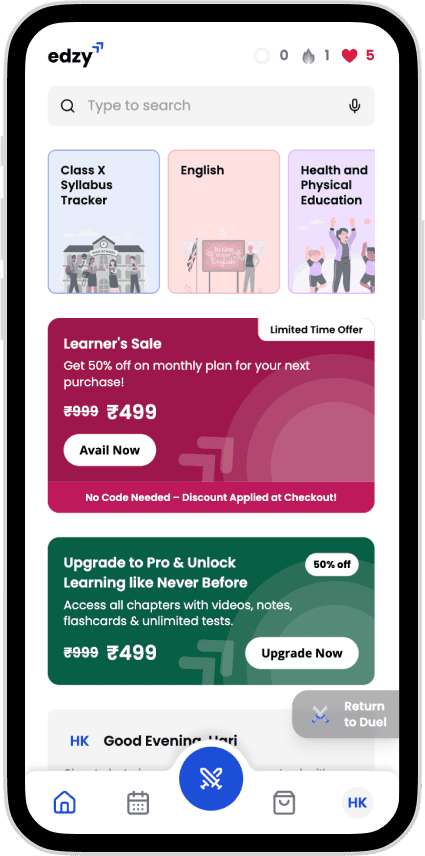
Edzy mobile app preview