
Aryabhata Ganit Challenge 2026: A Platform for Mathematical Excellence
CBSE invites students from Classes VIII to X to participate in a nationwide math challenge aimed at enhancing real-world mathematical skills.
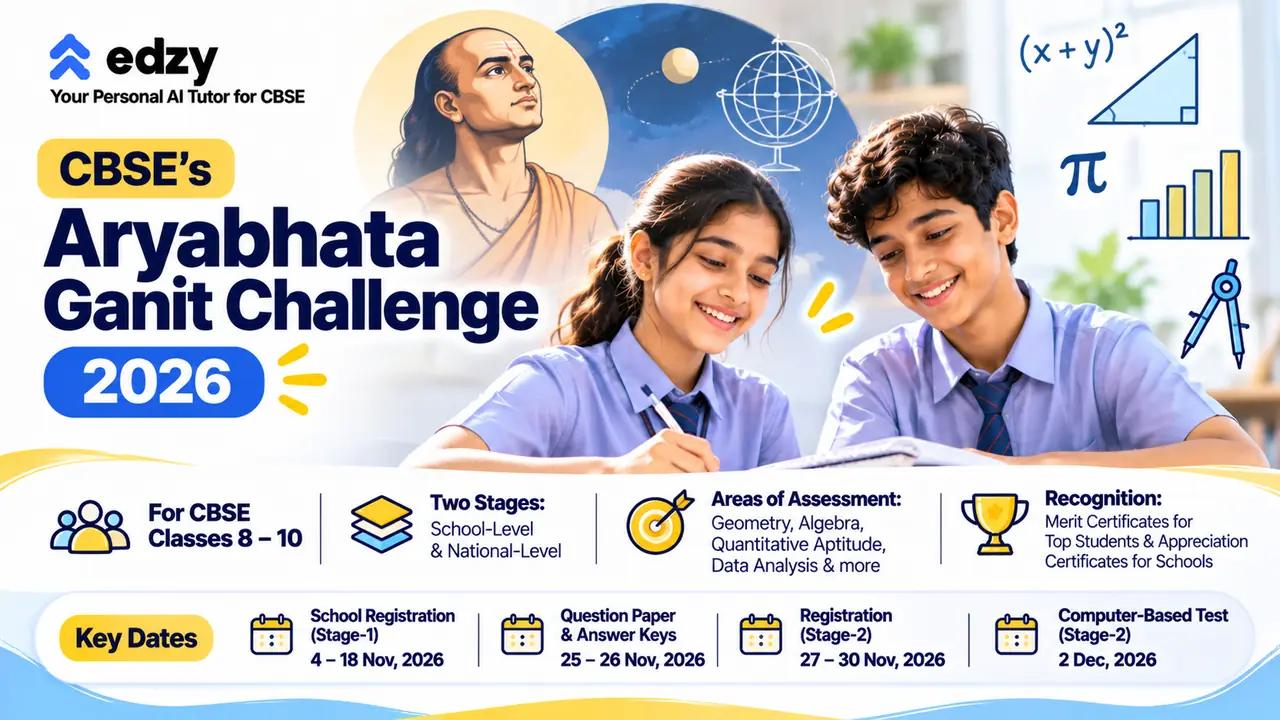
The Aryabhata Ganit Challenge 2026 is an initiative by CBSE to foster mathematical competencies among students. Open to Classes VIII to X, this two-stage competition encourages practical application of math in everyday situations. Learn about registration, assessment areas, and the recognition for top performers.
Listen to this article
Aryabhata Ganit Challenge 2026: A Platform for Mathematical Excellence
Understanding the Aryabhata Ganit Challenge 2026
The Aryabhata Ganit Challenge (AGC) 2026, organized by the Central Board of Secondary Education (CBSE), aims to enhance students' mathematical abilities by promoting the application of mathematical principles to real-world scenarios. This initiative is open to all students in Classes VIII to X enrolled in CBSE-affiliated schools, providing them with a unique opportunity to showcase their skills in mathematics. Readers can compare this update with cbse science exhibition 2026 27 registration and for related CBSE context.
The challenge is structured in two stages: a school-level competition and a national-level competition. The first stage is conducted by individual schools, while the second stage is a computer-based test organized by CBSE. This format not only assesses students' knowledge but also encourages them to think critically and apply their learning in practical situations. For more details on similar initiatives, students can check out the CBSE Science Exhibition 2026-27 guidelines. Readers can compare this update with cbse launches e integrity pledge for 2026 for related CBSE context.
Stages and Timeline of the Challenge
The AGC 2026 unfolds in two distinct stages, each with its own set of activities and timelines. The first stage is the school-level competition, where schools will download the question paper from the CBSE portal and conduct the assessment internally. Schools are responsible for determining the top three performers, and if there is a tie, they may conduct an internal screening test. Readers can compare this update with cbse promotes digital payments in schools a for related CBSE context.
The timeline for the Aryabhata Ganit Challenge is as follows:. Readers can compare this update with cbse young india culinary championship 2026 27 for related CBSE context.
- Registration of Affiliated Schools for Stage-1: 4th Nov – 18th Nov, 2026
- Availability of Question Paper and Answer Keys: 25th Nov – 26th Nov, 2026
- Registration for Stage-2: 27th Nov – 30th Nov, 2026
- Conduct of Computer-Based Test for Stage-2: 2nd Dec, 2026
For the second stage, schools must submit the names of their top three students along with a registration fee of Rs. 900. This fee is mandatory for participation and must be paid online. The successful completion of Stage-1 is a prerequisite for schools to participate in Stage-2. For more information on registration processes, students can refer to the CBSE e-Integrity Pledge initiative. Readers can compare this update with cbse class 10 board exam 2026 2027 for related CBSE context.
Areas of Assessment and Eligibility Criteria
The Aryabhata Ganit Challenge evaluates students across various areas of mathematical competencies. These include Geometry and Spatial Sense, Quantitative Aptitude, Algebra, Data Analysis and Probability, and more. The assessment is designed to gauge not only the students' knowledge but also their problem-solving skills, logical reasoning, and creative thinking.
Eligibility for the challenge is straightforward. All students from Classes VIII to X in CBSE-affiliated schools are eligible to participate in Stage-1. For Stage-2, only the top three students from each school, as determined in Stage-1, will be eligible. Each stage consists of a one-hour assessment comprising multiple-choice questions, with a total of 40 marks awarded and no negative marking. This structure encourages students to perform their best without the fear of losing points for incorrect answers. For further insights into assessment practices, students can explore the CBSE digital payments initiative.
Recognition and Awards for Participants
Participation in the Aryabhata Ganit Challenge is not just about competition; it also offers recognition for schools and students. The top 100 students from each CBSE region who excel in the national-level competition will receive a Merit Certificate, acknowledging their mathematical prowess. Additionally, the top 10 schools in each region with the highest student participation in Stage-1 will be awarded an Appreciation Certificate by CBSE.
This recognition serves as a motivation for students to engage actively in mathematics and enhances their academic portfolios. Schools are encouraged to inspire their students to take part in this challenge, as it is an excellent opportunity for them to explore and enhance their mathematical skills. Furthermore, students can document their participation and achievements in personal portfolios, which can be beneficial for future academic pursuits. For more information on student engagement initiatives, check out the CBSE Young India Culinary Championship.
What the Aryabhata Ganit Challenge Means for Students
What are the benefits of participating in the Aryabhata Ganit Challenge for students? Participating in the Aryabhata Ganit Challenge allows students to apply mathematical concepts to real-life situations, enhancing their problem-solving skills and critical thinking. It provides a platform for students to showcase their abilities and gain recognition for their hard work. Additionally, the challenge fosters a competitive spirit and encourages collaboration among peers, which is essential for holistic development.
The AGC is more than just a competition; it is a stepping stone for students to develop a deeper understanding of mathematics and its applications. By engaging in this challenge, students can build confidence in their mathematical abilities, which is crucial for their academic journey, especially as they prepare for board examinations like the Class 10 Board Exam. Schools are urged to promote this initiative and support their students in participating actively.
For students interested in similar educational opportunities, the CBSE Class 10 Board Exam provides another platform to demonstrate their academic skills.
Related News

CBSE Celebrates Constitution Day on 26th November 2026: Activities and Significance
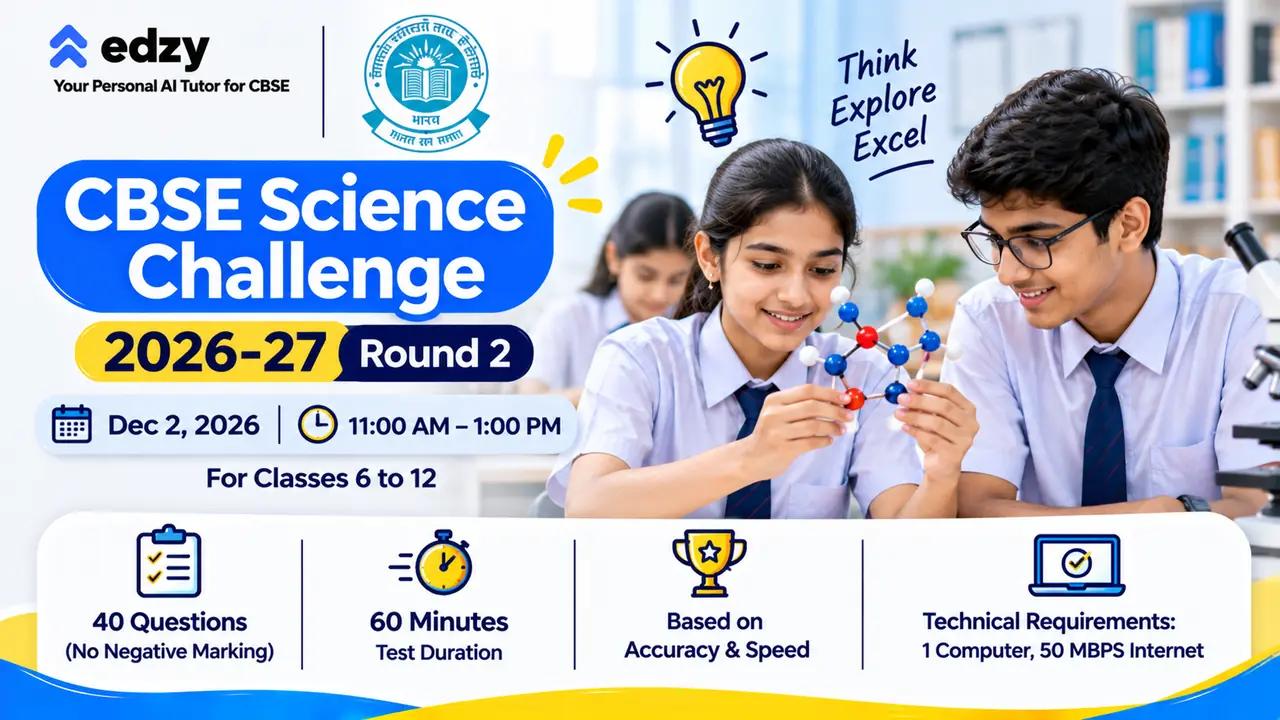
CBSE Science Challenge 2026-27 Round 2: Key Instructions and Guidelines
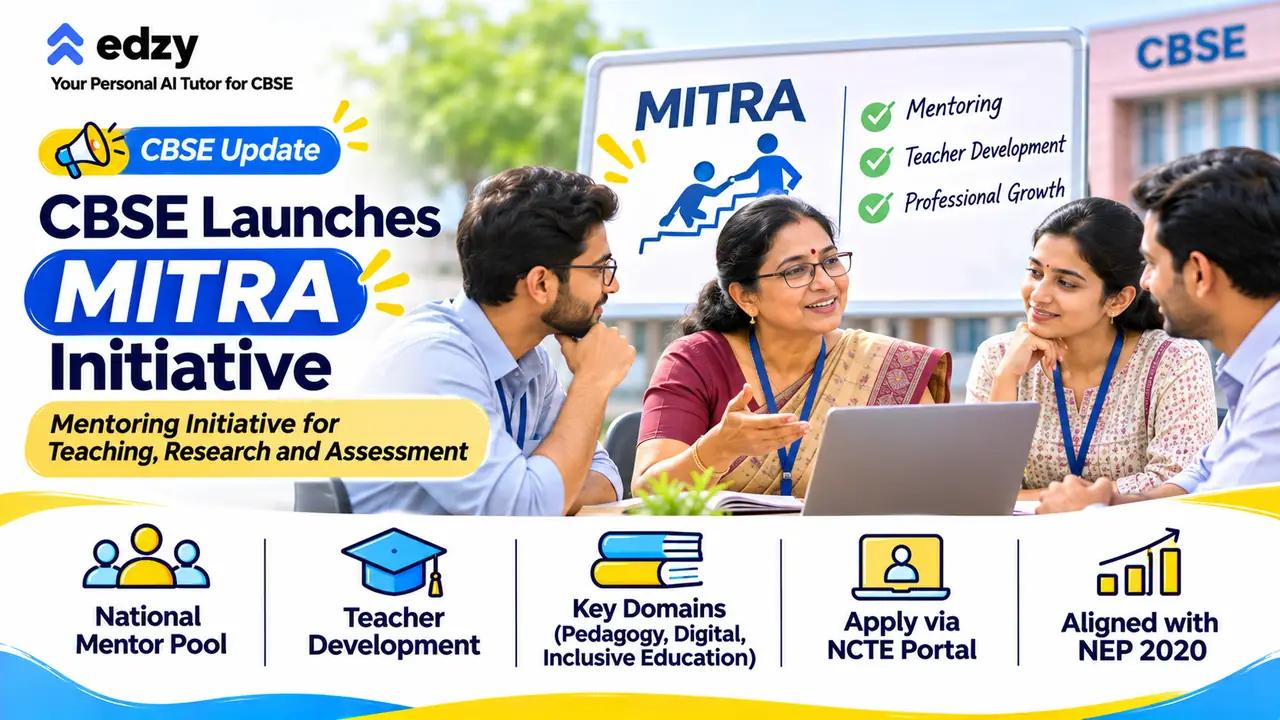
CBSE Enrolment of Experienced Teachers as Mentors Under MITRA Initiative
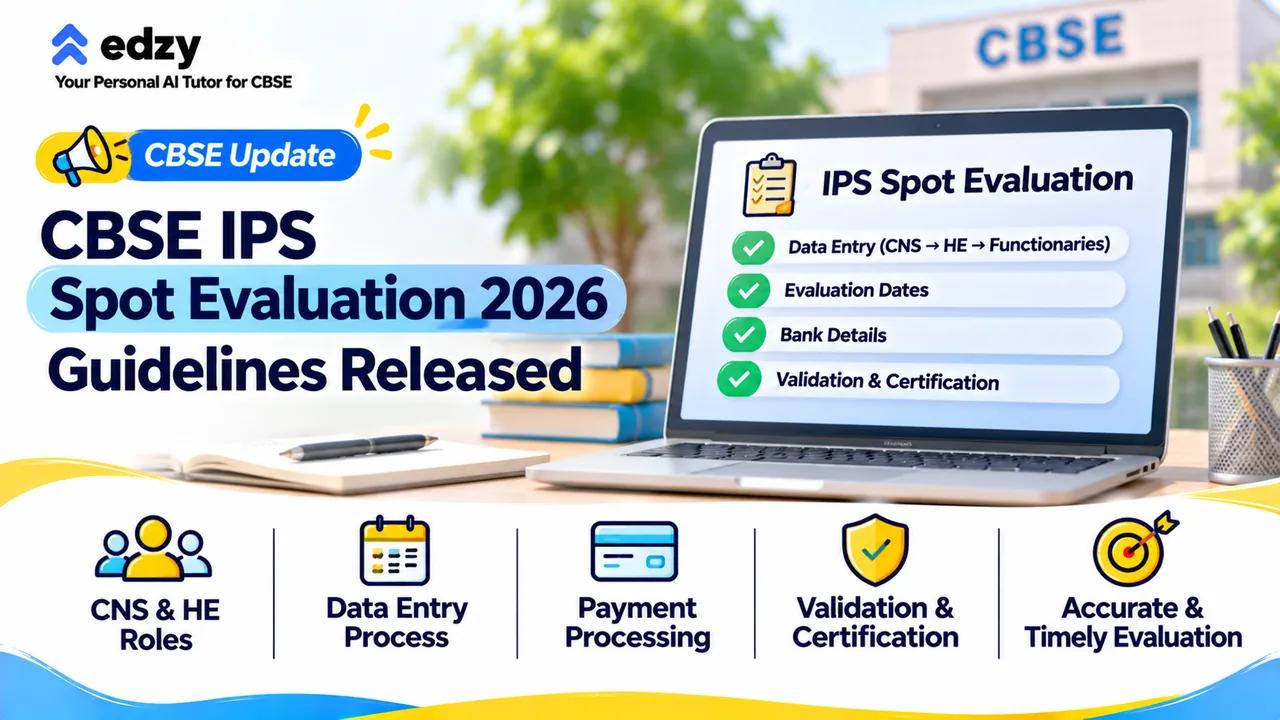
CBSE Releases Guidelines for IPS Spot Evaluation 2026: Key Steps and Data Management