
National Entrepreneurship Challenge Junior (NEC Junior) – A New Initiative by E-Cell, IIT Bombay
Fostering Innovation and Leadership in Schools Across India
The National Entrepreneurship Challenge Junior (NEC Junior) by E-Cell, IIT Bombay, aims to cultivate entrepreneurial skills among students from Classes 6 to 12 through structured activities and mentorship.

Listen to this article
National Entrepreneurship Challenge Junior (NEC Junior) – A New Initiative by E-Cell, IIT Bombay
Introduction to NEC Junior
The National Entrepreneurship Challenge Junior (NEC Junior) is an innovative initiative launched by the Entrepreneurship Cell of IIT Bombay. This program is specifically designed to nurture entrepreneurial skills among students in schools across India. With the increasing importance of entrepreneurship in the modern economy, NEC Junior aims to create a robust culture of innovation, leadership, and creativity among young learners.
Objectives of NEC Junior
The primary objective of NEC Junior is to establish Entrepreneurship Clubs in schools, which will serve as platforms for students to engage in various entrepreneurial activities. The initiative focuses on:
Encouraging creative thinking and problem-solving skills among students.
Providing mentorship and guidance through experienced professionals.
Organizing workshops and experiential learning opportunities.
Promoting collaboration and teamwork through club activities.
Program Structure
NEC Junior is structured as a six-month program that runs from July to December 2026. It includes a variety of activities aimed at enhancing students' entrepreneurial skills:
Entrepreneurship Club Building Framework: Schools will receive a comprehensive framework to establish and manage their clubs effectively.
Innovation and Ideation Activities: Students will participate in activities that stimulate creative thinking and innovation.
Teacher Training Program: Faculty coordinators will be trained to guide students and manage club activities.
Eureka! Junior Challenge: A competition designed to encourage students to present their innovative ideas.
Workshops and Bootcamps: Hands-on sessions to provide practical knowledge and skills.
Certification: Schools, teachers, and students who meet the eligibility criteria will receive certification from E-Cell, IIT Bombay.
Eligibility and Participation
NEC Junior is open to schools with students from Classes 6 to 12. The program is free of cost, making it accessible to a wide range of educational institutions. Here are the key details regarding participation:
Registration Deadline: Schools must register by 15th July 2026.
Mode of Participation: The program will be conducted online, culminating in an offline grand finale at IIT Bombay in the second week of December.
Registration Process
To register for NEC Junior, schools need to follow these steps:
Visit the registration link: NEC Junior Registration.
Designate 1-2 teacher representatives from the school to complete the registration form.
After the registration deadline, an orientation session will be conducted for teacher representatives to provide an overview of the program and guidelines.
Importance of Entrepreneurship Education
In today's rapidly changing world, entrepreneurship education is becoming increasingly vital. It equips students with essential skills such as critical thinking, creativity, and resilience. By participating in initiatives like NEC Junior, students will not only learn about entrepreneurship but also develop a mindset that encourages innovation and problem-solving.
Conclusion
The National Entrepreneurship Challenge Junior (NEC Junior) is a significant step towards fostering an entrepreneurial spirit among the youth in India. By encouraging schools to establish Entrepreneurship Clubs and providing structured activities, mentorship, and resources, this initiative aims to empower students to think creatively and develop their entrepreneurial skills. Schools are encouraged to participate in this transformative program and contribute to building a generation of innovative leaders.
For More Information
For further details regarding the NEC Junior initiative, schools can refer to the following resources:
For any queries, please contact the Events & PR Head at E-Cell, IIT Bombay via email at necjunior@ecell.in.
Related News

Prior Intimation of Submission of List of Candidates for Class X/XII Examination 2026-27

CBSE Skill Expo and Guidance Festival 2026-27: Venue Details Announced
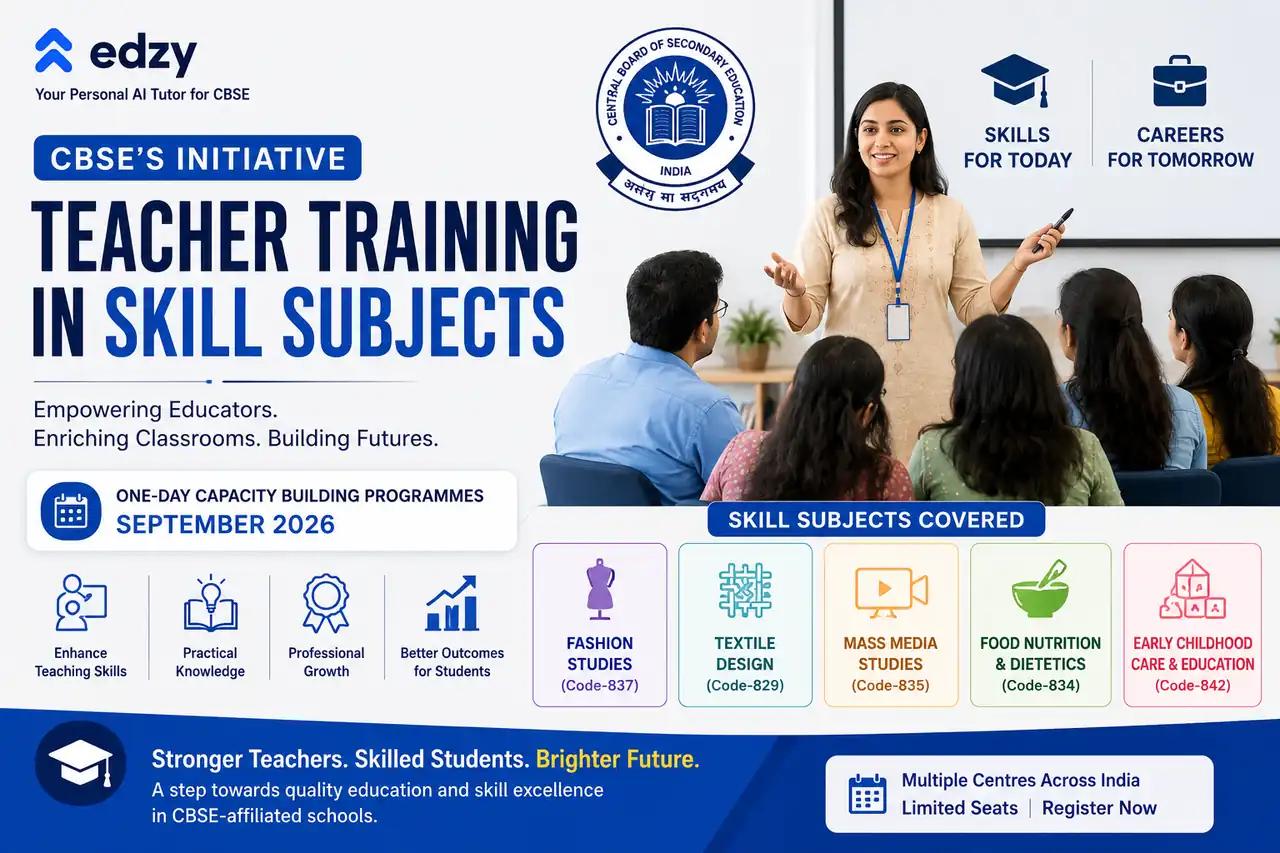
CBSE Organizes One-Day Teacher Training for Skill Subjects in September 2026

KVS/NVS Recruitment Drive 2025: Tier-II Results Declared