
NCERT Introduces AI & CT Module for Secondary Stage Students
New curriculum aims to enhance students' understanding of Artificial Intelligence and Computational Thinking.
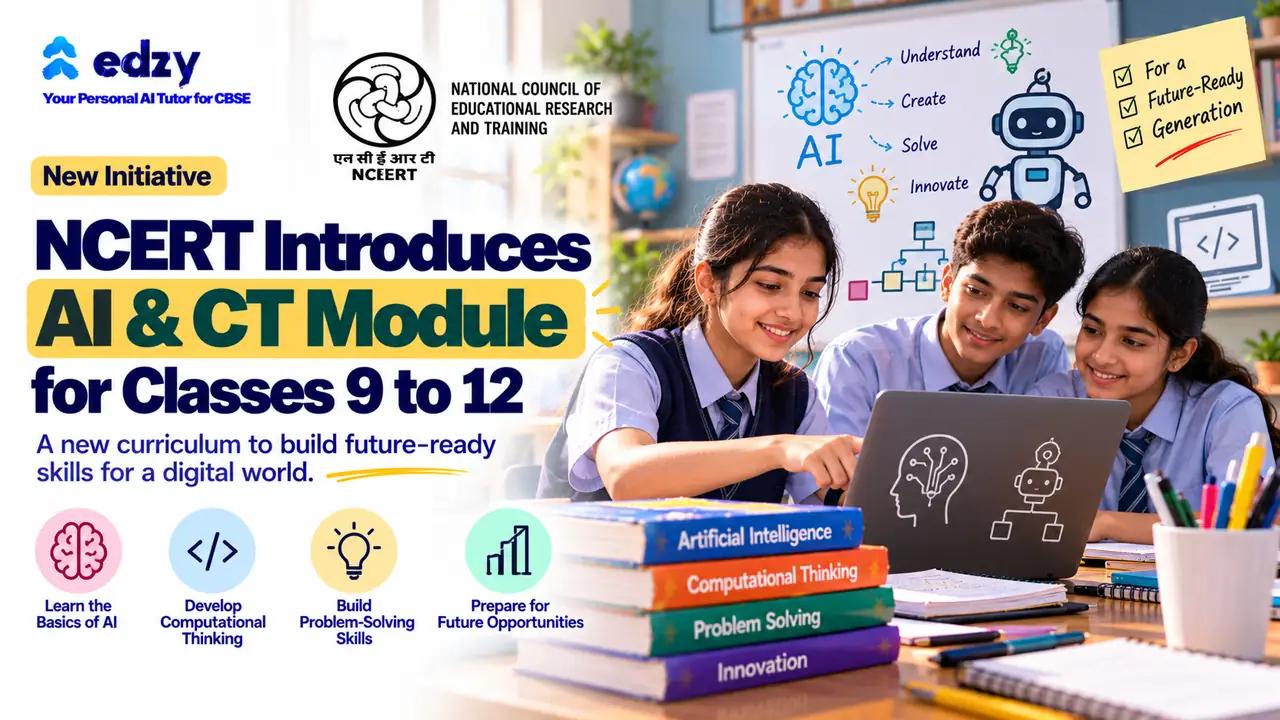
The NCERT has announced a new introductory module on Artificial Intelligence and Computational Thinking for students in grades 9 to 12. This initiative is part of a broader effort to integrate modern technology into the education system, preparing students for future challenges. In this article, we will explore the details of this module, its significance, and how it aligns with the CBSE curriculum.
Listen to this article
NCERT Introduces AI & CT Module for Secondary Stage Students
NCERT's New Initiative: AI & CT Module
The National Council of Educational Research and Training (NCERT) has recently released a press statement introducing an introductory module on Artificial Intelligence (AI) and Computational Thinking (CT) targeted at students in grades 9 to 12. This initiative is a significant step towards modernizing the curriculum and integrating technology into the educational framework. The module is designed to equip students with essential skills that are increasingly relevant in today's digital world. Readers can compare this update with cbse loc submission deadline approaches last date for related CBSE context.
As per the NCERT's announcement, this module will not only enhance students' understanding of AI and CT but also foster critical thinking and problem-solving skills. The curriculum aims to provide students with a foundational understanding of how AI works, its applications, and its implications in various fields. This is particularly important as the demand for technology-savvy professionals continues to grow in the job market. Readers can compare this update with cbse promotes digital payments in schools a for related CBSE context.
For more insights on how educational reforms are shaping the future, students can read about the recent updates on CBSE's LOC submission deadlines. Readers can compare this update with cbse organizes capacity building programmes for teachers for related CBSE context.
Importance of AI and CT in Education
The introduction of AI and CT into the school curriculum is a response to the rapid advancements in technology and the need for students to be prepared for a future where digital literacy is paramount. AI is not just a buzzword; it is a transformative force that is reshaping industries and creating new career opportunities. By incorporating AI and CT into the curriculum, NCERT aims to prepare students to navigate this evolving landscape. Readers can compare this update with cbse young india culinary championship 2026 27 for related CBSE context.
Moreover, understanding computational thinking helps students break down complex problems into manageable parts, a skill that is invaluable in both academic and real-world scenarios. The NCERT's initiative aligns with the CBSE's broader educational goals, which emphasize the importance of skill development and practical knowledge alongside traditional academic subjects. Readers can compare this update with establishing national service scheme nss in schools for related CBSE context.
For those interested in skill development, the CBSE's recent push for digital payments in schools is another example of how technology is being integrated into education.
Curriculum Structure and Implementation
The AI and CT module will be integrated into the existing curriculum for grades 9 to 12, allowing students to learn these concepts alongside their regular subjects. This integration is crucial as it ensures that students can apply their knowledge of AI and CT in various contexts, enhancing their overall learning experience. The module will include theoretical knowledge as well as practical applications, encouraging students to engage with technology hands-on.
Teachers will play a vital role in the successful implementation of this module. NCERT plans to provide training and resources to educators to ensure they are well-equipped to teach these new concepts effectively. This professional development is essential for fostering an environment where students can thrive and explore the potential of AI and CT.
For further information on teacher training initiatives, educators can check out the CBSE's capacity-building programs for teachers.
What This Means for Students and Educators
The introduction of the AI and CT module represents a significant shift in the educational landscape for secondary stage students. It emphasizes the importance of being technologically literate and prepares students for a future where AI will play a crucial role in various sectors. For educators, this module provides an opportunity to innovate their teaching methods and engage students in new ways.
Furthermore, this initiative aligns with the National Education Policy (NEP) 2020, which advocates for a holistic and multidisciplinary approach to education. By integrating AI and CT into the curriculum, NCERT is not only enhancing the learning experience but also ensuring that students are equipped with the skills necessary to succeed in a rapidly changing world.
As students prepare for their future, they can also look into the upcoming Young India Culinary Championship, which encourages creativity and practical skills among students.
What the AI & CT Module Means for Class 9 to 12 Students
For students in grades 9 to 12, the AI and CT module signifies a transformative addition to their educational journey. It not only enhances their understanding of essential technological concepts but also prepares them for future academic and career opportunities. The skills acquired through this module will be invaluable as students navigate higher education and the workforce, where digital proficiency is increasingly demanded.
In conclusion, the NCERT's initiative to introduce an AI and CT module is a forward-thinking approach that aligns with global educational trends. For Class 9 to 12 students, this represents a significant opportunity to develop critical skills that will serve them well in their future endeavors. The integration of AI and CT into the curriculum is a step towards preparing students for a technology-driven world, ensuring they are not just consumers of technology but also creators and innovators.
Related News

CBSE Launches Online Diploma Course in Teaching of Science for 2026-27

Post Graduate Diploma in Vocational Education and Training (PGDVET) Programme Commences at PSSCIVE, Bhopal

Extension of Last Date for PRAYAAS 2026-27 Applications Announced

Guidelines for Preservation and Weeding Out of Examination Records