
Class 10 Maths: How to Choose Between Substitution and Elimination
Mastering the art of solving linear equations with confidence and clarity.
Many Class 10 students struggle with choosing the right method for solving pair of linear equations. This blog introduces the Substitution and Elimination Framework, guiding students through practical examples and common pitfalls. Readers will learn how to effectively decide between substitution and elimination methods, enhancing their problem-solving skills in Mathematics.

Hari krishna
@harikrishna2
Listen to this article
Class 10 Maths: How to Choose Between Substitution and Elimination
Understanding the Learning Objectives and Prerequisites
For Class 10 students, mastering the concept of pair of linear equations is crucial, as it forms the foundation for higher-level mathematics. Before diving into methods like substitution and elimination, students should be familiar with basic algebraic concepts, including variables, constants, and the properties of equality. Understanding how to graph linear equations and interpret their solutions geometrically can also provide valuable insights. This knowledge is essential for tackling problems effectively in the CBSE Mathematics syllabus. For more foundational knowledge, check out our blog on understanding polynomials.
Core Concepts Behind Choosing Between Substitution and Elimination
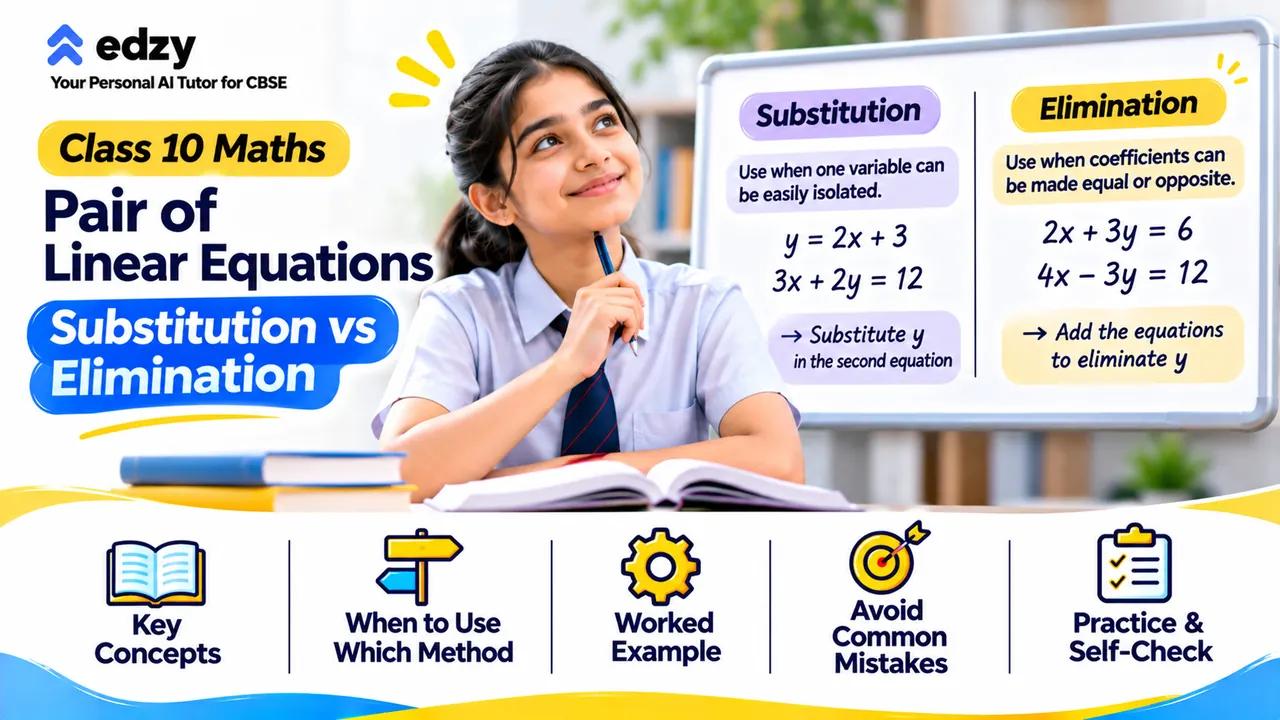
When faced with a pair of linear equations, students often wonder whether to use substitution or elimination. The choice largely depends on the specific equations presented. The Substitution and Elimination Framework is a structured approach that helps students make this decision. Substitution is typically more efficient when one equation is easily solvable for one variable. For example, if we have the equations:
1. y = 2x + 3 2. 3x + 2y = 12
In this case, the first equation can be substituted into the second, simplifying the process. On the other hand, elimination is often preferable when the coefficients of one variable are easily manipulated to cancel each other out. For instance, consider:
1. 2x + 3y = 6 2. 4x - 3y = 12
Here, adding the two equations allows for the elimination of y, making it straightforward to solve for x.
Worked Example: Applying the Framework
Let’s apply the Substitution and Elimination Framework to a practical example. Consider the equations:
1. 2x + 3y = 12 2. 4x - y = 5
To decide which method to use, we can first manipulate the second equation to isolate y:
-y = 5 - 4x y = 4x - 5
Now, we can substitute this expression for y into the first equation:
2x + 3(4x - 5) = 12
Solving this gives:
2x + 12x - 15 = 12 14x = 27 x = 27/14
Substituting back to find y:
y = 4(27/14) - 5 = 108/14 - 70/14 = 38/14
Thus, the solution is (27/14, 38/14). This example illustrates how the Substitution and Elimination Framework can streamline the problem-solving process.
Common Misconceptions and Corrections
Many students mistakenly believe that one method is universally better than the other. However, the effectiveness of substitution versus elimination depends on the equations themselves. A common error occurs when students attempt to use substitution on equations that are not easily rearranged. For instance, if both equations are in standard form and neither can be easily solved for a variable, students may struggle unnecessarily. Instead, recognizing when to switch to elimination can save time and reduce frustration. For more insights on avoiding common mistakes in mathematics, check out our blog on using mistakes as a study advantage.
Additionally, students often overlook the importance of checking their solutions. After finding values for x and y, substituting these back into the original equations is essential to ensure accuracy. This practice not only builds confidence but also reinforces understanding of the concepts involved. For more insights on avoiding common mistakes in mathematics, check out our blog on why skipping steps can lead to errors.
Independent Practice and Self-Check
To solidify understanding of the Substitution and Elimination Framework, students should engage in independent practice. Start with a set of problems that require both methods. For instance, try solving:
1. x + y = 10 2. 2x - 3y = -4
Students can first attempt substitution by solving the first equation for y and substituting into the second. Alternatively, they can use elimination by multiplying the first equation to align coefficients. This practice not only reinforces the concepts but also prepares students for case-based questions in the CBSE board exams. For additional practice, refer to our blog on how to practice case study questions effectively, which provides targeted exercises to enhance problem-solving skills.
Why Do CBSE Students Struggle with Choosing Between Substitution and Elimination?
Why do CBSE students struggle with choosing between substitution and elimination? Many students find it challenging to determine which method to use due to a lack of familiarity with the characteristics of the equations. Without a clear understanding of how to analyze the equations, students may waste time on inefficient methods. By applying the Substitution and Elimination Framework, students can quickly assess the best approach based on the structure of the equations.
Conclusion: The Path to Mastery in Linear Equations
Mastering the choice between substitution and elimination is a vital skill for Class 10 students. By employing the Substitution and Elimination Framework, students can approach pair of linear equations with confidence, ensuring they select the most efficient method for each problem. This not only enhances their problem-solving abilities but also prepares them for the rigors of the CBSE examinations. Every mark a CBSE student loses to a careless error is a mark they already earned — the only task left is making sure it shows up on the paper. For more tips on improving your study routine, check out our blog on improving your study routine.
Suggested blogs
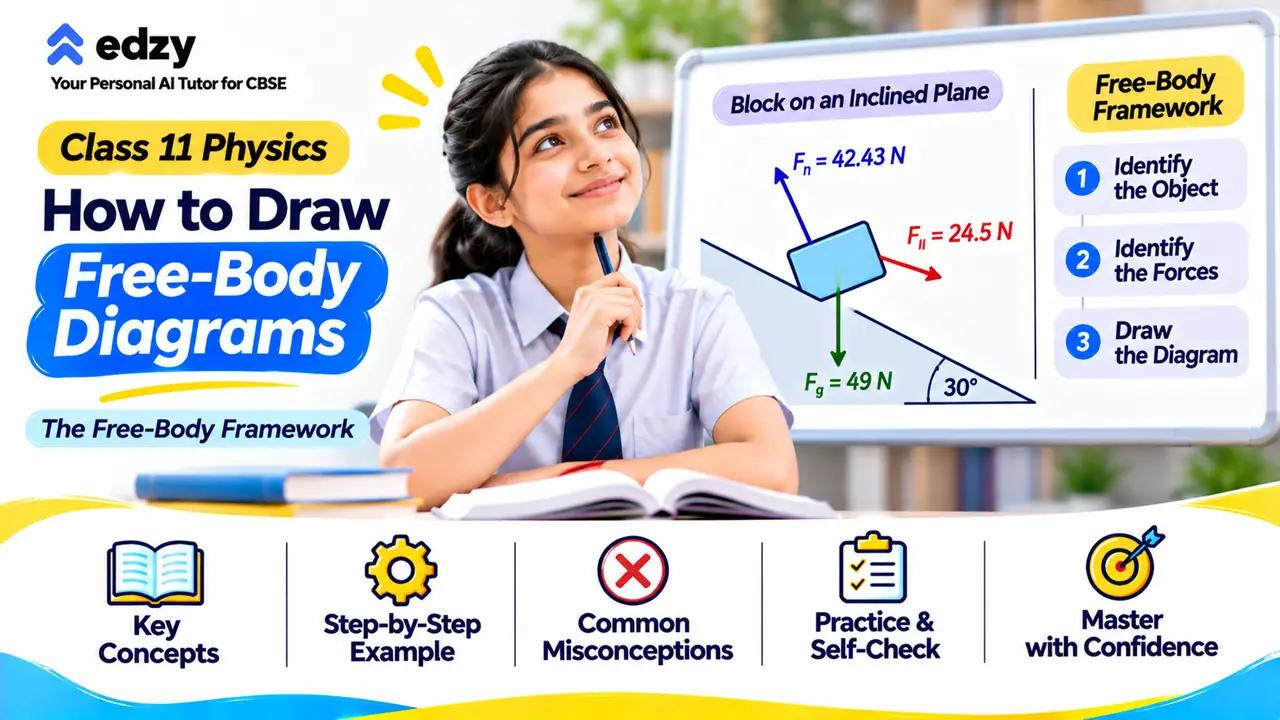
Class 11 Physics: How to Draw Free-Body Diagrams Correctly
Mastering Free-Body Diagrams: A Key Skill for CBSE Physics Success.

Class 10 Science: How to Understand Magnetic Effects of Electric Current
Mastering the magnetic effects of electric current is crucial for Class 10 students — here’s how to do it effectively.
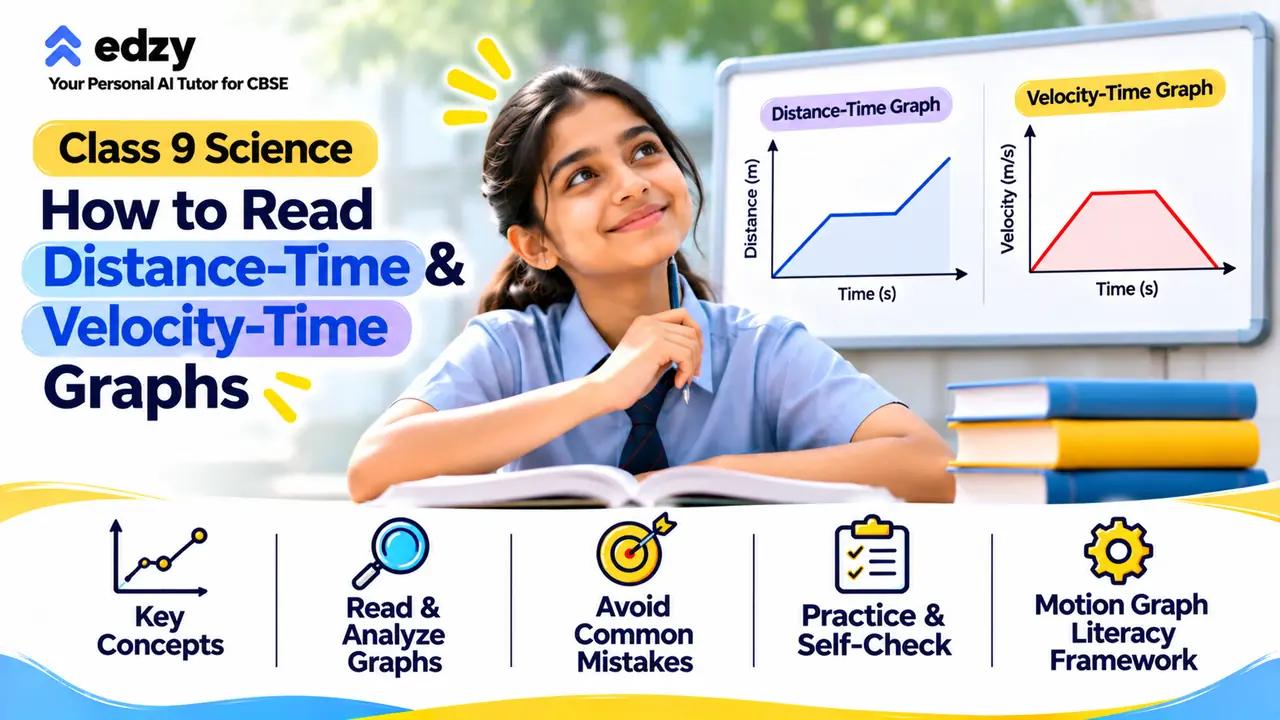
Class 9 Science: How to Read Distance-Time and Velocity-Time Graphs
Understanding motion graphs is essential for mastering concepts in Class 9 Science and excelling in CBSE exams.
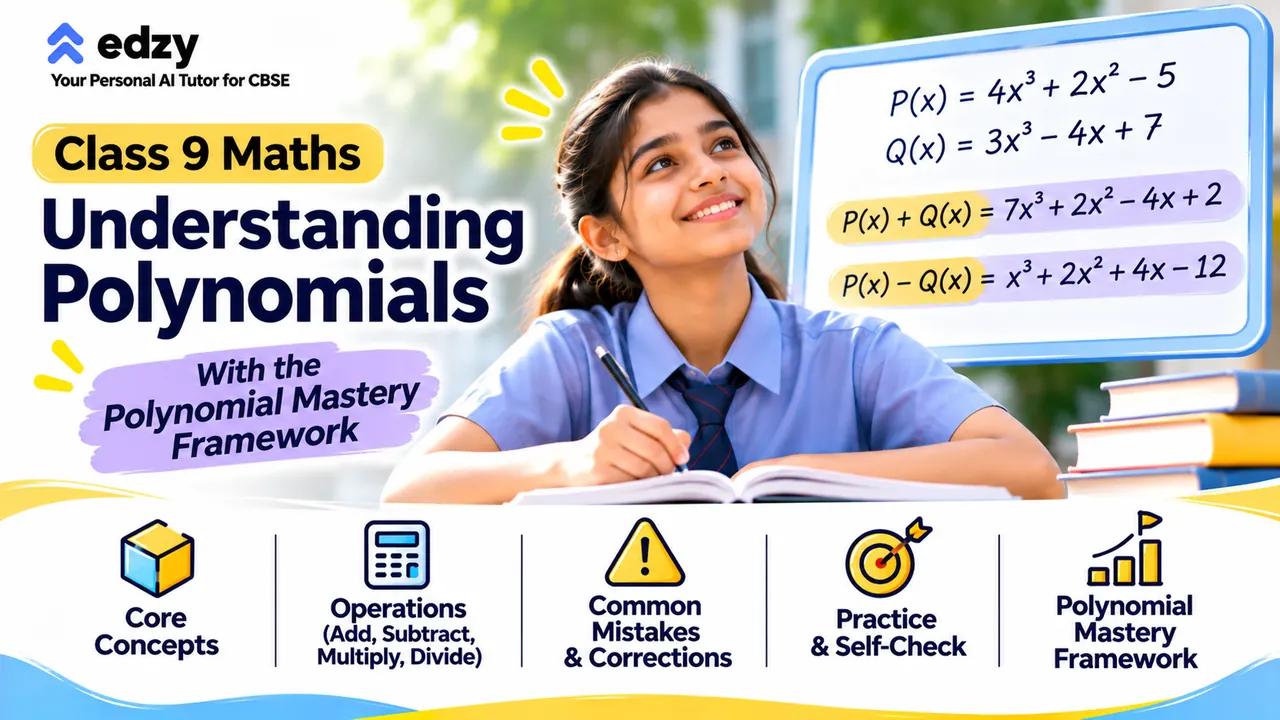
Class 9 Maths: How to Understand Polynomials With Worked Examples
Mastering polynomials is crucial for Class 9 students to excel in mathematics and beyond.