
How to Use Mistakes as Your Biggest Study Advantage
Transforming errors into stepping stones for academic success.
Many students struggle with careless mistakes during exams, leading to lost marks. This blog introduces the concept of the Mistake Advantage Framework, which helps students analyze and learn from their errors. Readers will discover how to identify patterns in mistakes, fix conceptual gaps, and track their improvement effectively.


Gaurav Parashar
@gauravparashar
Listen to this article
How to Use Mistakes as Your Biggest Study Advantage
Why Students Ignore Mistakes
In the high-pressure environment of CBSE exams, many students tend to overlook their mistakes, often viewing them as mere errors rather than valuable learning opportunities. This tendency can stem from a fear of failure or a lack of understanding about how mistakes can inform their study strategies. For instance, a Class 10 student who answers a question incorrectly in Mathematics may dismiss it as a simple oversight, failing to recognize that this mistake could indicate a deeper misunderstanding of the concept of Quadratic Equations.
Ignoring mistakes can lead to a cycle of repeated errors, particularly in subjects like Science and Social Science, where foundational knowledge is crucial. Students often rush through practice tests without taking the time to analyze their performance, missing out on critical insights that could enhance their understanding and retention of the material. By adopting a more reflective approach, students can transform their mistakes into a powerful tool for academic growth, as discussed in this guide. Additionally, they can learn how to avoid last-minute cramming to ensure they grasp these concepts better.
Analyzing Errors Properly
To leverage mistakes effectively, students must first engage in a thorough analysis of their errors. This involves reviewing not just the incorrect answers but also understanding why they occurred. For example, a Class 12 student preparing for the Physics board exam might find that they consistently struggle with Laws of Motion questions. Instead of simply marking these questions wrong, they should revisit the concepts, identify the specific principles they misunderstood, and seek clarification on those topics, similar to the strategies outlined in this article.
Creating an error log can be an effective strategy for this analysis. By documenting each mistake along with the reasoning behind it, students can identify recurring themes in their errors. This practice not only helps in pinpointing weak areas but also encourages a proactive approach to learning. For instance, if a student frequently miscalculates in case-based questions in Mathematics, they can focus on practicing similar problems to build confidence and accuracy.
Finding Patterns in Mistakes
Identifying patterns in mistakes is crucial for effective learning. Students should look for trends in their errors across different subjects and types of questions. For instance, a Class 9 student might notice that they often struggle with source-based questions in Social Science, particularly when it comes to interpreting data from graphs or tables. Recognizing this pattern allows them to focus their revision on these specific question types, as emphasized in this resource.
Moreover, students can categorize their mistakes into different types, such as conceptual errors, calculation errors, or misinterpretations of questions. This categorization can guide their study sessions, allowing them to allocate time more efficiently. For example, if a student realizes they frequently misinterpret questions in English literature, they can dedicate more time to practicing comprehension and analysis skills.
Fixing Conceptual Gaps
Once students have identified their patterns of mistakes, the next step is to address the underlying conceptual gaps. This is particularly important in subjects like Science and Mathematics, where a solid understanding of foundational concepts is essential for tackling advanced topics. For instance, a Class 11 student struggling with Photosynthesis in Biology may need to revisit the basics of plant biology to fully grasp the process.
Students should not hesitate to seek help from teachers or peers when they encounter challenging concepts. Engaging in group discussions or study sessions can provide different perspectives and explanations that may resonate better. Additionally, utilizing online resources and educational platforms can supplement their learning. For example, a student can watch video tutorials on specific topics to reinforce their understanding and clarify doubts.
Practicing Targeted Questions
Targeted practice is essential for mastering the concepts that students struggle with. Instead of practicing a wide range of questions, students should focus on specific areas where they have previously made mistakes. For instance, a Class 10 student preparing for their board exams should concentrate on solving past year questions related to the chapters they find most challenging, such as Quadratic Equations or Electricity.
This focused approach not only helps reinforce learning but also builds confidence. By repeatedly practicing similar types of questions, students can become familiar with the formats and expectations of the CBSE exams. Additionally, they should incorporate a mix of question types, including assertion-reason questions and competency-based problems, to ensure a well-rounded preparation.
Tracking Improvement
Tracking improvement is a vital aspect of using mistakes as a learning tool. Students should regularly assess their progress by revisiting their error logs and comparing their performance over time. For example, a Class 12 student preparing for the board exams can take practice tests every few weeks and analyze their scores to see if they are making fewer mistakes in previously challenging areas.
Using a simple spreadsheet or a dedicated notebook can help students visualize their progress. They can record their scores, note the types of mistakes they made, and reflect on how their understanding has evolved. This practice not only boosts motivation but also reinforces the idea that improvement is a gradual process, encouraging students to stay committed to their studies.
Avoiding Repeated Errors
To avoid repeating mistakes, students must develop a proactive mindset. This involves not only recognizing errors but also implementing strategies to prevent them in the future. For instance, a Class 9 student who frequently makes calculation errors in Mathematics should adopt a systematic approach to double-check their work. This could involve writing down intermediate steps clearly or using estimation to verify their answers.
Additionally, students can create a checklist of common mistakes they tend to make in each subject. Before submitting their answers in an exam, they can quickly review this checklist to ensure they haven’t overlooked anything. This practice can significantly reduce careless errors, allowing students to focus on demonstrating their knowledge rather than losing marks to avoidable mistakes.
Improving Exam Scores
Ultimately, the goal of using mistakes as a learning tool is to improve exam scores. By systematically analyzing errors, fixing conceptual gaps, and practicing targeted questions, students can enhance their performance in CBSE exams. For instance, a Class 10 student who diligently follows these strategies will likely see a marked improvement in their scores, particularly in subjects like Science and Mathematics where precision is key.
Moreover, students should approach exams with a growth mindset, viewing each test as an opportunity to learn rather than just a measure of their abilities. This perspective shift can alleviate anxiety and encourage a more positive attitude towards studying. By embracing their mistakes and learning from them, students can unlock their full potential and achieve the academic success they desire.
In conclusion, the journey of learning is filled with mistakes, but it is how students respond to these errors that truly matters. By adopting the Mistake Advantage Framework, students can transform their approach to studying, turning errors into stepping stones for success. Every mark a CBSE student loses to a careless error is a mark they already earned — the only task left is making sure it shows up on the paper.
Suggested blogs

New Year Study Plan: How to Set Goals You’ll Actually Follow
Transform your study habits this New Year with a realistic and achievable study plan.

How to Stay Focused During Long Study Sessions
Mastering concentration techniques for effective study sessions.
How to Revise Quickly in the Morning Before School
Mastering morning revision for effective learning and confidence.
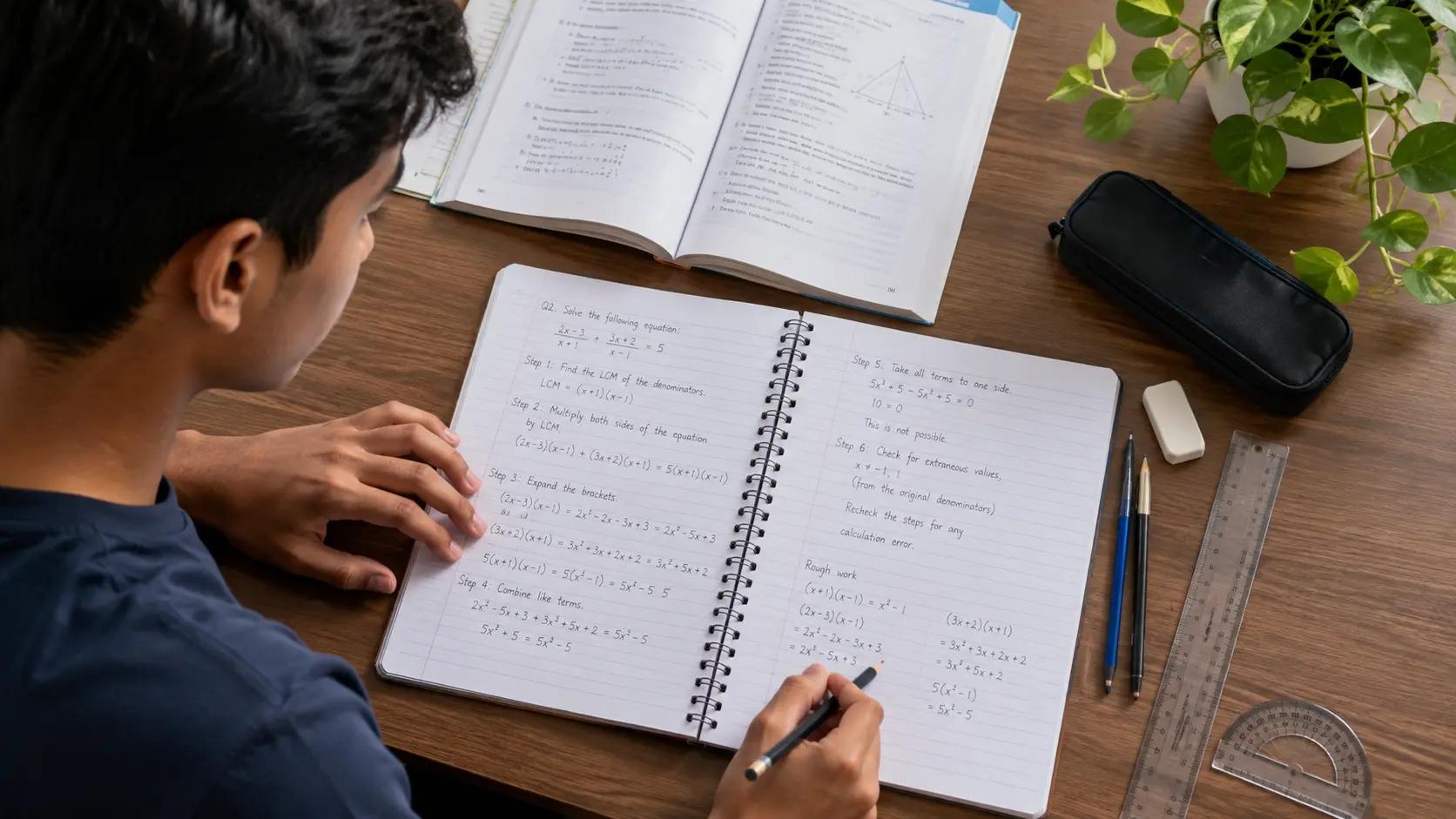
Why You Shouldn’t Skip Steps in Maths (Even If You Know the Answer)
Understanding the importance of step-by-step problem-solving in CBSE Mathematics.