
How to Stay Focused During Long Study Sessions
Mastering concentration techniques for effective study sessions.
Many CBSE students struggle to maintain focus during long study sessions, leading to fatigue and reduced retention. This blog introduces the concept of Focused Study Blocks, a structured approach to enhance concentration. Readers will learn effective strategies to break study sessions into manageable chunks, engage actively with the material, and maintain their energy levels throughout their study time.


Gaurav Parashar
@gauravparashar
Listen to this article
How to Stay Focused During Long Study Sessions
For CBSE students, particularly those in Classes 10 to 12, long study sessions can often lead to a significant drop in focus and productivity. This is a common challenge faced by students preparing for crucial exams like the CBSE board exams. Understanding why focus diminishes over time is the first step in combating this issue. In this blog, we will explore various strategies that can help students maintain their concentration and energy levels during extended study periods.
Why Focus Drops Over Time
The human brain is not designed to maintain high levels of concentration for prolonged periods. As students dive deep into subjects like Mathematics or Science, they may find their attention waning after just 30 to 45 minutes. This phenomenon is often attributed to cognitive fatigue, which occurs when the brain becomes overwhelmed by the amount of information being processed. For instance, a student studying Chapter 5 of NCERT Class 10 Science on 'Acids, Bases, and Salts' might initially grasp the concepts well but struggle to retain information after an hour of intensive study. To combat this, students can refer to strategies for avoiding last-minute cramming that help manage study time effectively.
Moreover, the pressure of upcoming exams can exacerbate this issue. Students might feel compelled to study for hours on end without breaks, which ironically leads to decreased productivity. A Class 12 student preparing for the Physics board exam might spend hours on complex topics like 'Electromagnetic Induction' but find that their understanding diminishes as fatigue sets in. Recognizing these patterns is crucial for developing effective study habits, as discussed in our article on improving study routines.
Breaking Sessions into Chunks
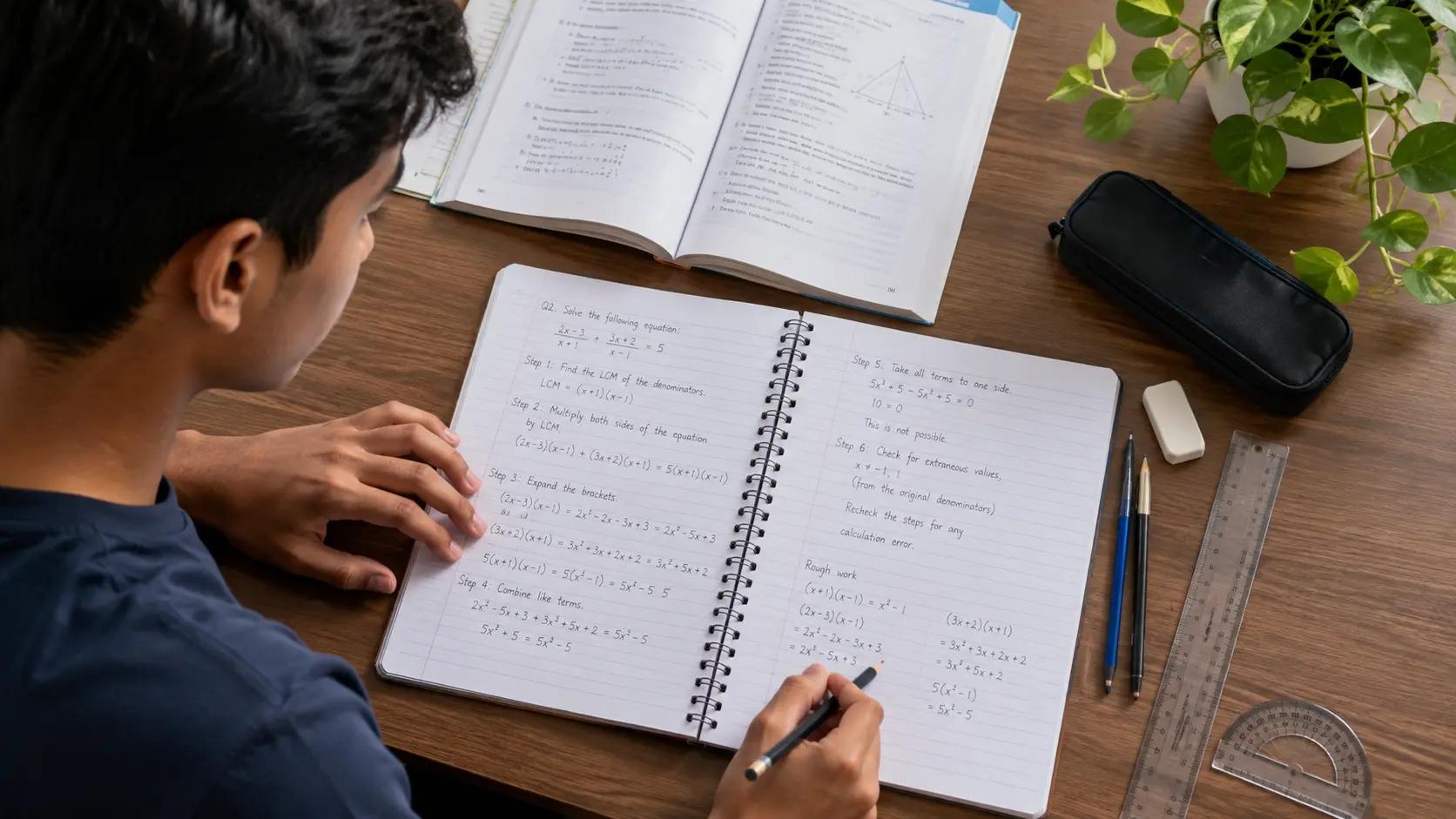
One effective strategy to combat cognitive fatigue is to break study sessions into manageable chunks. This method, which we will refer to as Focused Study Blocks, involves dividing study time into segments of 25 to 50 minutes, followed by short breaks. For example, a Class 10 student preparing for the 'Quadratic Equations' chapter in Mathematics can set a timer for 30 minutes to focus solely on solving problems, followed by a 5-10 minute break to relax and recharge. To learn more about effective study practices, check out our guide on quick morning revision techniques.
During these breaks, students should engage in activities that do not require intense mental effort. Simple stretches, a quick walk, or even a few minutes of mindfulness can help reset the brain. This technique not only helps maintain focus but also enhances retention of information. Research indicates that the brain can absorb and retain information more effectively when study sessions are interspersed with breaks, making Focused Study Blocks a powerful tool for CBSE students.
Using Active Engagement Techniques
Active engagement techniques are essential for keeping the mind alert and focused during study sessions. Instead of passively reading through textbooks, students should actively interact with the material. For instance, while studying Chapter 3 'Federalism' in Class 10 Social Science, students can create flashcards summarizing key points or draw mind maps to visualize relationships between concepts. To further enhance understanding, students can utilize methods discussed in our article on using mistakes to improve marks.
Another effective method is teaching the material to someone else, such as a peer or even a family member. This technique, known as the Feynman Technique, encourages students to break down complex topics into simpler terms, reinforcing their understanding. For example, a student explaining the principles of 'Photosynthesis' from Class 10 Science to a friend will not only clarify their own understanding but also identify any gaps in their knowledge.
Taking Effective Breaks
Breaks are not just a time to step away from the books; they are an integral part of the study process. Effective breaks can rejuvenate the mind and enhance overall productivity. Students should aim to take a break every hour or after completing a Focused Study Block. During these breaks, engaging in physical activities, such as a quick workout or a short walk, can significantly boost energy levels.
For instance, a Class 12 student studying for the English board exam can take a break after reviewing a chapter from 'Flamingo' or 'Vistas' by going for a brisk walk outside. This not only refreshes the mind but also helps in reducing stress levels. Additionally, students should avoid screens during breaks, as this can lead to mental fatigue. Instead, opting for activities like listening to music or practicing deep breathing can be more beneficial.
Avoiding Distractions
In today's digital age, distractions are everywhere. Social media notifications, mobile games, and even family conversations can easily divert a student's attention away from their studies. To maintain focus, it is crucial for students to create a dedicated study environment that minimizes distractions. This could mean finding a quiet room or using noise-canceling headphones while studying.
Moreover, students should consider using apps that block distracting websites during their study sessions. For example, a Class 10 student preparing for their Mathematics exam can use tools like 'Forest' or 'Cold Turkey' to stay focused on solving problems without the temptation of checking social media. Establishing a distraction-free zone not only enhances concentration but also promotes a more effective study routine.
Maintaining Energy Levels
Energy levels play a crucial role in a student's ability to focus during long study sessions. Proper nutrition, hydration, and sleep are essential components in maintaining energy. Students should prioritize balanced meals rich in proteins, healthy fats, and carbohydrates. For instance, a Class 12 student might benefit from a breakfast that includes eggs, whole-grain toast, and fruits to fuel their brain for a day of studying.
Additionally, staying hydrated is vital. Dehydration can lead to fatigue and decreased cognitive function, making it harder to concentrate. Students should aim to drink plenty of water throughout the day, especially during study sessions. A simple rule of thumb is to keep a water bottle nearby and take sips regularly. This small habit can significantly impact focus and overall study performance.
Staying Consistent
Consistency is key when it comes to effective studying. Establishing a regular study schedule helps students build a routine that promotes focus. For instance, a Class 10 student preparing for their board exams should aim to study at the same time every day, creating a habit that signals to the brain that it is time to focus. This could mean dedicating specific hours each evening to subjects like Science or Mathematics.
Moreover, students should set realistic goals for each study session. Instead of attempting to cover an entire chapter in one sitting, they can break it down into smaller sections. For example, when studying 'Laws of Motion' in Class 9 Physics, a student can focus on understanding the first law one day and the second law the next. This approach not only makes studying more manageable but also reinforces learning through repetition.
Improving Study Quality
Finally, the quality of study time is just as important as the quantity. Students should focus on understanding concepts rather than rote memorization. For instance, while preparing for the Class 12 board exam in Mathematics, students should aim to grasp the underlying principles of topics like 'Integration' rather than just memorizing formulas. Engaging with the material through problem-solving and application will lead to deeper understanding and better retention.
Additionally, utilizing past exam papers and sample questions can enhance study quality. A Class 10 student can practice with previous years' board exam questions to familiarize themselves with the exam format and question types, such as case-based questions or assertion-reason questions. This not only boosts confidence but also improves performance on exam day. For more tips on how to study effectively, consider reading our article on studying faster without compromising understanding.
Conclusion
Maintaining focus during long study sessions is a skill that can be developed through practice and the right strategies. By implementing techniques such as Focused Study Blocks, active engagement, and effective breaks, CBSE students can enhance their concentration and overall study effectiveness. Every mark a CBSE student loses to a careless error is a mark they already earned — the only task left is making sure it shows up on the paper.
Suggested blogs

New Year Study Plan: How to Set Goals You’ll Actually Follow
Transform your study habits this New Year with a realistic and achievable study plan.

How to Use Mistakes as Your Biggest Study Advantage
Transforming errors into stepping stones for academic success.

How to Revise Quickly in the Morning Before School
Mastering morning revision for effective learning and confidence.
Why You Shouldn’t Skip Steps in Maths (Even If You Know the Answer)
Understanding the importance of step-by-step problem-solving in CBSE Mathematics.