
How to Revise Quickly in the Morning Before School
Mastering morning revision for effective learning and confidence.
Students often struggle to find time for revision before school, leading to anxiety and poor retention. This blog introduces the concept of Morning Revision Mastery, a structured approach to utilize morning hours effectively. Readers will learn specific strategies to enhance focus, manage time, and build a consistent revision habit that sets a positive tone for the day.


Gaurav Parashar
@gauravparashar
Listen to this article
How to Revise Quickly in the Morning Before School
Why Morning Revision Works Well
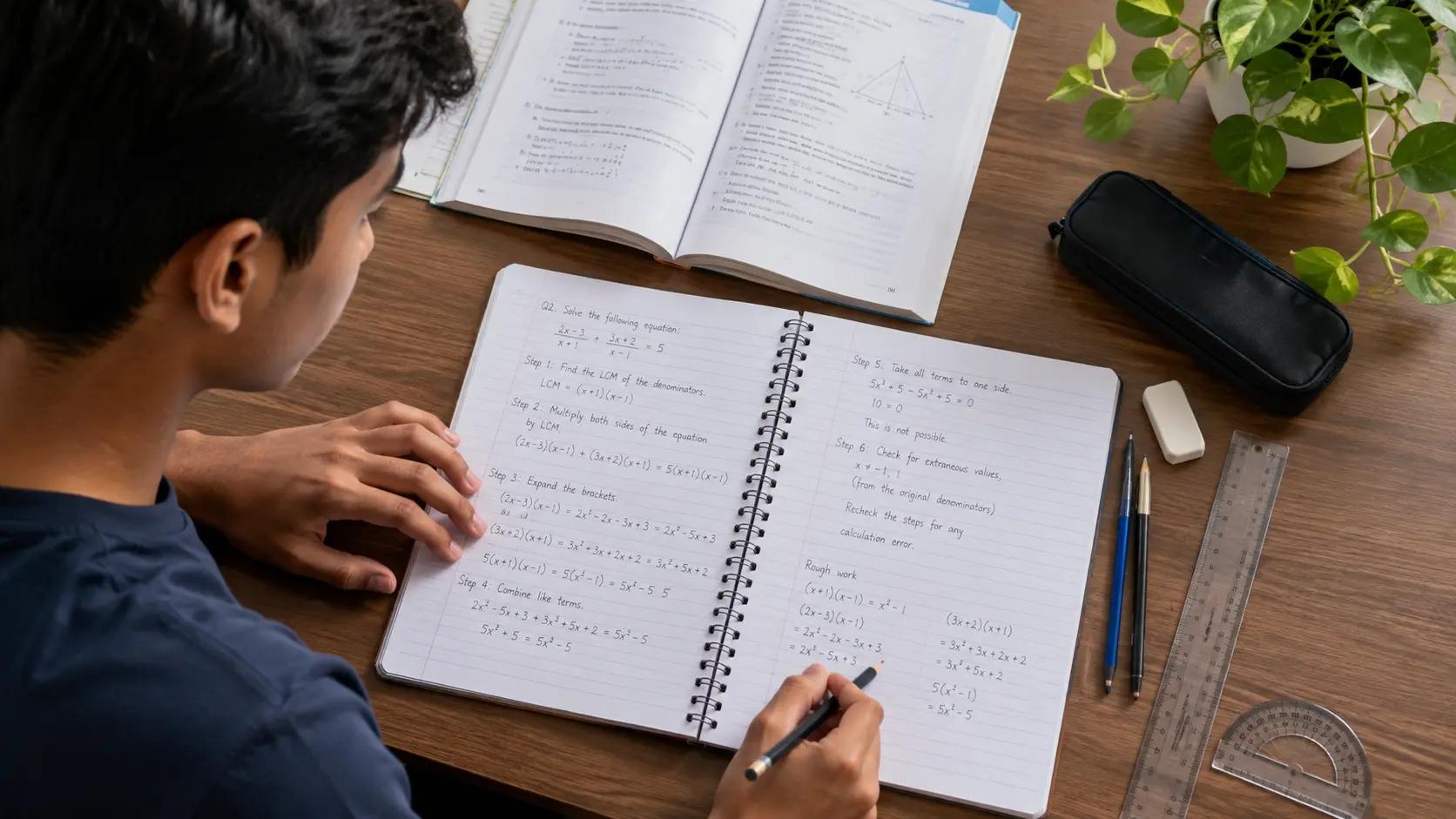
Morning is often the most peaceful time of the day, making it an ideal period for focused study. For CBSE students, especially those in classes 10 to 12, the early hours can be a golden opportunity to revise crucial subjects like Mathematics and Science without the distractions that accumulate throughout the day. The brain is fresh after a good night's sleep, which enhances memory retention and cognitive function. For instance, a Class 10 student revising the chapter on Quadratic Equations in the morning can grasp complex concepts more effectively than later in the day when fatigue sets in. Additionally, students can benefit from strategies outlined in our article on finishing their syllabus on time.
Moreover, studies indicate that information learned in the morning is often retained better than information learned at night. This is particularly beneficial for students preparing for board exams, where every mark counts. By utilizing the morning hours for revision, students can enter their classes with confidence, ready to engage with the material actively. Techniques for managing time effectively during exams can be found in our guide on managing time during a 3-hour exam.
What to Revise vs What to Avoid
When planning morning revision, it’s essential to prioritize what to study. Focus on key topics that are frequently tested in CBSE exams, such as Photosynthesis in Science or Federalism in Social Science. These subjects often contain core concepts that serve as the foundation for more complex ideas. For example, a Class 9 student should concentrate on understanding the basic principles of Motion and Laws of Motion rather than trying to cover the entire syllabus. For more tips on effective study techniques, check out our article on studying smarter, not longer.
Conversely, avoid revising new or complex topics that require extensive time and concentration. For instance, attempting to learn a new chapter in English Literature right before school can lead to confusion and anxiety. Instead, focus on summarizing key points or revising previously learned material. This strategy not only reinforces knowledge but also builds confidence for the day ahead.
Using Short Focused Sessions
Implementing short, focused study sessions can significantly enhance the effectiveness of morning revision. The concept of Morning Revision Mastery emphasizes breaking study time into manageable chunks, typically 20-30 minutes, followed by a short break. This method aligns well with the attention spans of students and helps maintain high levels of concentration.
For example, a Class 12 student preparing for the CBSE Board Exams can dedicate 25 minutes to revising key formulas in Physics related to Electricity, followed by a 5-minute break. During this break, they can stretch or hydrate, which helps refresh the mind. This approach prevents burnout and keeps the student engaged, making morning revision a productive part of their routine.
Active Recall in Limited Time
Active recall is a powerful technique that involves retrieving information from memory rather than passively reviewing notes. This method is particularly effective during morning revision sessions. For instance, a Class 10 student could cover the chapter on Case-Based Questions in Mathematics by first attempting to solve problems without looking at their notes. This challenges the brain to recall information actively, reinforcing learning.
To implement active recall, students can create flashcards or use apps designed for this purpose. For example, a student revising Assertion-Reason Questions in Social Science can write down assertions on one side of a flashcard and the corresponding reasons on the other. This method not only aids in memory retention but also prepares students for the types of questions they will encounter in exams. For further insights, refer to our article on revising smartly for exams.
Revising Formulas and Key Points
Revising formulas and key points is crucial for subjects like Mathematics and Science, where precision is essential. Students should create a dedicated formula sheet that they can review each morning. For example, a Class 11 student studying Trigonometry should ensure they can recall and apply the fundamental identities and formulas quickly.
In addition to formulas, summarizing key points from chapters can be beneficial. For instance, a student revising the chapter on Photosynthesis should focus on the process, the role of chlorophyll, and the overall equation. This not only aids in quick recall but also helps in understanding the interconnections between concepts, which is vital for answering application-based questions in exams.
Avoiding Distractions Early Morning
To maximize the effectiveness of morning revision, it is essential to create a distraction-free environment. This means turning off mobile phones or any devices that could interrupt focus. For students preparing for CBSE exams, a quiet space free from noise and clutter can significantly enhance concentration.
For example, a Class 12 student might choose to study in a designated area of their home, away from family distractions. Establishing a routine where the first hour of the day is dedicated solely to revision can help reinforce this habit. The less time spent on distractions, the more time available for productive study.
Building a Daily Revision Habit
Consistency is key when it comes to effective revision. Building a daily revision habit can transform morning study sessions into a natural part of the routine. The Morning Revision Mastery framework encourages students to set specific goals for each session, such as revising two chapters a week or mastering a particular set of formulas.
For instance, a Class 10 student might decide to focus on revising the chapters on Linear Equations and Quadratic Equations over two weeks. By breaking down the syllabus into manageable parts and dedicating time each morning, students can ensure they cover all necessary material without feeling overwhelmed.
Starting the Day with Confidence
The ultimate goal of morning revision is to start the day with confidence. When students engage in focused study sessions, they not only reinforce their knowledge but also build a positive mindset. This confidence can significantly impact their performance in class and during exams.
For example, a Class 12 student who revises key concepts in Chemistry related to Organic Compounds in the morning is likely to feel more prepared and less anxious when faced with questions in class. This confidence translates into better participation and a more proactive approach to learning. To further enhance their preparation, students can explore our article on preparing for unit tests without stress.
In conclusion, mastering morning revision is not just about cramming information; it’s about creating a structured, focused approach that enhances learning and builds confidence. By implementing the Morning Revision Mastery framework, CBSE students can transform their mornings into a powerful tool for academic success. Every mark a CBSE student loses to a careless error is a mark they already earned — the only task left is making sure it shows up on the paper.
Suggested blogs

New Year Study Plan: How to Set Goals You’ll Actually Follow
Transform your study habits this New Year with a realistic and achievable study plan.

How to Stay Focused During Long Study Sessions
Mastering concentration techniques for effective study sessions.

How to Use Mistakes as Your Biggest Study Advantage
Transforming errors into stepping stones for academic success.
Why You Shouldn’t Skip Steps in Maths (Even If You Know the Answer)
Understanding the importance of step-by-step problem-solving in CBSE Mathematics.