
How to Use Mistakes to Improve Your Marks (Most Students Ignore This)
Transforming errors into learning opportunities for better exam performance
This blog explores how students can learn from their mistakes to enhance their exam performance, focusing on analysis, understanding patterns, and targeted practice.


Gaurav Parashar
@gauravparashar
Listen to this article
How to Use Mistakes to Improve Your Marks (Most Students Ignore This)
Mistakes are often seen as setbacks in the academic journey, but they can also be powerful learning tools. For students in classes 6 to 12, understanding how to analyze and learn from mistakes can significantly enhance their performance in exams. In this blog, we will explore why students tend to repeat the same mistakes, how to analyze wrong answers, understand error patterns, fix conceptual gaps, practice targeted questions, track improvement, avoid careless mistakes, and ultimately improve exam scores.
Why Students Repeat the Same Mistakes
One of the most frustrating aspects of learning is the tendency to repeat mistakes. This phenomenon is not uncommon among students. Often, it stems from a lack of understanding of the underlying concepts or insufficient practice. When students do not fully grasp a topic, they may misinterpret questions or fail to apply the correct methods during exams.
Additionally, many students approach their studies with a focus on rote memorization rather than comprehension. This approach can lead to a superficial understanding of the material, making it easy to overlook crucial details that could prevent mistakes. For instance, a student might memorize formulas without understanding their derivation or application, leading to errors in problem-solving.
Another reason for repeating mistakes is the absence of a feedback loop. Without analyzing past performances, students may not recognize patterns in their errors. This lack of reflection can create a cycle where mistakes are repeated, resulting in stagnant learning and poor exam results.
Analyzing Wrong Answers
The first step in learning from mistakes is to analyze wrong answers thoroughly. After receiving feedback on an exam or assignment, students should take the time to review each incorrect answer. This process involves asking questions such as:
What was the question asking?
What was my thought process when answering?
What concept did I misunderstand?
Was there a specific detail I overlooked?
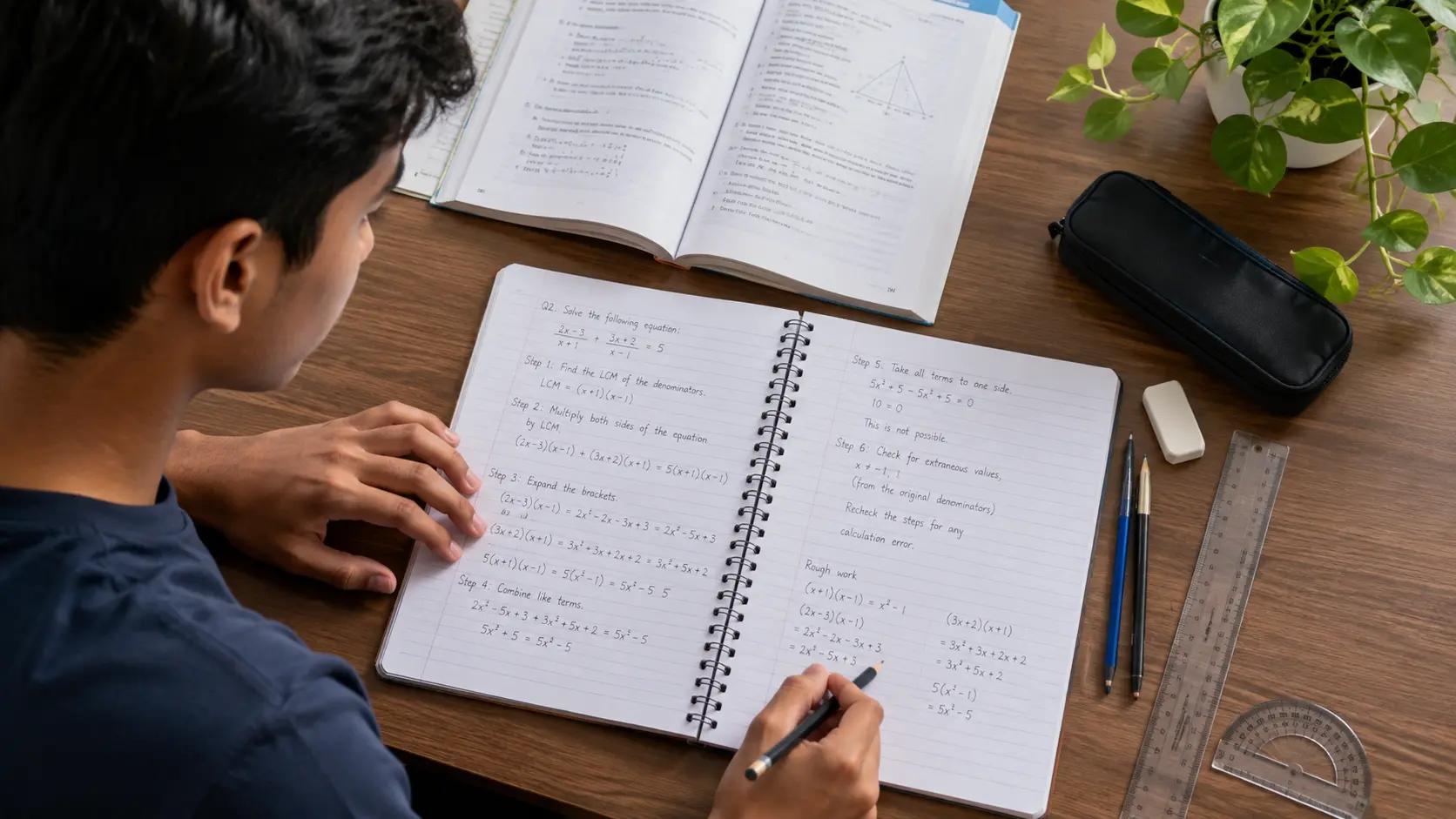
For example, if a student answers a math problem incorrectly, they should revisit the problem and identify where their reasoning went awry. Did they misapply a formula? Did they make a calculation error? By pinpointing the exact nature of the mistake, students can focus on addressing that specific area in their studies.
Moreover, students can benefit from discussing their mistakes with teachers or peers. Engaging in conversations about errors can provide new insights and clarify misunderstandings. This collaborative approach not only reinforces learning but also builds a supportive academic community.
Understanding Error Patterns
Once students have analyzed their wrong answers, the next step is to identify error patterns. This involves looking for trends in the types of mistakes made across different subjects or topics. For instance, a student may notice that they frequently struggle with word problems in mathematics or have difficulty with specific grammar rules in English.
Recognizing these patterns is crucial for targeted improvement. Students can create a chart or a log to track their errors over time. This log can include details such as:
Date of the assessment
Type of question
Nature of the mistake
Concepts involved
By maintaining this log, students can visualize their progress and identify which areas require more attention. For example, if a student finds that they consistently misinterpret geometry questions, they can prioritize reviewing geometry concepts and practicing related problems.
Fixing Conceptual Gaps
Identifying error patterns leads to the next critical step: fixing conceptual gaps. Many mistakes arise from a lack of foundational knowledge. Students should take the initiative to revisit the concepts they struggle with, using various resources such as textbooks, online tutorials, and educational platforms like Edzy.
For example, if a student finds that they are making errors in algebra, they might benefit from revisiting the basic principles of equations and inequalities. They can use interactive tools on Edzy to practice these concepts in a gamified manner, making learning more engaging and effective.
Additionally, students should not hesitate to seek help from teachers or tutors. Sometimes, a different explanation or perspective can make a significant difference in understanding. Group study sessions can also be beneficial, as peers may have insights that can help clarify complex topics.
Practicing Targeted Questions
Once students have addressed their conceptual gaps, the next step is to practice targeted questions. This practice should focus on the areas where they previously made mistakes. By working on similar problems, students can reinforce their understanding and build confidence.
For instance, if a student has struggled with solving quadratic equations, they should seek out a variety of quadratic problems to solve. This targeted practice can be done through worksheets, online quizzes, or educational apps. Edzy offers a range of practice questions tailored to specific topics, allowing students to hone their skills effectively.
Moreover, timed practice can help students prepare for the pressure of actual exams. Setting a timer while solving practice questions can simulate exam conditions, helping students manage their time effectively during tests.
Tracking Improvement
Tracking improvement is essential for maintaining motivation and ensuring that learning is progressing. Students should regularly review their performance on practice tests and assignments to see how their efforts are paying off. This can be done by comparing scores over time or analyzing the types of questions that are still challenging.
Creating a visual representation of progress, such as a graph or chart, can also be motivating. For example, students can plot their scores on practice tests over several weeks to see their improvement trajectory. This visual feedback can encourage them to continue working hard and address any remaining weaknesses.
In addition, students can set specific, measurable goals for themselves. For instance, they might aim to improve their score in a particular subject by a certain percentage or to reduce the number of mistakes made in practice tests. Setting these goals provides a clear target to work towards and can enhance focus and determination.
Avoiding Careless Mistakes
While understanding conceptual gaps and practicing targeted questions are crucial, students must also focus on avoiding careless mistakes. These errors often occur due to a lack of attention or rushed work. To minimize careless mistakes, students can adopt several strategies:
Read questions carefully: Taking the time to read each question thoroughly can prevent misinterpretation.
Double-check answers: Allocating a few minutes at the end of an exam to review answers can catch mistakes that may have been overlooked.
Practice mindfulness: Techniques such as deep breathing or visualization can help students stay focused and calm during exams.
For example, a student might rush through a math test and miscalculate a simple addition problem. By developing a habit of reviewing their work, they can catch these errors before submitting their exams.
Improving Exam Scores
Ultimately, the goal of learning from mistakes is to improve exam scores. By following the steps outlined in this blog, students can transform their approach to learning and assessment. Embracing mistakes as opportunities for growth rather than setbacks can lead to a more positive and effective learning experience.
In conclusion, students should remember that mistakes are a natural part of the learning process. By analyzing wrong answers, understanding error patterns, fixing conceptual gaps, practicing targeted questions, tracking improvement, and avoiding careless mistakes, they can significantly enhance their academic performance. With dedication and the right strategies, students can turn their mistakes into stepping stones toward success.
For more tips on effective learning strategies, check out our resources on Edzy, where we provide gamified learning experiences tailored to CBSE and NCERT students.
Suggested blogs
Why You Shouldn’t Skip Steps in Maths (Even If You Know the Answer)
Understanding the importance of step-by-step problem-solving in CBSE Mathematics.

How to Improve Accuracy in Maths Without Extra Practice Hours
Why mastering accuracy is the key to unlocking your true potential in Maths.

How to Revise Formulas in Maths Without Forgetting Them
Mastering math formulas through understanding and practice — a guide for CBSE students.

How to Identify Your Weak Areas in Studies (And Fix Them Fast)
Transforming academic weaknesses into strengths through targeted strategies.