EdzyEdzy
AI Tutor
CBSE AI TutorStep-by-step CBSE study help for Classes 6-12.
WhatsApp TutorGet AI tutor help directly on WhatsApp.
CBSE
Class 6CBSE Class 6 subjects and study material.EnglishMathematicsHindiUrdu
Class 7CBSE Class 7 subjects and study material.EnglishMathematicsHindiUrdu
Class 8CBSE Class 8 subjects and study material.EnglishMathematicsHindiUrdu
Class 9CBSE Class 9 subjects and study material.EnglishMathematicsHindiUrdu
Class 10CBSE Class 10 subjects and study material.EnglishMathematicsHindiUrdu
Class 11CBSE Class 11 subjects and study material.EnglishMathematicsHindiUrdu
Class 12CBSE Class 12 subjects and study material.EnglishMathematicsHindiUrdu
Play
DuelChallenge another student in a quick learning duel.
RumbleJoin live academic competitions and leaderboards.
BadgesTrack milestones and learning achievements.
Get AppDownload Edzy for faster access on mobile.
Schools
Inter-School ChampionshipExplore Edzy's school championship.
School InstitutionBrowse schools and institutions.
State Wise SchoolFind schools by state.
District Wise SchoolFind schools by district.
Resources
StudyStudy ToolsCalculatorPlanners
ContentBlogsNews Article
CompareEdzy vs GPTEdzy vs GeminiEdzy vs Others
Buy
SearchDownload AppLogin
EdzyEdzy

Edzy for Classes 6-12

Edzy is a personal AI tutor for CBSE and State Board students, with curriculum-aligned guidance, practice, revision, and study plans that adapt to each learner.

  • Email: always@edzy.ai
  • Phone: +91 96256 68472
  • WhatsApp: +91 96256 68472
  • Address: Sector 63, Gurgaon, Haryana

Follow Edzy

Browse by Class

  • CBSE Class 6
  • CBSE Class 7
  • CBSE Class 8
  • CBSE Class 9
  • CBSE Class 10
  • CBSE Class 11
  • CBSE Class 12
Explore the CBSE resource hub

Explore Edzy

  • Study Resources
  • Free Study Tools
  • Best Apps for Board Exams
  • Edzy vs ChatGPT
  • About Us
  • Why We Built Edzy
  • Blog
  • CBSE AI Tutor
  • Chrome Extension

Support & Legal

  • Help & FAQs
  • Accessibility
  • Privacy Policy
  • Terms & Conditions
  • Refund Policy
  • Cookie Policy
  • Site Directory

© 2026 Edzy. All rights reserved.

Curriculum-aligned learning paths for students in Classes 6-12.

CBSE
Class 9
Science
Exploration
Describing Motion Around Us

Revision Guide

Practice Hub

Revision Guide: Describing Motion Around Us

Structured practice

Describing Motion Around Us - Quick Look Revision Guide

Your 1-page summary of the most exam-relevant takeaways from Exploration.

This compact guide covers 20 must-know concepts from Describing Motion Around Us aligned with Class 9 preparation for Science. Ideal for last-minute revision or daily review.

Revision Guide

Revision guide

Complete study summary

Essential formulas, key terms, and important concepts for quick reference and revision.

Key Points

1

Motion is a change in an object's position.

Movement occurs when the position of an object changes relative to a reference point.

2

Define distance and displacement.

Distance is the total path length traveled; displacement is the straight-line distance from the starting to the ending point.

3

Difference between speed and velocity.

Speed is scalar (magnitude only), while velocity is vectorial, including direction.

4

Average speed formula: v̅ = d/t.

Average speed is the total distance divided by the total time taken during the motion.

5

Define average velocity.

Average velocity is the change in position (displacement) divided by the time interval.

6

Average acceleration: a = (v - u)/t.

Average acceleration is change in velocity divided by time taken; important for describing motion changes.

7

Uniform vs. non-uniform motion.

Uniform motion occurs when an object covers equal distances in equal intervals of time; non-uniform motion varies distances.

8

Graphical representation of motion.

Position-time and velocity-time graphs visually depict motion. The slope gives velocity, while the area can show displacement.

9

Kinematic equations for constant acceleration.

Important formulas: v = u + at, s = ut + 0.5at², v² = u² + 2as describe motion under constant acceleration.

10

Instantaneous velocity defined.

The velocity of an object at a specific moment, calculated using limits as the time interval approaches zero.

11

Factors affecting stopping distance.

Stopping distance depends on speed, road conditions, and vehicle braking capabilities.

12

Uniform circular motion explained.

Motion in a circular path with constant speed; direction changes continuously hence involves acceleration.

13

SI units for distance, speed, and acceleration.

Distance (m), speed (m/s), and acceleration (m/s²) are standard units of measurement in physics.

14

Understanding motion types: linear, circular, oscillatory.

Describes how objects move; linear is straight, circular follows a path, and oscillatory moves back and forth.

15

Misconceptions regarding motion.

Always clarify that an object can have high speed but zero acceleration if it moves at constant speed.

16

Concept of reference points.

Motion is described relative to these fixed points; they help assess object changes in position.

17

Velocity-time graph interpretation.

Slope indicates acceleration; the area under the graph signifies displacement over time.

18

Effect of acceleration on velocity.

Acceleration causes the velocity of an object to increase or decrease over time.

19

Total distance vs. total displacement.

Total distance accounts for all movement, while displacement focuses on the shortest path between two points.

20

Zero displacement scenarios.

If the starting and ending positions are the same, displacement equals zero, despite total distance traveled.

21

Applications of kinematic equations.

Used in various real-world scenarios, like calculating stopping distances and projectile motions.


Learn Better On The App
Gamified progress

Learning That Feels Rewarding

Earn XP, unlock badges, and turn revision into a habit that feels motivating.

XP and badges
Higher engagement

Faster access to practice, revision, and daily study flow.

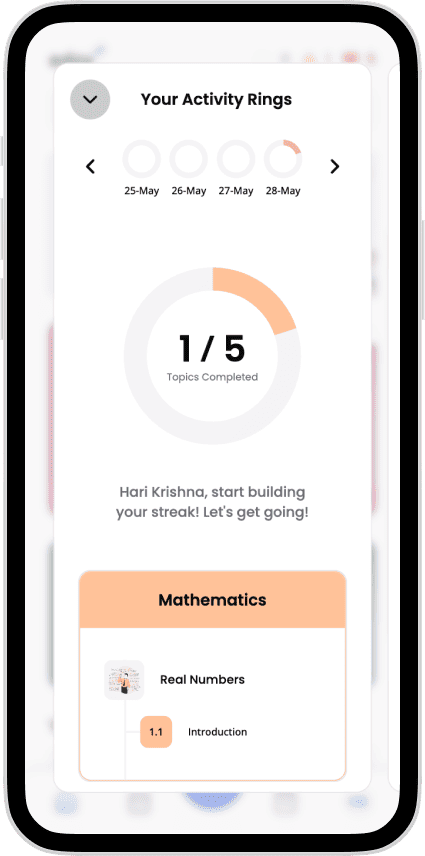
Edzy mobile app preview

Chapters related to "Describing Motion Around Us"

Exploration: Entering the World of Secondary Science

Start chapter

Cell: The Building Block of Life

Start chapter

Tissues in Action

Start chapter

Exploring Mixtures and their Separation

Start chapter

How Forces Affect Motion

Start chapter

Work, Energy, and Simple Machines

Start chapter

Journey Inside the Atom

Start chapter

Atomic Foundations of Matter

Start chapter

Sound Waves: Characteristics and Applications

Start chapter

Reproduction: How Life Continues

Start chapter

Worksheet Levels Explained

This drawer provides information about the different levels of worksheets available in the app.

Describing Motion Around Us Summary, Important Questions & Solutions | All Subjects

Question Bank

Worksheet

Revision Guide