
Class 10 Maths: How to Revise Entire Syllabus Before Boards
Mastering the Class 10 Maths syllabus for board exams requires a strategic approach to revision.
Many students struggle to revise effectively before their Class 10 board exams, leading to anxiety and poor performance. This blog introduces the Revision Mastery Framework, a structured approach to tackle the entire Maths syllabus efficiently. Readers will learn how to break down their syllabus, prioritize chapters, practice effectively, and manage their time to ensure they are fully prepared for the exams.

Gaurav Parashar
@gauravparashar
Listen to this article
Class 10 Maths: How to Revise Entire Syllabus Before Boards
Class 10 Maths: How to Revise Entire Syllabus Before Boards
As the board exams approach, many Class 10 students find themselves overwhelmed by the sheer volume of material they need to revise for Mathematics. The pressure to perform well can make revision feel like an insurmountable task. However, with a clear plan and the right strategies, it is possible to cover the entire syllabus effectively. This blog will guide students and parents through a comprehensive revision plan, ensuring that no important topic is left behind.
Why Revision Feels Difficult
One of the primary reasons students struggle with revision is the anxiety associated with exams. The fear of forgetting important concepts or making careless mistakes can lead to a lack of confidence. Additionally, the vastness of the Class 10 Maths syllabus, which includes chapters like Quadratic Equations, Statistics, and Triangles, can be daunting. Students often feel lost when they attempt to tackle multiple chapters at once, which can result in ineffective study sessions.
Moreover, many students fall into the trap of trying to learn new concepts during the revision phase, which can lead to confusion and frustration. Instead of reinforcing what they already know, they end up adding more stress to their preparation. Understanding these challenges is the first step toward creating a successful revision strategy.
Breaking Syllabus into Parts
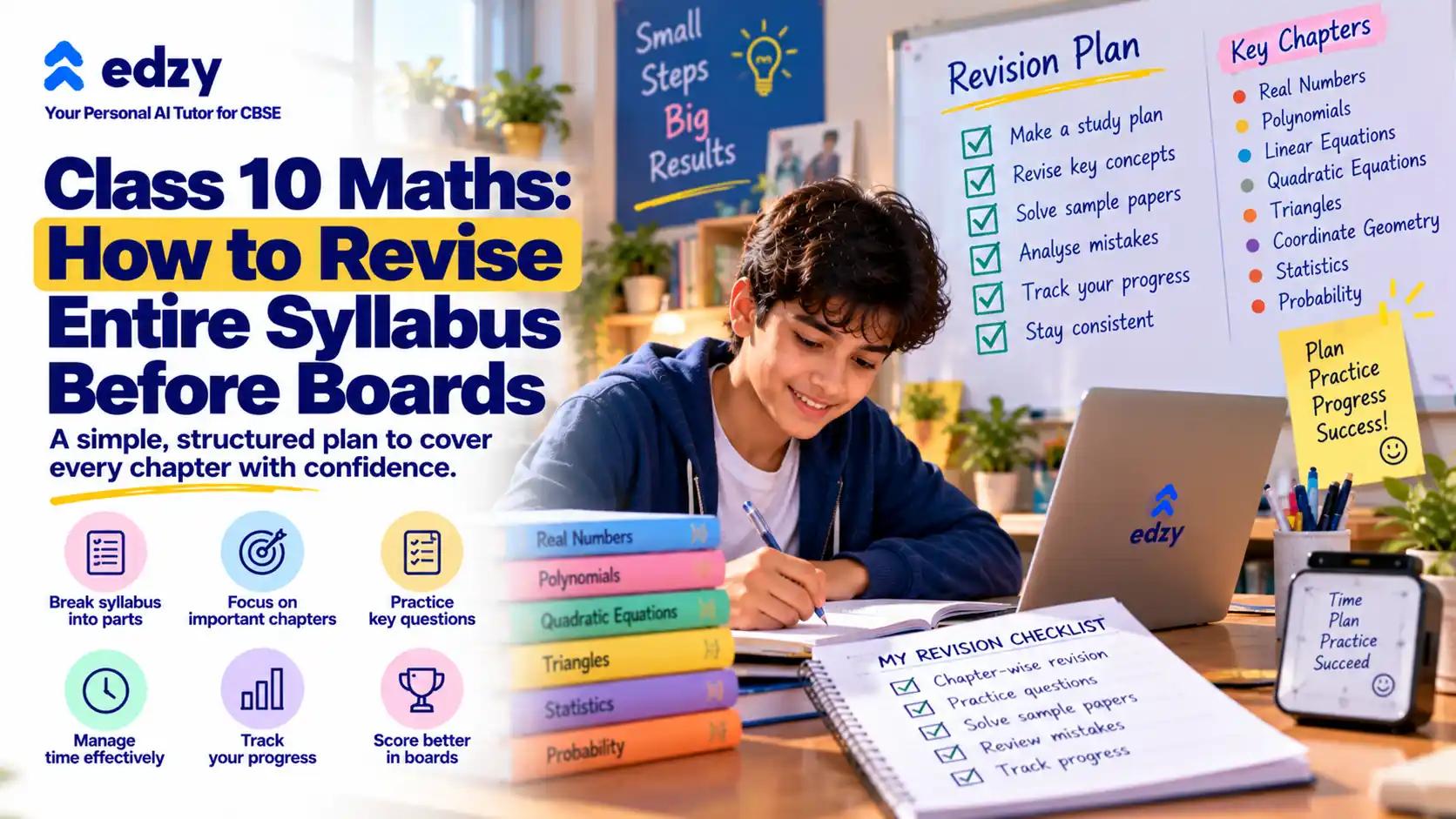
To make revision manageable, it's essential to break the syllabus into smaller, more digestible parts. Start by listing all the chapters included in the Class 10 Maths syllabus as per the NCERT guidelines. For instance, the syllabus typically includes topics such as Real Numbers, Polynomials, Pair of Linear Equations in Two Variables, and more.
Once the chapters are listed, categorize them based on their complexity and importance. For example, chapters like Quadratic Equations and Probability are often considered crucial due to their weightage in the board exams. By focusing on these chapters first, students can ensure they are prioritizing their efforts effectively. This method not only helps in organizing the study material but also boosts confidence as students complete each section.
Prioritizing Important Chapters
After breaking down the syllabus, the next step is to prioritize chapters based on their significance in the board exams. The CBSE board often emphasizes certain chapters more than others, and understanding this can guide students in their revision. For instance, chapters like Statistics and Quadratic Equations frequently appear in board exams and carry substantial marks.
Students should analyze previous years' question papers to identify frequently asked questions and topics. This analysis can be instrumental in allocating more time to high-yield chapters while ensuring that less critical topics are still reviewed adequately. By focusing on important chapters, students can maximize their chances of scoring well.
Practicing Key Questions
Revision is not just about reading through notes; it involves active practice. Students should compile a list of key questions from each chapter, particularly those that have been frequently asked in previous board exams. For example, a Class 10 student revising Polynomials should practice problems related to polynomial identities and factorization techniques.
Additionally, utilizing sample papers and previous years' question papers can provide a realistic understanding of the exam format. Students should aim to solve at least one sample paper each week, focusing on time management and accuracy. This practice not only reinforces their understanding of concepts but also builds exam readiness. For more effective practice strategies, students can refer to our blog on how to practice sample papers effectively.
Avoiding New Topics
During the revision phase, it's crucial to avoid introducing new topics. This is a common pitfall for many students who feel the need to cover every single aspect of the syllabus. Instead, focus on consolidating existing knowledge. For instance, if a student feels unsure about Triangles, they should revisit their notes, practice problems, and clarify doubts rather than trying to learn a new chapter like Surface Areas and Volumes.
By sticking to familiar topics, students can build confidence and ensure that they are well-prepared for the exam. This approach aligns with the Revision Mastery Framework, which emphasizes depth over breadth in revision.
Managing Time Effectively
Time management is a critical skill during the revision period. Students should create a realistic timetable that allocates specific time slots for each chapter. For example, a student might dedicate two days to Real Numbers and three days to Polynomials, ensuring they have ample time to practice key questions and revise concepts. To enhance their time management skills, they can explore our blog on how to manage time during a 3-hour exam.
Incorporating short breaks into study sessions can enhance focus and retention. The Revision Mastery Framework suggests that students take a 5-10 minute break after every 45-60 minutes of study. This technique helps to refresh the mind and maintain concentration, ultimately leading to more effective revision.
Tracking Progress
Monitoring progress is essential to ensure that the revision plan is on track. Students should maintain a checklist of chapters and topics covered, marking them off as they complete each one. This visual representation of progress can be incredibly motivating and help students stay focused on their goals.
Additionally, students can set specific milestones, such as completing a certain number of practice questions or chapters each week. Regular self-assessment through quizzes or mock tests can also provide insights into areas that need more attention. For instance, if a student consistently struggles with questions from Statistics, they should allocate additional time to that chapter. For more insights on tracking progress, refer to our blog on how to identify weak areas in studies.
Scoring Better in Boards
Ultimately, the goal of revision is to score well in the board exams. By following the strategies outlined in this blog, students can approach their Class 10 Maths syllabus with confidence. The Revision Mastery Framework not only helps in organizing study material but also emphasizes the importance of practice and time management.
As students prepare for their exams, they should remember that consistent effort and a structured approach will yield the best results. By focusing on key chapters, practicing effectively, and managing their time wisely, students can significantly improve their chances of success in the board exams. For additional tips on effective study routines, check out our blog on how to improve your study routine before board exams. Furthermore, students can also benefit from understanding how to study faster before exams without compromising understanding.
As the exam date approaches, maintaining a positive mindset is crucial. Every mark a CBSE student loses to a careless error is a mark they already earned — the only task left is making sure it shows up on the paper.
Suggested blogs
How to Improve Speed in Exams Without Making More Mistakes
Mastering the art of speed and accuracy for CBSE exams.
How to Revise One Day Before the Exam (Without Panic)
Mastering last-minute revision for CBSE exams without stress.
Class 12 Physics: How to Revise Entire Syllabus Before Boards
Mastering the Class 12 Physics syllabus for board exams through efficient revision strategies.
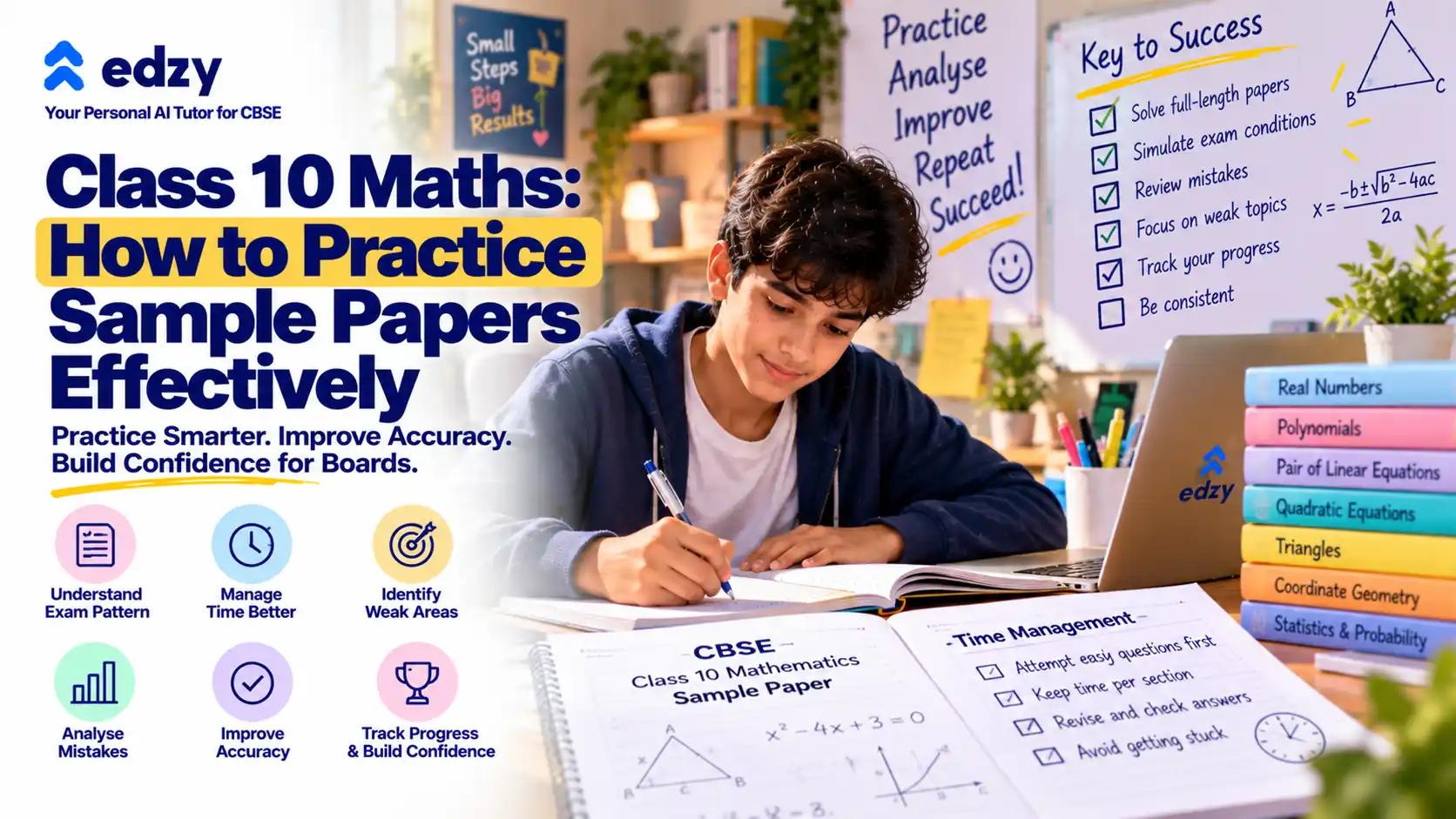
Class 10 Maths: How to Practice Sample Papers Effectively
Mastering sample papers is the key to acing your Class 10 Maths board exams.