
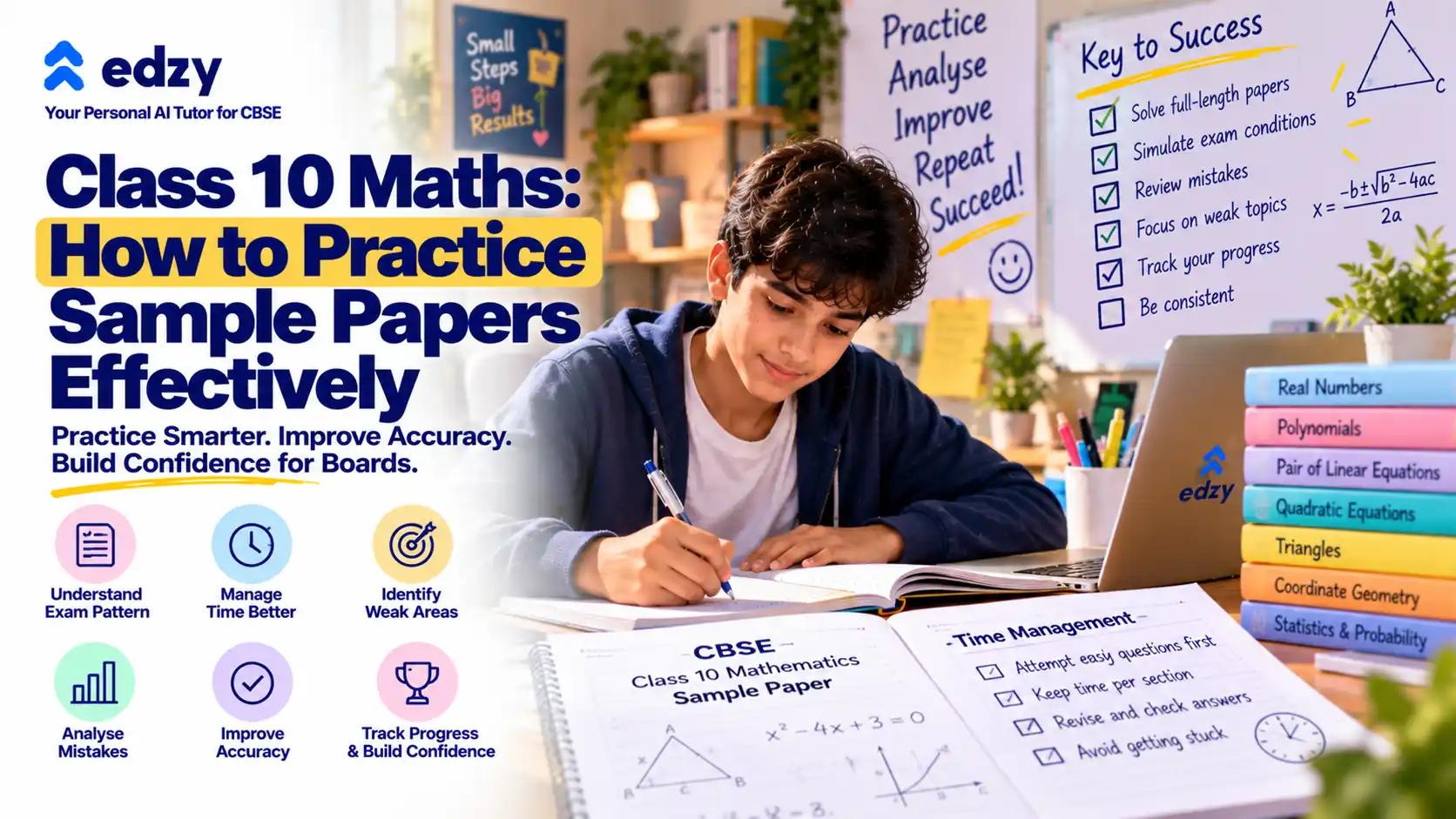
Class 10 Maths: How to Practice Sample Papers Effectively
Mastering sample papers is the key to acing your Class 10 Maths board exams.
Struggling with board exam preparation? This blog outlines a structured approach to practicing sample papers effectively. Learn how to simulate exam conditions, manage your time, analyze mistakes, and track your progress to boost your confidence and performance in Class 10 Maths.

Gaurav Parashar
@gauravparashar
Listen to this article
Class 10 Maths: How to Practice Sample Papers Effectively
Class 10 Maths: How to Practice Sample Papers Effectively
For many CBSE students, the Class 10 board exams can feel overwhelming, especially in subjects like Mathematics. One of the most effective strategies to enhance performance is practicing with sample papers. Sample papers not only familiarize students with the exam format but also help in identifying areas that require more focus. This blog will guide you through a structured approach to practicing sample papers effectively, ensuring that you are well-prepared for your upcoming exams.
Why Sample Papers Are Important
Sample papers serve as a crucial tool in the preparation arsenal of any CBSE student. They provide insights into the types of questions that are frequently asked in exams, allowing students to become accustomed to the format and style of questions they will encounter. For instance, a Class 10 student preparing for the Mathematics exam can benefit significantly from practicing sample papers that include questions from chapters like Quadratic Equations and Statistics. This practice not only enhances understanding but also builds confidence. Additionally, using past year papers can further solidify this preparation.
Moreover, sample papers help in reinforcing concepts learned in class. When students tackle problems from previous years, they can see how theoretical knowledge translates into practical application. This is particularly important in Mathematics, where problem-solving skills are essential. For example, solving a sample paper that includes case-based questions on Linear Equations can help students understand how to apply their knowledge in real-world scenarios. To enhance this practice, students can also explore study routines that complement their preparation.
Simulating Real Exam Conditions
One of the most effective ways to prepare for board exams is to simulate real exam conditions while practicing sample papers. This means setting aside a specific time and space that mimics the actual exam environment. For instance, a Class 10 student can choose to practice a sample paper in a quiet room, free from distractions, and set a timer for three hours to reflect the actual exam duration.
By doing this, students can train themselves to manage their time effectively during the exam. For example, if a student is working on a sample paper that includes questions from the chapter Triangles, they should allocate time for each question and stick to it. This practice helps in developing a sense of urgency and improves time management skills, which are crucial during the actual exam. To further enhance speed, students can refer to strategies for improving speed.
Managing Time During Practice
Effective time management is a skill that every CBSE student must develop, especially when preparing for board exams. When practicing sample papers, students should not only focus on answering questions but also on how long they take to complete each section. For instance, while working through a sample paper that includes questions from Polynomials, a student should track the time spent on each question and adjust their pace accordingly.
To enhance this skill, students can use a timer or a stopwatch. After completing a sample paper, they should review their timing for each section. If they find that they spent too long on certain questions, they can revisit those topics for further practice. This method not only helps in improving speed but also in building confidence, as students become more familiar with the types of questions they may encounter.
Analyzing Mistakes Properly
Analyzing mistakes is a critical step in the learning process. After completing a sample paper, students should take the time to go through their answers and identify any errors. This is particularly important in Mathematics, where a small miscalculation can lead to incorrect answers. For example, if a student incorrectly solved a problem from the chapter Coordinate Geometry, they should not only note the mistake but also understand why it happened. To ensure thoroughness, students can refer to guidelines for checking answers.
Students can create a mistake log where they document the types of errors they make, whether they are calculation errors, misinterpretation of questions, or conceptual misunderstandings. This log can serve as a valuable resource for targeted revision. By focusing on their weak areas, students can improve their overall performance and reduce the likelihood of making the same mistakes in the future.
Identifying Weak Areas
Identifying weak areas is essential for effective exam preparation. When practicing sample papers, students should pay attention to the topics where they struggle the most. For instance, if a Class 10 student finds themselves consistently making errors in questions related to Surface Areas and Volumes, it indicates a need for further review of that chapter.
To address these weaknesses, students can dedicate specific study sessions to focus on these challenging topics. They can refer to NCERT textbooks and additional resources to strengthen their understanding. Moreover, discussing these topics with peers or teachers can provide different perspectives and clarify doubts. This targeted approach ensures that students are not just practicing but are also improving their understanding of the subject matter.
Improving Accuracy
Accuracy is paramount in Mathematics, and practicing sample papers is an excellent way to enhance this skill. Students should aim to not only complete the questions but also ensure that their answers are correct. For example, while practicing a sample paper that includes questions from Statistics, students should double-check their calculations and ensure that they have followed the correct procedures.
One effective method to improve accuracy is to review the solutions after completing a sample paper. Students should compare their answers with the provided solutions and analyze any discrepancies. This practice helps in reinforcing correct methods and identifying areas where they need to improve. Additionally, students can practice similar questions to solidify their understanding and reduce errors in future attempts.
Tracking Progress
Tracking progress is vital for any student preparing for board exams. By keeping a record of their performance on sample papers, students can monitor their improvement over time. For instance, a Class 10 student can maintain a spreadsheet where they log their scores on each sample paper, along with the topics covered. This allows them to visualize their growth and identify patterns in their performance.
Moreover, students can set specific goals for improvement. For example, if a student scored 60% on their first sample paper, they can aim for 70% on the next one. This goal-setting approach encourages students to strive for better performance and keeps them motivated throughout their preparation journey. Regularly reviewing progress also helps in adjusting study strategies as needed.
Preparing Confidently for Boards
As the board exams approach, confidence becomes a crucial factor in performance. Practicing sample papers effectively builds this confidence. By following a structured approach that includes simulating exam conditions, managing time, analyzing mistakes, and tracking progress, students can enter the exam hall with a sense of preparedness. For instance, a Class 10 student who has diligently practiced sample papers from chapters like Quadratic Equations and Probability will feel more assured when faced with similar questions in the actual exam.
Additionally, students should remember that confidence also stems from a positive mindset. Engaging in regular revision and practice not only enhances knowledge but also fosters a belief in one's abilities. This mindset is essential for tackling the pressures of board exams.
Why do CBSE students struggle with exam preparation? Many students face challenges due to a lack of structured practice and effective time management. By implementing strategies such as simulating real exam conditions and analyzing mistakes, students can significantly improve their performance and confidence. Furthermore, avoiding last-minute cramming is essential for retaining information.
In conclusion, mastering the art of practicing sample papers is essential for every CBSE student aiming for success in their Class 10 Maths board exams. By adopting a structured approach and focusing on key strategies, students can enhance their understanding, improve their accuracy, and build the confidence needed to excel.
Suggested blogs
How to Improve Speed in Exams Without Making More Mistakes
Mastering the art of speed and accuracy for CBSE exams.
How to Revise One Day Before the Exam (Without Panic)
Mastering last-minute revision for CBSE exams without stress.
Class 12 Physics: How to Revise Entire Syllabus Before Boards
Mastering the Class 12 Physics syllabus for board exams through efficient revision strategies.
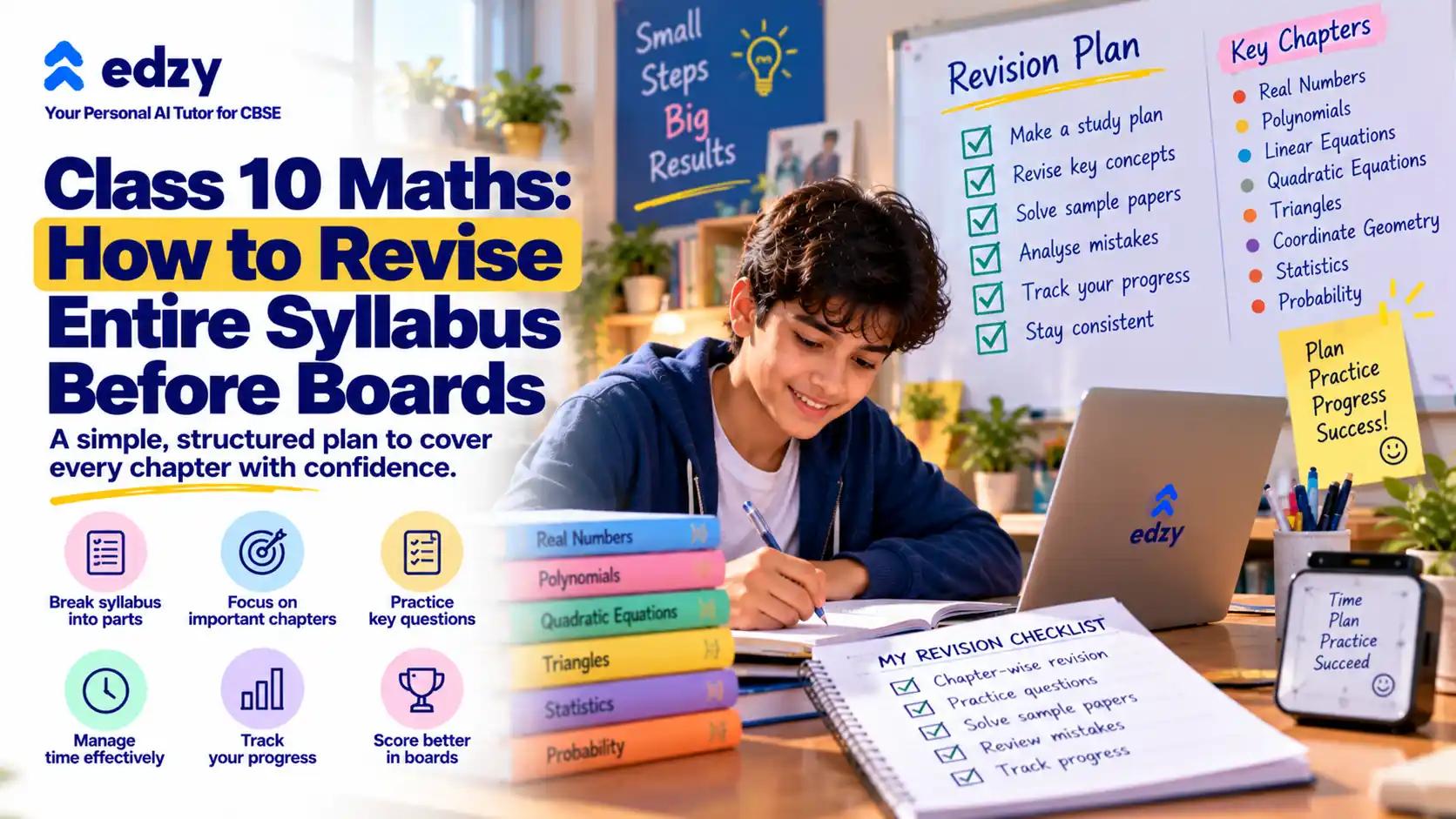
Class 10 Maths: How to Revise Entire Syllabus Before Boards
Mastering the Class 10 Maths syllabus for board exams requires a strategic approach to revision.