Brand Logo
Login
Search
Brand Logo

Edzy for Classes 6-12

Edzy is a personal AI tutor for CBSE and State Board students, with curriculum-aligned guidance, practice, revision, and study plans that adapt to each learner.

  • Email: always@edzy.ai
  • Phone: +91 96256 68472
  • WhatsApp: +91 96256 68472
  • Address: Sector 63, Gurgaon, Haryana

Follow Edzy

Browse by Class

  • CBSE Class 6
  • CBSE Class 7
  • CBSE Class 8
  • CBSE Class 9
  • CBSE Class 10
  • CBSE Class 11
  • CBSE Class 12
Explore the CBSE resource hub

Explore Edzy

  • About Us
  • Why We Built Edzy
  • Search Learning Resources
  • Blog
  • CBSE News & Updates
  • Contact Us
  • CBSE AI Tutor
  • CBSE Resource Hub

Support & Legal

  • Help & FAQs
  • Accessibility
  • Privacy Policy
  • Terms & Conditions
  • Refund Policy
  • Cookie Policy
  • Site Directory

© 2026 Edzy. All rights reserved.

Curriculum-aligned learning paths for students in Classes 6-12.

Chapter Hub

संख्‍यागणना ननुसरला

Chapter 'संख्‍यागणना ननुसरला' teaches essential counting principles in Sanskrit for Class 6, focusing on counting techniques, number systems, and practical applications.

Summary, practice, and revision
CBSE
Class 6
Sanskrit
Deepakam

संख्‍यागणना ननुसरला

Download NCERT Chapter PDF for संख्‍यागणना ननुसरला – Latest Edition

Access Free NCERT PDFs & Study Material on Edzy – Official, Anytime, Anywhere

Live Challenge Mode

Ready to Duel?

Challenge friends on the same chapter, answer fast, and sharpen your concepts in a focused 1v1 battle.

NCERT-aligned questions
Perfect for friends and classmates

Why start now

Quick, competitive practice with instant momentum and zero setup.

More about chapter "संख्‍यागणना ननुसरला"

In the chapter 'संख्‍यागणना ननुसरला' from the book 'दीपकम', students are introduced to basic counting in Sanskrit. The chapter encourages learners to understand the significance of various numerical systems and their applications. Through engaging examples, it outlines counting techniques and number classifications. Learners will discover practical uses of counting in everyday life, enhancing their numerical literacy. The chapter emphasizes a playful and interactive approach to counting, making it appealing for young scholars. By mastering these foundational concepts, students will cultivate a strong basis in Sanskrit counting and its relevance in their studies and daily activities.
Learn Better On The App
Competitive revision

Challenge Your Friends

Compete in short duels with fast rounds, instant feedback, and zero boredom.

1v1 challenges
Fast recall training

Faster access to practice, revision, and daily study flow.

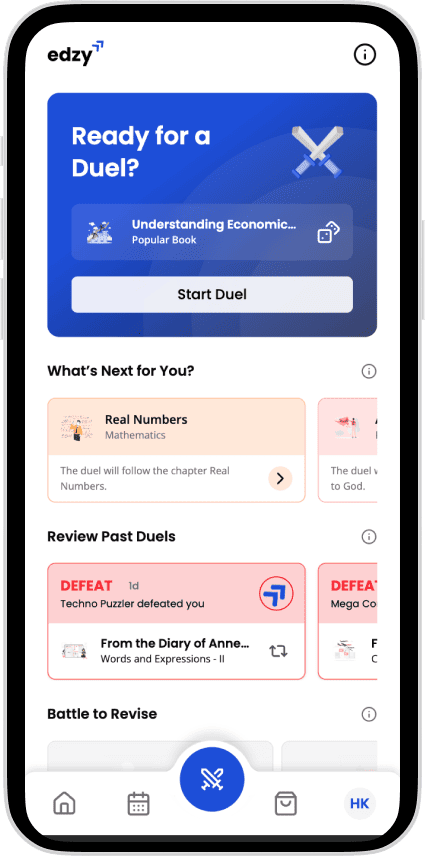
Edzy mobile app preview

Class 6 Sanskrit Chapter - संख्‍यागणना ननुसरला | Deepakam

Explore the Class 6 Sanskrit chapter 'संख्‍यागणना ननुसरला' from Deepakam, focusing on essential counting skills, number systems, and practical applications.

The chapter 'संख्‍यागणना ननुसरला' primarily focuses on teaching students the fundamentals of counting in Sanskrit. It covers various counting methods, numerical classifications, and practical applications of counting in everyday life. Through this chapter, students develop a foundational understanding of numbers in the Sanskrit language.
The chapter aids students in learning numbers by providing engaging examples and interactive counting techniques. It introduces concepts of number classification and simple counting exercises that enhance their counting skills in Sanskrit, making the learning process enjoyable and effective.
Key topics included in the chapter are 'संख्‍यागणना ननुसरला', 'गणना भ्रव्यवस्था', 'संख्‍या अङ्क', 'संख्‍यागणना वविधान', 'संख्‍यागणना प्रयोग', 'संख्‍या वर्गीकरण', and 'गणना नियम'. Each topic focuses on different aspects of counting and numerical understanding in Sanskrit.
'संख्‍या वर्गीकरण' or number classification involves categorizing numbers into different types based on their attributes. This chapter introduces students to various classifications of numbers which assist them in better understanding numerical relationships and their applications in everyday situations.
The chapter discusses various practical applications of counting, such as counting days, weeks, and objects in environments like schools and homes. These applications illustrate how counting is integral to daily life, thereby encouraging students to relate their learning to real-world scenarios.
This chapter enhances numerical literacy by teaching students important counting principles and everyday number usage in Sanskrit. Through practical exercises and relatable examples, students gain confidence in their counting abilities and learn to apply these skills effectively.
The chapter includes various exercises such as counting exercises, number recognition activities, and interactive quizzes. These exercises are designed to reinforce the concepts taught and promote active participation, making the learning experience fun and effective.
'गणना भ्रव्यवस्था' refers to the system of counting and organization of numbers. It provides insight into how numbers are structured and understood within the context of counting, fostering a deeper comprehension among students.
Learning counting in Sanskrit is important as it builds fundamental skills in this classical language. It fosters linguistic development and helps students appreciate the richness of Sanskrit literature and texts, while also enhancing their critical thinking and analytical skills through numerical understanding.
Dr. जनार्दनहेगडे, the author, plays a significant role by crafting the instructional content in this chapter. His expertise helps bridge the understanding of counting in Sanskrit, providing clear explanations and engaging examples that resonate well with young learners.
Yes, the chapter suggests several fun activities such as counting games, group counting sessions, and even songs to reinforce the concepts. These engaging methods make learning counting enjoyable and memorable for students.
Parents can support their children by engaging in counting activities at home, helping with exercises from the chapter, and discussing practical applications of counting in daily life. This reinforcement aids in solidifying the child's learning experience.
Counting skills are foundational and are crucial in learning other subjects such as mathematics, science, and even language arts. Proficiency in counting enhances problem-solving abilities and analytical thinking, which are vital in a child's overall academic development.
The chapter promotes engagement with the Sanskrit language through interactive counting, practical applications, and enjoyable activities. By emphasizing real-life contexts and fostering participation, students are more likely to develop an interest in Sanskrit.
This chapter can be integrated with subjects like mathematics through number games, and with science by counting elements or phenomena in nature. Cross-curricular activities can enhance students' understanding and create connections between different fields of study.
Understanding counting significantly impacts cognitive development as it improves logical thinking, number sense, and problem-solving skills. These cognitive skills are critical for academic success in various subjects and everyday decision-making.
Support materials may include worksheets, digital resources, and interactive counting tools that reinforce the concepts discussed in the chapter. These resources aid both teachers and students in creating a comprehensive learning experience.
Counting in Sanskrit may differ from other languages in terms of unique numerical terms and grammatical structures. Understanding these differences enhances linguistic appreciation and showcases diverse counting systems across languages.
Students can improve their counting skills by practicing regularly, using counting tools or aids, engaging in counting games, and applying their skills in everyday situations. These strategies offer practical experiences that reinforce learning.
'गणना नियम' or counting rules are important as they set the foundation for accurate counting and numerical understanding. Mastering these rules helps students avoid common mistakes and enhances their overall counting proficiency.
Some interesting facts about counting in Sanskrit include its rich history tied to ancient texts, where numbers often hold symbolic meanings. Additionally, Sanskrit counting involves unique terms and systems that reflect cultural nuances, making it an interesting area of study.
Counting is often portrayed in Sanskrit literature through symbolic representations, metaphors, and poetic structures. Numbers frequently appear in fables, stories, and philosophical texts, emphasizing their importance and multifaceted role in the Sanskrit literary tradition.
Students might face challenges such as unfamiliarity with the script, pronunciation issues, or difficulty in understanding unique numerical concepts. Consistent practice and supportive learning environments can help overcome these challenges.
Teachers can effectively teach this chapter by using interactive teaching methods, incorporating games, facilitating group activities, and encouraging discussions about real-life applications of counting. Engaging students will foster better understanding and retention of the material.
'दीपकम' includes resources such as illustrations, example problems, and exercises strategically designed to support the learning of counting principles. These resources support students in mastering the chapter's concepts effectively.

Chapters related to "संख्‍यागणना ननुसरला"

वयं वर्णमालां पठामः

Start chapter

संयुक्‍त-व्‍यञ्जनान

Start chapter

एषः कः ? एषा का ? एतत् किम्?

Start chapter

अहं च त्वं च

Start chapter

अहं प्रातः उत्तिष्‍ ठामि

Start chapter

शूराः वयं धीराः वयम्

Start chapter

सः एव महान् चित्रकार

Start chapter

अतिथिदेवो भव

Start chapter

बुद्धिः सर्वार्थसाधिका

Start chapter

यः जानाति सः पण्डितः

Start chapter

संख्‍यागणना ननुसरला Summary, Important Questions & Solutions | All Subjects

Question Bank

Worksheet

Revision Guide