Brand Logo
LoginDownload App
Search
Brand Logo

Edzy for Classes 6-12

Edzy is a personal AI tutor for CBSE and State Board students, with curriculum-aligned guidance, practice, revision, and study plans that adapt to each learner.

  • Email: always@edzy.ai
  • Phone: +91 96256 68472
  • WhatsApp: +91 96256 68472
  • Address: Sector 63, Gurgaon, Haryana

Follow Edzy

Browse by Class

  • CBSE Class 6
  • CBSE Class 7
  • CBSE Class 8
  • CBSE Class 9
  • CBSE Class 10
  • CBSE Class 11
  • CBSE Class 12
Explore the CBSE resource hub

Explore Edzy

  • Study Resources
  • Free Study Tools
  • Best Apps for Board Exams
  • Edzy vs ChatGPT
  • About Us
  • Why We Built Edzy
  • Blog
  • CBSE AI Tutor

Support & Legal

  • Help & FAQs
  • Accessibility
  • Privacy Policy
  • Terms & Conditions
  • Refund Policy
  • Cookie Policy
  • Site Directory

© 2026 Edzy. All rights reserved.

Curriculum-aligned learning paths for students in Classes 6-12.

Chapter Hub

त्वम्आपणं गच

Chapter 'त्वम्आपणं गच' from the Sanskrit textbook Deepakam for Class 6 explores various elements through dialogues and vocabulary exercises, enhancing comprehension and written skills.

Summary, practice, and revision
CBSE
Class 6
Sanskrit
Deepakam

त्वम्आपणं गच

Download NCERT Chapter PDF for त्वम्आपणं गच – Latest Edition

Access Free NCERT PDFs & Study Material on Edzy – Official, Anytime, Anywhere

Live Challenge Mode

Ready to Duel?

Challenge friends on the same chapter, answer fast, and sharpen your concepts in a focused 1v1 battle.

NCERT-aligned questions
Perfect for friends and classmates

Why start now

Quick, competitive practice with instant momentum and zero setup.

More about chapter "त्वम्आपणं गच"

In the chapter 'त्वम्आपणं गच' from the textbook Deepakam, students engage with dialogues that revolve around daily conversations, vocabulary lists, and cultural aspects in Sanskrit. The characters discuss familiar scenarios, allowing learners to absorb language in context. With topics such as 'अम्बा वसतूना नामावली' and practical exercises like question and answer sessions, this chapter promotes fluency and understanding of Sanskrit through interactive learning. The inclusion of social themes encourages thoughtful engagement, making language learning relevant and enjoyable for students in Class 6.
Learn Better On The App
Competitive revision

Challenge Your Friends

Compete in short duels with fast rounds, instant feedback, and zero boredom.

1v1 challenges
Fast recall training

Faster access to practice, revision, and daily study flow.

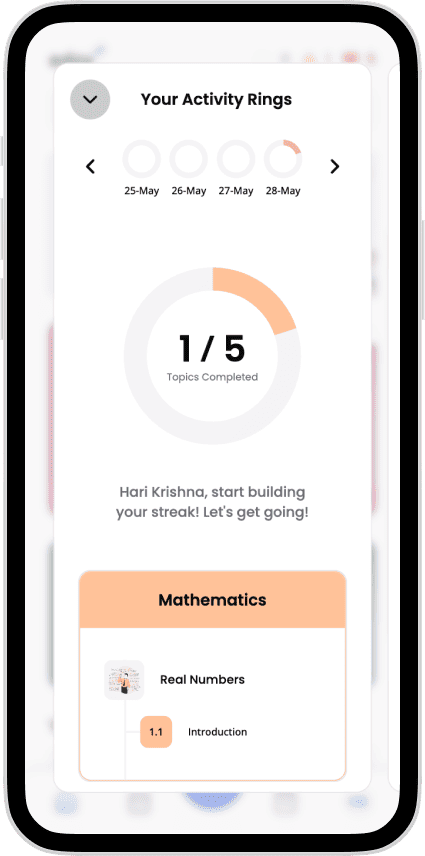
Edzy mobile app preview

Class 6 Sanskrit Chapter: त्वम्आपणं गच - Deepakam

Explore 'त्वम्आपणं गच', a Chapter from Deepakam for Class 6, focusing on conversational Sanskrit, vocabulary enhancement, and cultural insights.

The main focus of 'त्वम्आपणं गच' is to enhance the understanding of everyday conversations in Sanskrit. It employs dialogues to illustrate practical language use, complemented by vocabulary lists which aid in the learning process.
This chapter aids vocabulary improvement through its structured approach to dialogues and vocabulary exercises. Students learn new words in context, which enhances retention and practical application in conversations.
The chapter includes various exercises such as fill-in-the-blank dialogues, vocabulary lists, and questions designed to engage students in active learning. These activities help reinforce the concepts presented within the dialogues.
Yes, cultural aspects are integrated within the dialogues and situations discussed. This encourages students to connect language learning with cultural understanding, making the content more relatable and enriching.
This chapter is tailored for Class 6 students, thus aimed at early adolescents who are beginning their journey in learning Sanskrit through a structured and engaging manner.
Absolutely! Parents can assist their children by reviewing the dialogues and exercises together, facilitating discussions which enhance understanding and making the learning process collaborative and enjoyable.
The themes in 'त्वम्आपणं गच' explore everyday interactions, vocabulary acquisition, and social dynamics, providing students with a holistic view of language use in real-life scenarios.
While primarily designed for Class 6 students, the chapter's interactive and practical approach makes it useful for younger language learners as well, providing foundational skills in Sanskrit.
The use of dialogues allows students to see language in action, enabling them to comprehend context, tone, and structure, which are essential for mastering conversation dynamics in Sanskrit.
Vocabulary lists serve as a critical tool in the chapter, allowing students to systematically learn and practice new words, thereby building a robust linguistic foundation for further learning.
Students can expect to improve their conversational skills, expand their vocabulary, and gain a better grasp of cultural nuances within the Sanskrit language upon completing this chapter.
Yes, the chapter includes structured question-answer sessions designed to encourage students to think critically and articulate their understanding of the material in Sanskrit.
Teachers play a crucial role by guiding discussions, facilitating exercises, and providing feedback as students engage with the dialogues and vocabulary, enhancing learning effectiveness.
The chapter promotes critical thinking by presenting relatable scenarios that students must analyze and respond to, allowing them to apply their language skills effectively.
The pedagogical approach emphasizes interactive learning through dialogues, vocabulary reinforcement, and contextual exercises, facilitating a comprehensive understanding of Sanskrit language fundamentals.
Dialogue practice is pivotal in language learning as it helps students develop fluency, improve pronunciation and learn to navigate social interactions effectively, which are key components of language proficiency.
Technology can support learning by providing access to digital resources, interactive quizzes, and language apps that reinforce vocabulary and dialogues presented in the chapter.
The chapter may not include formal assessments but comprises numerous exercises that serve as informal assessments of students’ understanding and mastery of the material.
The exercises accommodate various learning styles by including auditory dialogues, visual vocabulary lists, and kinesthetic activities that engage different modalities, thus enhancing comprehension.
Learning Sanskrit through this chapter introduces students to an ancient language's rich cultural heritage, enhances cognitive skills, and encourages a deeper appreciation for linguistic diversity.
Students can track their progress by regularly reviewing their vocabulary retention, their ability to engage in dialogues, and through self-assessment of the exercises provided within the chapter.
Supplementary materials such as flashcards, audio recordings of dialogues, and additional reading resources related to cultural contexts can significantly enhance the learning experience.
Yes, the dialogues can be effectively used for role-playing activities, allowing students to practice conversational skills in a fun and interactive manner that reinforces learning.
This chapter aligns with curricular objectives by focusing on language skills development, cultural appreciation, and promoting analytical and communicative competencies essential in language learning.
Yes, 'Deepakam' typically offers additional resources such as supplementary exercises, teacher guides, and cultural insights across its chapters, enriching the educational experience for students.

Chapters related to "त्वम्आपणं गच"

शूराः वयं धीराः वयम्

Start chapter

सः एव महान् चित्रकार

Start chapter

अतिथिदेवो भव

Start chapter

बुद्धिः सर्वार्थसाधिका

Start chapter

यः जानाति सः पण्डितः

Start chapter

पृथिव्यां त्रीणि रत्‍नान

Start chapter

आलस्यं हि मनुष्याणां शरीरस्‍थः महान्रिपुः

Start chapter

माधवस्य प्रियम्अङ्गम

Start chapter

वृक्षाः सत्पुरुषाः इव

Start chapter

त्वम्आपणं गच Summary, Important Questions & Solutions | All Subjects

Question Bank

Worksheet

Revision Guide