
CBSE Introduces Integrated Payment System for 2026 Board Exam Centres
A New Era in Financial Transactions for Educational Institutions
The Central Board of Secondary Education (CBSE) has launched an Integrated Payment System (IPS) to streamline the payment process for exam centres participating in the 2026 Board Examinations. This initiative aims to enhance efficiency and transparency in financial transactions.
Listen to this article
CBSE Introduces Integrated Payment System for 2026 Board Exam Centres
Overview of the Integrated Payment System (IPS)
The Central Board of Secondary Education (CBSE) has taken a significant step towards modernizing its financial operations by introducing the Integrated Payment System (IPS) for the upcoming 2026 Board Examinations. This innovative system is designed to facilitate the timely release of final payments to exam centres, thereby ensuring a smoother and more efficient process for all stakeholders involved.
Why the IPS is Necessary
The introduction of the IPS comes in response to the growing need for a more streamlined and transparent payment process within the educational sector. Traditionally, the payment system for exam centres has faced various challenges, including delays, lack of transparency, and administrative burdens. The IPS aims to address these issues by providing a centralized platform for financial transactions.
Key Benefits of the IPS
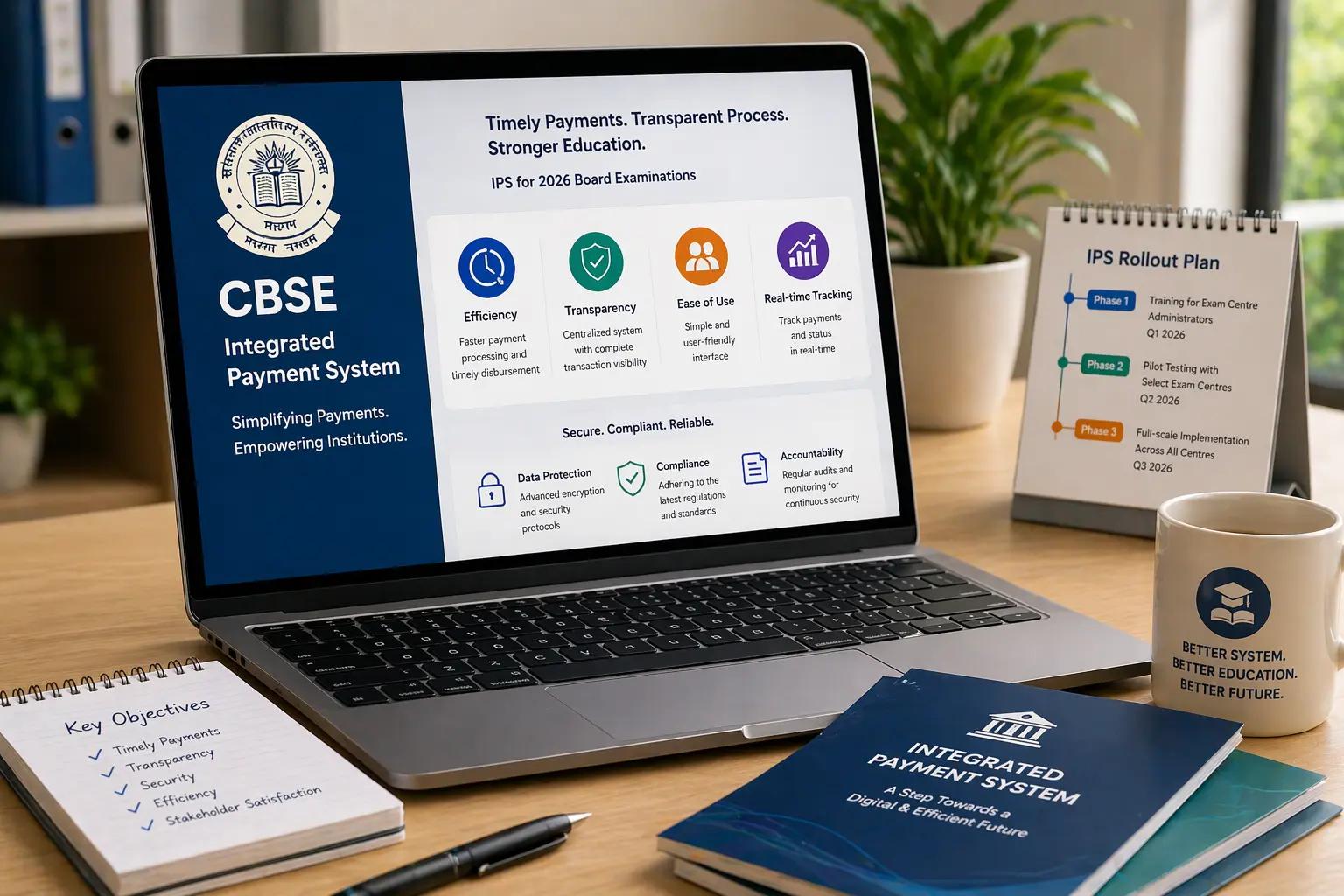
Efficiency: The IPS will significantly reduce the time taken to process payments, allowing exam centres to receive their dues promptly.
Transparency: With a centralized system, all transactions will be recorded and monitored, minimizing the chances of discrepancies.
Ease of Use: The user-friendly interface of the IPS will make it easier for exam centres to navigate the payment process.
Real-time Tracking: Institutions will be able to track their payments in real-time, providing them with better financial management capabilities.
Implementation Timeline
The rollout of the IPS is expected to take place in phases, with the initial phase focusing on training exam centre administrators on how to use the new system effectively. CBSE has planned workshops and training sessions to ensure that all stakeholders are well-equipped to adapt to this new payment method.
Phase-wise Implementation
Phase 1: Training sessions for exam centre administrators (Q1 2026)
Phase 2: Pilot testing of the IPS with select exam centres (Q2 2026)
Phase 3: Full-scale implementation across all exam centres (Q3 2026)
Impact on Educational Institutions
The introduction of the IPS is set to have a profound impact on educational institutions across India. By simplifying the payment process, schools and colleges can focus more on their core educational activities rather than getting bogged down by administrative tasks. This shift will allow them to allocate more resources towards enhancing the quality of education.
Financial Management for Schools
With the IPS in place, schools will have better control over their finances. The ability to track payments in real-time will enable them to manage their budgets more effectively, ensuring that funds are utilized optimally. This financial clarity is crucial for institutions that often operate on tight budgets.
Ensuring Security and Compliance
One of the primary concerns in any financial transaction is security. The IPS has been designed with robust security measures to protect sensitive financial data. CBSE is committed to ensuring that all transactions are compliant with the latest regulations and standards, providing peace of mind to all participating institutions.
Data Protection Measures
Encryption: All data transmitted through the IPS will be encrypted to prevent unauthorized access.
Regular Audits: CBSE will conduct regular audits of the IPS to ensure compliance and security standards are maintained.
User Authentication: Strict user authentication protocols will be in place to verify the identity of individuals accessing the system.
Feedback and Continuous Improvement
CBSE recognizes the importance of feedback in the successful implementation of the IPS. After the initial rollout, the board will actively seek input from exam centres and other stakeholders to identify areas for improvement. This feedback loop will be essential in refining the system and ensuring it meets the needs of all users.
Engaging with Stakeholders
Surveys: Regular surveys will be conducted to gather insights from exam centres regarding their experiences with the IPS.
Workshops: Ongoing workshops will be held to address any concerns and provide updates on system enhancements.
Conclusion
The launch of the Integrated Payment System (IPS) by CBSE marks a significant advancement in the way financial transactions are managed within the education sector. By prioritizing efficiency, transparency, and security, the IPS is set to transform the payment process for exam centres participating in the 2026 Board Examinations. As educational institutions adapt to this new system, they can look forward to a future where administrative burdens are minimized, allowing them to focus on what truly matters: delivering quality education to students across India.
Related News

CBSE LOC Submission Deadline Approaches: Only 7 Days Left

CBSE Science Challenge 2026-27: A Platform for Scientific Inquiry

Fit India Freedom Run 2026: A Nationwide Campaign for Health and Fitness

CBSE Class 10 Board Exam 2026-2027: Submission of Examination Forms for Private Candidates