
How to Build a Daily Study Habit That Actually Sticks
Creating a daily study routine that transforms learning into a natural habit.
Many students struggle to maintain a consistent study routine, leading to poor retention and exam performance. This blog introduces the Habitual Learning Framework, a method to build sustainable study habits. Readers will learn how to start small, create triggers, and track their progress effectively.

Gaurav Parashar
@gauravparashar
Listen to this article
How to Build a Daily Study Habit That Actually Sticks
Many CBSE students find it challenging to maintain a consistent study routine, leading to stress and poor exam performance. The key to overcoming this challenge lies in developing a daily study habit that becomes second nature. This blog introduces the Habitual Learning Framework, a structured approach to creating sustainable study habits that stick. By following the steps outlined here, students can transform their approach to learning, making study time more productive and less daunting.
Understanding Why Habits Fail Initially
One of the primary reasons students struggle with establishing study habits is the overwhelming pressure of academic expectations. For instance, a Class 10 student preparing for the CBSE board exams often feels the weight of multiple subjects like Mathematics, Science, and Social Science, leading to procrastination and burnout. This initial failure to establish a habit can stem from setting unrealistic goals, such as planning to study for four hours straight without breaks. Instead, students should focus on manageable goals that allow for gradual improvement.
Additionally, many students fall into the trap of trying to change too much at once. For example, a Class 9 student who decides to study every subject for two hours daily may quickly become overwhelmed. The pressure to perform can lead to anxiety, making it harder to stick to a routine. Understanding these pitfalls is crucial for developing a successful study habit.
Starting Small with Study Sessions
The first step in building a daily study habit is to start small. The Habitual Learning Framework emphasizes beginning with short, focused study sessions. For instance, a Class 7 student can start with just 20 minutes of studying a specific chapter, such as 'Photosynthesis' in Science. This short duration helps to reduce the intimidation factor associated with studying. Once the student becomes comfortable with this duration, they can gradually increase the time spent studying.
Moreover, focusing on one subject at a time can enhance retention. A Class 8 student preparing for the chapter 'Federalism' in Social Science might dedicate 20 minutes to reading and summarizing key points. This focused approach not only makes studying less daunting but also allows for deeper understanding and retention of the material.
Creating a Fixed Study Trigger
Establishing a fixed study trigger is essential for reinforcing the habit. A trigger can be a specific time of day, a location, or even an action that signals the start of study time. For example, a Class 11 student might choose to study Mathematics right after dinner every day. This routine creates a mental association between dinner and study time, making it easier to transition into studying.
Additionally, students can enhance their triggers by creating a conducive study environment. A Class 12 student preparing for 'Laws of Motion' in Physics might set up a dedicated study space with all necessary materials organized. This physical setup acts as a visual cue, reinforcing the habit of studying whenever they enter that space.
Building Consistency Slowly Over Time
Consistency is key to developing a lasting study habit. The Habitual Learning Framework suggests gradually increasing the duration and frequency of study sessions. A Class 10 student who starts with 20 minutes of study can aim to increase this to 30 minutes after a week. This gradual increase helps to build endurance without overwhelming the student.
Moreover, incorporating variety into study sessions can keep students engaged. For instance, a Class 9 student studying 'Quadratic Equations' in Mathematics might alternate between solving problems, watching video tutorials, and discussing concepts with peers. This variety not only makes studying more enjoyable but also reinforces learning through different modalities.
Handling Off-Days Without Losing Momentum
Every student experiences off-days, where motivation dips and focus wanes. The key is to handle these days without losing momentum. For example, if a Class 8 student feels unmotivated to study 'Social Science', they can opt for a lighter study session, such as reviewing flashcards or watching a documentary related to the subject. This approach keeps the study habit alive without the pressure of intense focus.
Additionally, students should practice self-compassion on these off-days. A Class 12 student preparing for board exams might feel guilty for not studying as planned. Instead of succumbing to negative feelings, they can acknowledge the day as a part of the learning process and plan to return to their routine the next day with renewed energy.
Tracking Progress to Stay Motivated
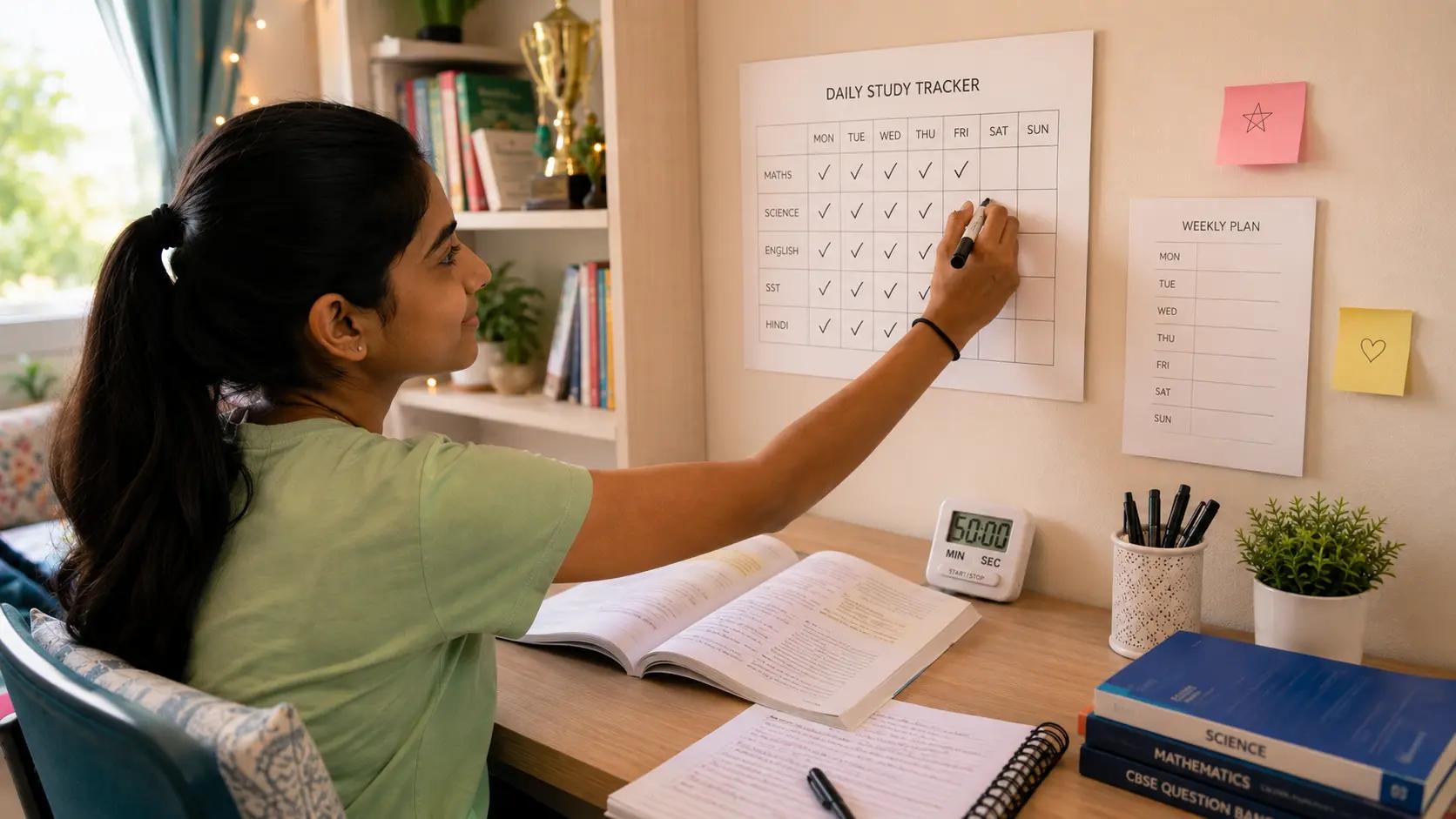
Tracking progress is a vital component of the Habitual Learning Framework. By keeping a record of study sessions, students can visually see their commitment and improvements over time. A Class 10 student preparing for 'Science' can maintain a study journal where they note the topics covered, time spent, and any challenges faced. This reflection not only helps in identifying areas needing more focus but also serves as a motivational tool.
Moreover, students can set specific milestones to celebrate their achievements. For instance, after completing a chapter in Mathematics, a Class 9 student can reward themselves with a small treat or a break. These rewards reinforce positive behavior and encourage continued commitment to the study routine.
Staying Disciplined Amidst Distractions
In today's digital age, distractions are everywhere, making it challenging for students to stay disciplined. The Habitual Learning Framework encourages students to create a distraction-free study environment. A Class 11 student preparing for 'English Literature' might choose to study in a quiet room, away from electronic devices that can divert attention.
Additionally, students can use techniques to minimize distractions. For example, a Class 12 student might set specific times to check social media, allowing them to focus fully during study sessions. This discipline not only enhances productivity but also fosters a sense of accomplishment as students complete their study goals without interruptions.
Making Study a Natural Habit Through Consistent Practice
Ultimately, the goal is to make studying a natural part of daily life. The Habitual Learning Framework emphasizes the importance of consistent practice. A Class 10 student who studies for just 20 minutes daily will find that, over time, this practice becomes ingrained in their routine, requiring less mental effort to initiate. This natural integration of study time into daily life leads to improved retention and performance in exams.
Furthermore, students should reflect on their progress regularly. A Class 9 student preparing for 'Physics' might take time each week to assess what study techniques worked best and what needs adjustment. This ongoing reflection helps to refine the study habit, ensuring it remains effective and aligned with their learning goals.
Why Do CBSE Students Struggle to Maintain Study Habits?
Why do CBSE students struggle to maintain study habits? Many CBSE students face challenges in maintaining study habits due to the overwhelming pressure of academic expectations and the tendency to set unrealistic goals. This often leads to procrastination and burnout, making it difficult to establish a consistent routine.
In conclusion, building a daily study habit that sticks requires a structured approach, patience, and self-compassion. By implementing the Habitual Learning Framework, students can create a sustainable study routine that enhances their learning experience and prepares them for success in their CBSE exams. Every mark a CBSE student loses to a careless error is a mark they already earned — the only task left is making sure it shows up on the paper.
Suggested blogs

Why You Shouldn’t Skip Steps in Maths (Even If You Know the Answer)
Understanding the importance of step-by-step problem-solving in CBSE Mathematics.

How to Improve Accuracy in Maths Without Extra Practice Hours
Why mastering accuracy is the key to unlocking your true potential in Maths.

How to Revise Formulas in Maths Without Forgetting Them
Mastering math formulas through understanding and practice — a guide for CBSE students.

How to Identify Your Weak Areas in Studies (And Fix Them Fast)
Transforming academic weaknesses into strengths through targeted strategies.