
How to Create the Perfect Study Environment at Home for CBSE Success
Designing a distraction-free space for effective CBSE study.
This blog provides insights on creating an ideal study environment at home for CBSE students, focusing on organization, lighting, and minimizing distractions.
Listen to this article
How to Create the Perfect Study Environment at Home for CBSE Success
A well-organized study space can dramatically improve concentration and learning efficiency. For CBSE students, a conducive study environment is essential for effective learning and retention of information. This blog will guide students and parents on how to design a distraction-free, motivating home environment that fosters academic success.
Importance of Environment in Focus and Retention
The study environment plays a crucial role in a student’s ability to focus and retain information. Research indicates that students who study in a well-structured and organized space tend to perform better academically. A cluttered or chaotic environment can lead to distractions, making it difficult to concentrate on studies.
For instance, consider a student preparing for their Class 10 board exams. If their study area is filled with unrelated items, such as toys or unorganized books, it can lead to a fragmented focus. On the other hand, a clean and organized space allows for a clearer mind, enabling students to absorb and process information more effectively.
Lighting, Seating, and Posture Considerations
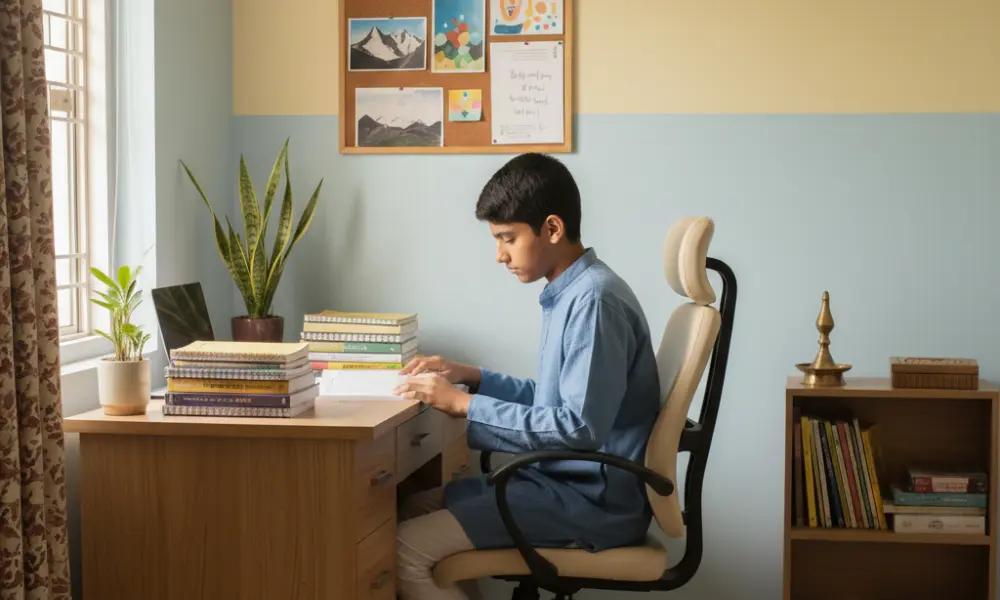
Lighting is a fundamental aspect of any study environment. Natural light is ideal, as it has been shown to enhance mood and productivity. If possible, position the study desk near a window to take advantage of daylight. However, during evening hours or in low-light conditions, ensure that the study area is well-lit with soft, warm lighting to reduce eye strain.
Seating is another critical factor. A comfortable chair that supports good posture can significantly impact a student’s ability to focus. Encourage students to sit up straight with their feet flat on the ground. This posture not only promotes better concentration but also helps prevent fatigue during long study sessions.
For example, a student preparing for their Class 12 physics exam might spend hours solving complex problems. A supportive chair can make this experience more comfortable and less distracting, allowing them to maintain focus for longer periods.
Decluttering Tips for Better Concentration
Decluttering is essential for creating a productive study environment. A clean workspace can lead to improved concentration and reduced stress levels. Here are some practical tips for decluttering:
Remove unnecessary items from the study area. Keep only essential study materials within reach.
Organize books and stationery in a way that is easy to access. Use shelves, drawers, or organizers to keep everything tidy.
Incorporate a regular cleaning schedule. Set aside time each week to tidy up the study space.
Encourage students to limit personal items in their study area. While some personalization is beneficial, too many distractions can hinder focus.
By implementing these decluttering strategies, students can create a more inviting and efficient study environment that promotes better learning outcomes.
Digital Distractions: Managing Phones and TVs
In today’s digital age, managing distractions from phones and televisions is crucial for maintaining focus during study sessions. Smartphones can be particularly distracting, with notifications and social media vying for attention. Here are some strategies to minimize digital distractions:
Designate specific times for checking phones. Encourage students to keep their phones in another room or on silent mode during study hours.
Limit screen time for entertainment. Set boundaries for watching TV or playing video games to ensure that study time is prioritized.
Utilize apps that block distracting websites during study sessions. These tools can help students stay focused on their work.
For instance, a student preparing for their Class 9 social science exam might find it challenging to concentrate with their phone nearby. By putting the phone away and using website blockers, they can create a more focused study session.
Creating a Fixed Study Zone vs Flexible Spaces
When designing a study environment, students and parents must decide between creating a fixed study zone or flexible study spaces. A fixed study zone is a dedicated area solely for studying, while flexible spaces allow for studying in various locations around the home.
A fixed study zone can be beneficial for students who thrive on routine. This space can be personalized with motivational quotes, study materials, and a comfortable chair. For example, a student preparing for their Class 11 chemistry exam might find it helpful to have all their materials in one place, allowing for a consistent study routine.
On the other hand, flexible study spaces can cater to students who prefer variety. They can study in different areas of the home, such as the living room, kitchen, or even outdoors. This approach can help break the monotony and keep students engaged. However, it’s essential to ensure that each space is conducive to studying, free from distractions.
Role of Parents in Maintaining the Environment
Parents play a vital role in maintaining an effective study environment for their children. Their involvement can significantly impact a student’s motivation and focus. Here are some ways parents can contribute:
Encourage regular study habits by setting a consistent study schedule. This helps students develop a routine and stay disciplined.
Provide support by helping students organize their study materials and declutter their spaces.
Be mindful of the overall atmosphere in the home. A calm and positive environment can enhance a student’s ability to concentrate.
Engage in discussions about study goals and progress. This shows students that their efforts are valued and encourages them to stay committed.
For example, a parent might sit down with their Class 10 child to discuss their study plan for the upcoming mathematics exam. This not only helps the student stay organized but also fosters a supportive environment.
How to Personalize the Space with Inspiration Boards
Personalization can make a study space more inviting and motivating. One effective way to personalize a study area is by creating an inspiration board. This board can include:
Motivational quotes that resonate with the student.
Images of goals or aspirations, such as universities they wish to attend.
Visual reminders of achievements, such as certificates or awards.
An inspiration board serves as a daily reminder of what students are working towards. For instance, a student preparing for their Class 12 board exams might include images of their dream college to keep them motivated during their study sessions.
Final Checklist for an Ideal CBSE Study Setup
To wrap up, here’s a final checklist to ensure that the study environment is optimized for CBSE success:
Ensure adequate lighting and comfortable seating.
Keep the study area organized and clutter-free.
Limit digital distractions by managing phone and TV usage.
Decide on a fixed study zone or flexible spaces based on the student’s preferences.
Involve parents in maintaining a supportive atmosphere.
Create an inspiration board to personalize the space.
By following these guidelines, students can create a study environment that not only enhances their focus and retention but also contributes to their overall academic success in the CBSE curriculum.
Suggested blogs
Why You Shouldn’t Skip Steps in Maths (Even If You Know the Answer)
Understanding the importance of step-by-step problem-solving in CBSE Mathematics.

How to Improve Accuracy in Maths Without Extra Practice Hours
Why mastering accuracy is the key to unlocking your true potential in Maths.

How to Revise Formulas in Maths Without Forgetting Them
Mastering math formulas through understanding and practice — a guide for CBSE students.

How to Identify Your Weak Areas in Studies (And Fix Them Fast)
Transforming academic weaknesses into strengths through targeted strategies.