
How to Improve Your Writing Answers in CBSE Exams
Enhance your exam writing skills for better scores
Discover effective strategies to improve your writing answers in CBSE exams, ensuring clarity and higher marks.

Gaurav Parashar
@gauravparashar
Listen to this article
How to Improve Your Writing Answers in CBSE Exams
Writing clear and effective answers in exams is crucial for students aiming to achieve high scores. In the CBSE examinations, the way you present your answers can significantly impact your overall performance. This blog will guide you through essential strategies to enhance your writing skills, ensuring that your answers are not only correct but also well-structured and appealing to examiners.
Why Presentation Matters in Exams
The presentation of your answers plays a vital role in how they are perceived by examiners. A well-presented answer can make a positive impression, while a poorly structured one may lead to misunderstandings, even if the content is accurate. Here are some reasons why presentation matters:
Clarity: A clear presentation helps examiners quickly grasp your understanding of the topic.
Organization: Structured answers demonstrate logical thinking and coherence.
Professionalism: Neat handwriting and proper formatting reflect your seriousness and respect for the exam.
For instance, in a science exam, a student who presents their answer with labeled diagrams and bullet points is likely to score higher than one who writes in a continuous paragraph without any structure.
Understanding What Examiners Look For
Examiners have specific criteria they use to evaluate answers. Familiarizing yourself with these can help you tailor your responses effectively. Here are key aspects examiners focus on:
Content Accuracy: Ensure your answers are factually correct and relevant to the question.
Depth of Knowledge: Show your understanding by providing explanations, examples, and relevant details.
Structure: Use headings, bullet points, and paragraphs to organize your thoughts.
Presentation: Maintain neatness and legibility in your writing.
For example, in a history exam, if you are asked to discuss the causes of the First World War, including a well-structured outline with key points and dates can enhance your answer's effectiveness.
Structuring Answers Clearly
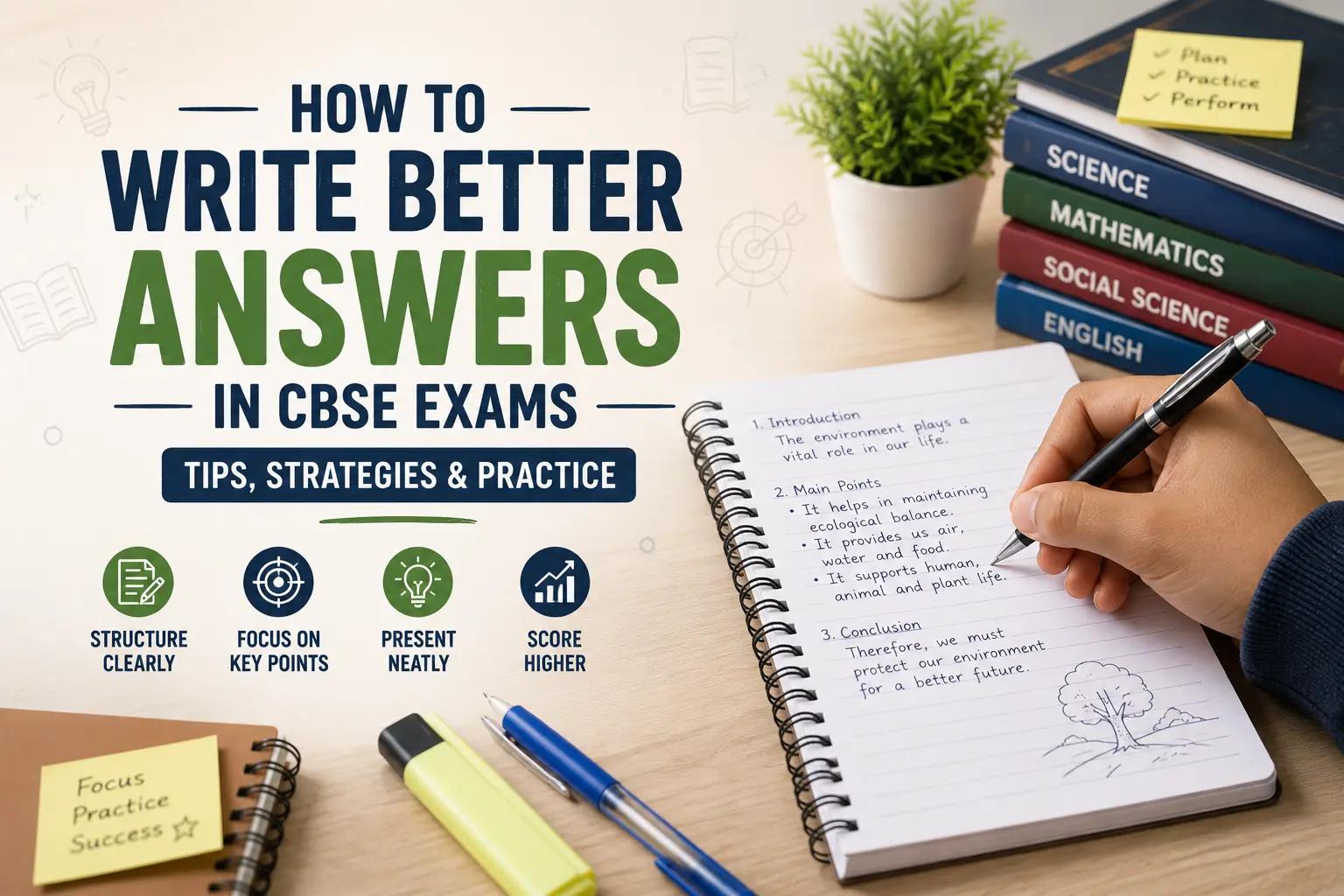
A well-structured answer is easier to read and understand. Here are some strategies to structure your answers clearly:
Introduction
Begin with a brief introduction that outlines your understanding of the question. This sets the stage for your answer.
Main Body
Divide the main body into paragraphs, each focusing on a specific point. Use subheadings if necessary to enhance clarity.
Conclusion
End with a concise conclusion that summarizes your main points. This reinforces your understanding and leaves a lasting impression.
For instance, if answering a question about the effects of climate change, structure your answer into sections discussing environmental, economic, and social impacts.
Using Keywords and Diagrams
Incorporating keywords and diagrams can significantly improve your answers. Here’s how:
Keywords
Identify and use keywords relevant to the topic. This not only shows your knowledge but also helps examiners quickly identify the focus of your answer.
Diagrams
Where applicable, use diagrams to illustrate your points. Diagrams can simplify complex information and make your answers visually appealing. For example, in a biology exam, a labeled diagram of the human heart can enhance your answer on its structure and function.
Avoiding Common Mistakes
Many students make common mistakes that can easily be avoided. Here are some pitfalls to watch out for:
Ignoring the question: Always read the question carefully and ensure your answer addresses it directly.
Overwriting: Be concise. Avoid unnecessary information that does not add value to your answer.
Poor grammar and spelling: These can distract from your content. Always proofread your answers if time permits.
Neglecting presentation: Avoid crossing out or overwriting. Use a clean sheet and maintain neat handwriting.
For example, in a mathematics exam, misreading a question can lead to incorrect answers, even if your calculations are correct. Always double-check the question before answering.
Practicing Answer Writing
Practice is essential for improving your writing skills. Here are some effective ways to practice:
Mock Tests: Regularly take mock tests under timed conditions to simulate the exam environment.
Peer Review: Exchange answers with classmates and provide constructive feedback to each other.
Use Past Papers: Practice with previous years' question papers to familiarize yourself with the exam format.
For instance, if you practice writing answers to past CBSE exam questions, you will become more comfortable with the types of questions asked and the expected answer formats.
Time Management in Exams
Effective time management is crucial during exams. Here are some strategies to help you manage your time wisely:
Allocate Time: Before starting, allocate specific time limits for each question based on its marks.
Prioritize Questions: Start with questions you are most confident about to secure quick marks.
Keep Track: Regularly check the time to ensure you are on track to complete all questions.
For example, if a paper has five questions and is worth 100 marks, you might allocate 15 minutes for each question, leaving time for review at the end.
Improving Scores Consistently
To consistently improve your scores, consider the following tips:
Review Feedback: Analyze feedback from teachers on previous exams to identify areas for improvement.
Set Goals: Set specific, measurable goals for each exam to track your progress.
Stay Updated: Keep abreast of any changes in the syllabus or exam patterns.
For instance, if your teacher notes that your answers lack depth, focus on providing more detailed explanations and examples in your next exam.
In conclusion, improving your writing answers in CBSE exams requires a combination of clear presentation, understanding examiner expectations, structured responses, and consistent practice. By implementing these strategies, you can enhance your writing skills and achieve the scores you aspire to. Remember, practice makes perfect, and with dedication, you can excel in your exams.
Suggested blogs

How to Manage Time During a 3-Hour Exam
Mastering time management for a successful exam experience.

How to Check Your Answers Properly in Exams
Mastering the art of answer checking to secure every mark in CBSE exams.

How to Improve Your Speed in Solving Questions Before Exams
Mastering speed in question-solving is crucial for CBSE students aiming for high marks.

How to Use Past Year Papers the Right Way
Mastering past papers transforms passive practice into effective learning for CBSE students.