
How to Use the Last 48 Hours Before an Exam Effectively
Transforming exam anxiety into a structured plan for success.
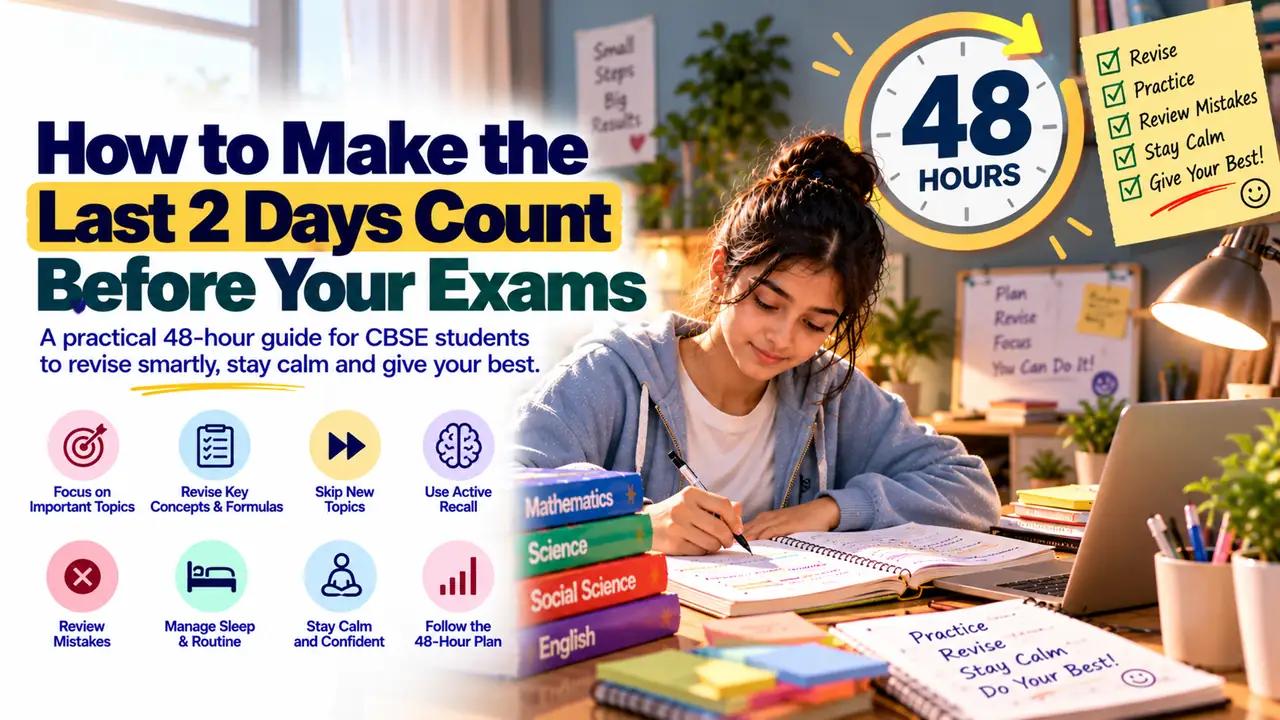
Students often feel overwhelmed in the last 48 hours before an exam, leading to confusion and stress. This blog introduces the '48-Hour Mastery Framework', a practical approach to make the most of the final hours. Readers will learn how to prioritize revisions, focus on key concepts, and manage their routine to enter the exam with confidence.

Gaurav Parashar
@gauravparashar
Listen to this article
How to Use the Last 48 Hours Before an Exam Effectively
Why the Last 2 Days Feel Overwhelming
As exams approach, students often experience heightened anxiety and stress. The last 48 hours before an exam can feel like a race against time, where every minute counts. This period is critical, especially for CBSE students in Classes 10 and 12, who are preparing for board exams. The pressure to perform well can lead to a sense of panic, making it challenging to focus on effective study strategies. Students may find themselves questioning whether they have covered enough material or if they will remember key concepts during the exam.
The overwhelming feeling is often compounded by the vast syllabus that students need to revise. For instance, a Class 10 student preparing for the Science exam must recall important chapters like 'Light' and 'Chemical Reactions', while also ensuring they understand the practical applications of these concepts. This is where a structured approach becomes essential, as discussed in our guide on finishing your syllabus on time. To enhance your study efficiency, consider learning how to use mistakes as your biggest study advantage.
What to Revise vs What to Skip
In the final hours before an exam, it's crucial to distinguish between what to revise and what can be skipped. Students should focus on high-yield topics that frequently appear in CBSE exams. For example, a Class 12 student studying Mathematics should prioritize chapters like 'Integrals' and 'Probability', which are often heavily weighted in board exams. A helpful strategy is to review past year papers to identify these key areas. Additionally, students can benefit from improving their speed in exams to ensure they can complete the paper in time.
Additionally, students should review their class notes and previous assignments to identify areas of weakness. If a student struggled with 'Thermodynamics' in Physics, revisiting those concepts is essential. However, spending time on less significant topics, such as minor details in 'Motion in a Straight Line', can lead to wasted effort. The goal is to maximize retention and understanding of key concepts.
Focusing on Key Concepts and Formulas
Focusing on key concepts and formulas is vital during the last 48 hours. Students should create a formula sheet that includes essential equations for subjects like Mathematics and Physics. For instance, a Class 10 student revising for the Mathematics exam should ensure they have formulas for 'Quadratic Equations' and 'Statistics' at their fingertips. To enhance this process, students can refer to our article on revising formulas.
Moreover, understanding the application of these formulas is equally important. For example, knowing how to apply the quadratic formula to solve equations can significantly impact a student's performance. Active engagement with the material, such as solving practice problems or explaining concepts to a peer, can enhance retention and understanding.
Avoiding New Topics
Introducing new topics in the last 48 hours is a common pitfall for students. The focus should be on consolidating existing knowledge rather than attempting to learn something entirely new. For example, a Class 11 student preparing for the English exam should not start reading a new novel or exploring unfamiliar poetry. Instead, they should review previously studied texts and practice writing essays on familiar themes.
This approach not only reduces stress but also reinforces confidence. Students can utilize resources like past year papers or sample questions to familiarize themselves with the exam format. This method is particularly effective for subjects like Social Science, where understanding historical events and their implications is crucial.
Using Active Recall for Quick Revision
Active recall is a powerful technique for quick revision. This method involves testing oneself on the material rather than passively reviewing notes. For instance, a Class 12 student preparing for the Chemistry exam can create flashcards with key reactions and their mechanisms. By quizzing themselves, they reinforce their memory and understanding of the subject.
Additionally, students can use practice tests to simulate exam conditions. This not only aids in retention but also helps in managing time effectively during the actual exam. For example, a Class 10 student can set a timer and attempt a previous year's question paper on 'Science' to gauge their readiness.
Reviewing Mistakes One Last Time
Reviewing mistakes made in previous tests or assignments is an invaluable part of the revision process. Students should take time to analyze errors and understand why they occurred. For example, if a Class 9 student consistently makes mistakes in 'Laws of Motion', they should revisit the concepts and practice related problems to avoid repeating those errors in the board exam.
This reflective practice not only helps in identifying weak areas but also builds confidence. By understanding their mistakes, students can approach the exam with a clearer mindset, knowing they have addressed potential pitfalls.
Managing Sleep and Routine
Managing sleep and routine in the last 48 hours is crucial for optimal performance. Students should aim for a consistent sleep schedule, ensuring they get adequate rest before the exam. A well-rested mind is more alert and better equipped to recall information. For instance, a Class 12 student preparing for the Mathematics exam should avoid late-night cramming sessions and instead focus on getting a full night's sleep.
Additionally, maintaining a balanced diet and staying hydrated can significantly impact cognitive function. Students should avoid heavy meals that can lead to sluggishness and instead opt for light, nutritious snacks. This holistic approach to well-being can enhance focus and retention during study sessions.
Entering the Exam Calmly
Entering the exam calmly is the final step in ensuring success. Students should practice relaxation techniques, such as deep breathing or visualization, to manage anxiety. For example, a Class 10 student can visualize themselves confidently answering questions in the exam hall, reinforcing a positive mindset.
Moreover, arriving at the exam venue early can help students acclimatize to the environment and reduce last-minute stress. They should take a moment to review their formula sheet or notes before the exam begins, ensuring they feel prepared and confident. This calm approach can make a significant difference in performance, allowing students to focus on demonstrating their knowledge.
The 48-Hour Mastery Framework
The '48-Hour Mastery Framework' is designed to help students maximize their revision in the crucial hours leading up to an exam. This framework emphasizes prioritizing key concepts, using active recall, and managing stress effectively. By following this structured approach, students can transform their anxiety into focused preparation.
As students implement the 48-Hour Mastery Framework, they will find that they can navigate the final hours with clarity and confidence. This method not only prepares them for the immediate exam but also instills lifelong study habits that will benefit them in future academic endeavors.
Conclusion
Every mark a CBSE student loses to a careless error is a mark they already earned — the only task left is making sure it shows up on the paper.
Suggested blogs

How to Plan Your Final Month Before Board Exams (Without Panic)
A structured approach to mastering your final month before board exams, ensuring clarity and confidence.
How to Improve Speed in Exams Without Making More Mistakes
Mastering the art of speed and accuracy for CBSE exams.
How to Revise One Day Before the Exam (Without Panic)
Mastering last-minute revision for CBSE exams without stress.
Class 12 Physics: How to Revise Entire Syllabus Before Boards
Mastering the Class 12 Physics syllabus for board exams through efficient revision strategies.