
How to Study Smarter, Not Longer (A Practical Student Guide)
Maximize your study efficiency with proven strategies tailored for CBSE students.
Many students struggle with long study hours that yield little results. This guide introduces the Smarter Study Framework, focusing on efficient study techniques. Readers will learn how to enhance focus, utilize active recall, and avoid burnout while preparing for CBSE exams.

Gaurav Parashar
@gauravparashar
Listen to this article
How to Study Smarter, Not Longer (A Practical Student Guide)
How to Study Smarter, Not Longer: A Practical Student Guide
In the competitive landscape of CBSE examinations, students often believe that the more hours they spend studying, the better their results will be. However, this is a misconception that can lead to frustration and burnout. Instead of increasing study hours, students should focus on studying smarter. This blog will guide students and parents through effective study strategies that enhance learning efficiency without the need for endless hours of study.
Why Long Study Hours Don’t Always Work
Many CBSE students fall into the trap of equating long hours with effective studying. However, studies indicate that prolonged study sessions can lead to diminishing returns. For instance, a student preparing for Class 10 Mathematics may spend hours reviewing the chapter on Quadratic Equations but retain little information if they lack focus or effective study techniques. The brain can only absorb so much information at once, and without proper breaks or varied study methods, retention rates drop significantly. Instead of cramming for hours, students should focus on quality over quantity, ensuring they understand and retain the material they are studying. For more tips on effective study habits, check out our article on building a daily study habit.
Moreover, the pressure to study for long hours can lead to stress and anxiety, which further hampers learning. A student might feel overwhelmed by the syllabus, especially when preparing for critical exams like the CBSE board exams. Instead of cramming for hours, students should focus on quality over quantity, ensuring they understand and retain the material they are studying. For additional strategies on managing exam stress, consider reading our guide on preparing for unit tests.
Understanding Focus vs Time
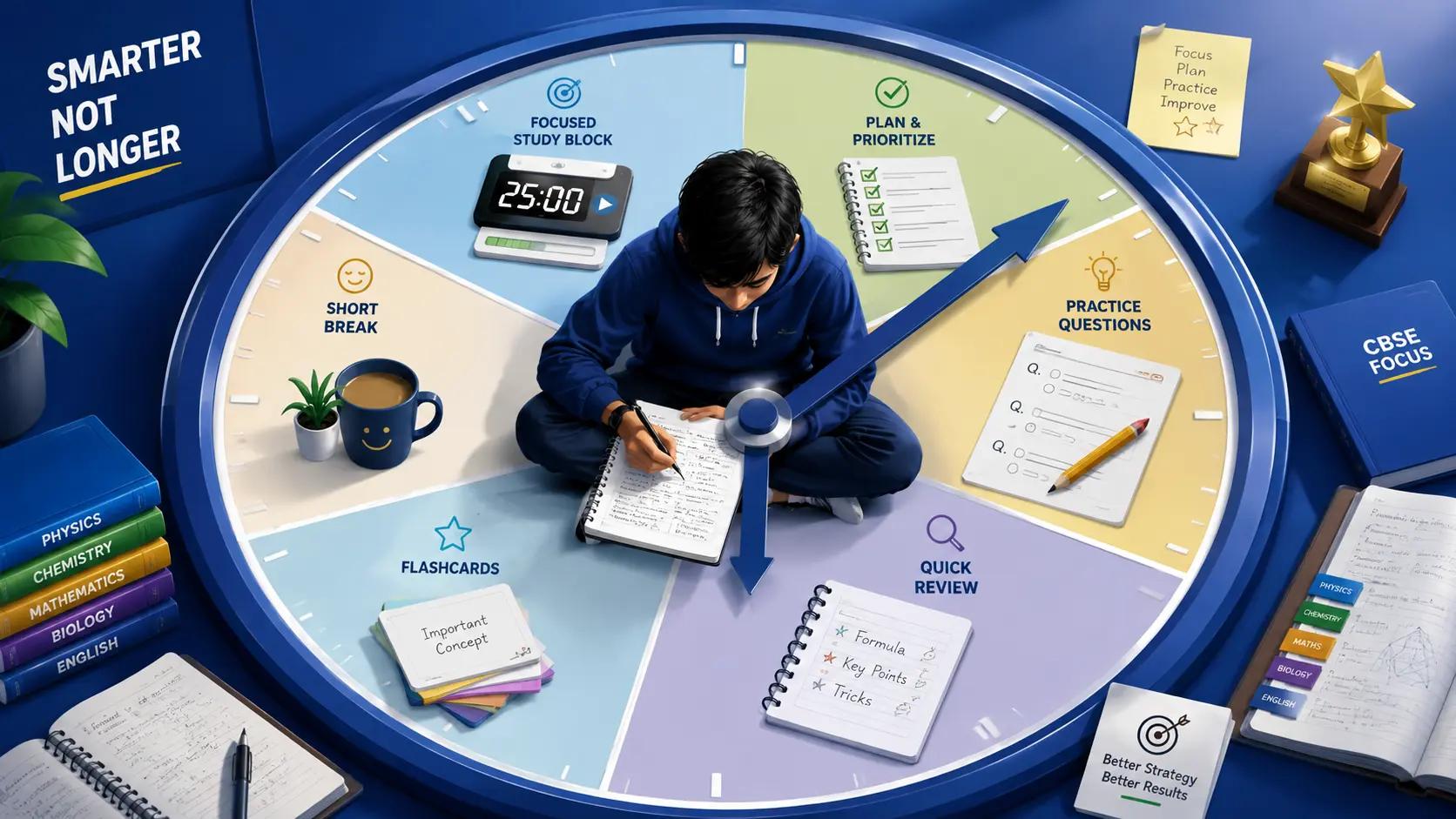
The key to studying smarter lies in understanding the relationship between focus and time. It is not about how many hours you put in, but how effectively you use those hours. For example, a Class 12 student studying for their Physics exam on Laws of Motion should aim for focused study sessions of 45 minutes, followed by a 10-minute break. This method not only helps maintain concentration but also allows the brain to process information more effectively. To learn more about maintaining focus, read our guide on staying focused during exams.
During these focused sessions, students should eliminate distractions. This means turning off mobile notifications and finding a quiet space to study. By creating an environment conducive to learning, students can maximize their productivity during each study session. The Smarter Study Framework emphasizes the importance of focus, which can significantly enhance learning outcomes.
Planning Study Sessions Properly
Effective study planning is crucial for academic success. Students should create a study timetable that allocates specific times for each subject, ensuring a balanced approach. For instance, a Class 9 student preparing for Social Science might dedicate Mondays to Federalism, Tuesdays to the French Revolution, and so on. This structured approach helps students cover the syllabus systematically without feeling overwhelmed. For insights on effective study planning, check out our post on studying faster before exams.
Additionally, students should incorporate different study methods for each subject. For example, while studying English literature, a student could engage in group discussions to enhance understanding, whereas for Mathematics, solving problems from previous years’ papers would be more beneficial. This variety keeps the study sessions interesting and engaging, reducing the likelihood of burnout.
Using Active Recall Techniques
Active recall is a powerful technique that enhances memory retention. Instead of passively reading through notes, students should actively test themselves on the material. For instance, a Class 10 student studying the chapter on Photosynthesis can create flashcards with questions on one side and answers on the other. Regularly quizzing themselves on these flashcards reinforces their memory and understanding of the topic. To further improve recall, students can refer to our article on using mistakes to boost marks.
Moreover, incorporating practice questions from past CBSE papers into study sessions can significantly improve recall. When a student attempts to solve case-based questions or assertion-reason questions from previous years, they not only prepare for the exam format but also reinforce their understanding of the subject matter. This method aligns perfectly with the Smarter Study Framework, which advocates for active engagement with the material.
Practicing Effectively
Effective practice is essential for mastering any subject. For example, a Class 11 student preparing for their Chemistry exam should focus on understanding concepts rather than rote memorization. Instead of memorizing chemical equations, they should practice deriving them through real-life applications. This approach not only solidifies their understanding but also prepares them for competency-based problems that are increasingly common in CBSE exams.
Additionally, students should engage in peer teaching. Explaining concepts to classmates can reinforce their understanding and highlight any gaps in knowledge. A student who can teach the concept of Federalism to their peers is likely to have a much deeper understanding than one who simply reads the textbook. This collaborative approach is a key component of the Smarter Study Framework.
Reviewing Quickly
Regular review sessions are crucial for long-term retention of information. Instead of cramming before exams, students should schedule quick review sessions throughout their study plan. For instance, after completing a chapter in Mathematics, a Class 10 student should spend 15 minutes reviewing key concepts and formulas. This method not only reinforces learning but also helps in identifying areas that need further attention.
Using summary notes or mind maps can be an effective way to review material quickly. A student can create a mind map for the chapter on Photosynthesis, summarizing key points and linking them visually. This technique not only aids in quick revision but also enhances understanding by connecting different concepts. The Smarter Study Framework encourages students to incorporate such review techniques into their study routine.
Avoiding Burnout
Burnout is a common issue among students, especially during exam season. To avoid this, it is essential to maintain a healthy balance between study and leisure. Students should schedule regular breaks and engage in activities that they enjoy, such as sports or hobbies. For instance, a Class 12 student preparing for board exams should take time off to play cricket or read a novel, allowing their mind to recharge.
Additionally, practicing mindfulness techniques such as meditation can help students manage stress and improve focus. A few minutes of deep breathing or meditation can clear the mind and enhance concentration during study sessions. The Smarter Study Framework emphasizes the importance of mental well-being in achieving academic success.
Improving Learning Efficiency
Ultimately, the goal of studying smarter is to improve learning efficiency. Students should focus on understanding concepts rather than memorizing facts. For example, a Class 9 student studying the chapter on the French Revolution should aim to understand the causes and effects rather than just memorizing dates and events. This deeper understanding will not only help them in exams but also in real-life applications.
Incorporating technology can also enhance learning efficiency. Using educational apps or platforms like Edzy can provide personalized learning experiences tailored to individual needs. For instance, a student struggling with Mathematics can access targeted practice questions and explanations that align with their learning pace. This approach aligns with the Smarter Study Framework, which advocates for personalized learning paths.
Conclusion
Every mark a CBSE student loses to a careless error is a mark they already earned the only task left is making sure it shows up on the paper. By implementing the strategies outlined in this blog, students can transform their study habits, focusing on efficiency and understanding rather than just time spent. The Smarter Study Framework provides a roadmap for students to navigate their academic journey effectively, ensuring they achieve their desired results without the stress of long study hours.
Suggested blogs

Why You Shouldn’t Skip Steps in Maths (Even If You Know the Answer)
Understanding the importance of step-by-step problem-solving in CBSE Mathematics.

How to Improve Accuracy in Maths Without Extra Practice Hours
Why mastering accuracy is the key to unlocking your true potential in Maths.

How to Revise Formulas in Maths Without Forgetting Them
Mastering math formulas through understanding and practice — a guide for CBSE students.

How to Identify Your Weak Areas in Studies (And Fix Them Fast)
Transforming academic weaknesses into strengths through targeted strategies.