
Class 7 Science: How to Understand Heat Transfer Through Simple Activities
Engaging Activities to Master Heat Transfer Concepts for Class 7 Students.
Many Class 7 students struggle to grasp the concept of heat transfer, leading to confusion in exams. Understanding heat transfer is crucial for mastering Science concepts. This blog provides practical activities, common misconceptions, and a checklist to enhance learning and retention.

Hari krishna
@harikrishna2
Listen to this article
Class 7 Science: How to Understand Heat Transfer Through Simple Activities
Learning Objectives and Prerequisites for Understanding Heat Transfer
Before diving into the fascinating world of heat transfer, it's essential to establish clear learning objectives. Students should aim to understand the three primary modes of heat transfer: conduction, convection, and radiation. Additionally, they should be familiar with basic concepts such as temperature, thermal energy, and the states of matter. These foundational concepts are critical as they form the basis for more complex topics in Class 7 Science, specifically in the chapter on Heat.
Students should also have a basic understanding of the scientific method, as they will be conducting simple experiments to observe heat transfer in action. Familiarity with common materials such as water, metal, and air will enhance their ability to relate to the experiments and activities discussed in this blog. For instance, knowing that metals are good conductors of heat will help them understand why a metal spoon feels hot when placed in a hot liquid. To further explore this, students can check out home experiments for separation of substances.
Core Concepts Behind Heat Transfer Through Simple Activities
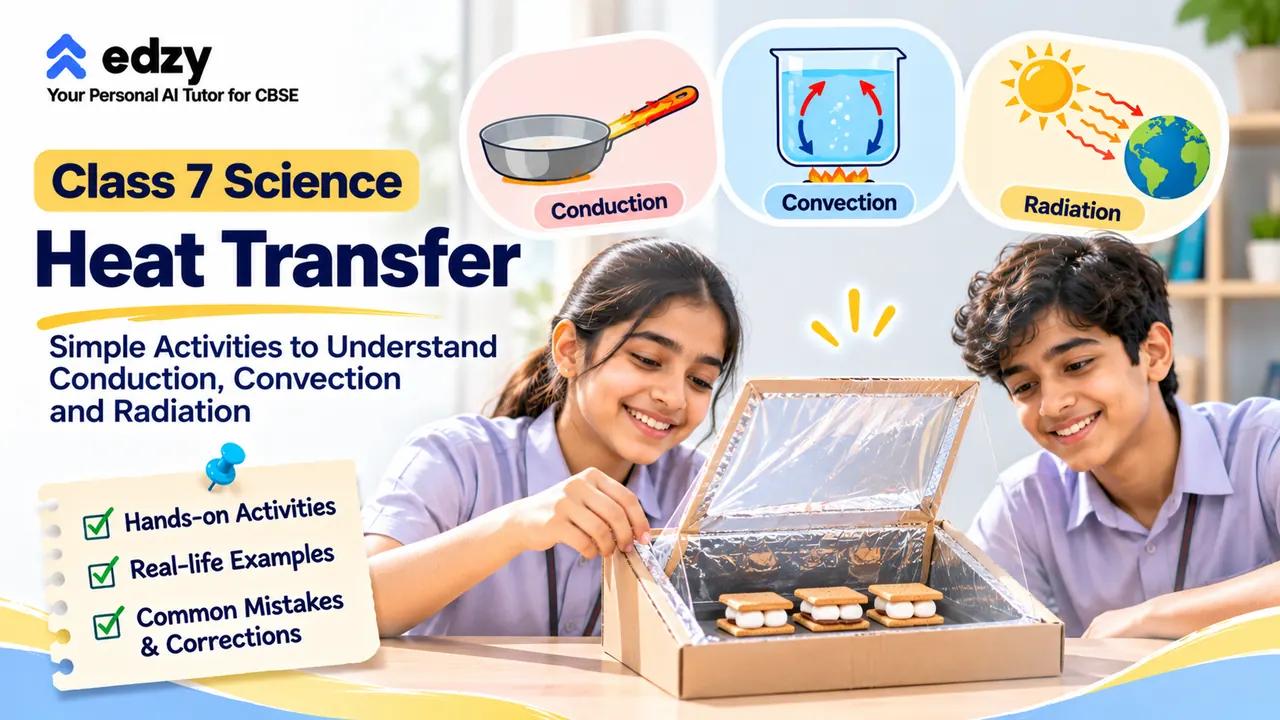
Heat transfer occurs through three main processes: conduction, convection, and radiation. Each of these processes can be demonstrated through simple activities that are not only educational but also fun. Let's explore each mode of heat transfer with practical examples.
**Conduction** is the transfer of heat through direct contact. A simple activity to demonstrate conduction involves using two metal rods of different lengths. Students can heat one end of each rod and observe how quickly the heat travels to the other end. This experiment illustrates how materials with different properties conduct heat at different rates. For instance, a Class 7 student might find that a copper rod conducts heat faster than an aluminum rod, reinforcing the concept that metals are generally good conductors.
**Convection** is the transfer of heat through fluids (liquids and gases) caused by molecular motion. To observe convection, students can fill a clear glass with water and add a few drops of food coloring. When heat is applied to the bottom of the glass, the colored water will start to move, demonstrating how warmer, less dense water rises while cooler, denser water sinks. This activity can be linked to real-world phenomena such as ocean currents and weather patterns, making it relevant to the students' understanding of environmental science. For more on effective study techniques, students can refer to how to effectively utilize the last days before an exam.
**Radiation** is the transfer of heat through electromagnetic waves. A simple experiment to observe radiation involves using a lamp and a thermometer. Students can place a thermometer at varying distances from the lamp and record the temperature. This activity helps them understand how heat can be transferred without direct contact or a medium, as seen in sunlight warming the Earth.
Worked Example: Guided Activity on Heat Transfer
To solidify their understanding of heat transfer, students can engage in a guided activity that combines all three modes of heat transfer. This activity involves creating a simple solar oven using a pizza box, aluminum foil, plastic wrap, and black paper. Students will line the inside of the box with black paper to absorb heat, cover the opening with plastic wrap to trap heat, and use aluminum foil to reflect sunlight into the box.
As they construct their solar oven, students will learn how conduction occurs when the black paper absorbs heat, convection happens as the air inside the box warms up, and radiation is utilized as sunlight enters the box. After constructing the oven, students can place s'mores inside and observe how long it takes for them to melt, providing a delicious and memorable conclusion to their learning experience.
Common Misconceptions and Corrections in Heat Transfer Concepts
Despite the simplicity of heat transfer concepts, students often harbor misconceptions that can hinder their understanding. One common misconception is that heat always moves from cold to hot. In reality, heat flows from hot to cold until thermal equilibrium is reached. For example, when a hot cup of coffee is left on a table, it cools down as heat is transferred to the cooler air around it.
Another misconception is that all materials conduct heat equally. Students may believe that wood and metal conduct heat at the same rate, but experiments will show them that metals are generally better conductors than insulators like wood. Engaging students in hands-on activities helps clarify these misconceptions and reinforces correct understanding.
Independent Practice and Self-Check for Mastery
To ensure students have grasped the concept of heat transfer, independent practice is essential. Students can be assigned a project where they must identify and document examples of heat transfer in their daily lives. They can observe how heat transfer occurs in cooking, weather changes, or even in their homes, such as how heat escapes through windows.
Additionally, a self-check quiz can be provided, featuring questions that require students to apply their knowledge of conduction, convection, and radiation. For instance, they might be asked to explain why a metal spoon feels hot when placed in a pot of boiling water or to describe how a hot air balloon rises. Such exercises not only reinforce their learning but also prepare them for related questions in their CBSE exams. For more tips on improving exam performance, students can check out tips to enhance exam performance.
For further study strategies, students can refer to articles like revision strategies for Class 10 Science and time management during exams. These resources provide additional insights that can enhance their understanding of scientific concepts.
Why Do CBSE Students Struggle with Heat Transfer Concepts?
Why do CBSE students struggle with heat transfer concepts? Many CBSE students find heat transfer concepts challenging due to the abstract nature of thermal energy and the difficulty in visualizing processes like conduction and convection. Engaging in hands-on activities helps bridge this gap, allowing students to see and feel the effects of heat transfer in real-time.
Introducing the Heat Transfer Engagement Framework
To enhance understanding, we introduce the Heat Transfer Engagement Framework. This framework emphasizes active learning through hands-on activities, real-world applications, and collaborative discussions. By engaging students in practical experiments, they can better grasp the principles of heat transfer and apply them to their everyday lives.
The Heat Transfer Engagement Framework can be referenced throughout the learning process, ensuring that students remain focused on the key concepts while having fun. For example, when conducting the solar oven experiment, students can discuss their observations in groups, reinforcing their understanding through peer interaction.
Conclusion: Mastering Heat Transfer for CBSE Success
Understanding heat transfer is crucial for Class 7 students as it lays the groundwork for more advanced scientific concepts. By engaging in simple activities, correcting misconceptions, and applying the Heat Transfer Engagement Framework, students can master this topic effectively. Every mark a CBSE student loses to a careless error is a mark they already earned — the only task left is making sure it shows up on the paper.
Suggested blogs
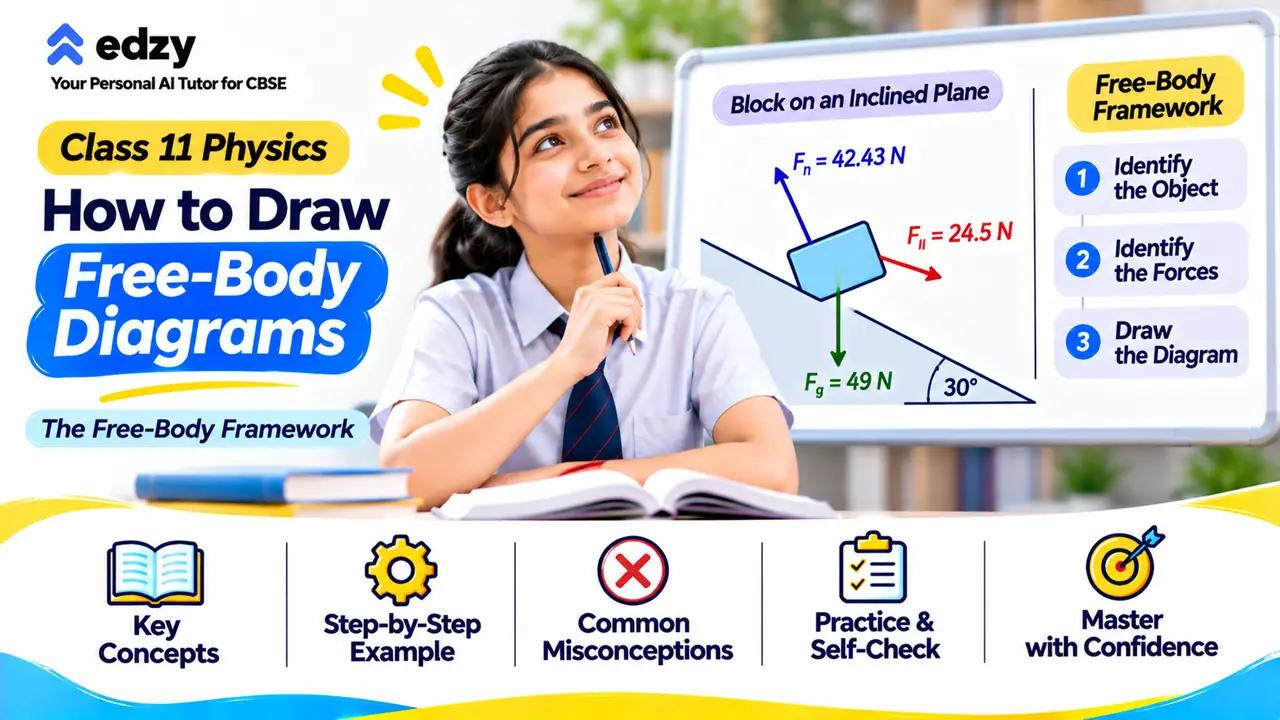
Class 11 Physics: How to Draw Free-Body Diagrams Correctly
Mastering Free-Body Diagrams: A Key Skill for CBSE Physics Success.
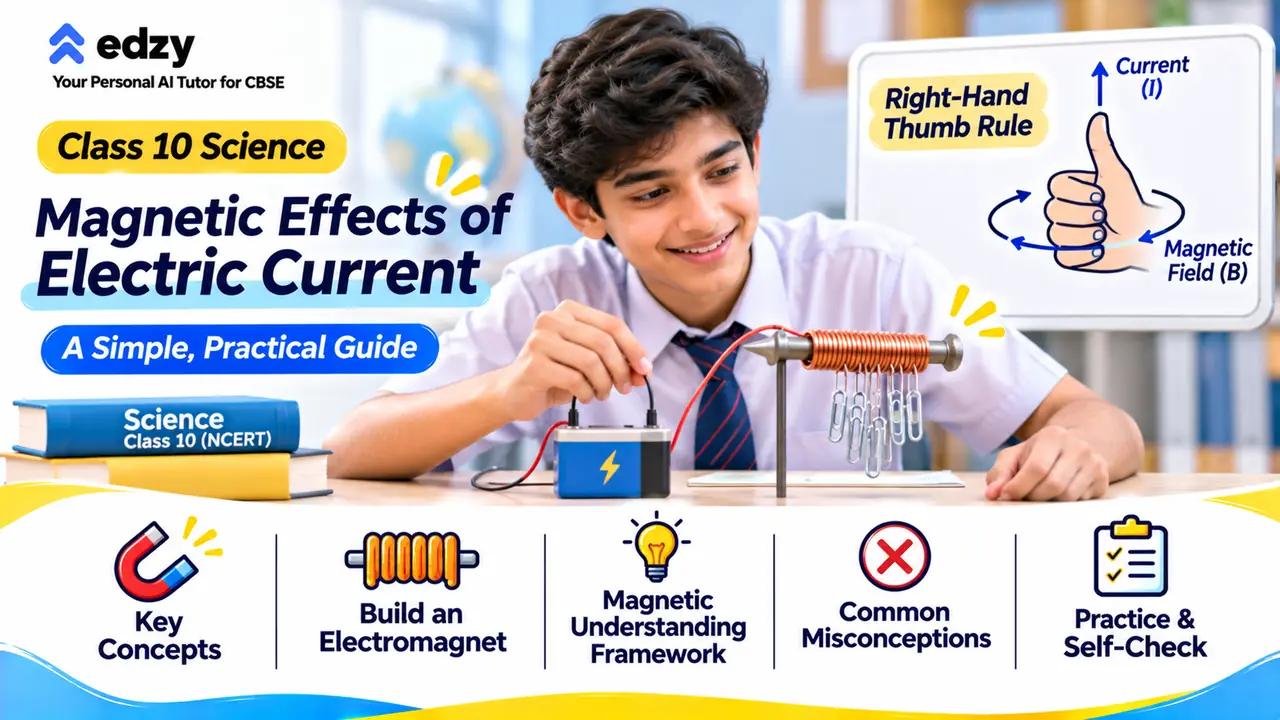
Class 10 Science: How to Understand Magnetic Effects of Electric Current
Mastering the magnetic effects of electric current is crucial for Class 10 students — here’s how to do it effectively.
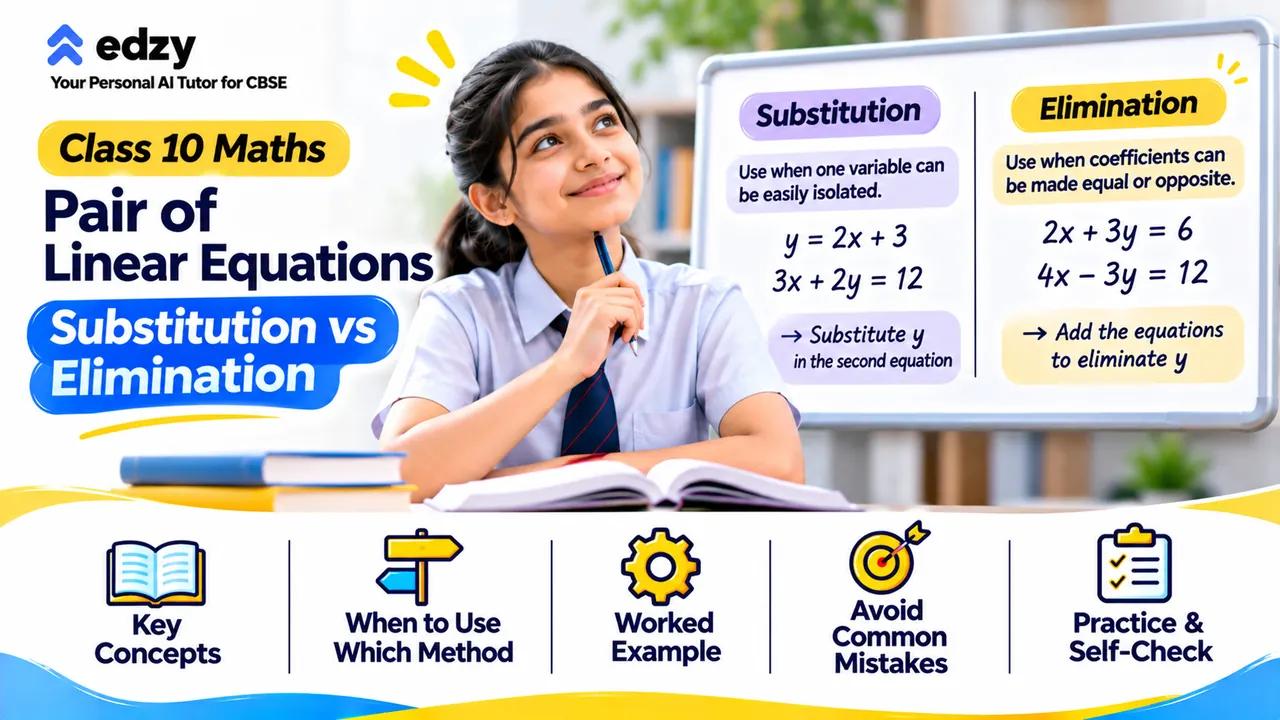
Class 10 Maths: How to Choose Between Substitution and Elimination
Mastering the art of solving linear equations with confidence and clarity.
Class 9 Science: How to Read Distance-Time and Velocity-Time Graphs
Understanding motion graphs is essential for mastering concepts in Class 9 Science and excelling in CBSE exams.