
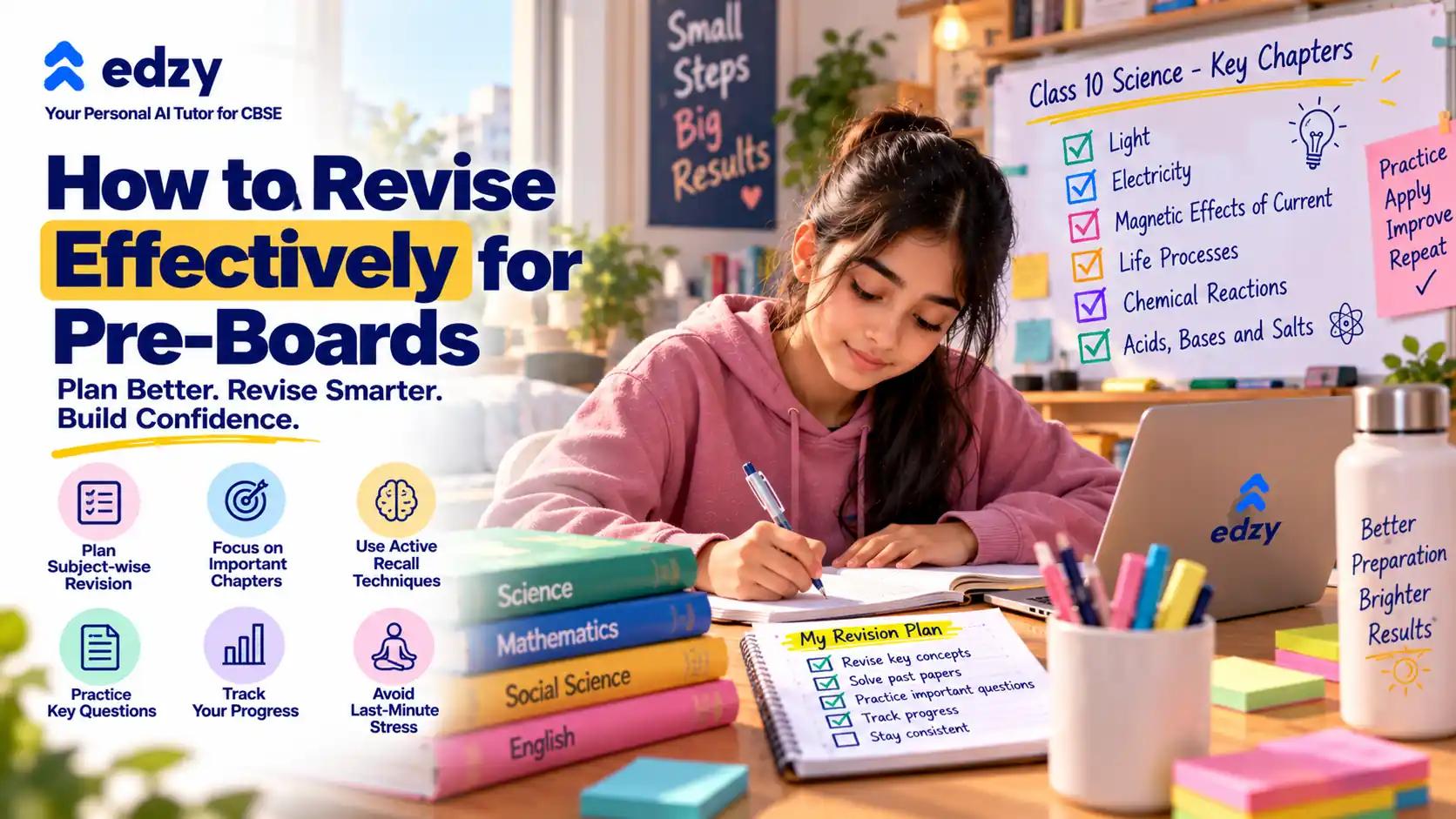
Class 10 Science: How to Revise All Chapters Before Pre-Boards
Why covering chapters is not the same as retaining them — and what CBSE students should do instead.
Facing the pressure of pre-board exams? Many students struggle to retain information despite covering all chapters. This blog introduces the Active Recall Framework, a structured approach to effective revision. Readers will learn how to prioritize chapters, utilize active recall techniques, and track their progress to enter pre-boards confidently.

Gaurav Parashar
@gauravparashar
Listen to this article
Class 10 Science: How to Revise All Chapters Before Pre-Boards
Why Pre-Board Revision is Important
Pre-board exams serve as a crucial checkpoint for Class 10 students preparing for their CBSE board examinations. They not only assess students' understanding of the syllabus but also help identify areas that require further attention. With subjects like Science, which encompasses chapters such as Light, Electricity, and Life Processes, students must ensure they are not just familiar with the content but can also apply their knowledge effectively in exam scenarios. For more tips on managing time during exams, check out our guide on time management strategies.
The importance of pre-board revision cannot be overstated. It allows students to simulate the exam environment, practice time management, and reduce anxiety. Moreover, it helps in reinforcing concepts learned throughout the year. For instance, a student who has studied Acids, Bases, and Salts in Science should be able to tackle questions that require application, such as identifying the pH of various solutions or predicting the outcomes of chemical reactions. To enhance your revision techniques, consider our article on quick revision methods.
Planning Subject-Wise Revision
Effective revision starts with a well-structured plan. Students should begin by breaking down their syllabus into manageable sections. For Science, this means categorizing chapters into topics such as Physics, Chemistry, and Biology. Each of these subjects has its own set of chapters that require different approaches. For example, while Magnetic Effects of Current in Physics may require problem-solving skills, Nutrition in Plants in Biology may focus more on definitions and processes. To help with your study schedule, refer to our guide on finishing your syllabus on time.
Creating a timetable that allocates specific time slots for each subject can help students maintain a balanced approach. For instance, dedicating two hours to Physics on Mondays and Wednesdays, while focusing on Chemistry on Tuesdays and Thursdays, ensures comprehensive coverage of the syllabus. This method not only helps in retaining information but also reduces the feeling of being overwhelmed.
Prioritizing Important Chapters
Not all chapters hold the same weight in terms of marks distribution in the CBSE board exams. Students should prioritize chapters based on their importance and their own comfort level with the material. For instance, chapters like Light and Electricity are often heavily featured in exams and thus should be given more time during revision. To identify which chapters to prioritize, students can refer to previous years' question papers and mark the frequency of questions from each chapter. This analysis can guide them in focusing their efforts where it counts the most. For example, a Class 10 student might find that questions on Chemical Reactions appear frequently, indicating that this chapter deserves extra attention. To maximize your preparation, consider practicing key questions from our resource on practice questions for CBSE students.
Additionally, students can benefit from understanding how to study smarter, not harder. Our article on smart study techniques can provide insights into effective study habits.
Using Active Recall Techniques
One of the most effective methods for retaining information is through active recall. This technique involves testing oneself on the material rather than passively reviewing notes. For example, after studying a chapter on Life Processes, a student should close their book and write down everything they remember about the topic. This could include processes like photosynthesis and respiration, along with their respective equations.
Incorporating active recall into daily study routines can significantly enhance memory retention. Students can create flashcards for key concepts or use apps that promote self-testing. For instance, a student preparing for the chapter on Acids, Bases, and Salts can use flashcards to quiz themselves on the properties of different substances, thus reinforcing their understanding through active engagement.
Practicing Key Questions
Practice is essential for mastering any subject, especially in Science where application of knowledge is key. Students should focus on solving previous years' question papers and sample papers to familiarize themselves with the exam format. For example, a Class 10 student can practice case-based questions from the chapter on Electricity to understand how to apply theoretical concepts to practical scenarios.
Additionally, students should identify important questions that frequently appear in exams. This can be done by consulting with teachers or using resources that list frequently asked questions. For example, a student revising Magnetic Effects of Current should ensure they can solve problems related to Ohm's Law and the calculation of resistance, as these are common themes in board exams.
Avoiding Last-Minute Stress
Last-minute cramming is a common pitfall for many students. To avoid this, it is crucial to start revising well in advance of the pre-board exams. A well-planned revision schedule that spreads out study sessions over weeks rather than days can alleviate stress. For instance, a student should aim to complete their revision of all Science chapters at least two weeks before the pre-boards, allowing time for review and practice.
Moreover, students should incorporate relaxation techniques into their routine. Simple practices such as deep breathing or short breaks during study sessions can help maintain focus and reduce anxiety. For example, a student studying Life Processes can take a five-minute break after completing a section to refresh their mind before moving on to the next topic.
Tracking Progress
Keeping track of progress is vital for effective revision. Students should maintain a revision diary where they can note down what they have studied and what still needs to be covered. This not only helps in staying organized but also provides a sense of accomplishment as they check off completed chapters. For example, after finishing the chapter on Acids, Bases, and Salts, a student can mark it as done and reflect on the key concepts learned.
Additionally, students can set small goals for each study session. For instance, a goal could be to complete all exercises from the chapter on Electricity in one sitting. This method of goal-setting fosters a sense of achievement and motivates students to continue their revision journey.
Entering Pre-Boards Confidently
Confidence plays a crucial role in exam performance. By following a structured revision plan, prioritizing important chapters, and employing active recall techniques, students can enter their pre-boards with a sense of preparedness. It is essential to remember that understanding concepts is far more beneficial than rote memorization. For example, a student who understands the principles behind Photosynthesis will be better equipped to tackle related questions than one who merely memorizes definitions.
Ultimately, the goal of revision is not just to pass the pre-boards but to build a strong foundation for the upcoming board exams. By implementing the Active Recall Framework, students can ensure they retain information effectively and approach their exams with confidence. Every mark a CBSE student loses to a careless error is a mark they already earned — the only task left is making sure it shows up on the paper.
Suggested blogs
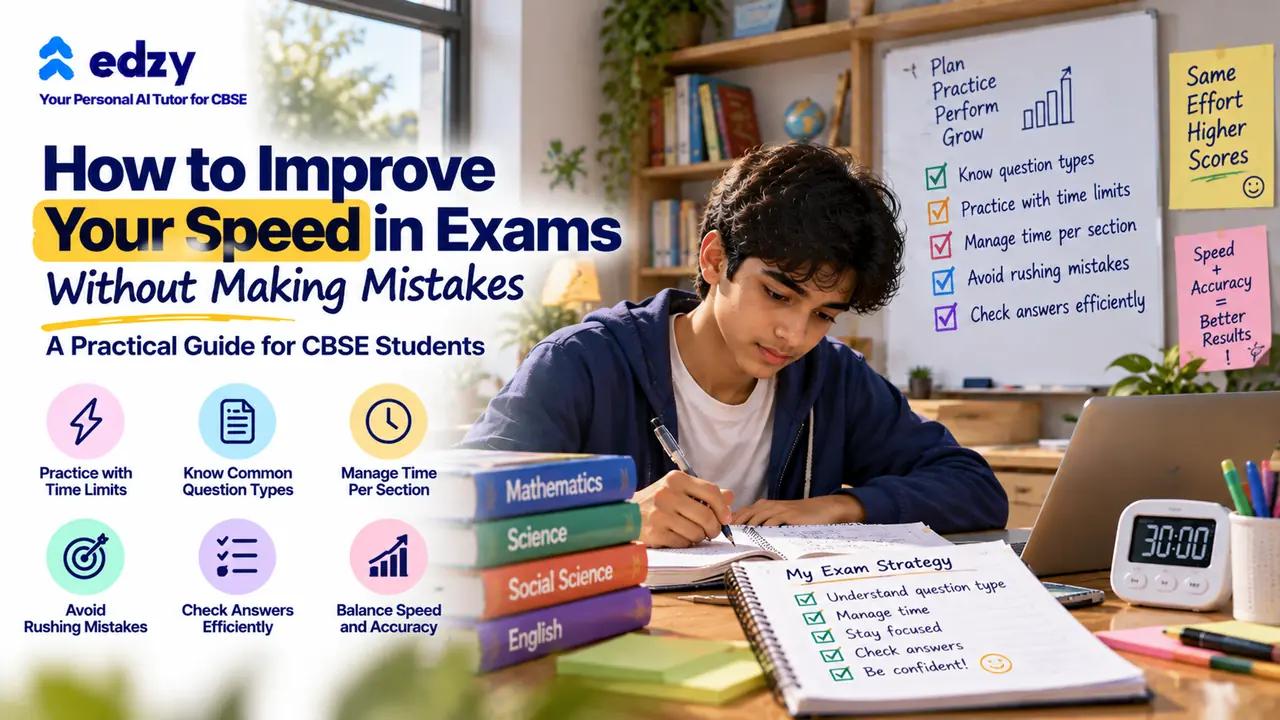
How to Improve Speed in Exams Without Making More Mistakes
Mastering the art of speed and accuracy for CBSE exams.
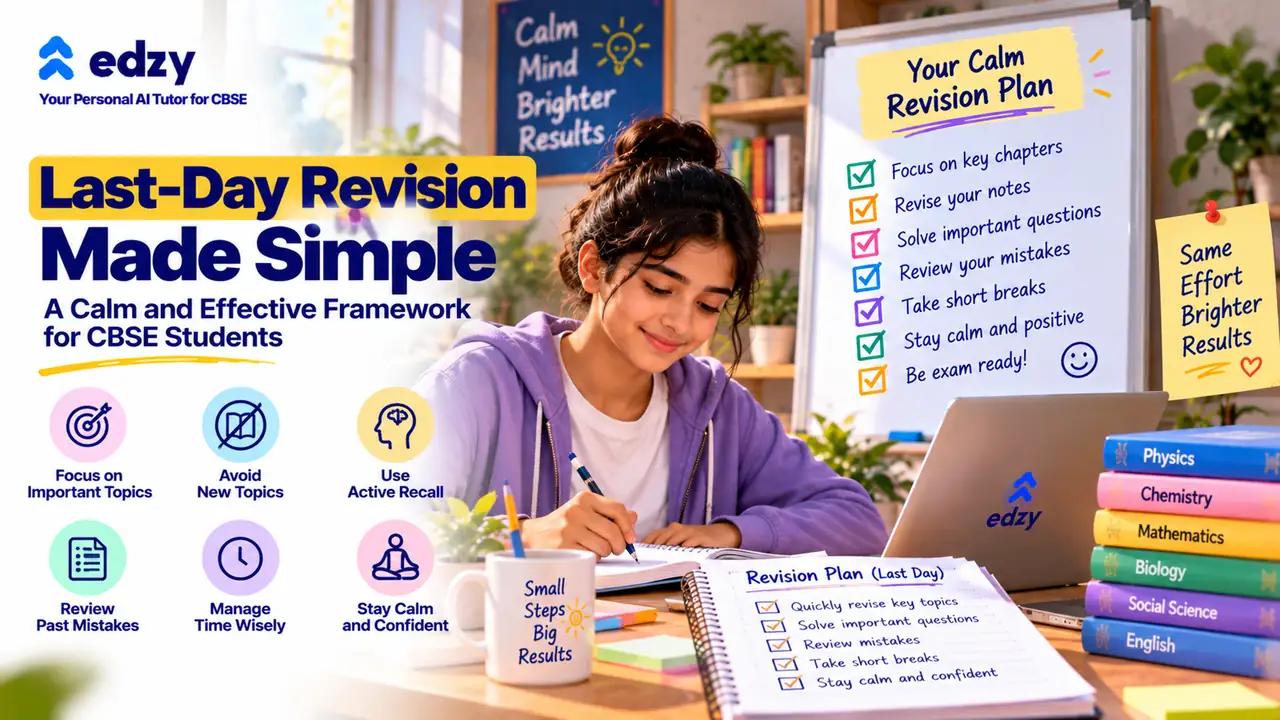
How to Revise One Day Before the Exam (Without Panic)
Mastering last-minute revision for CBSE exams without stress.
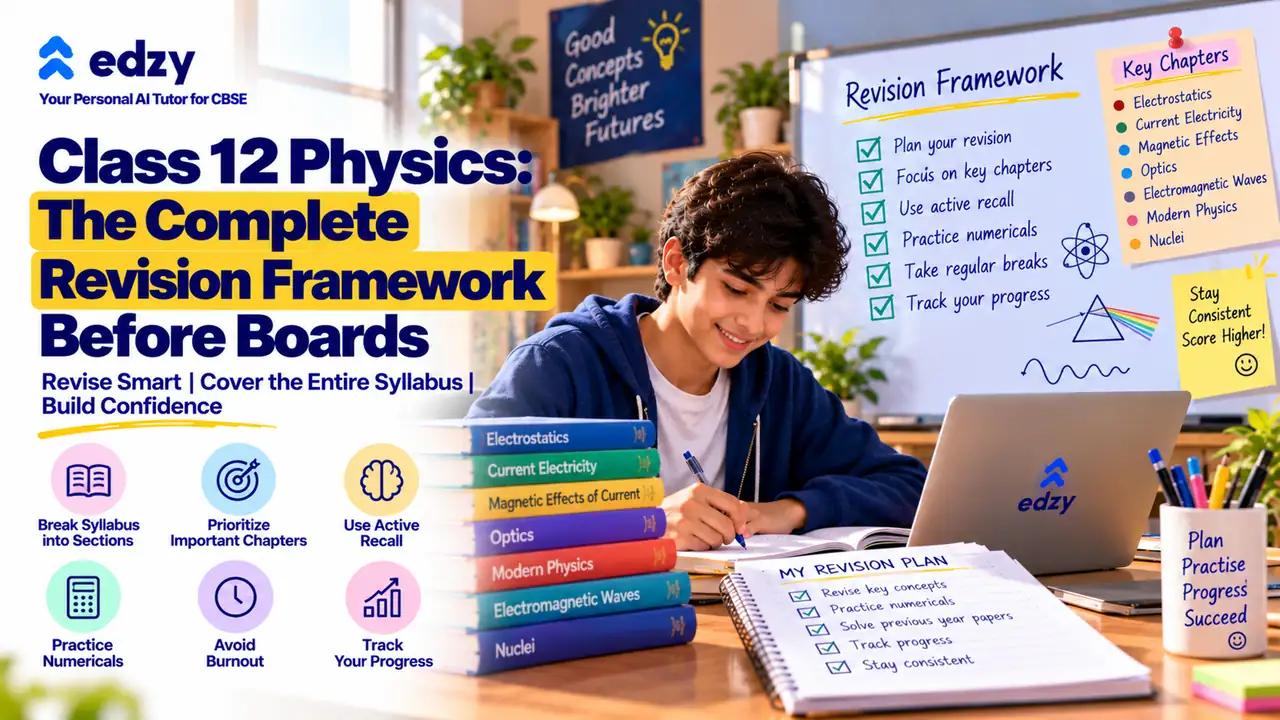
Class 12 Physics: How to Revise Entire Syllabus Before Boards
Mastering the Class 12 Physics syllabus for board exams through efficient revision strategies.
Class 10 Maths: How to Revise Entire Syllabus Before Boards
Mastering the Class 10 Maths syllabus for board exams requires a strategic approach to revision.