
Class 7 Maths: A Visual Guide to Integers and Negative Numbers
Understanding integers is crucial for mastering mathematics in Class 7 — here's how to visualize and apply them effectively.
Many students struggle with integers and negative numbers in Class 7 Maths. This blog introduces the Visual Integer Framework, a method to simplify understanding. Readers will learn core concepts, common mistakes, and practical examples to enhance their grasp of integers.

Hari krishna
@harikrishna2
Listen to this article
Class 7 Maths: A Visual Guide to Integers and Negative Numbers
Class 7 Maths: A Visual Guide to Integers and Negative Numbers
Understanding integers is a fundamental aspect of mathematics, especially for Class 7 students following the CBSE curriculum. Integers include all whole numbers, both positive and negative, along with zero. As students progress through their mathematical journey, they will encounter integers in various contexts, from solving equations to understanding number lines. This blog aims to provide a comprehensive visual guide to integers and negative numbers, ensuring that students not only grasp the concepts but can also apply them effectively in their studies. For additional tips on effective study habits, check out our guide on using the last hours before an exam.
Learning Objectives and Prerequisites
Before diving into the world of integers, it is essential to establish a solid foundation. Students should be familiar with basic arithmetic operations such as addition, subtraction, multiplication, and division. Understanding the number line is also crucial, as it serves as a visual representation of integers. In Class 7, students will encounter integers in Chapter 1 of the NCERT Mathematics textbook, where they will learn about the properties and operations of integers. To enhance their understanding, students can refer to our article on quick revision techniques.
The primary learning objectives for this blog include:
- Defining integers and understanding their properties.
- Visualizing integers on a number line.
- Applying operations with integers in real-life scenarios.
- Identifying common misconceptions related to integers.
- Practicing integer problems to reinforce learning.
Core Concepts Behind a Visual Guide to Integers and Negative Numbers
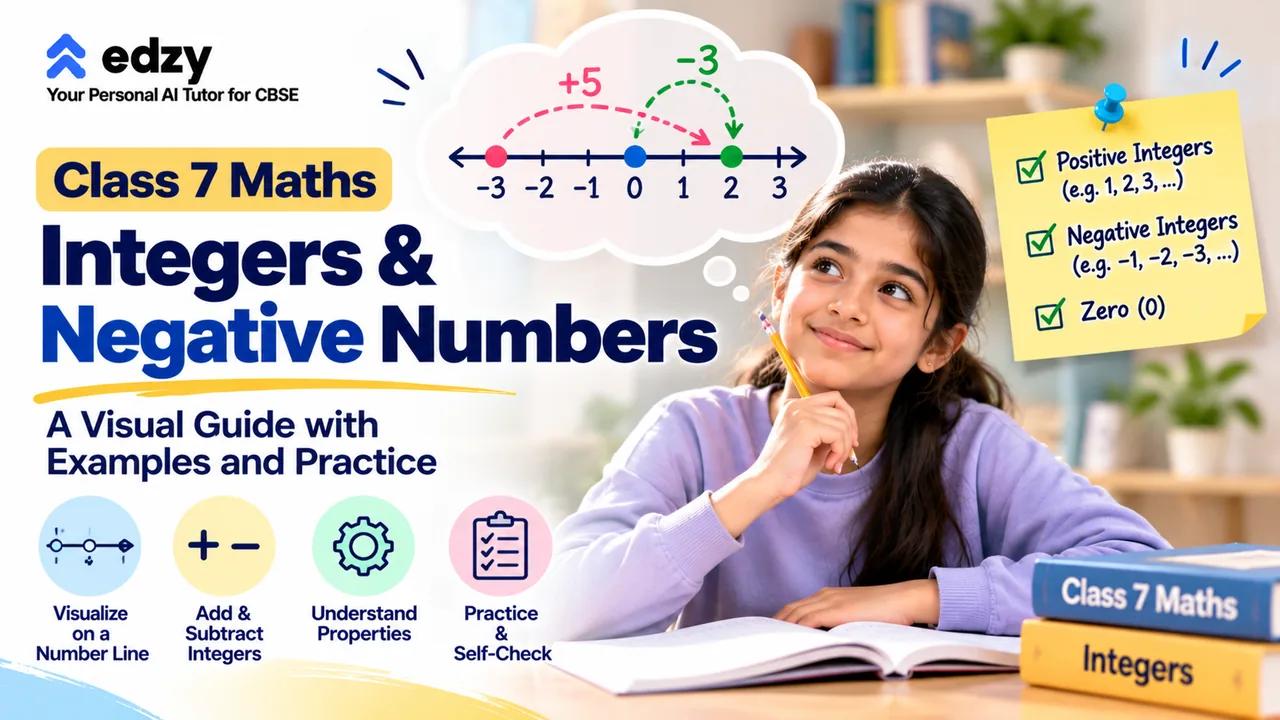
Integers are a set of numbers that include positive numbers, negative numbers, and zero. They are represented on a number line, where positive integers are located to the right of zero and negative integers to the left. This visual representation helps students understand the relationship between different integers. For instance, on a number line, -3 is less than -1, which can be visually represented by their positions relative to zero.
The Visual Integer Framework is a unique approach that emphasizes visualization in understanding integers. This framework encourages students to draw number lines and plot integers to see their relationships clearly. For example, if a student is asked to add -3 and 5, they can visualize starting at -3 on the number line and moving 5 units to the right, landing at 2. This method not only aids in comprehension but also enhances retention of the concepts. Students can also explore strategies to avoid last-minute cramming to improve their overall performance.
In Class 7, students will also learn about the properties of integers, such as:
- Closure Property: The sum or product of any two integers is an integer.
- Associative Property: The way in which integers are grouped does not change their sum or product.
- Commutative Property: The order of integers does not affect their sum or product.
- Identity Property: The sum of any integer and zero is the integer itself; the product of any integer and one is the integer itself.
Worked Example: Adding and Subtracting Integers
To illustrate the application of integers, let’s consider a worked example involving addition and subtraction. Suppose a student needs to solve the following problem:
Problem: Calculate -4 + 7 - 3.
Using the Visual Integer Framework, the student can approach this problem step-by-step:
- Start at -4 on the number line.
- Move 7 units to the right, which brings you to 3.
- Now, from 3, move 3 units to the left (subtracting 3), landing at 0.
Thus, the final answer is 0. This example not only demonstrates the process of adding and subtracting integers but also reinforces the importance of visualizing the operations on a number line.
Common Misconceptions and Corrections
Despite the clarity that the Visual Integer Framework provides, students often encounter misconceptions when dealing with integers. One common mistake is confusing the signs of integers during addition and subtraction. For instance, many students mistakenly believe that adding two negative integers results in a positive integer. In reality, adding two negative integers yields a more negative integer. For example, -2 + -3 equals -5, not +5.
Another misconception arises when students subtract negative integers. They often think that subtracting a negative number is the same as adding a positive number. While this is true, the confusion lies in the execution. For example, when calculating 5 - (-3), students should recognize that this is equivalent to 5 + 3, resulting in 8. Visualizing this on a number line can help clarify the concept.
To combat these misconceptions, students should practice problems that specifically focus on these areas. Engaging with exercises from the NCERT Mathematics textbook can provide valuable practice. For instance, Chapter 1 includes various problems that challenge students to apply their understanding of integers in different contexts. Additionally, students can benefit from our guide on improving speed in exams to enhance their performance. Furthermore, they can learn how to finish their syllabus on time to avoid last-minute rushes.
Independent Practice and Self-Check
To reinforce the concepts learned, students should engage in independent practice. Here are a few problems to solve:
- Calculate -5 + 9.
- What is the result of -7 - 4?
- Evaluate 6 - (-2) + 3.
- Find the sum of -3, -2, and 5.
- Subtract -6 from 4.
After solving these problems, students should check their answers against the solutions provided in the NCERT textbook. This self-check process is crucial for identifying areas that require further practice. Incorporating the Visual Integer Framework into daily practice will not only enhance understanding but also build confidence in handling integers. Students are encouraged to draw number lines for complex problems and visualize their steps to ensure clarity.
Why Do CBSE Students Struggle with Integers?
Why do CBSE students struggle with integers? Many CBSE students find integers challenging due to their abstract nature and the confusion surrounding positive and negative values. Without a clear visual representation, students often misinterpret operations involving integers, leading to errors in calculations. The Visual Integer Framework addresses these challenges by providing a structured approach to understanding and applying integer concepts effectively.
Conclusion
Mastering integers is essential for success in mathematics, especially for Class 7 students. By utilizing the Visual Integer Framework, students can visualize and understand integers more effectively, leading to improved performance in their studies. Engaging with practical examples, recognizing common misconceptions, and practicing independently will solidify their understanding of integers. Every mark a CBSE student loses to a careless error is a mark they already earned — the only task left is making sure it shows up on the paper.
Suggested blogs
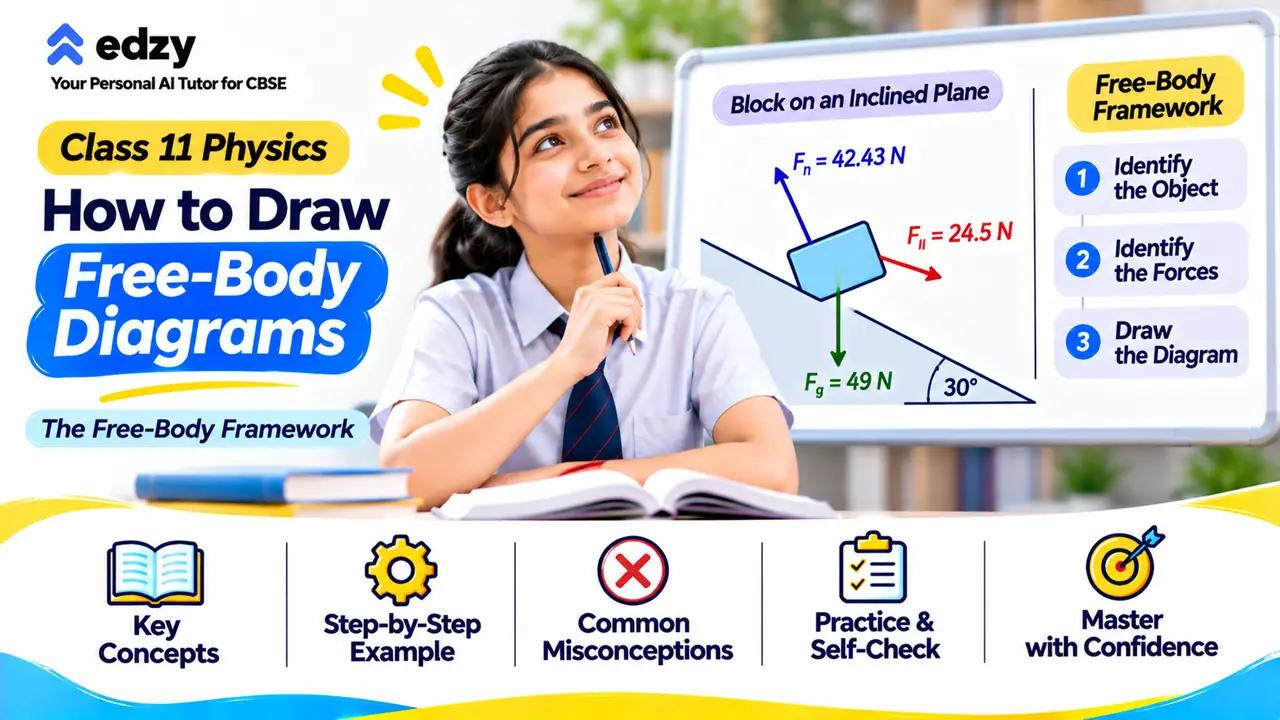
Class 11 Physics: How to Draw Free-Body Diagrams Correctly
Mastering Free-Body Diagrams: A Key Skill for CBSE Physics Success.

Class 10 Science: How to Understand Magnetic Effects of Electric Current
Mastering the magnetic effects of electric current is crucial for Class 10 students — here’s how to do it effectively.
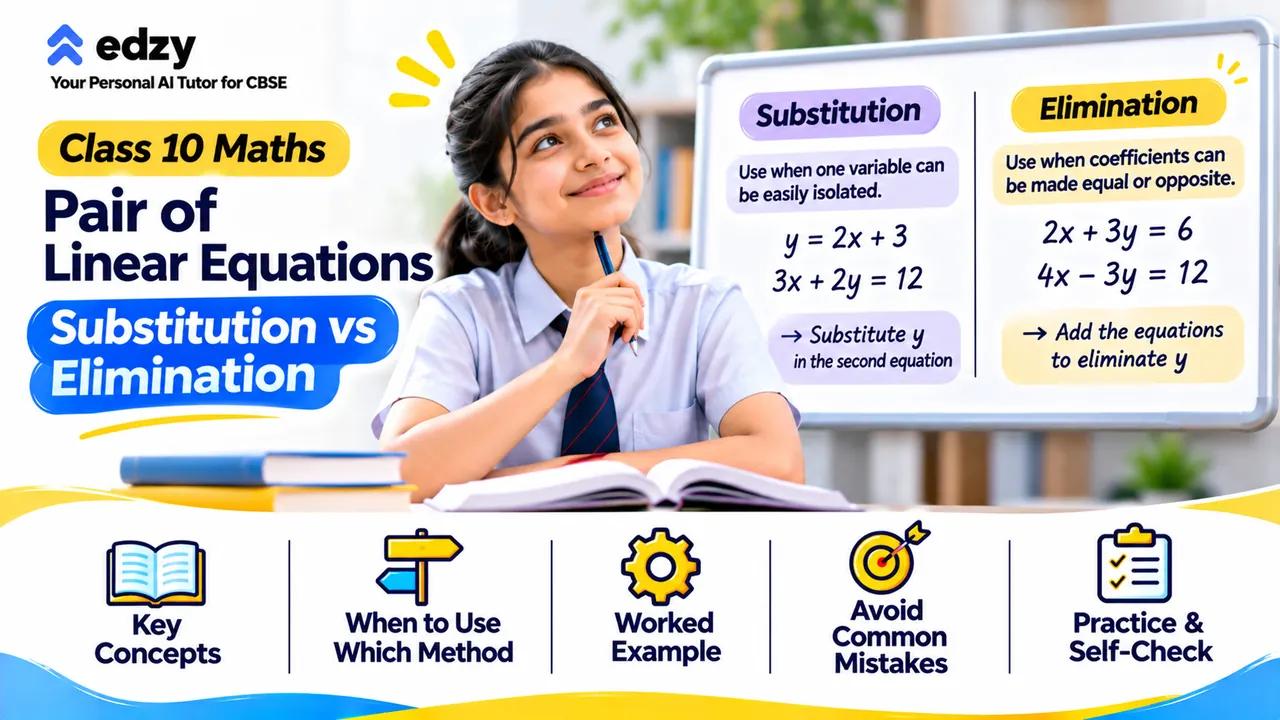
Class 10 Maths: How to Choose Between Substitution and Elimination
Mastering the art of solving linear equations with confidence and clarity.
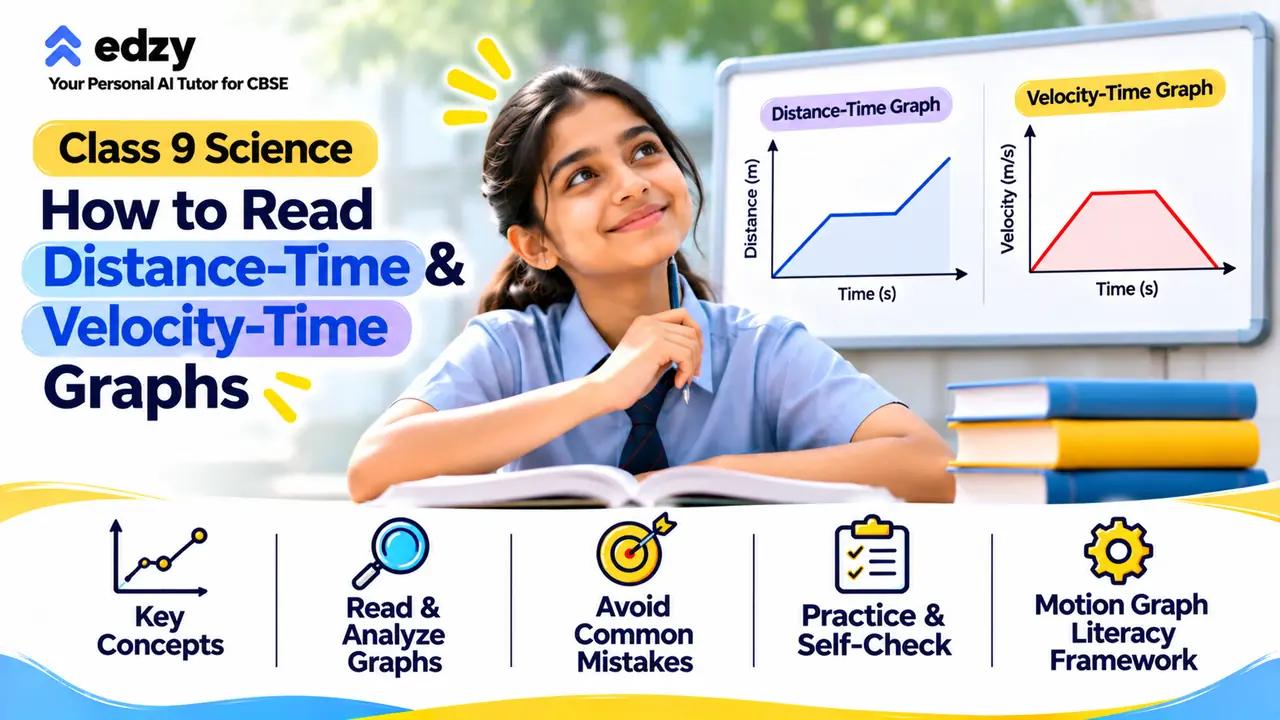
Class 9 Science: How to Read Distance-Time and Velocity-Time Graphs
Understanding motion graphs is essential for mastering concepts in Class 9 Science and excelling in CBSE exams.