
Class 8 Maths: How to Solve Linear Equations in One Variable
Mastering linear equations: A practical guide for Class 8 CBSE students.
Struggling with linear equations in Class 8? This blog introduces the Linear Equation Mastery Framework, guiding students through solving equations step-by-step. Readers will learn core concepts, common mistakes, and effective practice techniques to excel in their exams.

Hari krishna
@harikrishna2
Listen to this article
Class 8 Maths: How to Solve Linear Equations in One Variable
Class 8 Maths: How to Solve Linear Equations in One Variable
Linear equations in one variable are a fundamental concept in Class 8 Mathematics, forming the basis for more complex mathematical ideas. Understanding how to solve these equations is crucial for students as they prepare for their CBSE exams. This blog will guide you through the essential steps of solving linear equations, highlight common misconceptions, and provide practical examples to reinforce learning.
Learning Objectives and Prerequisites
Before diving into solving linear equations, students should have a solid understanding of basic algebraic concepts, including variables, constants, and arithmetic operations. Familiarity with the properties of equality and the concept of balancing equations is also essential. By the end of this blog, students will be able to:
- Identify and formulate linear equations in one variable.
- Apply the correct methods to solve these equations.
- Recognize and correct common mistakes made during the solving process.
- Engage in independent practice to enhance their skills.
Core Concepts Behind How to Solve Linear Equations in One Variable
A linear equation in one variable can be expressed in the form ax + b = 0, where a and b are constants, and x is the variable. The goal is to isolate x on one side of the equation. To achieve this, students must perform operations that maintain the equality of the equation. This includes:
1. **Addition and Subtraction**: To eliminate constants from one side of the equation, students can add or subtract the same value from both sides. For example, in the equation x + 5 = 12, subtracting 5 from both sides gives x = 7.
2. **Multiplication and Division**: To isolate the variable, students may need to multiply or divide both sides of the equation by the same non-zero number. For instance, in the equation 3x = 12, dividing both sides by 3 results in x = 4.
3. **Balancing the Equation**: It is crucial to remember that whatever operation is performed on one side must also be performed on the other side to maintain balance.
Understanding these core concepts is vital for students as they progress through their CBSE syllabus, particularly in chapters involving algebraic expressions and equations.
Worked Example: Solving a Linear Equation
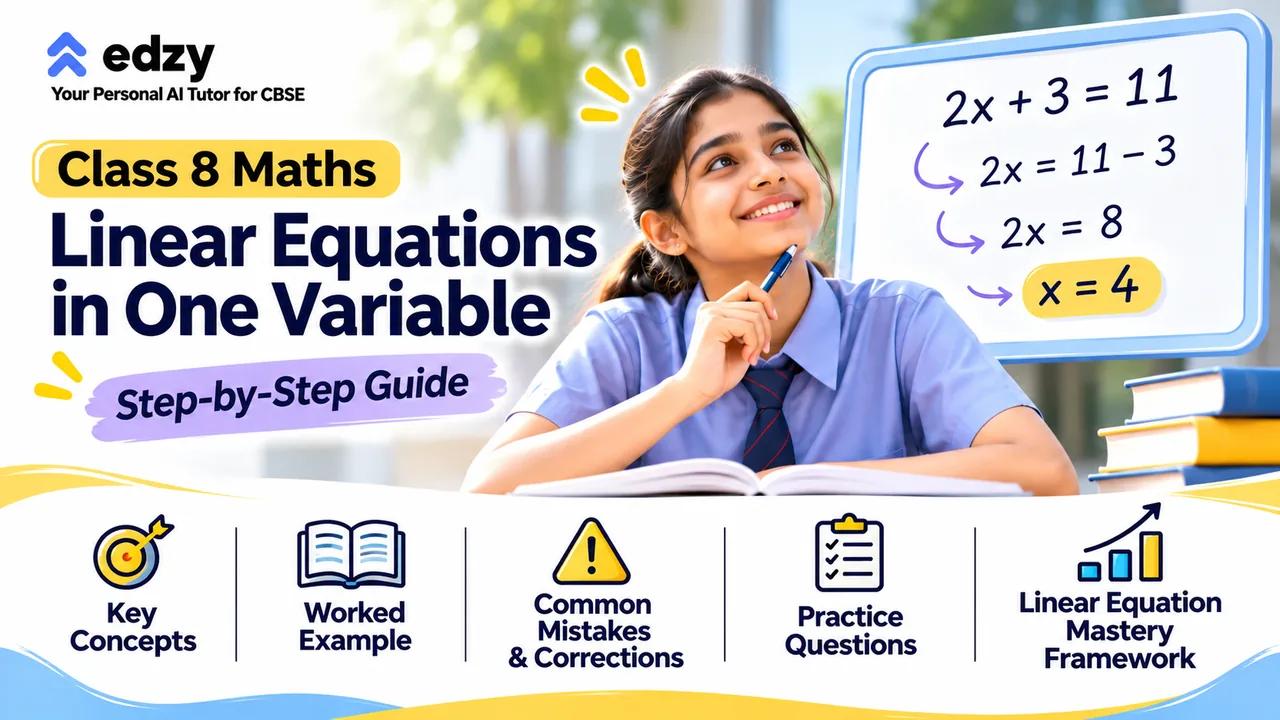
Let’s consider a practical example to illustrate the process of solving a linear equation. Suppose we have the equation:
2x + 3 = 11
To solve for x, follow these steps:
1. **Subtract 3 from both sides**: This gives us 2x = 11 - 3, which simplifies to 2x = 8.
2. **Divide both sides by 2**: This results in x = 8 / 2, leading to x = 4.
Thus, the solution to the equation 2x + 3 = 11 is x = 4. This example demonstrates the importance of following systematic steps to arrive at the correct answer.
For students looking to reinforce their understanding, practicing similar problems is essential. Engaging with resources such as important questions for Class 8 can provide additional context and practice opportunities. Additionally, students can explore how to improve speed in exams to enhance their performance.
Common Misconceptions and Corrections
While learning to solve linear equations, students often encounter several misconceptions that can lead to errors. Here are a few common mistakes and how to correct them:
1. **Misapplying Operations**: A frequent error is forgetting to apply the same operation to both sides of the equation. For instance, in the equation x + 4 = 10, if a student subtracts 4 from only one side, they may incorrectly conclude that x = 10. The correct approach is to subtract 4 from both sides, leading to x = 6.
2. **Ignoring Negative Signs**: Students sometimes overlook negative signs, particularly when dealing with subtraction. For example, in the equation 3x - 5 = 1, if a student mistakenly adds 5 instead of adding it to both sides, they may arrive at the wrong solution. The correct steps would be to add 5 to both sides, resulting in 3x = 6, and then divide by 3 to find x = 2.
3. **Confusing Variables with Constants**: Students may confuse the roles of variables and constants, leading to incorrect assumptions about their values. It is crucial to remember that variables represent unknown values that need to be solved, while constants are fixed numbers.
To further assist in overcoming these misconceptions, students can refer to resources like how to use mistakes as your biggest study advantage, which provides strategies for learning from errors. Moreover, exploring how to finish your syllabus on time can help students manage their study schedules effectively.
Independent Practice and Self-Check
To solidify understanding, independent practice is essential. Students should attempt a variety of linear equations to enhance their skills. Here are some practice problems:
1. Solve for x: 5x - 2 = 18
2. Solve for x: 4(x + 3) = 28
3. Solve for x: 7 - 2x = 1
After attempting these problems, students should check their answers against the solutions provided in their textbooks or online resources. Engaging with platforms that offer practice questions, such as how to revise one day before the exam without panic, can also be beneficial.
Additionally, students should reflect on their solving process and identify any mistakes made during practice. This self-checking method is crucial for reinforcing learning and building confidence.
The Linear Equation Mastery Framework
Introducing the Linear Equation Mastery Framework, a structured approach designed to help students systematically tackle linear equations. This framework consists of three key steps:
1. **Understand the Equation**: Before attempting to solve, students should ensure they comprehend the equation's structure and what is being asked. This includes identifying the variable and constants involved.
2. **Apply Operations Thoughtfully**: Students must carefully apply addition, subtraction, multiplication, or division to isolate the variable, ensuring they maintain balance throughout the process.
3. **Verify the Solution**: After arriving at a solution, students should substitute their answer back into the original equation to confirm its accuracy. This verification step is crucial in ensuring that no mistakes were made during the solving process.
By consistently applying the Linear Equation Mastery Framework, students will develop a deeper understanding of linear equations and improve their problem-solving skills.
As students prepare for their CBSE exams, it is essential to practice solving linear equations regularly. Engaging with various problems will enhance their confidence and proficiency, ensuring they are well-prepared for any question format they may encounter, including case-based questions.
Final Thoughts on Mastering Linear Equations
Mastering linear equations in one variable is a vital skill for Class 8 students as they navigate their CBSE Mathematics syllabus. By understanding the core concepts, practicing diligently, and applying the Linear Equation Mastery Framework, students can overcome common pitfalls and excel in their exams. Every mark a CBSE student loses to a careless error is a mark they already earned — the only task left is making sure it shows up on the paper.
Suggested blogs
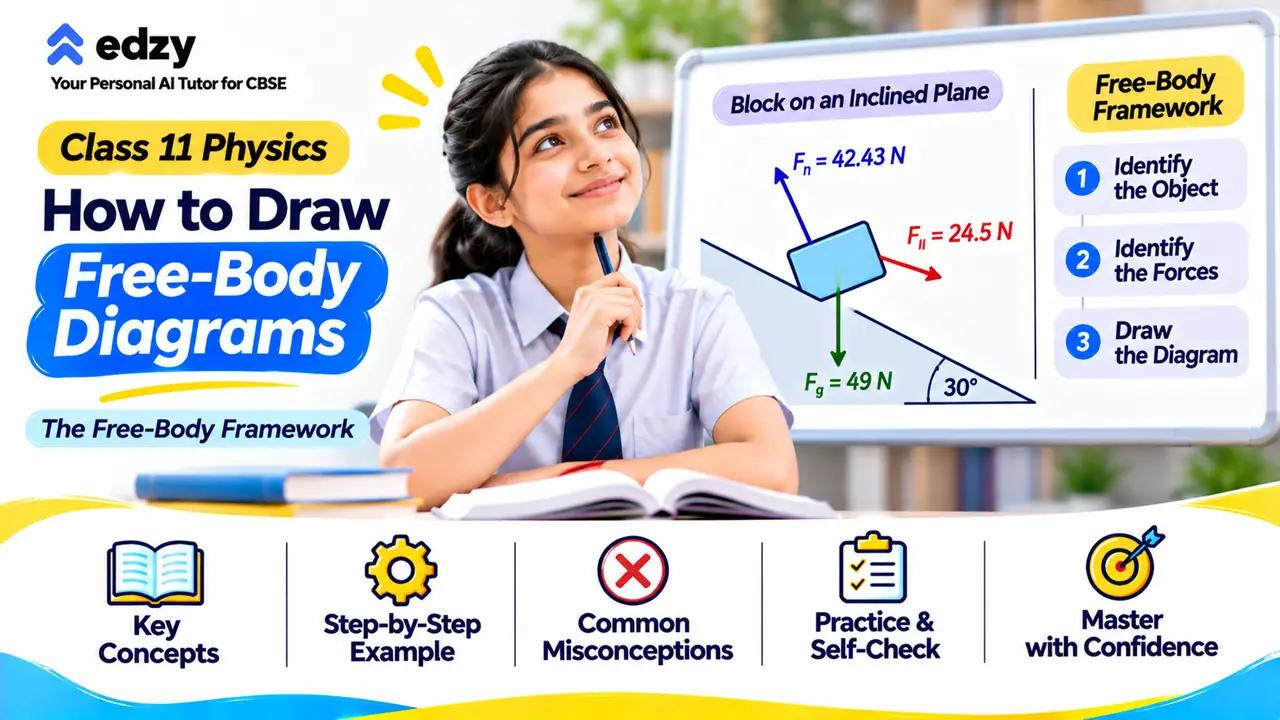
Class 11 Physics: How to Draw Free-Body Diagrams Correctly
Mastering Free-Body Diagrams: A Key Skill for CBSE Physics Success.

Class 10 Science: How to Understand Magnetic Effects of Electric Current
Mastering the magnetic effects of electric current is crucial for Class 10 students — here’s how to do it effectively.
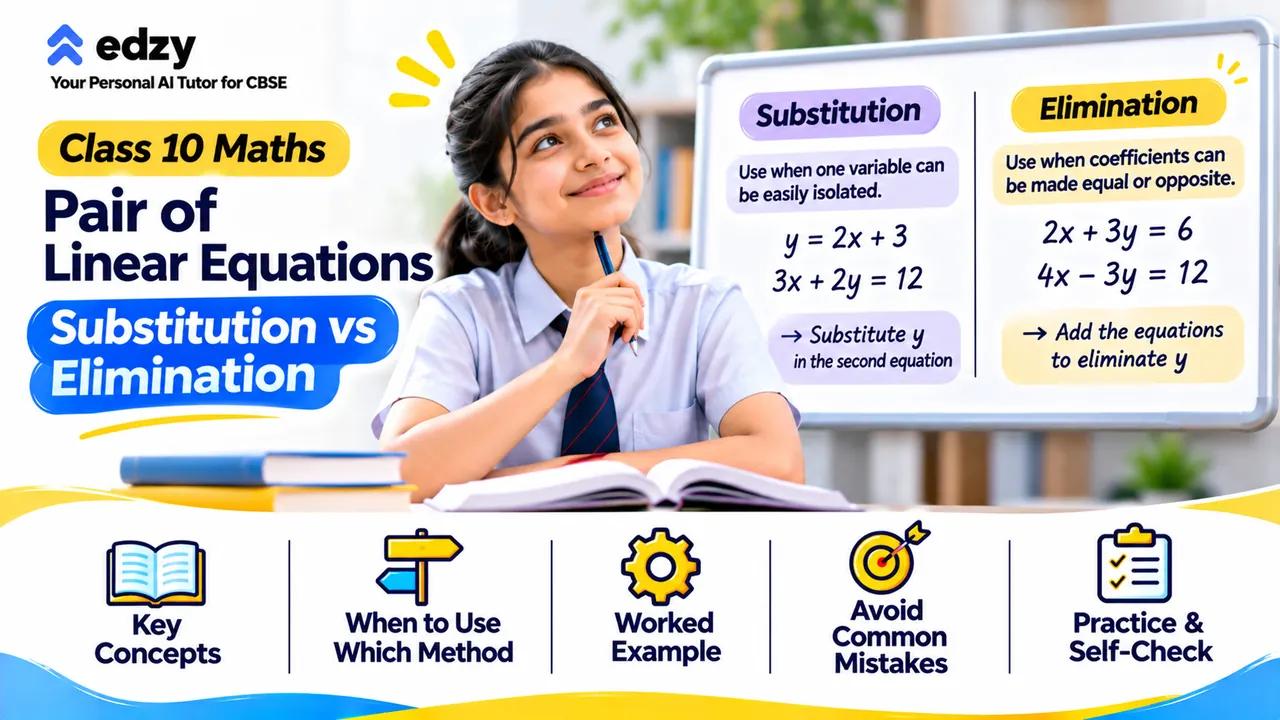
Class 10 Maths: How to Choose Between Substitution and Elimination
Mastering the art of solving linear equations with confidence and clarity.
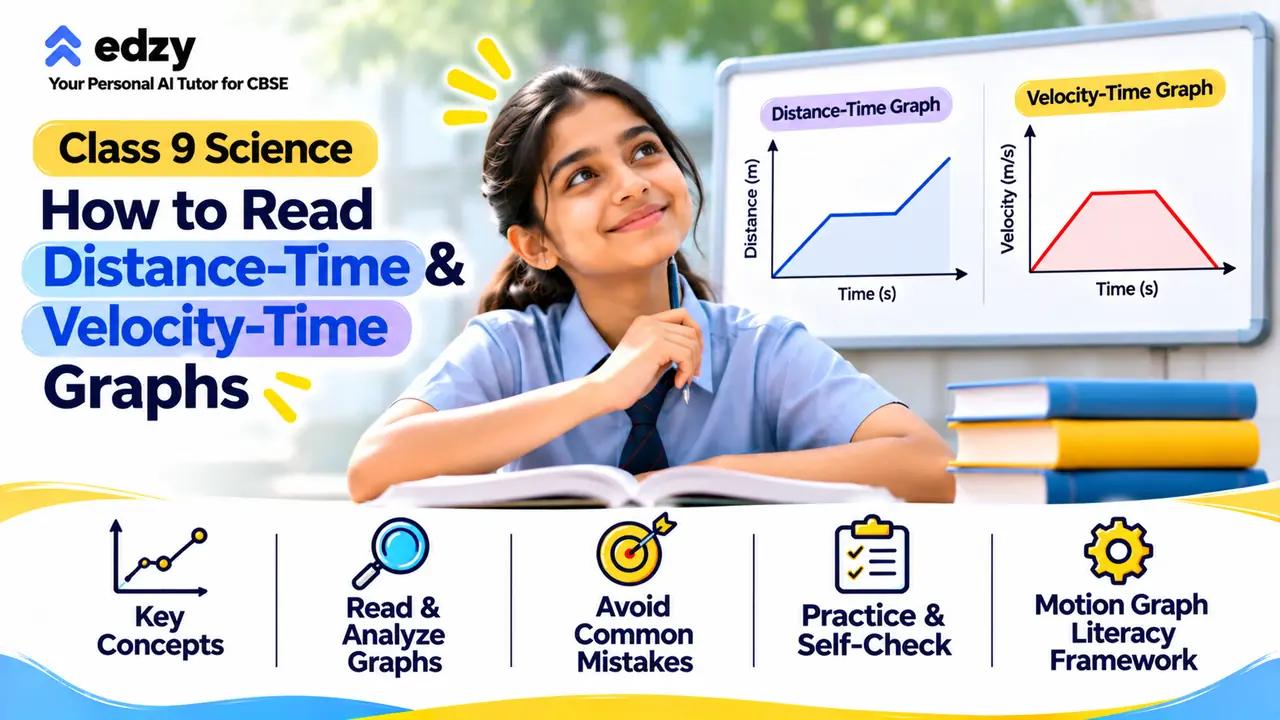
Class 9 Science: How to Read Distance-Time and Velocity-Time Graphs
Understanding motion graphs is essential for mastering concepts in Class 9 Science and excelling in CBSE exams.