
How to Study Without Getting Mentally Tired
Mastering study techniques to maintain mental energy and enhance learning.
Many CBSE students struggle with mental fatigue while studying, leading to decreased productivity. This blog introduces the concept of Energy Management Blocks, a method to study efficiently without burnout. Readers will learn how to structure their study sessions, take effective breaks, and maintain focus across subjects.


Gaurav Parashar
@gauravparashar
Listen to this article
How to Study Without Getting Mentally Tired
Why Mental Fatigue Happens
Mental fatigue is a common challenge for CBSE students, especially when preparing for exams like the Class 10 board exams. The brain, much like a muscle, can become exhausted from prolonged periods of intense focus. When students engage in lengthy study sessions without breaks, they often experience diminishing returns on their efforts. For instance, a Class 9 student studying Chapter 5 of NCERT Science on 'Force and Motion' for three continuous hours may find it increasingly difficult to absorb new information as fatigue sets in. This is because the cognitive load exceeds their capacity to process information effectively. Recognizing the signs of mental fatigue is crucial for students aiming to optimize their study habits, as discussed in our article on staying focused during exams.
Moreover, the pressure to perform well in exams can exacerbate this fatigue. Students may feel compelled to study for hours on end, believing that more time spent equals better results. However, this mindset can lead to burnout, where the quality of study declines, and retention of information becomes challenging. To avoid this, students can benefit from strategies outlined in our guide on improving study discipline. Additionally, students should consider studying smarter, not longer, to maximize their efficiency.
Studying in Shorter Focused Blocks
One effective strategy to combat mental fatigue is to study in shorter, focused blocks of time. This approach aligns with the Energy Management Blocks concept, which emphasizes managing study sessions based on mental energy levels rather than fixed time periods. For example, a Class 10 student preparing for the 'Quadratic Equations' chapter in Mathematics could set a timer for 25 minutes of focused study, followed by a 5-minute break. This method not only helps maintain concentration but also allows the brain to recharge, similar to techniques discussed in smart revision strategies.
During these focused blocks, students should engage deeply with the material. Instead of passively reading the textbook, they can solve practice problems or create mind maps to visualize concepts. For instance, while studying the 'Photosynthesis' chapter in Class 7 Science, a student could summarize key points and draw diagrams to reinforce learning. This active engagement during shorter study sessions can significantly enhance retention and understanding.
Taking Effective Breaks
Taking effective breaks is just as important as the study sessions themselves. Breaks should be purposeful and rejuvenating, allowing students to step away from their studies and refresh their minds. For instance, after a 25-minute study block on 'Federalism' in Class 10 Social Science, a student might take a 5-minute break to stretch, hydrate, or even take a short walk. This physical activity can increase blood flow to the brain, enhancing cognitive function and focus when they return to studying.
Additionally, students should avoid activities that can lead to further mental fatigue during breaks, such as scrolling through social media or watching television. Instead, engaging in mindfulness exercises or simple breathing techniques can help clear the mind and prepare for the next study session. By incorporating effective breaks into their study routine, students can maintain higher levels of mental energy and productivity.
Avoiding Overload
Overloading oneself with too much information at once is a common pitfall for CBSE students. When preparing for exams, it's easy to fall into the trap of trying to cover multiple subjects or chapters in a single study session. For example, a Class 11 student might attempt to study both 'Laws of Motion' in Physics and 'The Structure of the Earth' in Geography in one sitting. This can lead to confusion and mental fatigue, as the brain struggles to switch between different topics.
To avoid overload, students should prioritize their study material based on upcoming exams and personal strengths and weaknesses. Creating a study schedule that allocates specific days for each subject can help manage this load effectively. For instance, dedicating one day solely to Mathematics and another to Science allows for deeper focus and understanding of each subject without the cognitive strain of constant switching.
Maintaining Energy Levels
Maintaining energy levels throughout the study period is essential for effective learning. Students should pay attention to their physical health by ensuring they get adequate sleep, eat nutritious meals, and stay hydrated. A well-balanced diet rich in fruits, vegetables, and whole grains can provide the necessary fuel for the brain. For instance, a Class 12 student preparing for their board exams should incorporate foods like nuts and berries, which are known to boost cognitive function.
In addition to nutrition, regular physical activity can also enhance mental energy. Engaging in sports or even a quick workout can increase endorphins, improving mood and focus. For example, a student who plays cricket after a study session on 'The Indian Freedom Struggle' may find that the physical exertion helps clear their mind, making it easier to return to studying with renewed energy.
Balancing Subjects
Balancing subjects is crucial for preventing mental fatigue. Students often have a tendency to focus on subjects they find easier or more interesting, neglecting those that require more effort. For instance, a Class 10 student may prefer to spend more time on English literature while postponing Mathematics, leading to a backlog of challenging topics. This imbalance can result in increased stress as exams approach.
To achieve balance, students should create a study timetable that allocates time for each subject according to their syllabus and exam schedule. For example, if a student has a Mathematics exam coming up, they should allocate more time to practice problems from chapters like 'Statistics' and 'Probability' while still dedicating time to English and Science. This balanced approach ensures that no subject is left behind, reducing last-minute cramming and associated stress.
Staying Consistent
Consistency is key to effective studying without mental fatigue. Establishing a daily study routine helps students develop a habit that reduces the mental effort required to start studying. For instance, a Class 9 student could set aside the same time each day for studying, making it a non-negotiable part of their schedule. This routine could include specific days for each subject, ensuring that all areas receive attention over time.
Additionally, students should track their progress to stay motivated. Keeping a study journal or using an app to log completed topics can provide a sense of accomplishment. For example, after finishing a chapter on 'The French Revolution' in Class 10 Social Science, a student can note it down, reinforcing their commitment to the study schedule. This practice not only builds consistency but also helps in recognizing areas that need more focus.
Improving Study Quality
Improving the quality of study sessions is essential for retaining information without causing mental fatigue. Students should focus on understanding concepts rather than rote memorization. For instance, a Class 12 student studying 'Organic Chemistry' should strive to grasp the underlying principles of reactions rather than just memorizing reaction mechanisms. This deeper understanding leads to better retention and reduces the need for repetitive study sessions.
Moreover, utilizing various study methods can enhance engagement and comprehension. Techniques such as teaching back the material to a peer or using visual aids like charts and diagrams can make learning more interactive. For example, while studying 'The Constitution of India' in Class 11 Political Science, a student could create a flowchart outlining the fundamental rights, making the information easier to recall during exams.
Incorporating technology can also improve study quality. Online resources, interactive quizzes, and educational apps can provide additional support and make learning more enjoyable. For instance, a Class 10 student preparing for their board exams may find it beneficial to use an app that offers practice questions on 'Algebra' and provides instant feedback, allowing them to identify areas for improvement. For more tips on effective study techniques, check out our article on building a daily study habit.
Conclusion
Every CBSE student has the potential to study effectively without succumbing to mental fatigue. By implementing strategies like Energy Management Blocks, taking effective breaks, and balancing subjects, students can enhance their learning experience. The key lies in understanding one's mental limits and creating a study routine that promotes both productivity and well-being. Ultimately, the journey of learning is not just about the hours spent but the quality of engagement with the material.
Suggested blogs
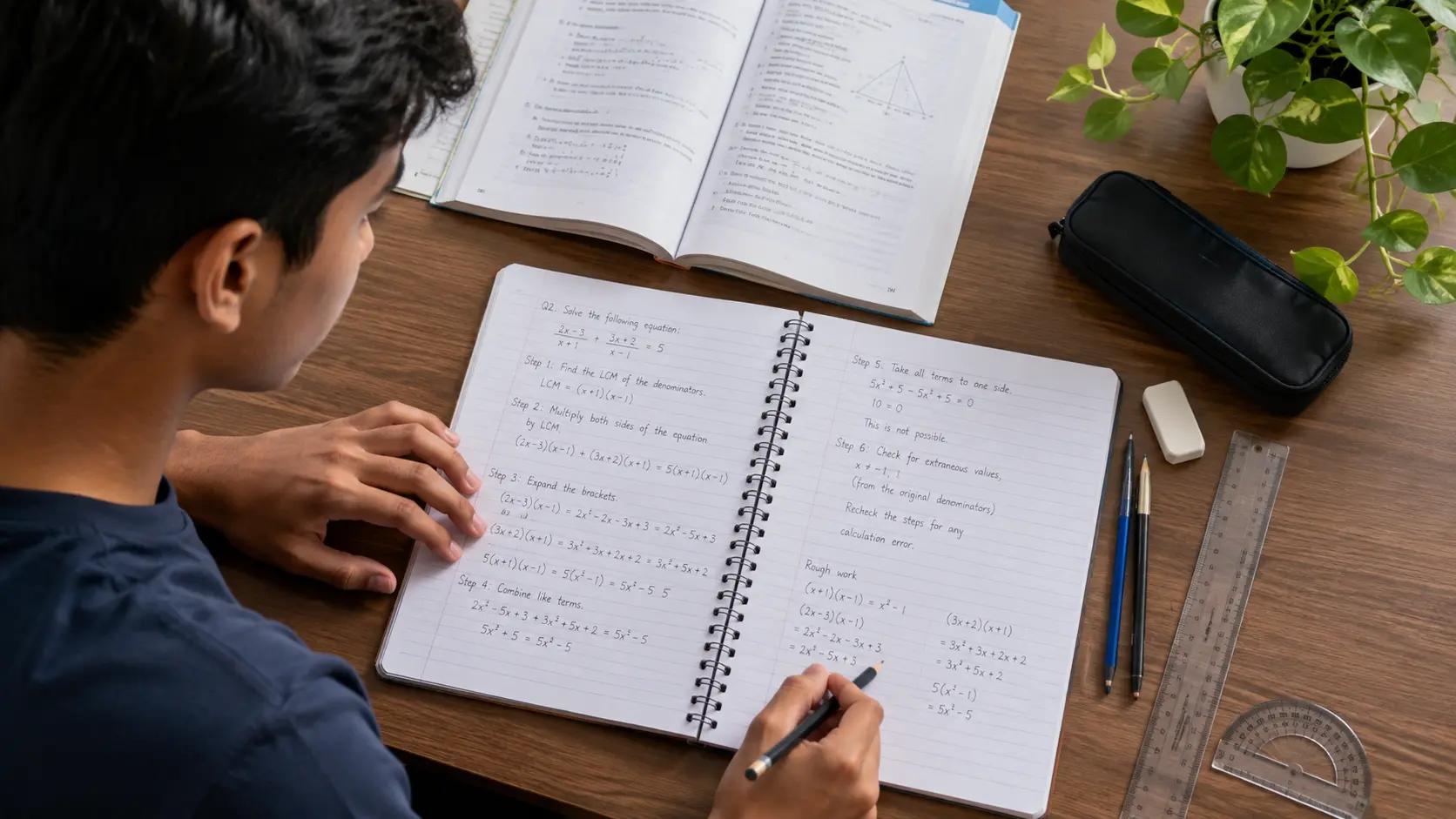
Why You Shouldn’t Skip Steps in Maths (Even If You Know the Answer)
Understanding the importance of step-by-step problem-solving in CBSE Mathematics.

How to Improve Accuracy in Maths Without Extra Practice Hours
Why mastering accuracy is the key to unlocking your true potential in Maths.

How to Revise Formulas in Maths Without Forgetting Them
Mastering math formulas through understanding and practice — a guide for CBSE students.

How to Identify Your Weak Areas in Studies (And Fix Them Fast)
Transforming academic weaknesses into strengths through targeted strategies.