
Why Class 11 Preparation Begins in Class 9 – Early Planning Strategies for Students
Why building strong foundations in Class 9 and 10 is the secret to Class 11 success
The foundation for higher secondary success starts earlier than most students realize. This blog explains how Class 9 and 10 preparation sets the stage for excelling in Class 11 and 12, offering subject-wise strategies, parental guidance, and a roadmap for long-term achievement.
Listen to this article
Why Class 11 Preparation Begins in Class 9 – Early Planning Strategies for Students
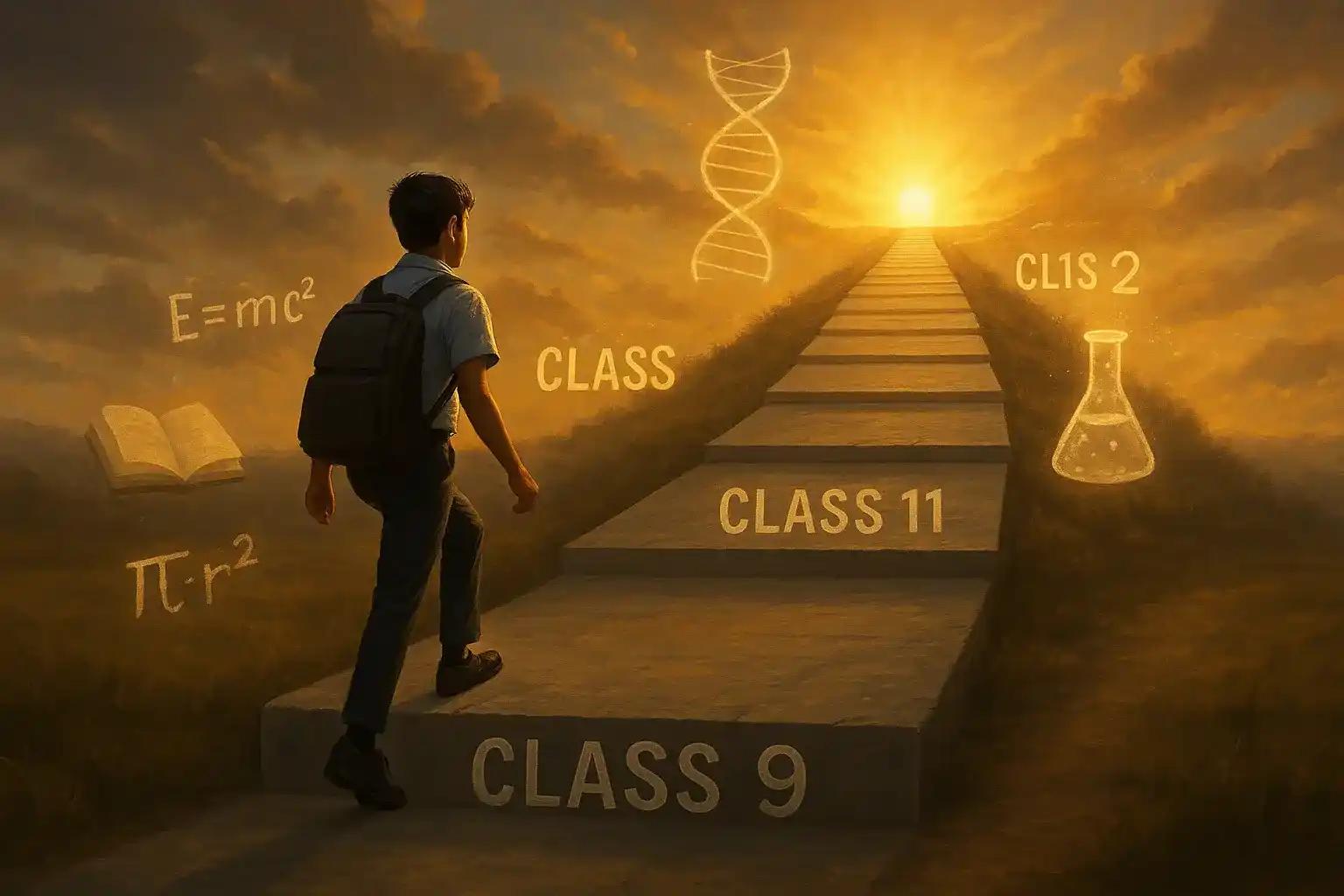
Many CBSE students and parents believe that the real academic challenge begins in Class 11. However, the truth is that the seeds of success are planted much earlier. Class 9 and 10 form the foundation not only for board exams but also for the demanding transition into higher secondary classes. The skills, concepts, and habits built in these years carry forward directly into Class 11 and beyond. This blog explores why early preparation matters, how competitive exams connect with the CBSE syllabus, and what strategies students and parents can adopt for long-term success.
Why early preparation matters
Class 11 introduces an advanced level of complexity, with subjects expanding into deeper, more analytical territory. Students who enter this stage without a strong base from Class 9 and 10 often feel overwhelmed. Early preparation ensures smoother adaptation, prevents knowledge gaps, and builds confidence. It also helps students adopt disciplined study habits well before the pressure of board exams or entrance tests intensifies.
Strong roots in Class 9 and 10 help students thrive in the storm of Class 11 and 12 academics.
Class 9 and 10 concepts that carry to Class 11
Many topics taught in Classes 9 and 10 act as stepping stones for advanced concepts in Class 11. For instance:
Algebra and geometry from Class 9 evolve into advanced coordinate geometry and calculus
Cell biology and genetics in Class 10 expand into molecular biology and biotechnology
Chemical equations and periodic classification prepare students for organic and inorganic chemistry
Understanding democratic institutions and economics in Social Science lays a foundation for humanities and commerce streams
Students who revise these core concepts thoroughly in Class 9 and 10 face fewer difficulties when these subjects deepen in Class 11.
How competitive exams link with CBSE syllabus
A significant reason early preparation is vital is the overlap between CBSE curriculum and competitive exams like JEE, NEET, and CUET. These entrance exams draw heavily from Class 9 and 10 NCERT concepts. Students who ignore early foundations end up re-learning basics under time pressure. Those who master them early gain a head start, saving time for advanced practice in Classes 11 and 12.
Long term benefits of early focus
Beyond exam scores, early preparation instills valuable skills:
Better time management through disciplined daily study routines
Higher confidence in tackling unfamiliar problems
Reduced stress as concepts are already familiar
Clarity in career planning by exploring subjects in depth
Students who pace their learning early on often report less anxiety during board exams and competitive test seasons, making them more resilient.
Subject wise strategies for Class 9 and 10
Mathematics
Practice NCERT thoroughly and solve application-based problems. Focus on algebra, geometry, and trigonometry as these topics form the backbone of higher mathematics.
Science
Build conceptual clarity by linking theory with real-life applications. For Physics, practice numerical problems. For Chemistry, master balancing equations. For Biology, visualize diagrams and flowcharts.
English
Strong reading and writing skills developed in Class 9 and 10 help in higher classes where comprehension and essay writing are frequent. Practice summaries, letters, and grammar regularly.
Social Science
Rather than memorizing facts, focus on understanding processes. For example, grasp how economic reforms impact society or how geography influences human activities. This approach develops analytical skills useful in senior classes.
Balancing board prep with future planning
Class 10 board exams are critical, but students must balance preparation with long-term goals. Allocating time for sample papers, along with exploring higher-level resources, keeps students ready for Class 11 without compromising board performance. The goal is not overburdening but aligning daily study with both current and future needs.
Parental role in early guidance
Parents often focus only on immediate marks. However, their guidance in these years should encourage curiosity, resilience, and balance. Parents can:
Encourage consistent study habits rather than last-minute cramming
Help students set realistic weekly goals
Expose children to career options early to align subject choices later
Maintain emotional support and reduce pressure by appreciating effort, not just results
Roadmap from Class 9 to Class 12 success
A structured approach from Class 9 onwards ensures smooth progress through senior secondary years. The roadmap could look like this:
Class 9 Build strong foundations in Maths and Science, improve language skills, and develop a daily routine
Class 10 Focus on board exam success while revising Class 9 concepts and starting exposure to Class 11 style problems
Class 11 Transition smoothly by connecting earlier knowledge to advanced topics; begin focused preparation for competitive exams
Class 12 Consolidate everything with intense practice of past papers, mock exams, and career-specific entrance preparation
This journey, when started early, makes Class 11 and 12 less intimidating and more rewarding.
Class 9 is not just another grade. It is the launchpad that determines how confidently students will soar in Class 11 and beyond.
Suggested blogs

Choosing Science, Commerce, or Arts After CBSE Class 10: A Clear Guide
A comprehensive guide to help students and parents navigate stream selection after Class 10.

What CBSE Class 10 Students Should Do in the Break After Boards
Maximize your break after board exams for growth and relaxation

What Class 10 CBSE Students Should Know About Subject Choices After Boards
Navigating subject choices after Class 10 for a brighter future
How to Prepare for Olympiads and NTSE Alongside CBSE Exams
Mastering the balance between CBSE and competitive exams