
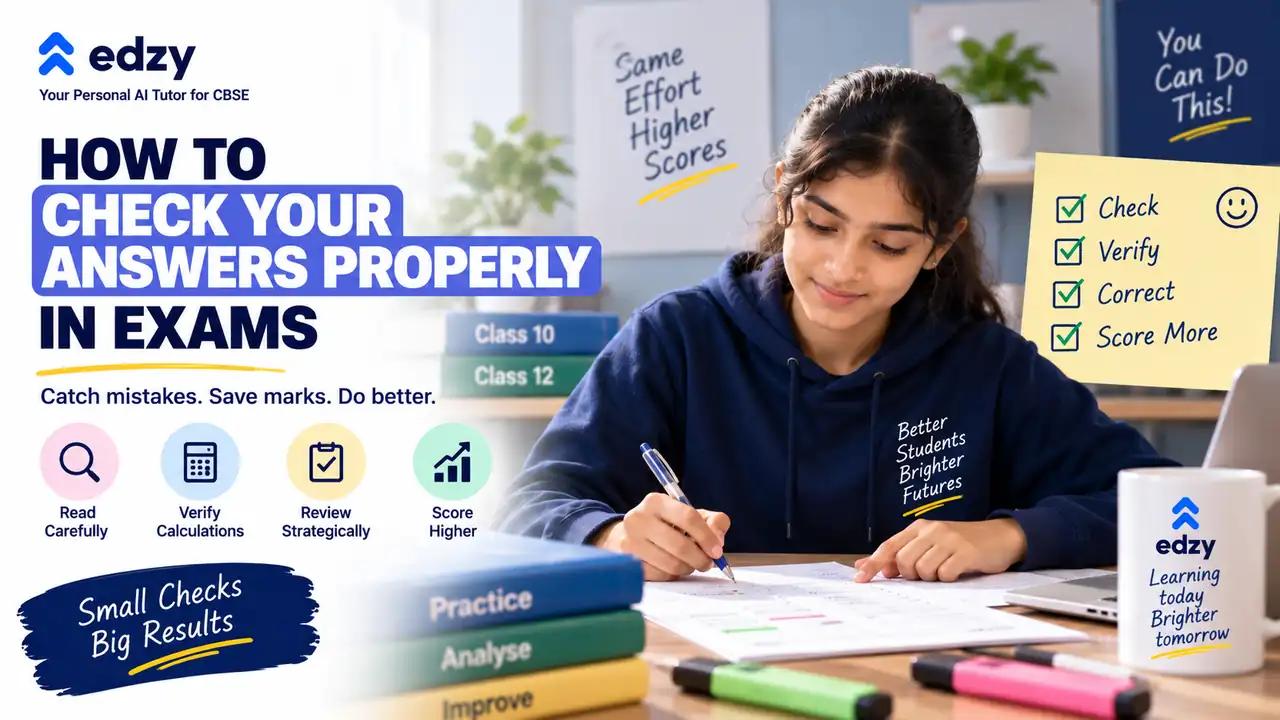
How to Check Your Answers Properly in Exams
Mastering the art of answer checking to secure every mark in CBSE exams.
Many students lose marks due to careless errors in exams. This blog introduces the Answer Verification Framework, a systematic approach to reviewing answers. Readers will learn effective strategies to check their work, manage their time, and improve their accuracy in CBSE exams.

Gaurav Parashar
@gauravparashar
Listen to this article
How to Check Your Answers Properly in Exams
How to Check Your Answers Properly in Exams
Losing marks on questions you knew? Many CBSE students face this issue, often due to simple mistakes made during the exam. The key to overcoming this challenge lies in effective answer checking. This blog will guide you through the importance of reviewing your answers, common mistakes to avoid, and practical strategies to enhance your accuracy and confidence during exams.
Why Checking Answers is Important
Checking your answers is not just a good habit; it is a crucial step in the exam process. For CBSE students, the difference between passing and failing can often come down to a few careless errors. In subjects like Mathematics, where precision is key, a small miscalculation can lead to losing significant marks. For instance, a Class 10 student solving a problem on Quadratic Equations may arrive at the correct answer but lose marks if they fail to show their working steps clearly. By reviewing answers, students can catch these mistakes and ensure they receive full credit for their knowledge.
Moreover, checking answers helps reinforce learning. When students revisit their solutions, they engage in a reflective process that can enhance their understanding of the material. This is particularly beneficial in subjects like Science, where concepts build upon one another. For example, a student studying Photosynthesis may realize they overlooked a key detail in their answer about the role of sunlight, thereby deepening their comprehension. To further improve your understanding, consider exploring ways to enhance accuracy in your studies.
Common Mistakes Students Miss
Despite the best intentions, students often overlook common mistakes during exams. One prevalent issue is misreading questions. For example, in a Social Science paper, a Class 9 student might misinterpret a question about Federalism and provide an answer related to a different topic, resulting in lost marks. Another frequent error is neglecting to check for simple arithmetic mistakes in calculations. A Class 10 student working on a physics problem involving Laws of Motion might miscalculate a force due to a minor slip in addition or subtraction. To avoid this, you can refer to effective study techniques that help minimize these errors.
Additionally, students often fail to verify that they have answered all parts of a question. In exams with case-based questions, such as those seen in Class 12 English, students may answer the first part thoroughly but neglect to address the second part, leading to incomplete answers. Recognizing these common pitfalls is the first step toward effective answer checking.
How to Review Quickly
Time is of the essence during exams, and students must learn to review their answers efficiently. One effective strategy is to allocate a specific time for checking answers at the end of the exam. For instance, a Class 10 student who has completed their paper can set aside the last 10-15 minutes solely for review. During this time, they should focus on scanning through their answers rather than re-reading every word. This quick review can help identify glaring mistakes, such as incorrect calculations or incomplete answers.
Another technique is to develop a systematic approach to reviewing. Students can create a mental checklist based on common errors they tend to make. For example, they might ask themselves if they have double-checked their calculations, ensured they have answered all parts of the question, and verified that their answers are clearly written. By following this checklist, students can streamline their review process and minimize the risk of overlooking mistakes. To further enhance your review skills, check out smart revision strategies that can be beneficial.
Checking Calculations and Steps
When it comes to subjects like Mathematics, checking calculations is paramount. Students should develop a habit of re-evaluating their calculations step-by-step. For example, a Class 10 student solving a problem on Linear Equations should not only check the final answer but also trace back through their working steps to ensure each calculation is accurate. This method not only helps catch errors but also reinforces the learning process by revisiting the concepts involved.
In subjects like Physics, where calculations often involve multiple steps, students should pay special attention to units and conversions. A common mistake might involve forgetting to convert units correctly, which can lead to incorrect answers. By checking each step and ensuring that units are consistent, students can avoid losing marks due to careless errors.
Managing Time for Review
Effective time management is crucial for a successful review process. Students should practice pacing themselves during mock exams to develop a sense of how much time they can afford to spend on each section. For instance, a Class 12 student preparing for their board exams should aim to complete their paper with at least 15 minutes left for review. This practice not only helps in managing time during the actual exam but also builds confidence in their ability to check their work thoroughly.
Additionally, students can use techniques like time blocking during their study sessions to simulate exam conditions. By setting a timer and practicing answering questions within a specific timeframe, they can train themselves to allocate time effectively for both answering and reviewing. This approach can significantly reduce anxiety during the actual exam.
Avoiding Overthinking
While reviewing answers is essential, overthinking can lead to confusion and second-guessing. Students often fall into the trap of doubting their initial answers, which can waste precious time. For example, a Class 10 student who initially solved a problem correctly may spend too much time re-evaluating their answer, leading to unnecessary stress. To combat this, students should trust their preparation and instincts. If they have practiced thoroughly, they are likely to have a solid foundation for their answers.
One effective strategy to avoid overthinking is to set a limit on how many times they will review each answer. For instance, a student might decide to check each answer only once and then move on. This approach helps maintain momentum and prevents the mind from spiraling into doubt.
Improving Accuracy
Improving accuracy in exams is a goal every CBSE student should strive for. One way to enhance accuracy is through consistent practice. For example, a Class 9 student preparing for their exams should regularly solve previous years' papers and focus on understanding the marking scheme. This practice not only familiarizes them with the exam format but also highlights the importance of accuracy in their answers. By understanding how marks are awarded, students can prioritize clarity and correctness in their responses.
Additionally, students should seek feedback on their practice answers. Engaging with teachers or peers to review answers can provide valuable insights into common mistakes and areas for improvement. This collaborative approach can help students refine their skills and boost their confidence in their abilities.
Scoring Better Marks
Ultimately, the goal of checking answers is to score better marks. By implementing the strategies discussed, students can significantly reduce the number of careless errors they make. For instance, a Class 12 student preparing for their board exams in Mathematics should focus on practicing case-based questions and ensuring they understand the underlying concepts. By checking their answers thoroughly, they can increase their chances of achieving higher scores.
Moreover, students should remember that every mark counts. The difference between a passing and failing grade can often hinge on a few points lost to careless mistakes. By adopting a disciplined approach to answer checking, students can ensure that they maximize their potential and achieve the results they deserve. For more insights on exam preparation, consider reading about improving speed in solving questions and using past year papers effectively.
The Answer Verification Framework
Introducing the Answer Verification Framework, a systematic approach to checking answers that can help students enhance their exam performance. This framework consists of three key steps: Review, Reflect, and Reinforce. First, students should review their answers for accuracy and completeness. Next, they reflect on their thought process and the steps taken to arrive at their answers. Finally, they reinforce their understanding by revisiting relevant concepts and ensuring they have grasped the material fully. By applying this framework, students can significantly improve their answer-checking process and boost their confidence during exams.
As students continue to practice this framework, they will find themselves making fewer careless errors and gaining a deeper understanding of the subjects they study. For example, a Class 10 student preparing for their Science exam can apply the Answer Verification Framework to ensure they have not only answered the questions correctly but also demonstrated their understanding of the concepts involved.
Final Thoughts
Every mark a CBSE student loses to a careless error is a mark they already earned — the only task left is making sure it shows up on the paper. By implementing effective answer-checking strategies, students can significantly enhance their exam performance and secure the marks they deserve. Remember, the journey to mastering exams is not just about knowledge; it’s also about the meticulous process of verifying that knowledge on paper.
Suggested blogs

How to Manage Time During a 3-Hour Exam
Mastering time management for a successful exam experience.

How to Improve Your Speed in Solving Questions Before Exams
Mastering speed in question-solving is crucial for CBSE students aiming for high marks.
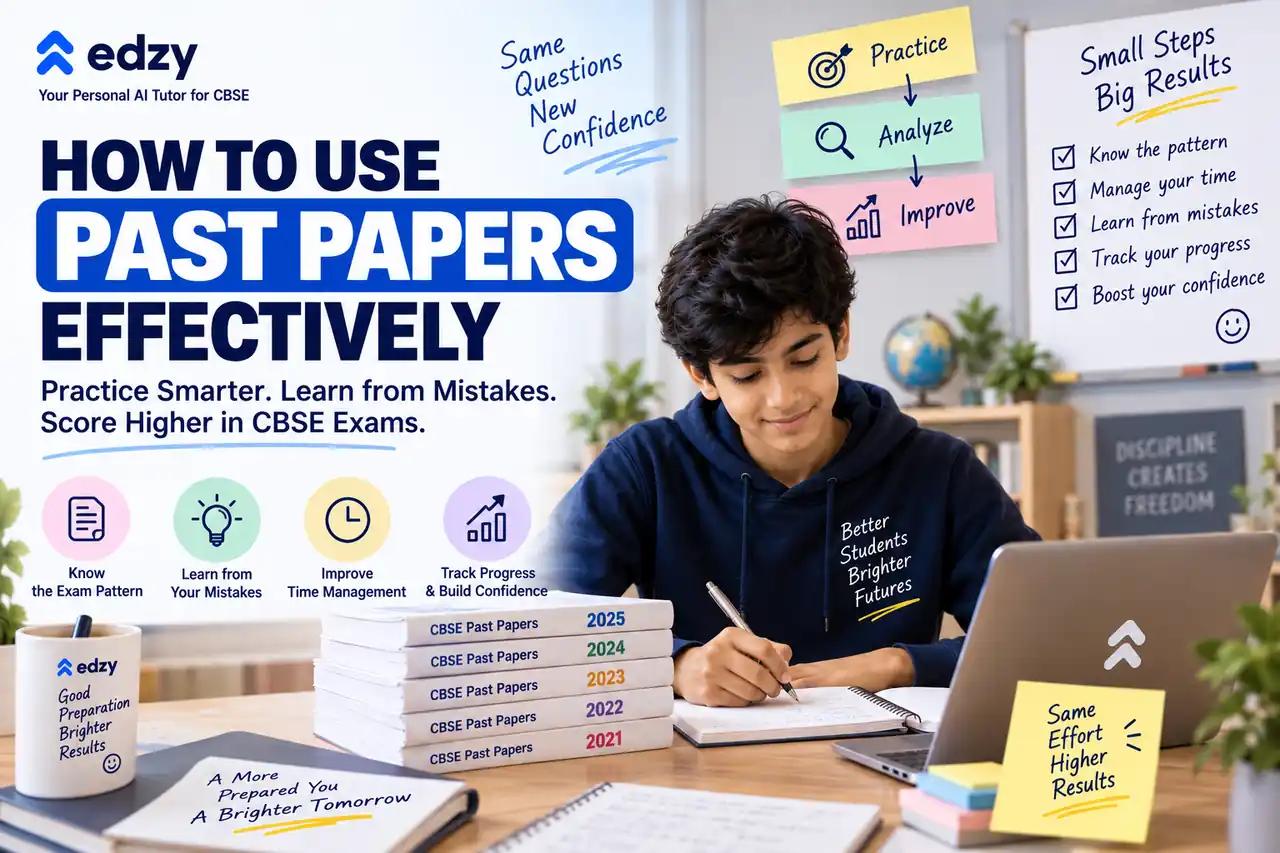
How to Use Past Year Papers the Right Way
Mastering past papers transforms passive practice into effective learning for CBSE students.
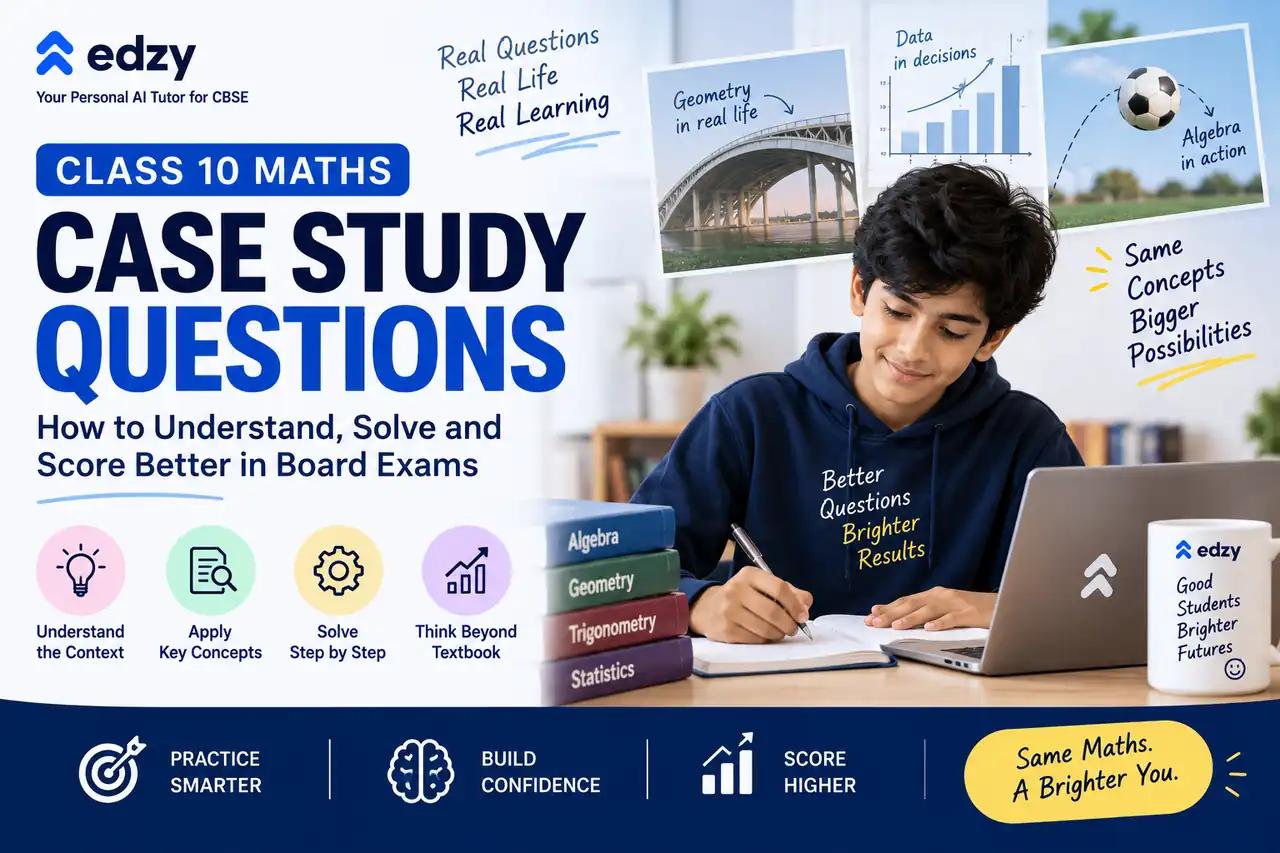
Class 10 Maths: How to Practice Case Study Questions for Boards
Mastering case study questions can significantly boost your Class 10 Maths scores.