
How to Improve Your Speed in Solving Questions Before Exams
Mastering speed in question-solving is crucial for CBSE students aiming for high marks.
Many students struggle with time management during exams, leading to lost marks. This blog introduces the Speed Mastery Framework, a unique approach to enhance solving speed without sacrificing accuracy. Readers will learn practical strategies to practice under time constraints, recognize question patterns, and balance speed with precision.


Gaurav Parashar
@gauravparashar
Listen to this article
How to Improve Your Speed in Solving Questions Before Exams
Why Speed Matters in Exams
In the high-stakes environment of CBSE exams, speed is not just an advantage; it is a necessity. Students often face a limited time frame to complete their papers, which can include a variety of question types such as case-based questions, assertion-reason questions, and competency-based problems. For instance, a Class 10 student tackling the Mathematics paper must solve 30 questions in a span of 3 hours. This translates to an average of 6 minutes per question, which can be daunting without effective strategies in place. To enhance their preparation, students can refer to guides like how to use past year papers the right way.
Moreover, the pressure of the clock can lead to anxiety, causing students to second-guess their answers or make careless mistakes. Therefore, improving speed while maintaining accuracy is essential for maximizing performance. The ability to quickly identify the type of question and apply the appropriate method can significantly enhance a student's overall score. This is particularly true in subjects like Science and Mathematics, where calculations and conceptual understanding must be executed swiftly. Students can also explore ways to improve accuracy in maths to complement their speed.
Common Mistakes When Trying to Go Fast
In the quest to improve speed, students often fall into several traps that can hinder their performance. One common mistake is rushing through questions without fully understanding what is being asked. For example, in a Class 9 Social Science exam, a student might misinterpret a source-based question due to haste, leading to incorrect answers. This not only wastes time but also results in lost marks. To avoid this, students should learn how to revise smartly for exams.
Another frequent error is neglecting to review answers. Students may skip this crucial step in an attempt to save time, only to discover later that they made simple errors. A Class 12 student preparing for the English exam might overlook grammatical mistakes in their essay because they were too focused on completing the paper quickly. Therefore, it is essential to strike a balance between speed and thoroughness to avoid these pitfalls.
Practicing Under Time Limits
One of the most effective ways to improve speed is through timed practice. Students should simulate exam conditions by setting a timer while solving previous years' question papers. For instance, a Class 10 student preparing for the Mathematics board exam should attempt to solve the last five years of CBSE board questions on topics like Quadratic Equations within the allotted time frame. This practice not only helps in managing time but also builds familiarity with the exam format. They can find useful tips on finishing their syllabus on time.
Additionally, students can utilize online platforms that offer timed quizzes and mock tests. These resources provide immediate feedback, allowing students to identify areas where they need to improve. For example, if a student consistently takes too long on geometry questions, they can focus their revision on that specific area to enhance their speed and accuracy.
Recognizing Question Patterns
Understanding the common patterns in exam questions can significantly reduce the time spent on each question. For instance, in the Class 10 Science exam, questions often follow a predictable format, such as asking for definitions, explanations of processes like Photosynthesis, or application-based questions. By recognizing these patterns, students can quickly determine the best approach to answer them.
Moreover, familiarizing oneself with the types of questions that frequently appear in the CBSE exams allows students to prepare more effectively. For example, a student might notice that assertion-reason questions are often followed by a specific type of explanation. By practicing these types of questions, students can develop a quicker response strategy, which is crucial during the actual exam.
Reducing Thinking Time with Clarity
Clarity of thought is essential for solving questions quickly. Students often waste precious time trying to decipher complex questions. To combat this, they should practice breaking down questions into simpler parts. For instance, in a Class 11 Physics exam, a student faced with a problem on Laws of Motion should first identify the given data, the required outcome, and the relevant formulas before attempting to solve it. This structured approach minimizes confusion and speeds up the problem-solving process.
Additionally, maintaining a clear workspace and organizing study materials can help students focus better. A cluttered desk can lead to distractions and wasted time searching for notes or textbooks. By keeping their study area tidy, students can enhance their concentration and efficiency.
Checking Answers Quickly
The final step in the question-solving process is checking answers. Many students overlook this step in their haste to finish the paper. However, a quick review can catch simple mistakes that could cost valuable marks. For example, a Class 12 student reviewing their answers in the Mathematics paper might find calculation errors that they initially overlooked.
To facilitate quicker checks, students can develop a systematic approach. For instance, they could allocate the last 10 minutes of the exam for a thorough review of their answers. This practice ensures that they have time to correct any mistakes without feeling rushed. Additionally, using a checklist of common errors can help students quickly identify areas to focus on during their review.
Balancing Speed and Accuracy
Achieving a balance between speed and accuracy is crucial for success in CBSE exams. Students must understand that while speed is important, it should not come at the expense of accuracy. The Speed Mastery Framework, which emphasizes practicing under timed conditions while maintaining a focus on accuracy, can be a game-changer. This framework encourages students to develop their speed gradually while ensuring they do not compromise on the quality of their answers.
For example, a Class 10 student preparing for the Science exam should aim to complete questions within a certain time limit but should also prioritize understanding the concepts behind each question. By doing so, they can answer accurately and quickly, leading to better overall performance.
Improving Overall Performance
Ultimately, improving speed in solving questions is about consistent practice and strategic preparation. Students should incorporate the techniques discussed in this blog into their study routines. For instance, they can set specific goals for each study session, such as completing a certain number of questions within a set time frame. This targeted practice can lead to significant improvements over time.
Additionally, students should regularly assess their progress. By tracking their performance on timed tests and identifying areas for improvement, they can adjust their study strategies accordingly. For example, if a student notices that they consistently struggle with case-based questions in Social Science, they can dedicate additional time to practicing those types of questions. They can also check out how to build strong concepts in maths from scratch to further enhance their understanding.
In conclusion, mastering speed in solving questions is not just about rushing through the exam; it is about developing a strategic approach that combines practice, clarity, and review. Every mark a CBSE student loses to a careless error is a mark they already earned — the only task left is making sure it shows up on the paper.
Suggested blogs

How to Manage Time During a 3-Hour Exam
Mastering time management for a successful exam experience.

How to Check Your Answers Properly in Exams
Mastering the art of answer checking to secure every mark in CBSE exams.
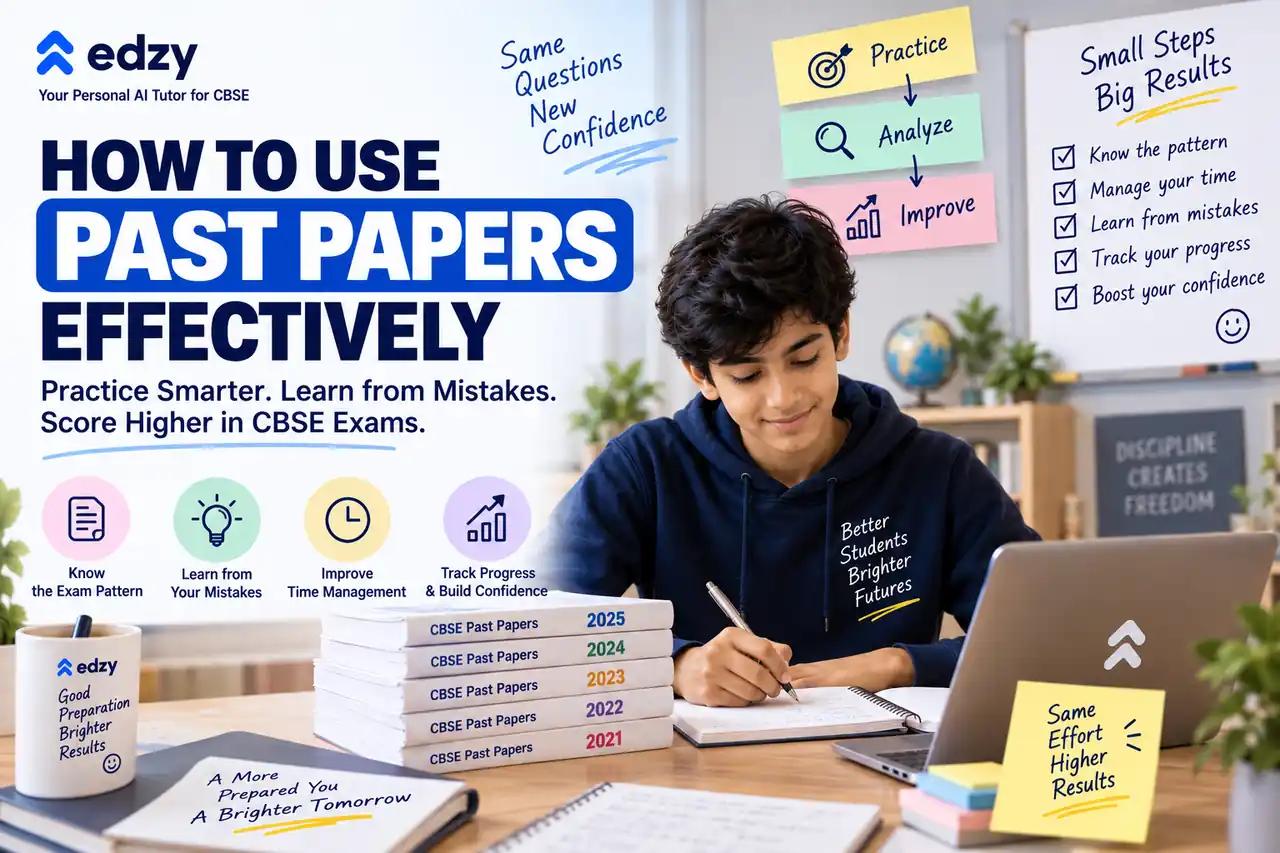
How to Use Past Year Papers the Right Way
Mastering past papers transforms passive practice into effective learning for CBSE students.

Class 10 Maths: How to Practice Case Study Questions for Boards
Mastering case study questions can significantly boost your Class 10 Maths scores.