
Empowering Future Generations: The Values Education Programme for Schools
A Comprehensive Initiative by Ramakrishna Mission to Foster Core Values in Students
The Values Education Programme, initiated by Ramakrishna Mission, aims to instill essential values and decision-making skills in students through innovative teaching methodologies.
Listen to this article
Empowering Future Generations: The Values Education Programme for Schools
Introduction to the Values Education Programme
In a rapidly changing world, the importance of values education cannot be overstated. The Central Board of Secondary Education (CBSE) has taken a significant step forward by endorsing the Values Education Programme, an initiative spearheaded by the Ramakrishna Mission. This programme is designed to equip students with the necessary skills to navigate life's challenges while fostering a strong moral compass.
Overview of the Programme
The Values Education Programme is a continuation of previous initiatives, specifically the Awakened Citizen Programme, which has been operational since 2017. The latest iteration includes two key components:
Foundation of Citizenship Programme – Awakened Ambassador for Community Transformation (AACT): This one-year abridged version consists of 16 modules aimed at instilling core values and enhancing character development.
Awakening Programme: A five-year graded programme tailored for primary school students, focusing on interactive and discussion-based learning methodologies.
Objectives of the Values Education Programme
The primary aim of the Values Education Programme is to nurture essential values among students. The objectives include:
Character Building: Strengthening students' character through value-based education.
Decision-Making Skills: Enhancing students' ability to make sound decisions by analyzing choices and understanding consequences.
Reflective Thinking: Encouraging a reflective and responsible outlook towards life.
Community Engagement: Fostering a sense of responsibility towards the community and encouraging active participation.
Methodology: Interactive Learning
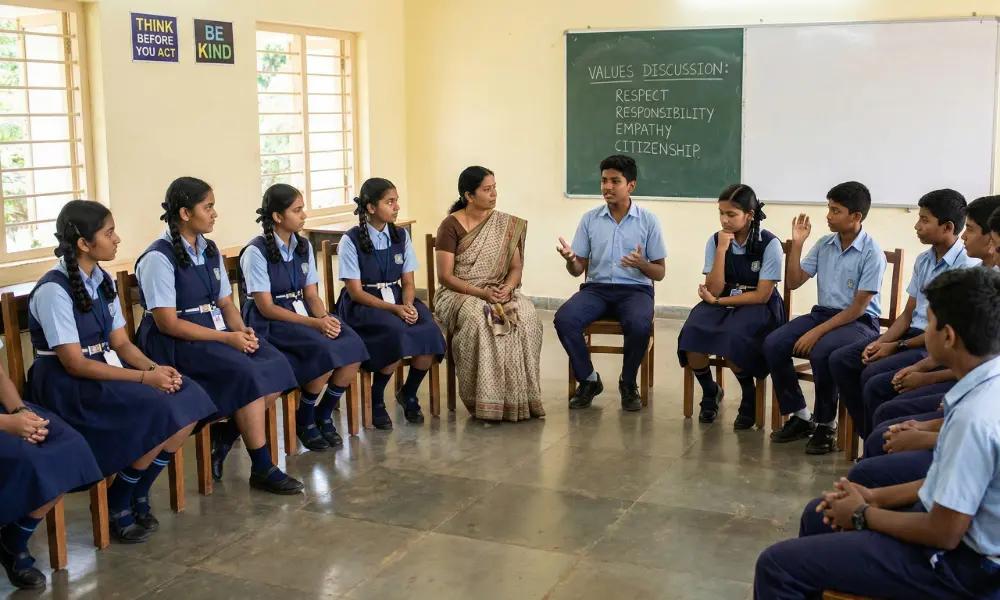
The programme employs an interactive, discussion-based methodology that encourages students to engage with real-life situations. This approach allows learners to:
Analyze various scenarios and make informed choices.
Discuss and reflect on their experiences and decisions.
Develop critical thinking skills that are essential for personal and academic growth.
Implementation and Participation
Participation in the Values Education Programme is optional for schools. However, those interested in implementing the Awakened Citizen Programme or the AACT are encouraged to reach out to the Ramakrishna Mission for guidance and registration. Schools can contact the following:
Email: viva.gurugram@gmail.com
Email: awakenedchild.in@gmail.com
Website: viva.rkmm.org
Participating schools will receive resource materials and teacher training from the Ramakrishna Mission, ensuring a smooth implementation process.
Benefits of the Programme for Students
The Values Education Programme offers numerous benefits for students, including:
Enhanced Moral Values: Students will develop a strong sense of ethics and morality.
Improved Social Skills: The programme promotes teamwork and collaboration among peers.
Increased Self-Awareness: Students will gain insights into their own values and beliefs.
Preparation for Future Challenges: The skills acquired will prepare students to face future challenges with confidence.
Conclusion: A Step Towards Holistic Education
The Values Education Programme is a commendable initiative that addresses the need for character education in schools. By fostering essential values and decision-making skills, this programme aims to create responsible citizens who are well-equipped to contribute positively to society. As schools across India consider adopting this programme, it is crucial to recognize the long-term benefits it offers for both students and the community at large.
Related News
CBSE LOC Submission Deadline Approaches: Only 7 Days Left
CBSE Science Challenge 2026-27: A Platform for Scientific Inquiry

Fit India Freedom Run 2026: A Nationwide Campaign for Health and Fitness
CBSE Class 10 Board Exam 2026-2027: Submission of Examination Forms for Private Candidates