
Class 10 English: How to Write Better Answers in Literature
Mastering literature answers can significantly boost your marks in Class 10 English.
Many students struggle with writing effective literature answers, leading to lost marks. This blog introduces the 'Literature Answer Framework', a structured approach to enhance answer quality. Readers will learn how to interpret questions, structure responses, and incorporate examples effectively.

Gaurav Parashar
@gauravparashar
Listen to this article
Class 10 English: How to Write Better Answers in Literature
Class 10 English: How to Write Better Answers in Literature
Writing literature answers in Class 10 English can be a daunting task for many students. Often, they lose marks not due to a lack of knowledge but because of how they present their answers. This blog aims to provide a comprehensive guide on improving answer writing in English literature, ensuring that students can articulate their understanding effectively and achieve higher marks. For additional tips on managing exam stress, check out our article on finishing your syllabus on time.
Why Literature Answers Lose Marks
One of the primary reasons students lose marks in their literature answers is the failure to address the question directly. For instance, in the CBSE Class 10 English syllabus, students encounter various types of questions, including case-based and source-based questions. A student might know the content well but could still receive a low score if they do not align their answers with what the question specifically asks. Additionally, vague language and lack of textual support can lead to deductions. For example, if a student is asked to discuss the theme of friendship in 'The Diary of a Young Girl' by Anne Frank, they must provide specific instances from the text rather than general statements about friendship. To better understand how to analyze themes, refer to our guide on studying chapters effectively.
Understanding the Question Properly
Understanding the question is crucial for crafting a well-structured answer. Students should take time to dissect the question, identifying keywords that indicate what is being asked. For example, if the question asks for an analysis of character development in a specific chapter, students should focus on how the character evolves throughout that chapter rather than summarizing the entire story. This targeted approach not only helps in staying relevant but also demonstrates a deeper understanding of the text. Familiarizing oneself with different question formats is essential, and our article on using mistakes to improve can provide valuable insights.
Moreover, students should practice identifying different question formats, such as assertion-reason questions or competency-based problems. By familiarizing themselves with these formats, they can tailor their responses accordingly. For instance, in a question that requires an assertion followed by a reason, students must ensure that their reasoning is directly linked to the assertion they make, providing a cohesive argument.
Structuring Answers Clearly
A clear structure is essential for any literature answer. Students should follow a logical flow that includes an introduction, body, and conclusion. The introduction should briefly state the main idea or argument, while the body should elaborate on this idea with supporting evidence from the text. Finally, the conclusion should summarize the key points made, reinforcing the argument presented. For instance, if a student is discussing the symbolism in 'The Necklace' by Guy de Maupassant, they should start with a thesis statement about the significance of the necklace, followed by examples from the story that illustrate this symbolism, and conclude by reflecting on its implications for the characters.
Using Keywords and References
Incorporating keywords and references from the text is vital for demonstrating knowledge and understanding. Students should aim to use specific quotes or references that support their arguments. For example, when discussing the theme of sacrifice in 'The Gift of the Magi' by O. Henry, a student might quote, "It is only when you give up something precious that you realize its true value." This not only strengthens their argument but also shows the examiner that they have engaged with the text critically.
Additionally, using literary terms appropriately can enhance the quality of the answer. Terms like 'metaphor', 'irony', or 'foreshadowing' can be integrated into the analysis to demonstrate a deeper understanding of literary techniques. For instance, a student analyzing the use of irony in 'The Gift of the Magi' should clearly define what irony is and provide examples from the story to illustrate their points.
Adding Examples Effectively
Examples are crucial in literature answers as they provide evidence to support claims. Students should ensure that their examples are relevant and directly related to the question. For instance, if a question asks about the impact of setting on the characters in 'The Road Not Taken' by Robert Frost, a student should discuss how the setting influences the speaker's choices, using specific lines from the poem to illustrate their points. To enhance your understanding of effective study techniques, consider our article on studying faster before exams.
Moreover, students should avoid overloading their answers with too many examples. Instead, they should focus on a few strong examples that clearly illustrate their points. This approach not only keeps the answer concise but also allows for a more in-depth analysis of each example. For instance, rather than discussing multiple characters in a single answer, a student might choose to focus on one character and analyze their development throughout the story, using specific incidents to support their claims.
Avoiding Unnecessary Writing
One common pitfall in literature answers is the inclusion of unnecessary information. Students often feel compelled to write everything they know about a topic, which can lead to rambling and a lack of focus. It is essential to stay on topic and ensure that every sentence contributes to answering the question. For example, if a student is asked to analyze the character of Macbeth in Shakespeare's play, they should focus solely on Macbeth's traits, motivations, and development, rather than providing a summary of the entire play.
To avoid unnecessary writing, students should practice writing concise answers. This can be achieved through timed writing exercises where they limit themselves to a specific word count. For instance, a student might practice writing a 150-word answer to a question about the theme of ambition in 'Macbeth', ensuring that they include only the most relevant information.
Practicing Answer Writing
Regular practice is key to improving answer writing skills. Students should set aside time each week to practice writing answers to past exam questions. For instance, a Class 10 student preparing for the English board exam should attempt to write answers for at least five past questions each week, focusing on different chapters and themes. This practice not only helps in reinforcing their knowledge but also builds confidence in their writing abilities. To further enhance your study routine, explore our article on studying at home effectively.
Additionally, students can benefit from peer reviews, where they exchange answers with classmates and provide constructive feedback. This collaborative approach allows students to learn from each other's strengths and weaknesses, ultimately improving their writing skills. For example, if one student excels at using textual references while another is great at structuring their answers, they can share tips and techniques that benefit both parties.
Improving Scores in English Exams
Improving scores in English exams requires a combination of understanding the material, practicing writing, and honing exam techniques. Students should familiarize themselves with the exam format, including the types of questions that are commonly asked. For instance, in the CBSE Class 10 English exam, students often encounter case-based questions that require critical thinking and analysis. Understanding how to approach these questions is essential for achieving higher marks.
Moreover, students should focus on time management during exams. Allocating specific time slots for each question can help ensure that they do not spend too long on any one answer. For example, if a student has three hours to complete the exam, they might allocate 30 minutes for each of the six questions, allowing time for review at the end. This strategy not only helps in managing time effectively but also reduces anxiety during the exam.
Why Do CBSE Students Struggle with Literature Answers?
Why do CBSE students struggle with literature answers? Many students find it challenging to express their thoughts clearly and concisely in literature answers. This struggle often stems from a lack of understanding of the text, insufficient practice in writing, and difficulty in structuring their responses. By implementing effective strategies and practicing regularly, students can significantly improve their answer quality and boost their scores.
Introducing the Literature Answer Framework
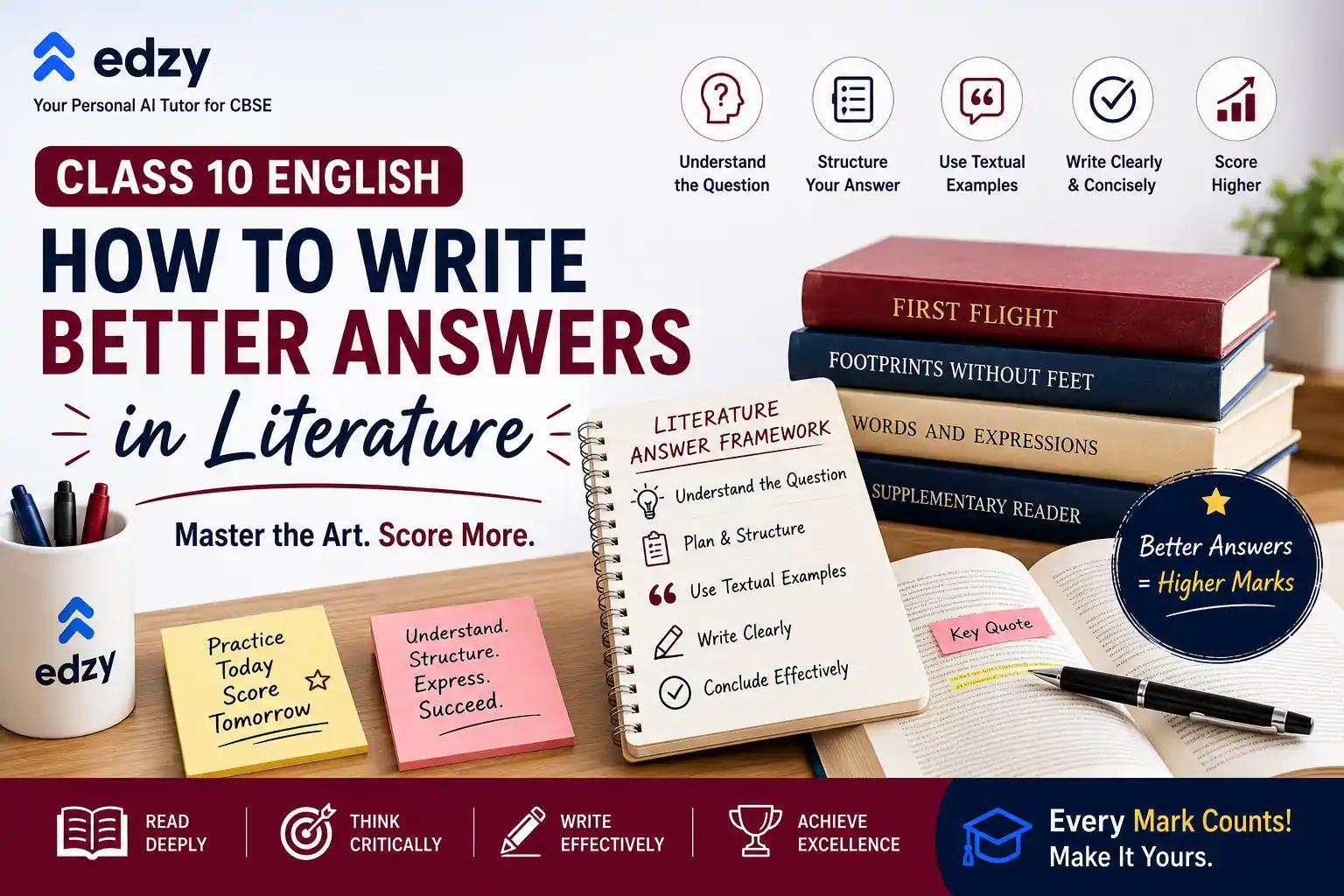
The Literature Answer Framework is a structured approach designed to help students write better literature answers. This framework emphasizes understanding the question, organizing thoughts, using textual evidence, and maintaining clarity throughout the answer. By following this framework, students can ensure that their answers are not only well-structured but also directly address the question posed. For example, when analyzing a character's motivations, students should first outline their understanding of the character, then provide specific examples from the text, and finally conclude with a reflection on how these motivations drive the plot.
Utilizing the Literature Answer Framework can also help students develop a consistent writing style. By practicing this framework regularly, students can become more adept at expressing their ideas and arguments clearly, ultimately leading to improved performance in their exams.
In conclusion, mastering literature answers in Class 10 English is a skill that requires practice, understanding, and effective strategies. By focusing on the key elements outlined in this blog, students can enhance their writing skills and achieve the marks they deserve. Every mark a CBSE student loses to a careless error is a mark they already earned — the only task left is making sure it shows up on the paper.
Suggested blogs

How to Avoid Panic When You Don’t Know an Answer in the Exam
Mastering calmness to tackle exam challenges effectively.

How to Manage Time During a 3-Hour Exam
Mastering time management for a successful exam experience.

How to Check Your Answers Properly in Exams
Mastering the art of answer checking to secure every mark in CBSE exams.

How to Improve Your Speed in Solving Questions Before Exams
Mastering speed in question-solving is crucial for CBSE students aiming for high marks.