
How to Stay Focused While Studying at Home
Master your study time with effective focus techniques.
Discover strategies to minimize distractions and enhance focus for CBSE students studying at home, ensuring productive learning hours.

Listen to this article
How to Stay Focused While Studying at Home
Studying at home can be both a blessing and a challenge for CBSE and NCERT students. While the comfort of home provides a relaxed atmosphere, it also presents numerous distractions that can hinder productivity. In this blog, we will explore effective techniques to help students stay focused while studying at home. By identifying personal distractions, utilizing proven study techniques, and creating a conducive study environment, students can maximize their learning hours.
Identifying Personal Distractions
The first step in improving focus is to identify what distracts you. Distractions can come in various forms, such as noise, digital interruptions, or even family members. Here are some common distractions that students face:
Television and streaming services
Social media notifications
Mobile phone calls and messages
Household chores
Family members or pets
To effectively manage these distractions, take a moment to reflect on your study habits. Keep a journal for a week and note when you find it hard to concentrate. This will help you pinpoint specific distractions and develop strategies to mitigate them.
Pomodoro and Deep Work Techniques
Once you have identified your distractions, the next step is to implement effective study techniques. Two popular methods are the Pomodoro Technique and Deep Work.
Pomodoro Technique
The Pomodoro Technique involves breaking your study time into intervals, traditionally 25 minutes long, followed by a 5-minute break. After completing four Pomodoros, take a longer break of 15-30 minutes. This technique helps maintain focus and prevents burnout. Here’s how to implement it:
Choose a task to work on.
Set a timer for 25 minutes.
Work on the task until the timer goes off.
Take a 5-minute break.
Repeat the process.
This method is particularly effective for CBSE students preparing for exams, as it allows for concentrated study sessions while ensuring regular breaks to recharge.
Deep Work
Deep Work is a concept introduced by Cal Newport, emphasizing the importance of focused, uninterrupted work. To practice Deep Work, follow these steps:
Set clear goals for each study session.
Eliminate distractions by turning off notifications and finding a quiet space.
Commit to a specific time frame for focused work.
Reflect on your progress after each session.
This approach is beneficial for subjects that require critical thinking and problem-solving, such as Mathematics and Science, where deep understanding is essential.
How to Manage Digital Interruptions
In today’s digital age, managing digital interruptions is crucial for maintaining focus. Here are some strategies to minimize these distractions:
Use apps that block distracting websites during study hours.
Set your phone to 'Do Not Disturb' mode while studying.
Limit social media usage to specific times of the day.
Keep your study area free of digital devices unless necessary for studying.
By creating boundaries around digital usage, students can significantly enhance their concentration and productivity.
Creating Study Rituals and Anchors
Establishing study rituals can signal to your brain that it’s time to focus. These rituals can be as simple as having a specific drink while studying or organizing your study space in a particular way. Here are some ideas:
Designate a specific study area that is only used for studying.
Start each study session with a brief meditation or breathing exercise.
Use a specific playlist or type of music that helps you concentrate.
Prepare your materials in advance to avoid wasting time during study sessions.
Creating these anchors can help condition your mind to enter a focused state more easily.
Short Physical Breaks to Reset Focus
Taking short physical breaks is essential for maintaining focus. During these breaks, engage in activities that help refresh your mind and body. Here are some effective break ideas:
Stretch or do light exercises to get your blood flowing.
Take a short walk outside for fresh air.
Practice mindfulness or meditation for a few minutes.
Have a healthy snack to refuel your energy.
These breaks not only help reset your focus but also improve overall productivity and learning retention.
Tracking Attention Using Tools and Journals
To improve focus, consider tracking your attention and productivity. Keeping a study journal can help you reflect on what works best for you. Here’s how to effectively track your attention:
Record your study sessions, noting what techniques you used and how focused you felt.
Identify patterns in your productivity and focus levels at different times of the day.
Adjust your study schedule based on your findings to optimize your learning.
Using tools like productivity apps or simple spreadsheets can make this process easier and more effective.
Role of Environment and Family Support
Your study environment plays a significant role in your ability to focus. Here are some tips to create a conducive study environment:
Choose a quiet, well-lit space free from distractions.
Keep your study area organized and clutter-free.
Involve family members by communicating your study schedule and asking for their support in minimizing distractions.
Family support can be invaluable. Encourage family members to respect your study time, and consider setting up a family study schedule where everyone can focus on their tasks simultaneously.
Final Productivity Checklist
To wrap up, here’s a final checklist to help you stay focused while studying at home:
Identify personal distractions and develop strategies to manage them.
Implement study techniques like Pomodoro and Deep Work.
Limit digital interruptions by using apps and setting boundaries.
Create study rituals and anchors to signal focus time.
Take short physical breaks to reset your mind and body.
Track your attention and productivity to find what works best for you.
Ensure your study environment is conducive to learning.
Communicate with family for support and understanding.
By following these strategies, CBSE and NCERT students can enhance their focus and productivity while studying at home. Remember, consistency is key, and with practice, you can create a study routine that works best for you.
Suggested blogs
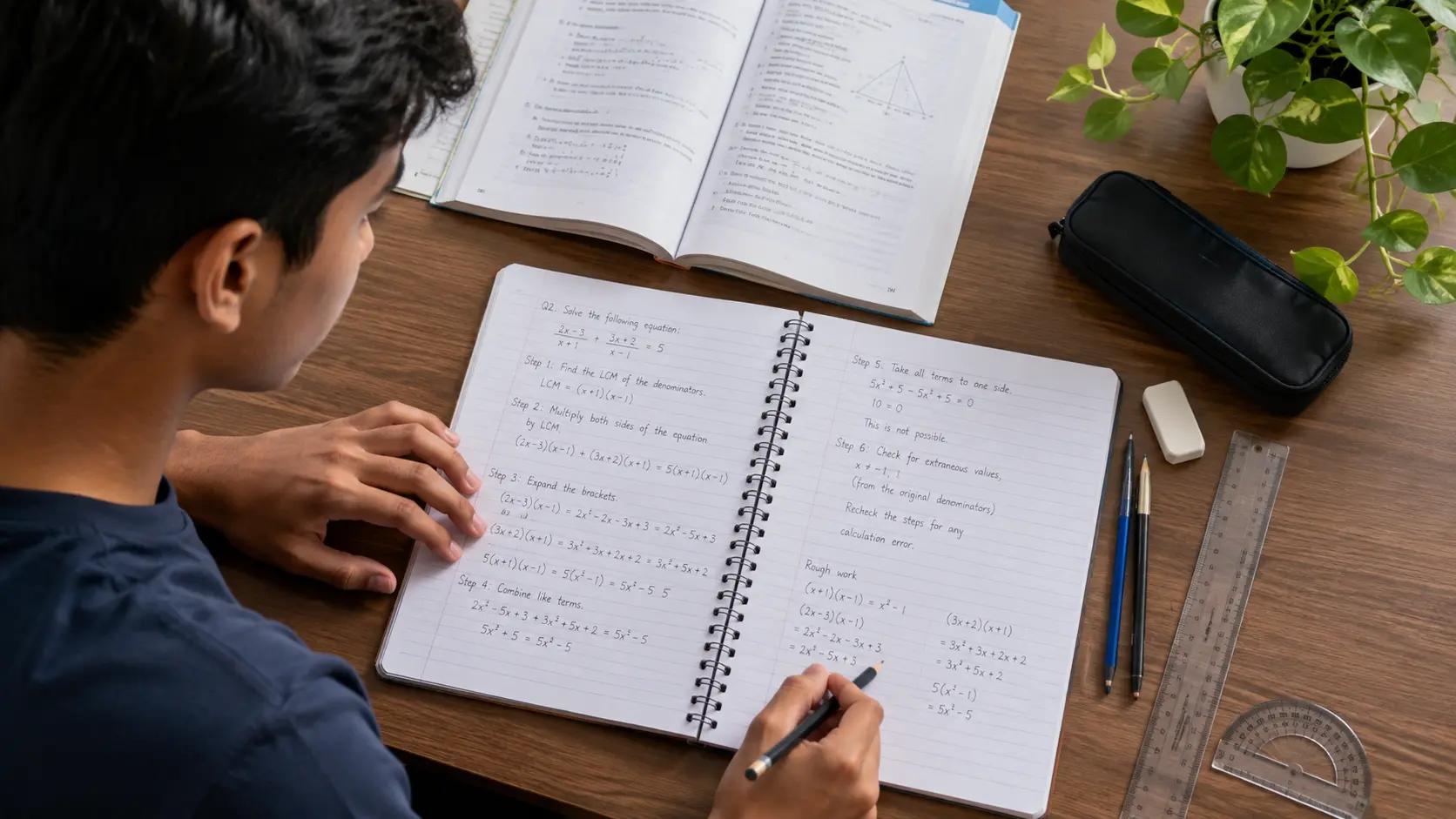
Why You Shouldn’t Skip Steps in Maths (Even If You Know the Answer)
Understanding the importance of step-by-step problem-solving in CBSE Mathematics.

How to Improve Accuracy in Maths Without Extra Practice Hours
Why mastering accuracy is the key to unlocking your true potential in Maths.

How to Revise Formulas in Maths Without Forgetting Them
Mastering math formulas through understanding and practice — a guide for CBSE students.

How to Identify Your Weak Areas in Studies (And Fix Them Fast)
Transforming academic weaknesses into strengths through targeted strategies.