
AI and the Future of Homework: How Learning is Changing
Exploring how AI is reshaping homework and learning for students.
This blog delves into the transformative role of AI in homework and education, highlighting its benefits, challenges, and future in Indian classrooms.

Listen to this article
AI and the Future of Homework: How Learning is Changing
In recent years, artificial intelligence has emerged as a powerful tool in various fields, including education. As students and educators navigate the complexities of learning, AI is transforming how homework is assigned, completed, and evaluated. This blog explores the future of homework in an AI-powered world, focusing on how these changes impact CBSE and NCERT students in India.
From Manual Assignments to AI-Assisted Work
Traditionally, homework has been a manual process where teachers assign tasks that students complete independently. This method often leads to a one-size-fits-all approach, where the unique learning needs of each student may not be adequately addressed. However, with the advent of AI, this paradigm is shifting.
AI tools can analyze a student’s performance and learning style, allowing for the creation of personalized assignments. For instance, platforms like Edzy utilize algorithms to assess a student’s strengths and weaknesses, tailoring homework to suit their individual needs. This personalized approach not only enhances engagement but also fosters a deeper understanding of the subject matter.
Consider a student struggling with mathematics. Instead of receiving generic math problems, AI can provide targeted exercises that focus on their specific areas of difficulty, whether it’s algebra or geometry. This tailored approach helps students build confidence and competence in their skills.
How AI Tools Help Personalize Tasks
AI tools are designed to adapt to the learning pace of each student. By analyzing data from quizzes, tests, and even classroom participation, these tools can recommend specific tasks that align with the student’s current understanding and future learning goals.
For example, if a student excels in science but struggles with language arts, an AI-powered platform can suggest more advanced science projects while providing additional resources and exercises in language arts. This not only helps students focus on their strengths but also encourages them to improve in areas where they may be lagging.
Moreover, AI can facilitate collaborative learning experiences. Students can work together on projects, with AI tools helping to assign roles based on each member’s strengths. This collaborative approach mirrors real-world scenarios, preparing students for future teamwork in their careers.
Concerns About Plagiarism and Misuse
While AI offers numerous benefits, it also raises concerns about academic integrity. The ease of accessing information and generating content can lead to increased instances of plagiarism. Students may be tempted to use AI tools to complete assignments without fully engaging with the material.
To combat this issue, educators must emphasize the importance of original thought and critical analysis. Schools can implement policies that require students to submit drafts of their work, showcasing their thought process and development. Additionally, AI tools can be programmed to detect plagiarism, ensuring that students are held accountable for their work.
Educators can also teach students how to use AI responsibly, guiding them on how to leverage these tools to enhance their learning rather than replace it. For instance, students can use AI to gather information and then synthesize that information into their own unique perspectives.
Teacher Roles in AI-Supervised Learning
As AI becomes more integrated into the educational landscape, the role of teachers is evolving. Rather than being the sole source of knowledge, teachers are becoming facilitators of learning. They guide students in navigating AI tools, helping them understand how to use these resources effectively.
Teachers can also use AI analytics to identify trends in student performance. For example, if a significant number of students struggle with a particular concept, teachers can adjust their lesson plans accordingly. This data-driven approach allows for more responsive teaching, ensuring that all students receive the support they need.
Furthermore, teachers can focus on fostering critical thinking and creativity in their students. By encouraging students to ask questions, explore different perspectives, and engage in discussions, teachers can help students develop skills that are essential in an AI-driven world.
Benefits for CBSE Students’ Time Management
One of the significant advantages of AI in education is its potential to improve time management for students. With personalized homework assignments, students can focus on areas that require more attention, allowing them to allocate their time more efficiently.
For instance, a student preparing for their CBSE board exams can use AI tools to create a study schedule that prioritizes subjects based on their performance in previous assessments. This targeted approach helps students manage their time effectively, reducing stress and enhancing their overall learning experience.
Additionally, AI can assist in automating routine tasks, such as scheduling study sessions or sending reminders for upcoming assignments. This automation allows students to concentrate on their studies rather than getting bogged down by administrative tasks.
Ethical AI Use in Classrooms
As AI becomes more prevalent in education, it is crucial to address ethical considerations. Schools must establish guidelines for the responsible use of AI, ensuring that students understand the implications of their actions.
Educators should promote discussions around data privacy, consent, and the potential biases inherent in AI algorithms. By fostering a culture of ethical awareness, schools can prepare students to navigate the complexities of an AI-driven world.
Additionally, schools should ensure that AI tools are accessible to all students, regardless of their socio-economic background. This inclusivity is essential for creating equitable learning environments where every student can thrive.
Future Vision for Indian Schools
Looking ahead, the integration of AI in Indian schools holds immense potential. As technology continues to evolve, we can expect to see more innovative approaches to homework and learning. Schools may adopt hybrid models that combine traditional teaching methods with AI-driven tools, creating a more dynamic and engaging educational experience.
Moreover, as AI becomes more sophisticated, we may see the emergence of virtual classrooms where students can learn from anywhere in the world. This flexibility can open up new opportunities for collaboration and knowledge-sharing among students from diverse backgrounds.
Ultimately, the future of homework in an AI-powered world is bright. By embracing these changes, CBSE and NCERT students can enhance their learning experiences, develop essential skills, and prepare for a future where technology plays a central role in education.
Suggested blogs
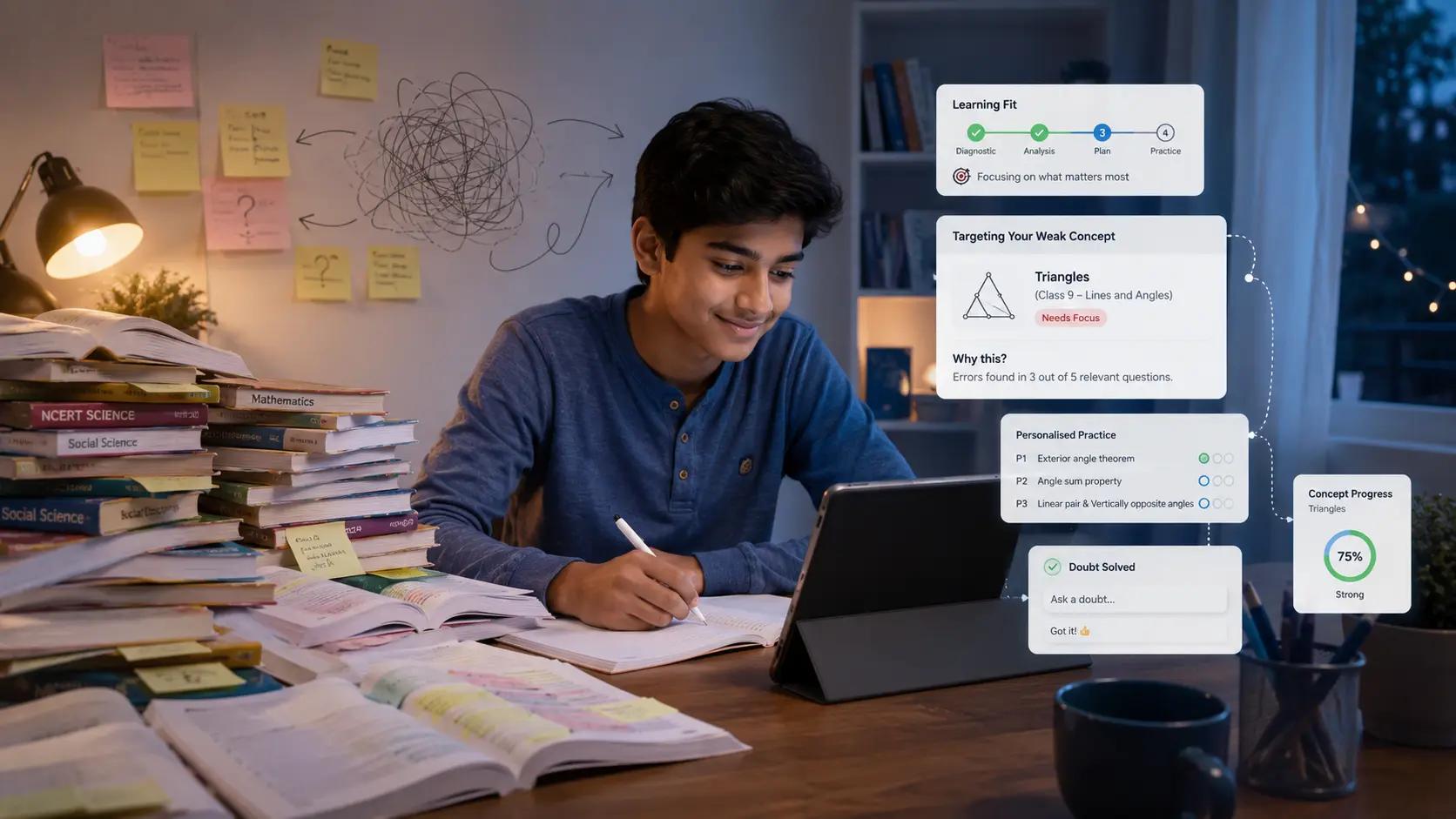
What Personalised Learning Actually Means for a CBSE Student (And Why It's Not What Most People Think)
Most students hear "personalised learning" and think pace. The real advantage is precision here's what that looks like for CBSE preparation.
How to Actually Use AI for CBSE Board Exam Preparation (Without Wasting Time on It)
Most students use AI the wrong way during revision. Here's the method that actually builds retention before board exams.
How AI-Based Practice Helps CBSE Class 10 Students Transition to Class 11
Navigating the academic leap from Class 10 to Class 11 with AI support
How AI Can Help CBSE Class 10 Students Revise Smarter During Holidays
Discover how AI tools can make holiday study effective yet enjoyable for CBSE Class 10 students.